ViVLA框架

Search documents
看一次就能执行!单视频示范零样本学习&跨模态动作知识迁移
具身智能之心· 2025-12-15 01:04
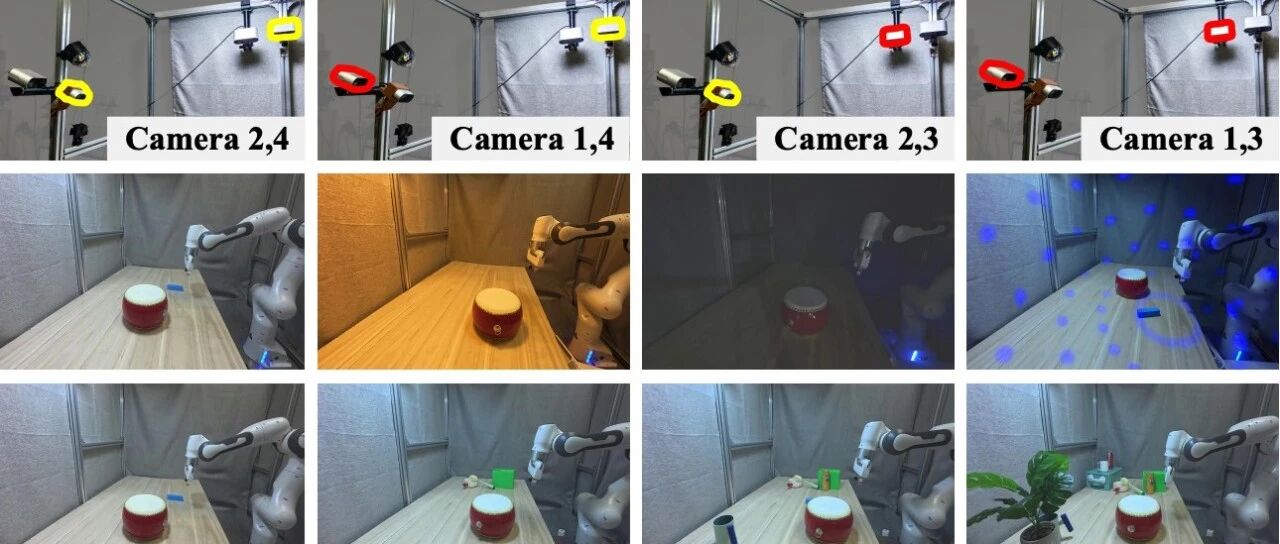
Core Insights - The article discusses the ViVLA framework, which enables robots to learn new skills from single video demonstrations, addressing the limitations of existing Vision-Language-Action (VLA) models in generalizing to tasks outside their training distribution [1][2][25]. Group 1: Challenges in Robot Skill Generalization - Four core challenges hinder the generalization of robot skills: insufficient fine-grained action recognition, differences in action representation and modalities, inherent flaws in autoregressive modeling, and a lack of diverse expert-agent pairing data [4][5][7]. Group 2: ViVLA's Technical Framework - ViVLA employs a three-layer technical system: unified action space construction, parallel decoding optimization, and large-scale data generation, facilitating efficient learning from single expert demonstration videos [1][8]. - The first layer focuses on latent action learning through an Action-Centric Cycle-Consistency (A3C) framework to bridge the gap between different expert and agent action spaces [10]. - The second layer enhances model training efficiency with parallel decoding and spatiotemporal masking strategies, improving video understanding and action prediction [11][12]. Group 3: Data Generation and Validation - ViVLA's data generation pipeline converts human videos into high-quality paired data, resulting in a dataset of over 892,911 expert-agent training samples [13][17]. - The framework's effectiveness is validated through a three-tier performance verification system, demonstrating significant improvements in unseen task success rates compared to baseline models [14][16]. Group 4: Performance Metrics - In the LIBERO benchmark test, ViVLA achieved over a 30% performance increase in unseen tasks compared to baseline models, with success rates of 74% in real-world manipulation tasks, significantly outperforming other models [14][16][18]. - The model maintained a success rate of over 70% in varying environmental conditions, showcasing its robustness [20]. Group 5: Future Directions and Limitations - While ViVLA represents a breakthrough in single-sample video imitation learning, there are areas for optimization, including enhancing error recovery capabilities and expanding data diversity through automated filtering of human videos [25][27].

看一次就能执行!VLA的零样本学习是伪命题吗?
具身智能之心· 2025-12-13 01:02
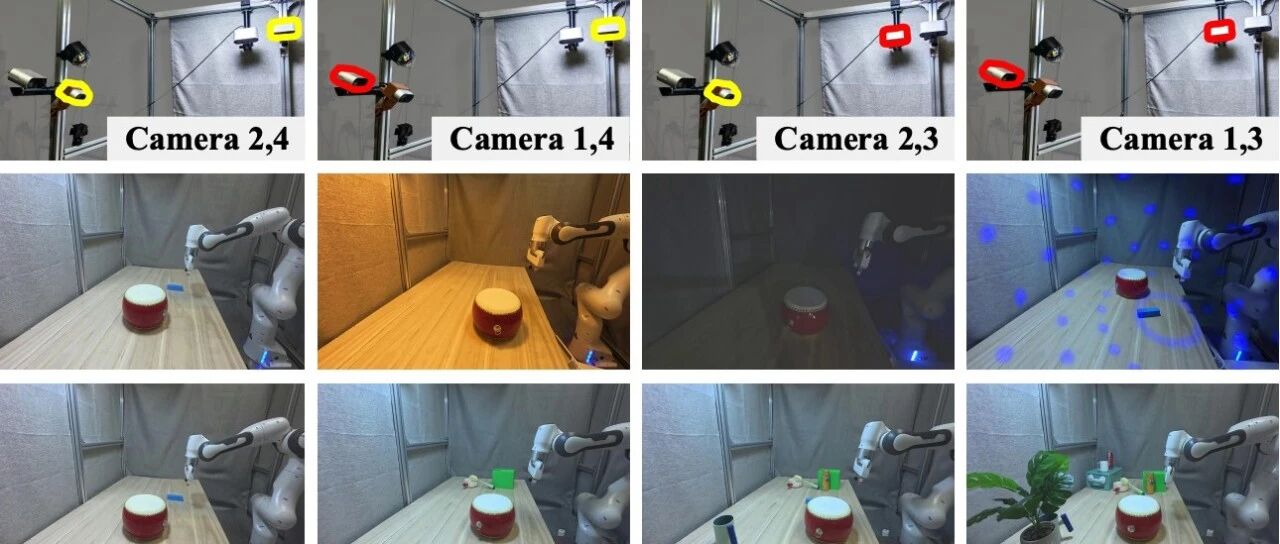
Core Insights - The article discusses the ViVLA framework, which enables robots to learn new skills from single video demonstrations, addressing the limitations of existing Vision-Language-Action (VLA) models in generalizing to tasks outside their training distribution [1][2][25] Group 1: Challenges in Robot Skill Generalization - Four core challenges hinder the generalization of robot skills: insufficient fine-grained action recognition, differences in action representation and modalities, inherent flaws in autoregressive modeling, and a lack of diverse expert-agent pairing data [4][5][7] Group 2: ViVLA's Technical Framework - ViVLA employs a three-layer technical system: unified action space construction, parallel decoding optimization, and large-scale data generation to achieve efficient learning from single video demonstrations [8] - The first layer focuses on latent action learning through an Action-Centric Cycle-Consistency (A3C) framework to bridge the gap between different expert and agent action spaces [10] - The second layer enhances model training efficiency with parallel decoding and spatiotemporal masking strategies, improving video understanding and reducing inference delays [11][12] Group 3: Data Generation and Validation - ViVLA's data generation pipeline converts human videos into high-quality paired data, resulting in a dataset of over 892,911 expert-agent training samples [13][17] - The framework's effectiveness is validated through a three-tier performance verification system, demonstrating significant improvements in unseen task success rates compared to baseline models [14][16] Group 4: Performance Metrics - In the LIBERO benchmark, ViVLA achieved over a 30% performance increase in unseen tasks compared to baseline models, with success rates of 74% in real-world manipulation tasks, significantly outperforming other models [14][16][18] - The model maintained a success rate of over 70% in varying environmental conditions, showcasing its robustness [20] Group 5: Future Directions and Limitations - While ViVLA represents a breakthrough in single-sample video imitation learning, there are areas for optimization, including enhancing error recovery capabilities and expanding data diversity through automated filtering of human videos [25][27]