零样本学习

Search documents
专家观点 | 以“AI+场景”推动智慧应急走向实践
Xin Lang Cai Jing· 2026-02-05 12:25
Core Insights - Emergency management is transitioning from passive response to proactive prevention, necessitating a new paradigm of smart emergency science to address complex challenges posed by climate change and urban governance [1][62] - The integration of AI and digital technologies into emergency management is crucial, with "AI + scenarios" serving as a practical bridge between scientific research and engineering practice [1][68] Group 1: Smart Emergency Science System Composition - Smart emergency science is an interdisciplinary field that combines information science, management science, engineering, and social sciences to fundamentally reshape traditional emergency management through data-driven approaches [3][64] - The transition from traditional emergency management, which relies on historical experience, to smart emergency management, which utilizes real-time data and predictive models, marks a significant paradigm shift [4][64] Group 2: Key Components of Smart Emergency Science - Data perception is foundational, focusing on integrated sensing networks and multi-source data fusion to monitor disaster elements and emergency resources comprehensively [5][65] - The smart emergency science system encompasses four key components: data intelligence, model intelligence, decision intelligence, and action intelligence, each contributing to a closed-loop system [6][65][66] Group 3: "AI + Scenarios" Implementation - "AI + scenarios" emphasizes the deep integration of AI technologies into specific emergency management contexts to address real pain points and create tangible value [8][68] - The approach shifts from a technology-driven model to one that is scenario-driven, defining specific emergency management challenges and developing tailored AI solutions [9][68] Group 4: Strategic Pathways for "AI + Scenarios" - The implementation of "AI + scenarios" requires breaking down broad goals into quantifiable, solvable scenario problems, such as predicting community evacuations during severe weather events [71] - Establishing cross-departmental data sharing and high-quality datasets is essential for training AI models effectively [71][72] Group 5: Challenges in Smart Emergency Management - Significant challenges include data silos, the scarcity of data for rare disaster scenarios, and the need for AI models to be robust and interpretable in high-stakes decision-making environments [72][73][74] - The complexity and uncertainty of real disaster scenarios necessitate AI systems that can adapt and function reliably under extreme conditions [75][76] Group 6: Frontiers of Research in Smart Emergency Science - Research directions include federated learning for data integration without sharing raw data, small-sample learning for rare disaster scenarios, and dynamic evolution of emergency knowledge graphs [78][79][80] - The development of digital twins for complex systems and disaster scenarios is crucial for high-fidelity simulations and effective emergency response planning [81]


CES 2026|现代汽车发布“王炸”级产品 Atlas机器人“行走、转身、抓取”丝滑流畅
Zhong Guo Jing Ying Bao· 2026-01-10 11:54
Core Insights - The main focus of the news is the unveiling of the new generation humanoid robot Atlas by Boston Dynamics at CES 2026, which is set to be utilized in Hyundai's manufacturing plants starting in 2028 [2][3]. Group 1: Robot Features and Capabilities - Atlas stands nearly 1.9 meters tall, can lift up to 50 kilograms (110 pounds), and operates efficiently in industrial environments ranging from -20°C to 40°C [3]. - The robot is equipped with 56 fully movable joints, most of which support 360° rotation, and features tactile sensors in its hands, allowing for efficient task execution without frequent posture adjustments [3][5]. - Atlas can autonomously navigate to charging stations for battery replacement, enabling continuous operation for 24 hours a day, 7 days a week, with a single charge lasting approximately 4 hours [5]. Group 2: Industrial Application and Production Goals - The new Atlas is nearing industrial application and is expected to be deployed at Hyundai's Metaplant America in Georgia, primarily for tasks like parts sorting, with plans to take on more complex assembly tasks by 2030 [5][6]. - Hyundai aims to produce 30,000 units of the robot annually by 2028, enhancing its operational efficiency through strategic partnerships with Nvidia and Google DeepMind [6]. Group 3: AI Integration and Future Implications - Atlas incorporates an intelligent system with "zero-shot learning" capabilities, developed in collaboration with Google DeepMind, allowing it to quickly understand and adapt to new environments [7][9]. - The integration of Atlas's capabilities is expected to influence Hyundai's next-generation smart driving systems, transitioning from rule-based to instinct-driven algorithms [9]. - Data collected from Atlas's operations in manufacturing will contribute to optimizing smart driving algorithms, creating a feedback loop that enhances both robot and vehicle performance [9][10].


美股科技行业周报:CES2026将召开,建议关注端侧AI、PhysicalAI等方向-20260104
Guolian Minsheng Securities· 2026-01-04 12:02
Investment Rating - The report suggests a focus on AI consumer applications, embodied intelligence, autonomous driving, and XR technologies, indicating a positive outlook for companies in these sectors [6][24]. Core Insights - The CES 2026 event is highlighted as a key opportunity to observe advancements in AI, particularly in consumer applications such as AI PCs and embodied intelligence [6][24]. - Significant developments in chip technology are anticipated, with AMD, Intel, and Qualcomm expected to unveil new products that enhance processing capabilities [2][11]. - The report emphasizes the evolution of video models into general visual foundation models, showcasing the capabilities of Google DeepMind's Veo 3 [5][14]. - DeepSeek's mHC architecture aims to address the stability issues in training large models, which could lead to more reliable AI applications [18][19]. Summary by Sections CES 2026 Preview - Focus on new chip products from leading companies: AMD's Ryzen 7 9850X3D and Intel's Panther Lake chips, which promise a 50% performance increase [2][11]. - Emphasis on advancements in autonomous driving technologies, with companies like Sony Honda Mobility and BMW showcasing new models and AI systems [3][12]. Technology Industry Dynamics - Google DeepMind's research indicates that video models are evolving into versatile visual models capable of zero-shot learning, enhancing their applicability across various tasks [5][14]. - DeepSeek's mHC architecture is designed to improve the training stability of large models while maintaining high expressiveness, potentially paving the way for larger-scale model training [18][19]. Weekly Insights - The report recommends focusing on companies that can effectively implement AI technologies in real-world scenarios, particularly in hardware and platforms that support multimodal reasoning [6][24]. - Suggested companies for investment include NVIDIA, Tesla, LITE, AVGO, and Google, which are positioned to benefit from advancements in AI and computing infrastructure [6][24].




Qwen负责人转发2025宝藏论文,年底重读「视觉领域GPT时刻」
量子位· 2025-12-29 09:01
Core Insights - The article discusses the emergence of a "GPT moment" in the computer vision (CV) field, similar to what has been seen in natural language processing (NLP) with the introduction of large language models (LLMs) [3][16]. - It highlights the potential of Google's DeepMind's video model, Veo 3, which can perform various visual tasks using a single model, thus addressing the fragmentation issue in CV [12][24]. Group 1: Video Model Breakthrough - The paper titled "Video models are zero-shot learners and reasoners" presents a significant advancement in video models, indicating that video is not just an output format but also a medium for reasoning [17][18]. - The model utilizes a "Chain-of-Frames" (CoF) approach, allowing it to demonstrate reasoning through the generation of video frames, making the inference process visible [18][22]. - Veo 3 exhibits zero-shot capabilities, meaning it can handle 62 different visual tasks without specific training for each task, showcasing its versatility [25][26]. Group 2: Transition from NLP to CV - The transition from NLP to CV is marked by the ability of a single model to handle multiple tasks, which was previously achieved through specialized models for each task in CV [7][10]. - The article emphasizes that the fragmentation in CV has limited its advancement, as different tasks required different models, leading to high development costs and restricted generalization capabilities [10][11]. - By leveraging large-scale video and text data for generative training, Veo 3 bridges the gap between visual perception and language understanding, enabling cross-task generalization [13][15]. Group 3: Implications for Future Development - The ability of video models to perform reasoning through continuous visual changes rather than static outputs represents a paradigm shift in how visual tasks can be approached [24][25]. - This unified generative mechanism allows for the integration of various visual tasks, such as segmentation, detection, and path planning, into a single framework [24]. - The advancements in video models signal a potential revolution in the CV field, akin to the disruption caused by LLMs in NLP, suggesting a transformative impact on AI applications [28].

看一次就能执行!VLA的零样本学习是伪命题吗?
具身智能之心· 2025-12-13 01:02
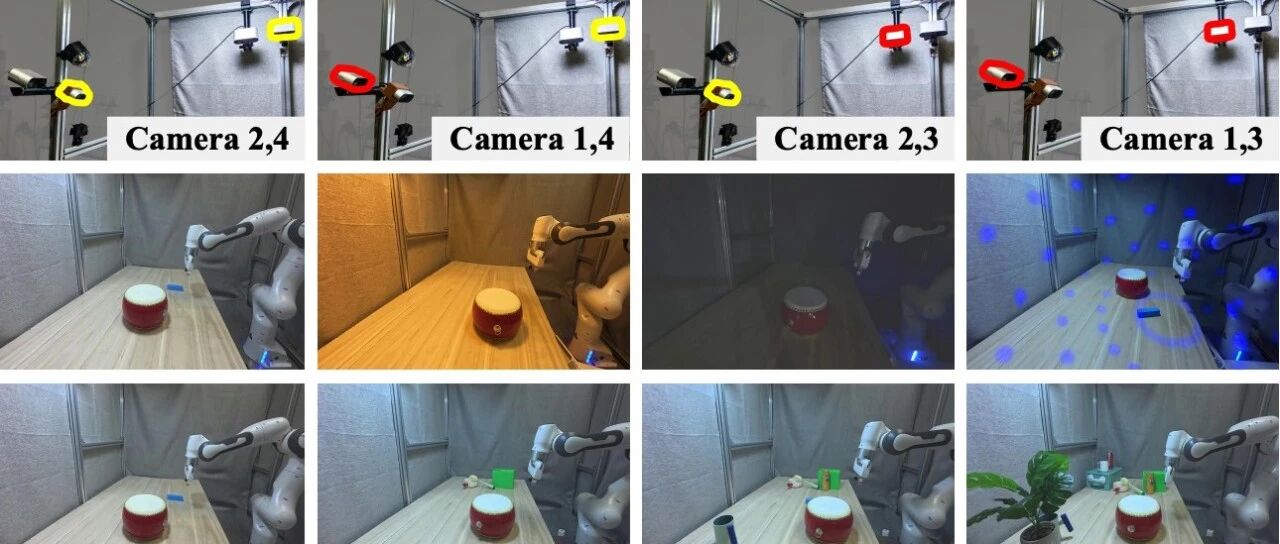
Core Insights - The article discusses the ViVLA framework, which enables robots to learn new skills from single video demonstrations, addressing the limitations of existing Vision-Language-Action (VLA) models in generalizing to tasks outside their training distribution [1][2][25] Group 1: Challenges in Robot Skill Generalization - Four core challenges hinder the generalization of robot skills: insufficient fine-grained action recognition, differences in action representation and modalities, inherent flaws in autoregressive modeling, and a lack of diverse expert-agent pairing data [4][5][7] Group 2: ViVLA's Technical Framework - ViVLA employs a three-layer technical system: unified action space construction, parallel decoding optimization, and large-scale data generation to achieve efficient learning from single video demonstrations [8] - The first layer focuses on latent action learning through an Action-Centric Cycle-Consistency (A3C) framework to bridge the gap between different expert and agent action spaces [10] - The second layer enhances model training efficiency with parallel decoding and spatiotemporal masking strategies, improving video understanding and reducing inference delays [11][12] Group 3: Data Generation and Validation - ViVLA's data generation pipeline converts human videos into high-quality paired data, resulting in a dataset of over 892,911 expert-agent training samples [13][17] - The framework's effectiveness is validated through a three-tier performance verification system, demonstrating significant improvements in unseen task success rates compared to baseline models [14][16] Group 4: Performance Metrics - In the LIBERO benchmark, ViVLA achieved over a 30% performance increase in unseen tasks compared to baseline models, with success rates of 74% in real-world manipulation tasks, significantly outperforming other models [14][16][18] - The model maintained a success rate of over 70% in varying environmental conditions, showcasing its robustness [20] Group 5: Future Directions and Limitations - While ViVLA represents a breakthrough in single-sample video imitation learning, there are areas for optimization, including enhancing error recovery capabilities and expanding data diversity through automated filtering of human videos [25][27]
为啥机器人集体放弃“跑酷” 全去“叠衣服”了?
机器人大讲堂· 2025-11-24 15:00
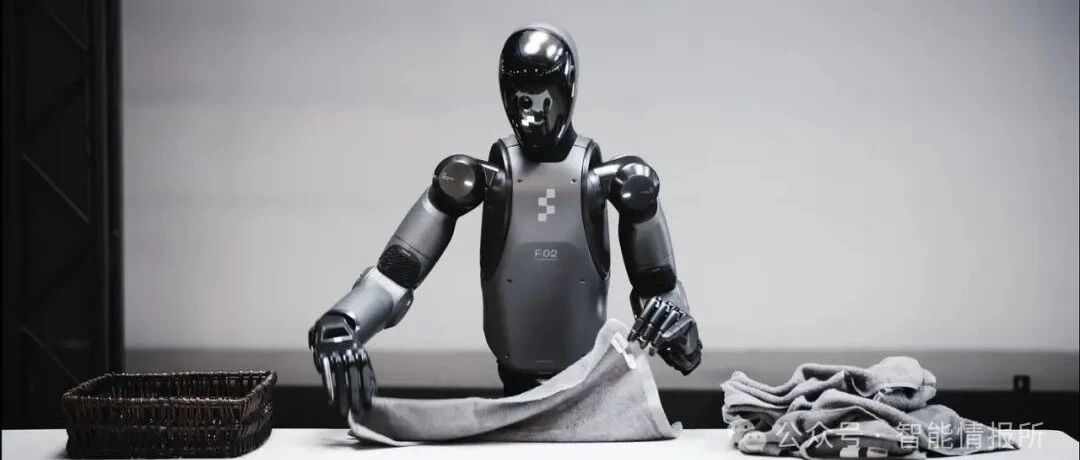
Core Viewpoint - The robotics industry has shifted focus from showcasing extreme capabilities, such as parkour and dancing, to addressing practical household tasks like folding clothes, indicating a maturation of the market and a response to real consumer needs [3][7][27]. Group 1: Industry Trends - The initial excitement around robotics was characterized by impressive demonstrations of movement and balance, which attracted capital and interest in the early stages of technology development [27]. - The current trend shows a significant pivot towards practical applications, with companies now prioritizing user needs over mere technical prowess [27][30]. - The emergence of clothing folding robots reflects a convergence of technological advancements and market demand, as the ability to fold clothes has become a more relatable and desirable function for consumers [9][15]. Group 2: Technological Advancements - Breakthroughs in robot learning technologies, such as diffusion models and zero-shot learning, have enabled robots to learn tasks like folding clothes from human demonstrations without extensive programming [13]. - The reduction in technical barriers has allowed startups to leverage pre-trained models to create functional demonstrations, making the technology more accessible [13][15]. - Despite advancements, current robotic demonstrations still reveal limitations in precision and adaptability, indicating that further improvements in algorithms and hardware are necessary [29][30]. Group 3: Market Demand and Consumer Expectations - There is a strong consumer desire for robots that can perform household tasks, with many willing to pay for solutions that alleviate mundane chores like folding clothes [15][26]. - The gap between what companies claim their robots can do and what consumers expect in terms of performance and reliability remains significant [24][26]. - Current demonstrations often fail to address the full scope of household tasks, focusing primarily on the folding action without integrating the entire process from retrieval to storage [24][30]. Group 4: Future Directions - The industry must continue to focus on practical applications and user needs to drive commercial viability, moving beyond mere technical demonstrations [30]. - As technology matures, there is potential for robots to expand their capabilities to include a wider range of household tasks, provided they remain aligned with consumer demands [29][30]. - The shift towards practical applications signifies a more rational approach to robotics, emphasizing the importance of solving real-world problems over showcasing extreme capabilities [30].
双非同学竟然是这样发第一篇CVPR的!
具身智能之心· 2025-07-10 13:16
Core Insights - The article highlights the success story of a student who, despite lacking guidance, managed to publish a paper in CVPR25 through proactive efforts and support from a service provider [1] - The emphasis is placed on the importance of taking initiative and being diligent in research endeavors [1] Group 1: Student Success Case - A student with no guidance successfully published a paper in CVPR25 after 10 months of communication, experimentation, and writing [1] - The student's proactive approach and willingness to work hard were crucial to overcoming the lack of mentorship [1] Group 2: Service Offerings - The company offers comprehensive support for research and publication, covering various stages from idea generation to submission [1] - Specific research areas for guidance include large models, visual language navigation, reinforcement learning, and more [1] - The service provides tiered pricing based on the level of the paper, including top conferences and journals, as well as various academic categories [2]