Vivo X300 Pro

Search documents
Vivo X300 Pro review: It goes beyond cameras
The Economic Times· 2025-12-20 10:09
Core Insights - The Vivo X300 Pro was launched in India on December 2, 2025, priced at Rs 1,09,999, featuring a single configuration of 16 GB RAM and 512 GB storage [1][41] - The device aims to compete directly with flagship models like the iPhone 17 Pro Max and Galaxy S25 Ultra, showcasing significant improvements in camera technology and overall performance [35][40] Design and Build - The X300 Pro retains Vivo's circular camera design while modernizing the overall look with a flat frame, back, and display, available in Elite Black and Dune Gold [2][3] - The device weighs 226 grams and features an aluminum alloy frame with glass on both sides, achieving IP68 and IP69 ratings for water resistance [3] - The introduction of a shortcut button enhances user experience by allowing customizable quick actions [4] Display and Audio - The phone features a 6.78-inch LTPO AMOLED display with a 1.5K resolution and a 120 Hz adaptive refresh rate, offering improved brightness of up to 4,500 nits [7][8] - The audio experience is enhanced with loud and clear stereo speakers, providing a convincing media experience [10][42] Software and Performance - The X300 Pro runs on OriginOS 6 based on Android 16, promising five major Android upgrades and seven years of security updates, with smoother animations and improved user interface [11][12] - It is powered by MediaTek's Dimensity 9500 chip, showing significant performance improvements over the previous generation, with efficient multitasking capabilities [16][17] Battery and Charging - The device is equipped with a 6510 mAh silicon-carbon battery, providing around 8+ hours of screen-on time, and supports 90W wired and 40W wireless charging [20][21] - The improved battery chemistry is expected to enhance longevity and usability during travel [22] Camera System - The rear camera setup includes a 50 MP main camera, a 200 MP periscope telephoto lens with 3.7x optical zoom, and a 50 MP ultra-wide camera, while the front camera has been upgraded to 50 MP with autofocus [23][34] - The camera system benefits from a multi-chip pipeline for enhanced image processing, resulting in improved dynamic range and detail in various lighting conditions [24][26] - The X300 Pro excels in portrait and zoom photography, often outperforming competitors in terms of detail and subject separation [27][28] Conclusion - The Vivo X300 Pro represents a significant advancement in Vivo's flagship offerings, combining strong camera capabilities with a modern design and robust performance, making it a serious contender in the premium smartphone market [35][40]



Snap, scroll, zoom - without breaking a sweat!
BusinessLine· 2025-12-17 15:26
Core Insights - Vivo has strengthened its position in the premium camera smartphone market with the launch of the X300 Pro, which builds on the success of the X200 Pro and aims to provide a comprehensive user experience with its display, camera capabilities, and performance [1] Design - The Vivo X300 Pro features a slim profile of 161.98 × 75.48 × 7.99 mm and weighs 226 g, with a design that includes a flat display and rounded edges for comfort [2] - The device has an armour glass front, an aluminium alloy frame, and a glass back, with a frosted glass finish that resists fingerprints [3] Display - The smartphone is equipped with a 6.78-inch AMOLED display with a resolution of 2800 × 1260 pixels and supports an adaptive LTPO refresh rate from 1 Hz to 120 Hz [4] - The display offers vibrant colors and excellent contrast, enhancing the viewing experience for videos and photos [5] Audio - The stereo speakers provide adequate volume and clarity, although they lack depth and layering, particularly in complex audio tracks [6] Camera - The X300 Pro features a triple rear camera setup, including a 50 MP primary sensor, a 50 MP ultra-wide camera, and a 200 MP telephoto lens, all of which deliver impressive image quality [8] - The camera system excels in low-light conditions, producing detailed night shots and accurate skin tones in selfies [10] Performance - Powered by MediaTek's Dimensity 9500 chipset, the X300 Pro includes 16 GB of RAM and 512 GB of storage, achieving high performance scores on Geekbench 6 [11][12] - The device runs on OriginOS 16 based on Android 16, providing a smooth user experience with minimal software bloat [13] AI Features - The smartphone includes various AI features across its applications, although the results can be inconsistent, indicating that the AI capabilities are still developing [14] Battery - The X300 Pro is equipped with a 6,510 mAh battery, supporting 90W FlashCharge, allowing for a full charge in around 60 minutes and lasting approximately 1.5 days under mixed usage [15] Verdict - The X300 Pro sets a high standard in the camera smartphone segment with its imaging capabilities, display quality, multimedia experience, and battery life, while facing minor drawbacks in weight and heat management [16] - The device is priced at ₹1,19,999, positioning it competitively against rivals like the Oppo Find X9 Pro and Samsung Galaxy S25 [17]

Vivo X300 Pro, X300 India launch soon: Check price, date, features, specifications, camera and other details
DNA India· 2025-11-01 07:46
Core Insights - Vivo is preparing to launch its X300 series in India in early December 2025, featuring significant upgrades in display, camera, and performance [1][2][3] Launch Timeline - The Vivo X300 series is expected to debut in the first week of December 2025, with availability through Vivo's official e-store, Flipkart, and other major retail outlets [3] Design and Build - The X300 series will retain the signature circular Zeiss-branded camera module, with the X300 likely available in Halo Pink and Phantom Black, while the X300 Pro may launch in Dune Brown and Phantom Black [4] Display and Performance - The X300 Pro is anticipated to feature a 6.78-inch 1.5K BOE Q10+ LTPO OLED flat display with a 120Hz refresh rate, while the standard X300 is expected to have a slightly smaller 6.31-inch display with similar specifications [5] - Both models will be powered by MediaTek's Dimensity 9500 chipset and LPDDR5X RAM for enhanced performance and power efficiency [5][6] Battery Specifications - The X300 Pro is expected to have a 5,440mAh battery, while the X300 will feature a 5,360mAh battery, both supporting 90W wired and 40W wireless fast charging [6] Camera Specifications - The X300 Pro may include a 50MP Sony LYT-828 main sensor, a 50MP ultra-wide Samsung JN1 lens, and a 200MP periscope telephoto sensor, while the standard X300 might feature a 200MP Samsung HPB primary lens and a 50MP ultra-wide camera [7][8] - Both devices are expected to utilize Zeiss imaging technology, with the Pro model incorporating Vivo's V3+ and Vs1 imaging chips, and a 50MP front camera for selfies [8] Expected Pricing - The Vivo X300 is anticipated to be priced around Rs 69,999, while the X300 Pro may cost approximately Rs 99,999 in India, though these prices are not yet officially confirmed [9]

苹果iPhone Air在华首发遇冷,已暂停生产?
Hu Xiu· 2025-10-22 10:51
Core Insights - The launch of the iPhone Air in China has been underwhelming, failing to replicate the previous excitement seen with other iPhone releases [1][4] - Many customers are showing interest in the iPhone Air's design but are primarily engaging in trial rather than making purchases [6][7] Sales Performance - On the launch day, there were no long queues at major Apple retail stores in Beijing and Shanghai, indicating a lack of strong demand [2][5] - Despite some color options selling out, the overall customer traffic did not translate into robust sales [5][6] Consumer Feedback - Consumers find the iPhone Air's lightweight design and new colors appealing, but most are opting to try the device rather than buy it [7][8] - The pricing strategy, with a starting price of 7999 yuan, is perceived as high compared to competitive Android flagship models [8][12] Production Status - Reports suggest that iPhone Air production has been paused due to disappointing sales both domestically and internationally, with plans to cut production by one million units by the end of 2025 [14] - Current inventory is deemed sufficient, leading to a temporary halt in production until further orders are accumulated [14] Competitive Landscape - Apple is facing intense competition in the Chinese market from local brands like Huawei, Xiaomi, and Oppo, which offer more competitively priced products [18][20] - Recent launches of flagship models by local competitors further intensify the competitive environment [19] Overall Market Demand - Despite the lackluster performance of the iPhone Air, the overall demand for the iPhone 17 series remains strong, with a 14% increase in sales compared to the previous generation during the first ten days post-launch [21][22] - The success of the iPhone 17 series is attributed to its redesign and enhancements, showcasing Apple's brand strength and ecosystem loyalty [23]


Apple’s iPhone Air gets muted reception in China debut
BusinessLine· 2025-10-22 05:40
Core Insights - The launch of Apple's iPhone Air in China received a muted consumer response, contrasting with the international rollout of the iPhone lineup which saw long queues [1][2] - The iPhone Air, priced at 7,999 yuan ($1,120), only supports eSIM, which has been slowly adopted by local carriers, leading to limited consumer interest [1][3] - Despite the lack of excitement for the iPhone Air, Apple has reported sales growth in the greater China region after a prolonged period of declining revenue [4] Consumer Response - At the Sanlitun store in Beijing, more customers were interested in the iPhone 17 Pro models rather than the iPhone Air, which was available for immediate purchase [2] - In Shanghai, the iPhone Air had no queues, indicating a lack of urgency among consumers, although some color options sold out quickly [2] - Consumers expressed curiosity about the iPhone Air's design and colors but were more inclined to try the device rather than make a purchase [2] Competitive Landscape - The iPhone Air's design prioritizes battery capacity over physical SIM card support, unlike the iPhone 17 series [3] - Local competitors like Huawei, Xiaomi, and Oppo have launched similarly thin foldable models, intensifying competition in the premium smartphone market [6] - The iPhone Air is considered expensive by Chinese standards, as consumers can find high-end Android devices at lower prices [6] Sales Performance - Demand for Apple's new iPhones has been strong, particularly for the redesigned iPhone 17 Pro and the new Air model [7] - The iPhone 17 series has outperformed the previous iPhone 16 series, with a 14% increase in sales during the first 10 days of availability in the US and China [7]
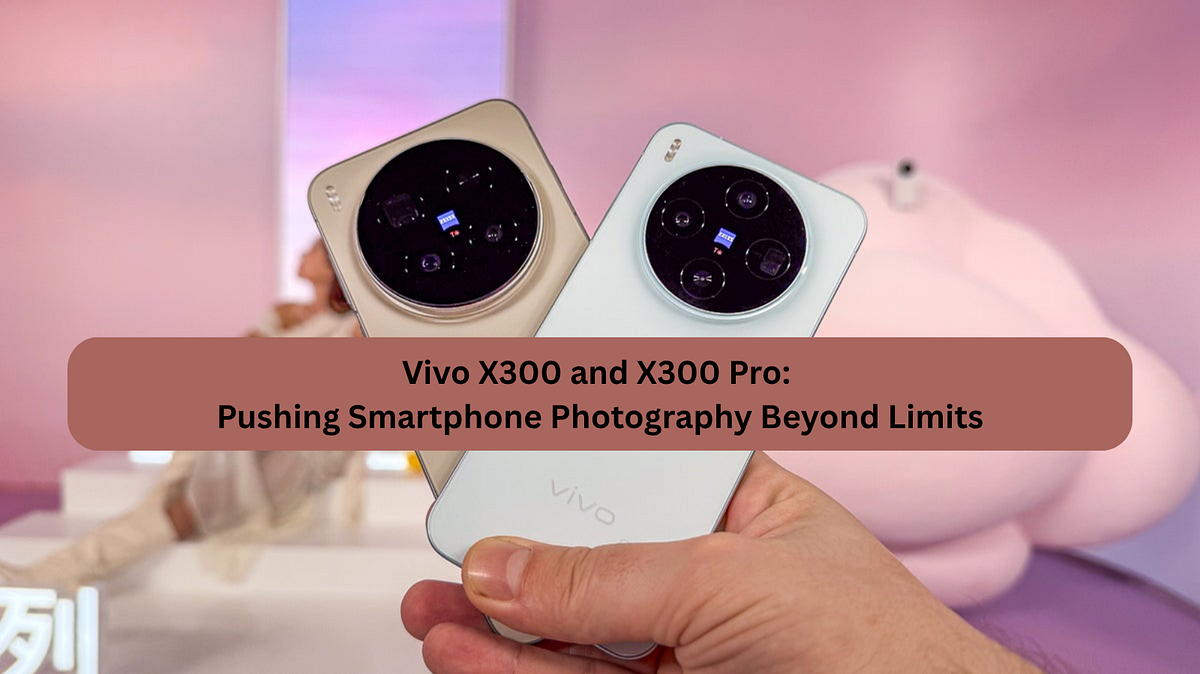
Vivo X300 and X300 Pro: Pushing Smartphone Photography Beyond Limits
Medium· 2025-10-14 06:00
Core Insights - Vivo is launching its X300 and X300 Pro flagship smartphones, enhancing its reputation in smartphone innovation and photography [1][2] Camera Innovation - Both models feature a 200-megapixel HPB imaging sensor co-engineered with Samsung, with the X300 Pro utilizing it for a telephoto lens [3] - The main camera on the X300 Pro incorporates the Sony LYT-828 sensor for improved light capture and detail rendering [5] - Both devices support 4K, 120fps, and 10-bit Log video recording, positioning them as elite options for mobile photography [5] Telephoto Extender - The telephoto extender, a 2.35x optical add-on lens, is available for both models, enhancing long-distance photography capabilities [6][7] Design and Durability - Both models are slim (under 8mm thick) and have IP68 and IP69 ratings for durability [9] - The X300 Pro has a 6,510mAh battery, while the standard model has a 6,040mAh battery, showcasing Vivo's optimization in battery technology [9] Performance - The X300 series is powered by the MediaTek Dimensity 9500 chipset, competing with Qualcomm's Snapdragon 8 Elite Gen 5 [10] - Both models support 90W wired and 40W wireless charging for quick power replenishment [10] Data Transfer - Smart Transfer app facilitates seamless data transfer between devices, enhancing user experience [11][12][13] Pricing and Availability - The X300 is priced at approximately $620, while the X300 Pro is around $745, with the telephoto extender priced separately at $180 [14] Future Developments - An X300 Ultra is anticipated in early 2026, promising advanced features [15] Overall Experience - The X300 series exemplifies Vivo's commitment to combining design, engineering, and camera technology, creating a unique user experience [18]