
Wali瓦力顶升移动机器人U1500

Search documents
“过年表演节目,机器人也躲不过”
Huan Qiu Wang· 2026-02-16 02:21
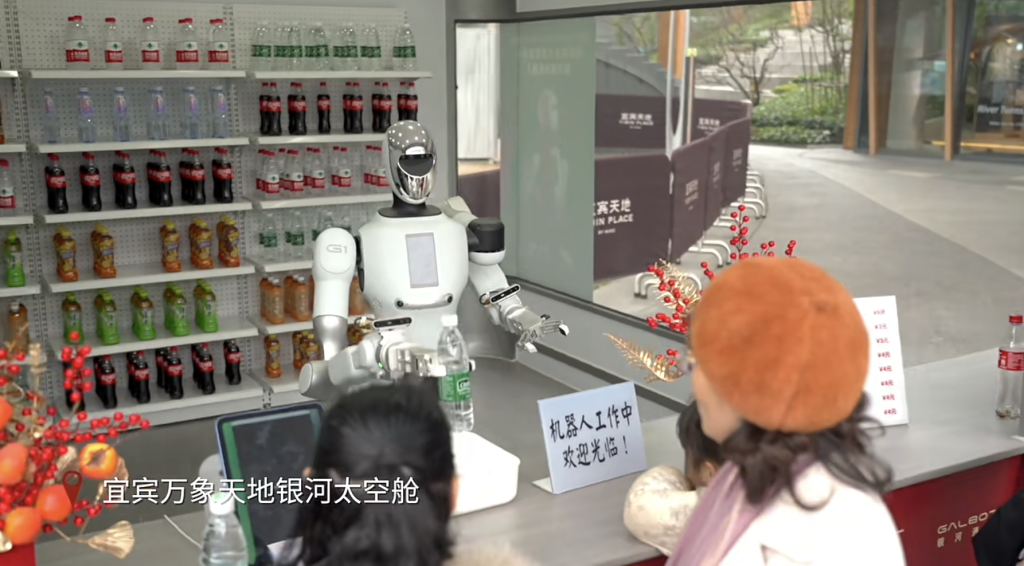
Core Viewpoint - The article highlights the increasing presence and capabilities of humanoid robots in various sectors, particularly during the 2026 Spring Festival, showcasing their evolution from mere performers to essential contributors in daily life and industry [2][14]. Group 1: Humanoid Robots in Performance - Humanoid robots will take center stage at the 2026 Spring Festival, with multiple domestic robot companies participating, showcasing advancements in technology and artistic expression [2][3]. - The performance will include robots like Yushu Technology's G1/H1, which will collaborate with dancers, and Magicbot Z1, which has demonstrated impressive acrobatic skills [3][5]. - The event will also feature robots from companies like Galaxy General, which will highlight their autonomous decision-making and collaboration capabilities in complex environments [3][5]. Group 2: Humanoid Robots in Daily Operations - Humanoid robots are increasingly being deployed in industrial settings, such as the collaboration between UBTECH's Walker S2 and Wali's U1500 for automated logistics [8][9]. - The production capacity of industrial humanoid robots is expected to reach 5,000 units by 2026, with plans to expand to 10,000 units by 2027, indicating a growing demand in sectors like automotive and smart manufacturing [9]. - The "Smart Cube" by Zhiyuan has been operational in various locations, demonstrating the ability to autonomously serve customers with high efficiency, further emphasizing the practical applications of humanoid robots [11]. Group 3: Industry Outlook - According to Dongwu Securities, the humanoid robot sector is expected to consolidate in 2026, with a focus on production certainty and new technologies aimed at improving efficiency and reducing costs [13]. - The anticipated mass production year for humanoid robots is 2026, driven by advancements in technology and supply chain optimization [13].


富士康新能源汽车项目官宣落地!优必选机器人“入职”,无人物流车同步下线
Jin Rong Jie· 2026-02-05 10:12
Group 1 - Foxconn's new energy vehicle R&D center officially commenced operations on February 4, marking a key milestone in the company's transition into the new energy vehicle era [1] - The R&D center is a core project of Foxconn's "3+3+3" strategy, which focuses on three future industries: electric vehicles, digital health, and robotics, alongside three core technologies: artificial intelligence, semiconductors, and next-generation mobile communications [1] - The center aims to create an "innovation engine" that integrates intelligence, automation, high quality, and efficiency, significantly shortening the production cycle of new vehicle models to 24 months [1] Group 2 - The Zhengzhou Airport Economic Zone's official stated that the R&D center's launch is a strategic foundation for Foxconn's deepening presence in Central China and a new milestone in cooperation with the airport zone [2] - Since the establishment of Foxconn's new energy vehicle trial production center in the airport zone in 2024, the company has accelerated the transition from R&D to mass production, with an expected output of 558,000 new energy vehicles by 2025 [2] - The launch of the R&D center coincided with the first batch of production validation test (PVT) vehicles from UQI's autonomous logistics vehicle, Chitu, marking a significant step in the production process [2] Group 3 - During the production of Chitu, UQI integrated embodied intelligence into its operations, creating a "self-manufacturing closed loop" for automotive-grade production lines [3] - The production process utilized a cluster scheduling system with robots, enabling a fully automated material transfer system that enhances stability and flexibility in logistics [3] - The PVT phase is crucial for validating the vehicle's mass production capabilities, ensuring consistency, stability, and traceability in manufacturing processes [3]