Whisper Flow

Search documents
在参与OpenAI、Google、Amazon的50个AI项目后,他们总结出了大多数AI产品失败的原因
3 6 Ke· 2026-02-09 06:57
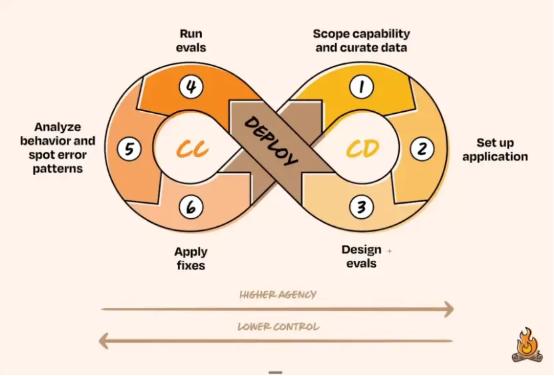
Core Insights - The cost of building AI products has significantly decreased, but the real challenge lies in product design and understanding the pain points to be addressed [1][2][3] - AI is a tool for solving problems, and leaders must engage directly to rebuild their judgment and adapt to new realities [2][3] - Retaining a degree of "foolish courage" is essential in an era where data suggests high failure rates [3] AI Product Development Challenges - Skepticism towards AI has decreased, but many leaders still view it as a potential bubble, delaying genuine investment [4] - Successful AI product development requires a thorough understanding of user experience and business processes, often necessitating a complete overhaul of existing workflows [4] - The lifecycle of AI products differs from traditional software, leading to a need for closer collaboration among PMs, engineers, and data teams [4][5] Key Differences in AI Product Construction - AI systems operate with a level of non-determinism that traditional software does not, complicating user interactions and outputs [5][6] - The balance between agency and control is crucial; higher autonomy in AI systems requires a foundation of trust built over time [6][7] - Starting with low autonomy and high control allows for gradual understanding and confidence in AI capabilities [7][8] Successful AI Product Patterns - Successful companies exhibit strong leadership, a healthy culture, and ongoing technical capabilities [14][15][16] - Leaders must acknowledge the need to relearn and adapt their intuition in the context of AI [14] - A culture that empowers employees and emphasizes AI as a tool for enhancement rather than a threat is vital for success [15] Continuous Calibration and Development Framework - The CC/CD framework emphasizes continuous improvement and understanding user behavior while maintaining user trust [25][28] - Initial stages should focus on low autonomy and high control to mitigate risks and build confidence in the system [28][29] - The framework encourages iterative processes to adapt to new user behaviors and system capabilities [32][34] Future of AI - The potential of Coding Agents remains underestimated, with significant value expected to be unlocked in the coming years [35] - The integration of AI into real workflows will enhance its contextual understanding and proactive capabilities [38] - A shift towards multi-modal experiences is anticipated, allowing for richer interactions and unlocking previously inaccessible data [39] Skills for AI Product Builders - The ability to focus on problem-solving and understanding workflows is becoming increasingly important as implementation costs decrease [40][42] - Proactive engagement and a willingness to iterate through trial and error are essential for success in AI product development [41][42]



AI Tools I can't Live Without!
20VC with Harry Stebbings· 2026-01-28 19:00
Yeah, you know the one that I actually love, I use Whisper Flow all the time. I don't know if you've seen this now. I found it on Twitter and it's insane.Basically, you press a button, you speak your emails, and it perfectly dictates them. Like, it breaks it down into bullet points, into numbers. I've tweeted before, I don't know if you've seen this, but I've tweeted before that I get my phone nicked in London.London, by the way, is the best place ever. You feel so generous because every week I donate a pho ...

下一代 AI 交互,会长成什么样子?| 42章经 AI Newsletter
42章经· 2025-12-11 13:31
Group 1 - The core idea of the article revolves around the evolution of software interaction, emphasizing that the biggest opportunities for startups lie in designing different interaction methods [2] - Personalized software is gaining traction, with the notion that the future of software will resemble a "YouTube for apps," allowing users to create mini apps tailored to specific needs [4][5] - The shift from traditional software development to a model where anyone can create applications reflects a broader democratization of software, moving from 20 million developers to 8 billion creators [6][10] Group 2 - The article discusses the limitations of independent Vibe Coding, highlighting three critical issues: trust and stability, integration capabilities, and distribution and collaboration [10][11][13] - A platform like Wabi is proposed as a solution to these issues, providing a trusted environment for app creation, integrating various APIs, and fostering social interaction among users [10][11][13] - The future of personal software is envisioned as a "personal memory manager" that consolidates data across different applications, enhancing user experience and personalization [21] Group 3 - The article suggests that the emergence of mini apps will lead to new go-to-market (GTM) strategies, where software becomes a form of content, allowing creators to monetize through app distribution rather than traditional methods [23][24] - Mini apps are expected to act as community starters, bringing together users with shared interests and facilitating offline activities and content co-creation [26][27] - The concept of Wabi is likened to a "Prompt container platform," aiming to provide a user-friendly interface for managing and sharing prompts, thus enhancing the user experience [28][33] Group 4 - The article highlights the potential of AI voice input methods evolving into a "voice operating system," which could significantly reduce cognitive load and enhance user interaction with AI [39][40] - The evolution of input methods is seen as a way to transition from passive recording to active expression, allowing users to communicate more naturally and effectively with AI [44] - The future of input methods may involve them becoming the primary interface for interaction with software, capturing user context and preferences to provide tailored responses [52] Group 5 - The article identifies recent advancements in AI interaction design, emphasizing the need for improved user interfaces that enhance trust and engagement [54][56] - New interaction paradigms, such as parameter sliders and reverse onboarding, are proposed to make AI tools more user-friendly and intuitive [57][65] - The importance of narrative design in AI products is discussed, suggesting that framing AI capabilities in relatable terms can improve user retention and satisfaction [81][82] Group 6 - The article concludes with insights on the future of product design, advocating for a systems-thinking approach that accommodates user preferences and allows for continuous evolution [95][101] - The analogy of software as a building is presented, emphasizing the need for adaptable structures that can evolve over time based on user needs and interactions [96][100] - The discussion highlights the importance of creating resilient systems that can balance innovation with stability, ensuring long-term viability in a rapidly changing environment [107][110]