人在回路

Search documents
在参与OpenAI、Google、Amazon的50个AI项目后,他们总结出了大多数AI产品失败的原因
3 6 Ke· 2026-02-09 06:57
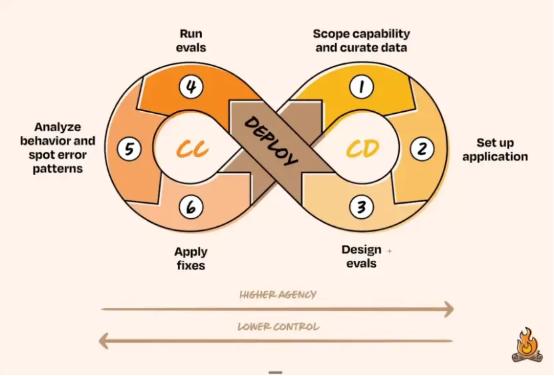
Core Insights - The cost of building AI products has significantly decreased, but the real challenge lies in product design and understanding the pain points to be addressed [1][2][3] - AI is a tool for solving problems, and leaders must engage directly to rebuild their judgment and adapt to new realities [2][3] - Retaining a degree of "foolish courage" is essential in an era where data suggests high failure rates [3] AI Product Development Challenges - Skepticism towards AI has decreased, but many leaders still view it as a potential bubble, delaying genuine investment [4] - Successful AI product development requires a thorough understanding of user experience and business processes, often necessitating a complete overhaul of existing workflows [4] - The lifecycle of AI products differs from traditional software, leading to a need for closer collaboration among PMs, engineers, and data teams [4][5] Key Differences in AI Product Construction - AI systems operate with a level of non-determinism that traditional software does not, complicating user interactions and outputs [5][6] - The balance between agency and control is crucial; higher autonomy in AI systems requires a foundation of trust built over time [6][7] - Starting with low autonomy and high control allows for gradual understanding and confidence in AI capabilities [7][8] Successful AI Product Patterns - Successful companies exhibit strong leadership, a healthy culture, and ongoing technical capabilities [14][15][16] - Leaders must acknowledge the need to relearn and adapt their intuition in the context of AI [14] - A culture that empowers employees and emphasizes AI as a tool for enhancement rather than a threat is vital for success [15] Continuous Calibration and Development Framework - The CC/CD framework emphasizes continuous improvement and understanding user behavior while maintaining user trust [25][28] - Initial stages should focus on low autonomy and high control to mitigate risks and build confidence in the system [28][29] - The framework encourages iterative processes to adapt to new user behaviors and system capabilities [32][34] Future of AI - The potential of Coding Agents remains underestimated, with significant value expected to be unlocked in the coming years [35] - The integration of AI into real workflows will enhance its contextual understanding and proactive capabilities [38] - A shift towards multi-modal experiences is anticipated, allowing for richer interactions and unlocking previously inaccessible data [39] Skills for AI Product Builders - The ability to focus on problem-solving and understanding workflows is becoming increasingly important as implementation costs decrease [40][42] - Proactive engagement and a willingness to iterate through trial and error are essential for success in AI product development [41][42]



周鸿祎:现阶段智能体竞争的唯一护城河是执行力
Tai Mei Ti A P P· 2025-08-06 11:42
Core Insights - The rapid evolution of AI agents leads to a very short product lead time, with companies needing to focus on execution and adaptability to stay competitive [2] - The concept of "Swarm L4" categorizes AI agents into five levels, with increasing complexity and application value as the level rises [3] - Single AI agents face significant limitations in task execution, while multi-agent swarm collaboration shows a high success rate and efficiency in completing complex tasks [5] Group 1: AI Agent Development - The competitive edge in the AI agent industry lies in the ability to quickly iterate and update products, rather than just launching them [2] - The "Swarm L4" framework indicates that higher-level agents can handle more complex projects, enhancing their task processing capabilities [3] Group 2: Multi-Agent Collaboration - Multi-agent systems can execute up to 1000 steps with a success rate of 95.4%, showcasing their effectiveness in complex task execution [5] - Challenges in multi-agent collaboration include task allocation and communication costs, but the benefits outweigh these difficulties [5] Group 3: Human-Machine Collaboration - The "human-in-the-loop" principle emphasizes the importance of user oversight in AI operations, allowing for decision-making and risk reduction [6] - The unpredictability of AI outputs necessitates a collaborative approach where humans guide AI execution, enhancing overall efficiency [6] Group 4: Specialized vs. General AI Agents - Specialized AI agents focusing on single domains are more effective than general-purpose agents, which struggle to excel in multiple areas [7][8] - General AI agents are suitable for repetitive tasks, while specialized agents provide more precise and efficient services for creative tasks [8] Group 5: Cybersecurity Challenges - The rise of AI agents introduces new cybersecurity threats, with the emergence of "super hackers" capable of automating attacks using AI [9] - Companies are encouraged to deploy security AI agents to counteract these threats, acting as digital counterparts to human security experts [9][10] Group 6: 360's AI Initiatives - 360 is advancing its entire product line towards AI integration, with the "AI Factory" enabling customized security AI agents for various scenarios [10] - Data shows that security AI agents significantly outperform traditional human services in threat detection and operational efficiency [10]