X86 CPU

Search documents
上任仅6个月!华裔CEO拯救英特尔
汽车商业评论· 2025-10-24 23:07
Core Viewpoint - Intel has reported a significant turnaround in its financial performance, achieving a net income of $4.1 billion in Q3, compared to a loss of $16.6 billion in the same period last year, breaking a 35-year streak of consecutive losses [4][11]. Financial Performance - Intel's Q3 revenue reached $12.7 billion, showing a modest year-on-year growth of 3% [11]. - The company forecasts Q4 revenue to be between $12.8 billion and $13.8 billion [5]. - Intel's stock price surged nearly 8% in after-hours trading, reflecting a year-to-date increase of nearly 90% [5]. Strategic Partnerships and Investments - The U.S. government has converted approximately $9 billion in federal funding into a 10% equity stake in Intel, becoming the largest shareholder [7]. - Nvidia announced a $5 billion investment in Intel, aimed at integrating Intel's X86 CPUs with Nvidia's AI GPUs [7]. - SoftBank's $2 billion investment was successfully received by Intel in Q3, enhancing its financial stability [7]. Asset Optimization - Intel is actively divesting non-core assets, including a 51% stake in Altera and shares in Mobileye, to focus resources on its main business [8]. - The company has implemented a significant reduction in workforce, with plans to cut approximately 15% of its employees, reducing the total from 88,400 to about 75,000 [13]. Leadership Changes - CEO Lip-Bu Tan has emphasized the importance of improving operational efficiency and has initiated a series of reforms since taking office [5][12]. - Tan's previous experience in venture capital and his connections in the semiconductor industry are seen as assets for Intel's recovery [12]. Challenges Ahead - Intel's data center CPU sales declined by 1% year-on-year, indicating challenges in meeting market demand due to supply constraints [16]. - The company faces significant hurdles in expanding its foundry business, requiring an investment of $100 billion and overcoming the lack of major external customers [18]. - The yield rates for Intel's 18A process technology are currently below acceptable levels, potentially delaying profitability until 2027 [18].



坚决将X86推向嵌入式,AMD再发新品
半导体芯闻· 2025-03-26 10:35
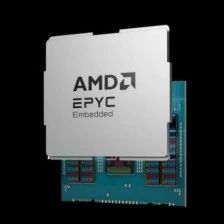
Core Viewpoint - AMD is expanding its presence in the embedded x86 market with the launch of the fifth-generation AMD EPYC embedded processor "Embedded Turin," which aims to deliver leading computing performance tailored for embedded applications [1][12]. Group 1: Embedded Market Expansion - AMD has made significant investments in the embedded x86 market over the past few years, with plans to continue product launches to enhance its embedded product portfolio [3]. - The embedded systems are characterized by their specific functions and real-time computing capabilities, often integrated into mechanical or electrical systems [5]. - The demand for embedded solutions is increasing across various sectors, including automotive, industrial, medical, scientific research, testing, data center infrastructure, and communication networks [6]. Group 2: Market Trends and Requirements - The growth in artificial intelligence, workload demands, and data explosion is driving the need for high throughput, low latency, and energy-efficient data processing technologies [9]. - There is a rising demand for data storage solutions that not only focus on scalability but also on real-time data analysis and computation [9]. - The industrial edge is experiencing explosive growth in computing needs, necessitating real-time data processing for smart manufacturing and automation [10]. Group 3: Features of "Embedded Turin" - "Embedded Turin" is built on AMD's "Zen 5" architecture and is optimized for embedded applications, offering high throughput, core density, and energy efficiency [12][17]. - The product is designed to be a trusted platform, having undergone customer validation and providing a stable architecture with strong ecosystem support [15]. - It includes enhanced embedded functionalities such as extended product lifecycle support of seven years, improved system resilience, and simplified application development processes [19][21]. Group 4: Security and Development Support - "Embedded Turin" features enhanced security measures, including trusted I/O and expanded trusted boundaries for secure access to private memory [19]. - The product supports frameworks like Yocto for custom Linux configurations and DPDK/SPDK for improved system performance, facilitating easier application development [22]. - AMD aims to provide quarterly updates to ensure a stable and supportive foundation for developers, reducing integration risks and accelerating time-to-market for applications [22]. Group 5: Future Outlook - AMD plans to continue enhancing the performance of the "Embedded Turin" series to provide more support for embedded applications in the future [23].