嵌入式系统

Search documents
STMicroelectronics' new STM32 series redefines entry-level microcontroller performance and value for smart devices everywhere
Globenewswire· 2026-03-05 07:00
Core Insights - STMicroelectronics has launched a new generation of entry-level microcontrollers, the STM32C5 series, aimed at enhancing the performance of smart devices across various applications while addressing cost, size, and power constraints [1][3]. Product Overview - The STM32C5 series targets a wide range of consumer and professional devices, including smart thermostats, electronic door locks, industrial sensors, robotic actuators, wearables, and computer peripherals [2]. - The new microcontrollers leverage ST's proprietary 40nm manufacturing process, allowing for faster task execution compared to existing entry-level chips, thus enabling modern features like improved sensing and user experiences while maintaining low power consumption [4]. Security Features - The STM32C5 MCUs come with built-in protections against tampering and cyber risks, supporting safer connected devices, which is increasingly important in both consumer and industrial markets [5][13]. Development Ecosystem - Users can benefit from an upgraded STM32Cube environment, which includes size-optimized drivers, enhanced code generation tools, and production-ready software examples, aimed at accelerating development and maximizing product capabilities [6][15]. - The STM32C5 series supports a comprehensive ecosystem that enhances end-device capabilities and reduces time to market, including new development tools and libraries for faster prototyping [18]. Technical Specifications - The STM32C5 MCUs utilize the Arm Cortex-M33 processor, providing advanced performance and efficiency, with on-chip Flash memory ranging from 128Kbyte to 1Mbyte, making it suitable for sophisticated applications [11][12]. - The devices are designed for demanding industrial environments, supporting a wide temperature range from -40°C to 125°C, and comply with industrial safety standards [14]. Market Positioning - STM32C5 MCUs are entering production with package sizes ranging from 3mm x 3mm to 20mm x 20mm, with pricing starting at $0.64 for bulk orders of 10,000 units, positioning them competitively in the market [9].



STMicroelectronics’ new STM32 series redefines entry-level microcontroller performance and value for smart devices everywhere
Globenewswire· 2026-03-05 07:00
Core Insights - STMicroelectronics has launched a new generation of entry-level microcontrollers, the STM32C5 series, aimed at enhancing the performance of smart devices across various applications while addressing cost, size, and power constraints [1][2]. Product Features - The STM32C5 series targets consumer and professional devices, including smart thermostats, electronic door locks, industrial sensors, robotic actuators, wearables, and computer peripherals [2]. - The new MCUs leverage ST's proprietary 40nm manufacturing process, allowing for faster task execution compared to existing entry-level chips, enabling modern features like improved sensing and user experiences while maintaining low power consumption [4]. - Built-in security features in the STM32C5 MCUs protect against tampering and cyber risks, addressing the growing demand for safer connected devices in both consumer and industrial markets [5][12]. Development Ecosystem - The STM32C5 series is supported by an upgraded STM32Cube environment, which includes optimized drivers, enhanced code generation tools, and production-ready software examples to facilitate faster and more efficient development [6][17]. - New tools such as STM32 HAL2 are designed to streamline development processes, making it easier to port code across different STM32 MCUs [18][21]. Technical Specifications - The STM32C5 MCUs utilize the advanced Arm Cortex-M33 processor, providing improved performance and efficiency, with on-chip Flash memory starting from 128Kbyte and scaling up to 1Mbyte [10][11]. - The devices are designed for industrial applications, supporting a wide temperature range from -40°C to 125°C, and comply with safety standards such as IEC 61508 SIL-2 [13]. Market Positioning - STM32C5 MCUs are entering production with package sizes ranging from 3mm x 3mm to 20mm x 20mm, with pricing starting at $0.64 for bulk orders of 10,000 units, positioning them competitively in the market [9].
AMD的第三大支柱
半导体芯闻· 2026-01-06 10:30
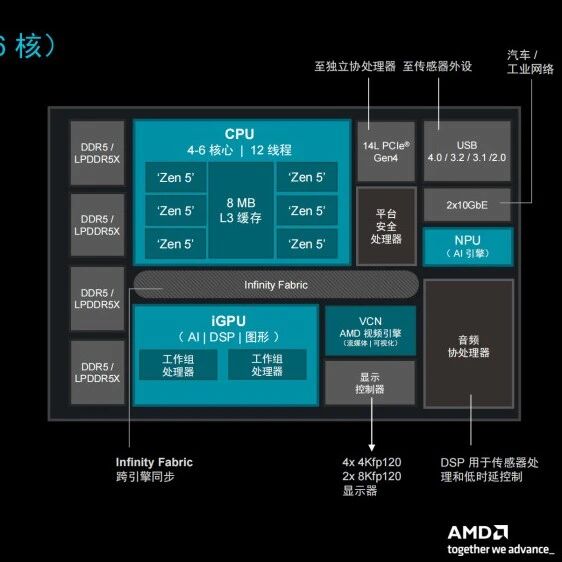
Core Viewpoint - AMD has achieved impressive financial results in Q3 2025, with GAAP revenue exceeding Wall Street expectations at $9.2 billion, driven by strong demand for high-performance computing products. Net profit increased by 61% year-over-year to $1.2 billion, with a gross margin of 52% due to a diverse product portfolio [1]. Group 1: Embedded Market Demand - The embedded systems market is evolving, with increasing demand for high-performance microprocessors driven by changes in end-user requirements, particularly due to the rise of artificial intelligence [3][5]. - AMD's CEO highlighted that active AI users surged from 1 million to 1 billion since the launch of ChatGPT, with projections of 5 billion by 2030, necessitating a 100-fold increase in global computing power [3][5]. Group 2: Challenges in Embedded Systems - Embedded systems face common challenges such as real-time response, mixed workloads, and scalability. These systems must ensure reliability and low latency without relying on cloud services [6][7]. - The complexity of software in embedded systems is unprecedented, requiring high performance, higher frequency, and reliability in hardware [7]. Group 3: AMD's Embedded Processor Offerings - AMD has introduced the Ryzen Embedded processors and EPYC processors, gaining over 7,000 embedded customers. Key features include long product life cycles of at least ten years, strict thermal requirements, fault tolerance, and proprietary connections [9][10]. - The newly launched Ryzen AI Embedded P100 series features high-performance "Zen 5" cores, RDNA 3.5 GPU for real-time graphics, and XDNA 2 NPU for low-latency AI acceleration [12][14]. Group 4: Software and Development Environment - The P100 series offers a unified software stack that includes optimized CPU libraries, open-standard GPU APIs, and native AI runtime through Ryzen AI software, built on an open-source virtualization framework [17][19]. - This framework allows multiple operating systems to run securely in parallel, supporting various applications while reducing costs and accelerating production processes [20]. Group 5: Market Opportunities and Competitive Advantage - The rapidly growing edge AI market presents numerous opportunities, with increasing demand for high-performance AI capabilities, particularly in robotics [23]. - AMD's established roadmap in CPUs, GPUs, NPUs, and custom accelerators provides a competitive edge, allowing the company to integrate high-end products into its embedded offerings to support diverse applications [23].

趋势研判!2025年中国机载娱乐系统(IFE)行业全景分析:国内机载娱乐系统(IFE)虽起步较晚,但增势稳健,市场规模有望达到28.37亿元[图]
Chan Ye Xin Xi Wang· 2025-07-09 01:33
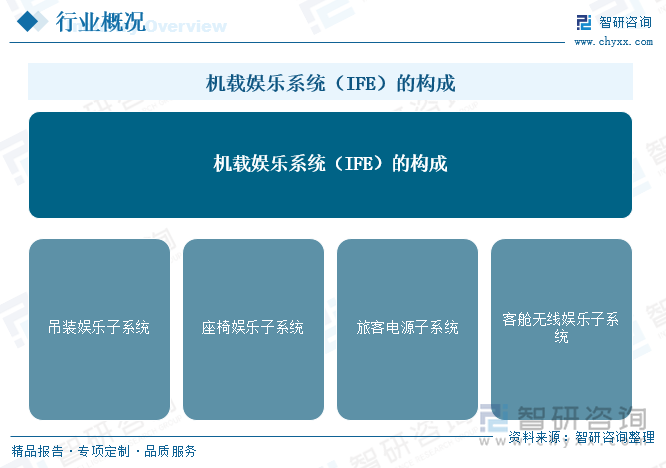
Core Insights - The in-flight entertainment system (IFE) is becoming a new value growth point in the aviation industry, driven by advancements in wireless and network technologies, with increasing demand from passengers for information services [1][6][17] - The global IFE market is projected to reach approximately $4 billion in 2024 and $5.238 billion in 2025, while China's IFE market is expected to grow from 1.727 billion yuan in 2024 to 2.837 billion yuan in 2025 [1][8][6] Industry Definition - IFE refers to cabin entertainment equipment designed for passenger leisure, providing services such as music, movies, and flight map access [2] - The system consists of various subsystems, including overhead entertainment, seat entertainment, passenger power, and cabin wireless entertainment [2] Current Industry Status - The IFE market has seen a decline from approximately $4.576 billion in 2017 to $2.191 billion in 2020 due to the pandemic, but is gradually recovering [6] - China's IFE market, although starting late, is experiencing steady growth, with a market size of 1.727 billion yuan in 2024, an increase of 408 million yuan from 2023 [8] Industry Chain - The IFE industry chain includes upstream components like display and audio devices, software, satellite communication, and content platforms; midstream involves integration and manufacturing; downstream is primarily focused on airlines and passengers [10] Competitive Landscape - The IFE market is dominated by major players such as Panasonic Avionics, Thales, Rockwell Collins, and Honeywell, with Panasonic and Thales holding the largest market shares [15] - Emerging systems and portable devices are diversifying the market, with key Chinese players including China Electronics Technology Group, Donica, and Feitian United [15][16] Development Trends - The importance of IFE is increasing due to diverse passenger demands, with future developments focusing on reducing system weight and power consumption while enhancing passenger comfort [17] - Integration with portable electronic devices and the introduction of AR, VR, and other technologies are expected to enhance the in-flight experience [17]
坚决将X86推向嵌入式,AMD再发新品
半导体芯闻· 2025-03-26 10:35
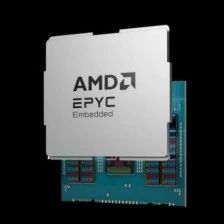
Core Viewpoint - AMD is expanding its presence in the embedded x86 market with the launch of the fifth-generation AMD EPYC embedded processor "Embedded Turin," which aims to deliver leading computing performance tailored for embedded applications [1][12]. Group 1: Embedded Market Expansion - AMD has made significant investments in the embedded x86 market over the past few years, with plans to continue product launches to enhance its embedded product portfolio [3]. - The embedded systems are characterized by their specific functions and real-time computing capabilities, often integrated into mechanical or electrical systems [5]. - The demand for embedded solutions is increasing across various sectors, including automotive, industrial, medical, scientific research, testing, data center infrastructure, and communication networks [6]. Group 2: Market Trends and Requirements - The growth in artificial intelligence, workload demands, and data explosion is driving the need for high throughput, low latency, and energy-efficient data processing technologies [9]. - There is a rising demand for data storage solutions that not only focus on scalability but also on real-time data analysis and computation [9]. - The industrial edge is experiencing explosive growth in computing needs, necessitating real-time data processing for smart manufacturing and automation [10]. Group 3: Features of "Embedded Turin" - "Embedded Turin" is built on AMD's "Zen 5" architecture and is optimized for embedded applications, offering high throughput, core density, and energy efficiency [12][17]. - The product is designed to be a trusted platform, having undergone customer validation and providing a stable architecture with strong ecosystem support [15]. - It includes enhanced embedded functionalities such as extended product lifecycle support of seven years, improved system resilience, and simplified application development processes [19][21]. Group 4: Security and Development Support - "Embedded Turin" features enhanced security measures, including trusted I/O and expanded trusted boundaries for secure access to private memory [19]. - The product supports frameworks like Yocto for custom Linux configurations and DPDK/SPDK for improved system performance, facilitating easier application development [22]. - AMD aims to provide quarterly updates to ensure a stable and supportive foundation for developers, reducing integration risks and accelerating time-to-market for applications [22]. Group 5: Future Outlook - AMD plans to continue enhancing the performance of the "Embedded Turin" series to provide more support for embedded applications in the future [23].