
Xclipse GPU

Search documents
三星电子加速GPU自主化布局,2027年Exynos芯片将搭载自研图形IP
Huan Qiu Wang· 2025-12-26 03:11
Core Insights - Samsung Electronics is advancing its self-developed graphics processing unit (GPU) with a target to integrate its proprietary graphics IP into the Exynos 2800 application processor by 2027, marking a significant step in its core chip technology autonomy [1][3] Group 1: Development Strategy - The current mid-to-high-end mobile application processors utilize the Xclipse GPU, which is based on AMD's RDNA architecture. Transitioning to fully self-developed GPUs will reduce reliance on external partners and enhance Samsung's autonomy in GPU functionality upgrades and feature iterations [3] - Samsung's self-developed GPU will initially target smartphones and gradually expand into consumer electronics and smart devices such as smart glasses and robots, while also covering automotive system-on-chip (SoC) scenarios [3] Group 2: Market Expansion - The company plans to enter the artificial intelligence application-specific integrated circuit (AI ASIC) market, aiming to build a multi-domain, all-scenario technology application ecosystem [3]

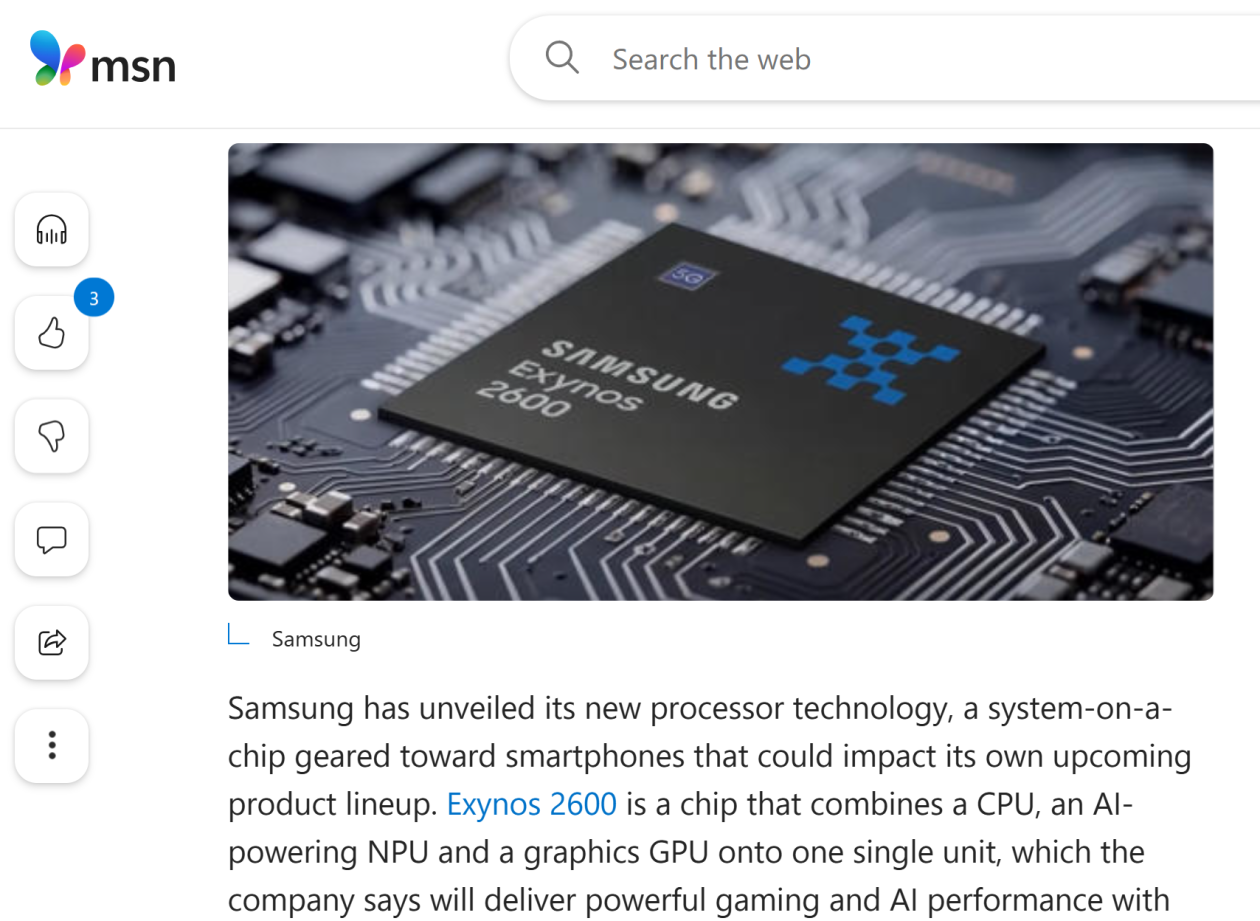
三星电子拟于2027年首次在应用处理器中搭载自研GPU,加速端侧AI布局
Hua Er Jie Jian Wen· 2025-12-25 13:06
Core Viewpoint - Samsung Electronics is advancing towards complete self-sufficiency in graphics processing units (GPUs), planning to integrate its own GPU in the Exynos 2800 chip set for release in 2027, marking a significant step in building an end-to-end AI ecosystem [1][2] Group 1: Self-Sufficiency and Product Development - Samsung aims to replace the current collaboration with AMD's RDNA architecture-based Xclipse GPU with its own developed graphics IP in the upcoming Exynos 2800 application processor [1] - This transition will reduce Samsung's reliance on external suppliers, providing greater autonomy in feature and functionality iterations [1][2] Group 2: Market Expansion and Strategic Goals - The company plans to extend the application of its self-developed GPU from smartphones to a broader range of devices, including smart glasses, robotics, automotive SoCs, and AI-specific chips [1][2] - This strategy is designed to establish a comprehensive edge AI product ecosystem [2]