
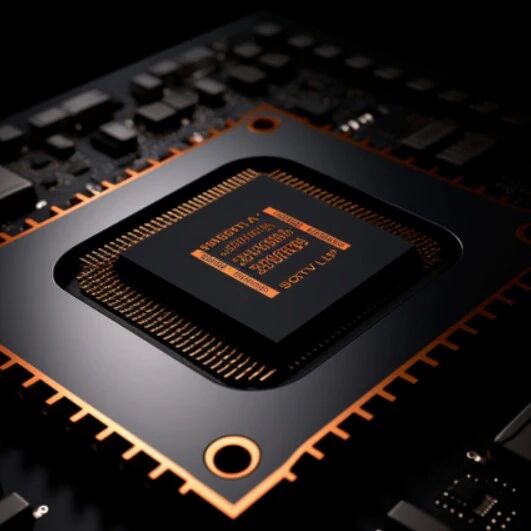
Exynos芯片

Search documents
OpenAI第一款硬件要来了,但可能“没那么AI”?
美股研究社· 2026-02-10 11:10
Core Viewpoint - OpenAI is facing challenges in launching its first consumer hardware device, the "Dime," due to rising BOM costs from the global storage chip crisis, leading to a downgrade from an independent device to a basic cloud-dependent headset [7][9]. Group 1: Product Development and Specifications - OpenAI's first consumer hardware, internally codenamed "Sweetpea" and named "Dime," was initially designed to feature a Samsung 2nm Exynos chip for advanced AI processing capabilities [8]. - Due to high costs of storage components, OpenAI is forced to downgrade the Dime to a simpler headset, which will primarily serve as a conduit for cloud-based AI models rather than a standalone AI computing device [8][9]. Group 2: Market Strategy and Production Plans - Despite the product's specification compromises, OpenAI is aggressively pursuing its hardware strategy, with executives prioritizing hardware projects [11]. - The company plans to officially launch the Dime in September 2026, with production likely handled by Foxconn in Vietnam, aiming for sales of 40 to 50 million units in the first year [11]. Group 3: Additional Consumer Devices - OpenAI is also developing a second consumer device, codenamed "Gumdrop," which will have a pen-like shape and no screen, focusing on environmental awareness and interaction [13]. - Key features of the Gumdrop include situational awareness through cameras and microphones, local AI model execution with cloud support, and the ability to convert handwritten notes to text for ChatGPT [15].


OpenAI第一款硬件要来了,但可能“没那么AI”?
硬AI· 2026-02-08 06:18
Core Viewpoint - OpenAI's first consumer device, originally intended to be a standalone smart headset, is likely to be downgraded to a cloud-dependent "basic headset" due to soaring BOM costs driven by the global storage chip crisis [2][3]. Group 1: Product Development and Specifications - OpenAI's first hardware, internally codenamed "Sweetpea" and named "Dime" for consumers, was initially designed to feature a Samsung 2nm Exynos chip, providing smartphone-like computing capabilities for complex edge AI processing [5][6]. - Due to high prices of storage components, OpenAI is forced to adjust its strategy, potentially stripping the device of its high-performance attributes and reverting to a simpler headset form [6]. Group 2: Market Strategy and Production Plans - Despite the product's compromised definition, OpenAI is aggressively pursuing its hardware agenda, with executives prioritizing it as a top project [8]. - The product is expected to launch in September 2026, likely manufactured by Foxconn in Vietnam, with a sales target of 40 to 50 million units in the first year [8]. Group 3: Future Product Development - In addition to the headset, OpenAI is developing a second consumer device codenamed "Gumdrop," which resembles a pen or an Apple iPod Shuffle, featuring a no-screen design focused on environmental awareness and interaction [10]. - Key functionalities of "Gumdrop" include real-time conversion of handwritten notes to text for ChatGPT, situational awareness through camera and microphone, and the ability to run local AI models supported by cloud computing [10].

OpenAI第一款硬件要来了,但可能“没那么AI”?
Hua Er Jie Jian Wen· 2026-02-08 03:30
Group 1 - OpenAI is attempting to extend its influence in the hardware sector after establishing dominance in the generative AI software field, but its first consumer device is facing a "spec downgrade" due to rising BOM costs from a global storage chip crisis [1][2] - The first hardware, internally codenamed "Sweetpea" and named "Dime" for consumers, was originally designed to feature a Samsung 2nm Exynos chip for independent computing capabilities, but this plan is being compromised due to supply chain cost issues [2] - OpenAI is now expected to release a simpler version of the Dime, which will likely serve as a cloud-based "basic headset" rather than a portable AI computing center [2] Group 2 - Despite the product definition challenges, OpenAI is aggressively pursuing its hardware initiatives, with executives prioritizing hardware as a top project [3] - The Dime is projected to be officially launched in September 2026, potentially manufactured by Foxconn in Vietnam, with a sales target of 40 to 50 million units in the first year [3] - OpenAI is also developing a second consumer device codenamed "Gumdrop," which will feature a pen-like design without a screen, focusing on environmental awareness and interaction [4] Group 3 - The core functionalities of the Gumdrop include context awareness through cameras and microphones, running local AI models with cloud support, converting handwritten notes to text for ChatGPT, and enabling device-to-device communication similar to smartphones [5]
华尔街点评台积电财报:资本支出、利润率指引过于“炸裂”,任何希望回调的人都会失望
华尔街见闻· 2026-01-16 01:42
Core Viewpoint - TSMC's latest financial report significantly exceeded expectations, showcasing strong performance with a gross margin surpassing 60% for the first time and a net profit of $16 billion, which was above analyst forecasts [1][3]. Financial Performance - TSMC achieved a gross margin of 62.3% in Q4, exceeding the previous guidance of 59%-61% and market expectations of 60.8%. The operating profit margin reached 54%, also surpassing the market's 51% forecast [5]. - The company raised its Q1 gross margin guidance to 63%-65%, significantly higher than Bank of America Merrill Lynch's estimate of 60.9% and the market's general expectation of 60.0% [5]. - TSMC has increased its long-term structural gross margin target from "53% and above" to "56% and above," driven by improved pricing power and operational efficiency [5]. Capital Expenditure and Growth Outlook - TSMC raised its 2026 capital expenditure guidance to $52-56 billion, nearly 40% higher than previous expectations of $45-46 billion, signaling a strong commitment to the AI chip sector [2][4]. - The company expects a compound annual growth rate (CAGR) of 25% for revenue from 2024 to 2029, up from the previous estimate of 20%. The revenue CAGR for AI accelerator business is projected to rise from "mid-40%" to "mid-50%" [4]. - TSMC anticipates nearly 30% year-over-year revenue growth in 2026, exceeding the market's prior expectation of a 20% mid-range growth rate [4]. Market Position and Industry Impact - TSMC's strong performance and capital expenditure outlook are expected to benefit the Asian semiconductor equipment sector, with companies like Tokyo Electron and Advantest anticipated to see significant gains [8]. - The company is viewed as a critical capacity bottleneck in the AI industry, and its increased capital investment signals a positive outlook for the semiconductor and AI sectors [9]. - TSMC's leadership in advanced process technology and its strategic shift towards advanced packaging are contributing to stable and sustainable capacity utilization levels [6].

华尔街点评台积电财报:资本支出、利润率指引过于“炸裂”,任何希望回调的人都会失望
Hua Er Jie Jian Wen· 2026-01-15 15:41
Core Viewpoint - TSMC's latest earnings report significantly exceeded expectations, showcasing a strong performance with a gross margin surpassing 60% for the first time and a net profit of $16 billion, indicating robust demand for advanced process technologies driven by AI chip production [1][2]. Group 1: Capital Expenditure - TSMC raised its 2026 capital expenditure guidance to $52-56 billion, exceeding both sell-side and buy-side analyst expectations [2]. - The company indicated that capital investments over the next three years will be "significantly higher," reducing market concerns about potential spending pullbacks [2]. - TSMC adjusted its revenue CAGR forecast for 2024-2029 from 20% to 25%, and increased the CAGR for its AI accelerator business from the mid-40s to the mid-50s [2]. Group 2: Profitability and Margin Improvement - TSMC's Q4 gross margin reached 62.3%, surpassing previous guidance and market expectations [3]. - The operating profit margin for the quarter was 54%, exceeding market predictions [3]. - The company raised its Q1 gross margin guidance to 63-65%, significantly above analyst estimates [3]. - TSMC's long-term structural gross margin target was increased from "53% and above" to "56% and above," driven by improved pricing power and operational efficiency [3]. Group 3: Semiconductor Equipment Sector Impact - TSMC's capital expenditure outlook is expected to benefit the Asian semiconductor equipment sector, with companies like Tokyo Electron and Advantest anticipated to see strong growth [4]. - The demand for DRAM storage chips is rapidly increasing, prompting companies like SK Hynix to accelerate new factory operations [5]. Group 4: Analyst Ratings and Market Sentiment - JPMorgan maintained an "overweight" rating on TSMC with a target price of 2,100 TWD, based on a 20x P/E ratio for 2027 [5]. - Bank of America also maintained a "buy" rating with a target price of 2,150 TWD, citing TSMC's position in a high-growth and profit-expanding cycle driven by ongoing AI investments [5]. - Analysts view TSMC as a critical capacity bottleneck in the AI supply chain, and the recent increase in capital expenditure guidance is seen as a positive signal for the semiconductor and AI sectors [5].
三星电子拟于2027年首次在应用处理器中搭载自研GPU,加速端侧AI布局
Hua Er Jie Jian Wen· 2025-12-25 13:06
Core Viewpoint - Samsung Electronics is advancing towards complete self-sufficiency in graphics processing units (GPUs), planning to integrate its own GPU in the Exynos 2800 chip set for release in 2027, marking a significant step in building an end-to-end AI ecosystem [1][2] Group 1: Self-Sufficiency and Product Development - Samsung aims to replace the current collaboration with AMD's RDNA architecture-based Xclipse GPU with its own developed graphics IP in the upcoming Exynos 2800 application processor [1] - This transition will reduce Samsung's reliance on external suppliers, providing greater autonomy in feature and functionality iterations [1][2] Group 2: Market Expansion and Strategic Goals - The company plans to extend the application of its self-developed GPU from smartphones to a broader range of devices, including smart glasses, robotics, automotive SoCs, and AI-specific chips [1][2] - This strategy is designed to establish a comprehensive edge AI product ecosystem [2]