Zotero

Search documents
刚刚,OpenAI发布「科研写作神器」Prism,Overleaf危
机器之心· 2026-01-28 03:36
Core Viewpoint - OpenAI has launched Prism, an AI-native collaboration platform designed specifically for scientists, powered by the advanced GPT-5.2 model, aiming to enhance writing and collaboration efficiency in scientific research [1][14]. Group 1: Platform Features - Prism is now available for free to all users with a ChatGPT personal account, with no limits on project numbers or collaboration participants [3]. - The platform integrates with Zotero, enhancing its functionality for researchers [4]. - Prism's interface is similar to Overleaf, which has raised concerns about competition in the scientific writing tool market [6]. - Users have reported that Prism's features effectively cover those of Overleaf, with some considering using it for their next articles [9]. Group 2: AI Integration and Functionality - As an AI-native workspace, Prism integrates initial draft writing, editing, team collaboration, and submission preparation into a unified cloud-based LaTeX environment [19]. - GPT-5.2 is embedded within the project core, allowing it to understand the structure of papers, mathematical formulas, references, and overall context [19]. - Prism is built on the existing cloud-based LaTeX platform Crixet, which OpenAI acquired and enhanced to create this unified product [19]. - Key functionalities include: - Engaging in deep conversations with GPT-5.2 to inspire ideas and validate scientific hypotheses [19]. - Writing and revising papers based on the full context, including text, formulas, references, and logical structure [19]. - Integrating relevant literature from platforms like arXiv into the current context [19]. - Handling formulas, citations, and figures across chapters, understanding their interconnections [19]. - Converting whiteboard formulas and figures into LaTeX, saving researchers significant time [19]. - Real-time collaboration with co-authors, students, and mentors, with all edits and comments synchronized [19]. - Directly modifying documents in situ without switching between editors and chat tools [19]. Group 3: Future Implications - The rapid evolution of AI technology is expected to bring significant transformations to the scientific field by 2026, with Prism being a step towards reducing the complexities of daily research tasks [14]. - There are discussions about whether research papers created using Prism should credit AI as a co-author, reflecting the growing role of AI in academic writing [20].


拒绝被大数据算法绑架,这是我的「信息筛选」原则
3 6 Ke· 2025-06-06 09:35
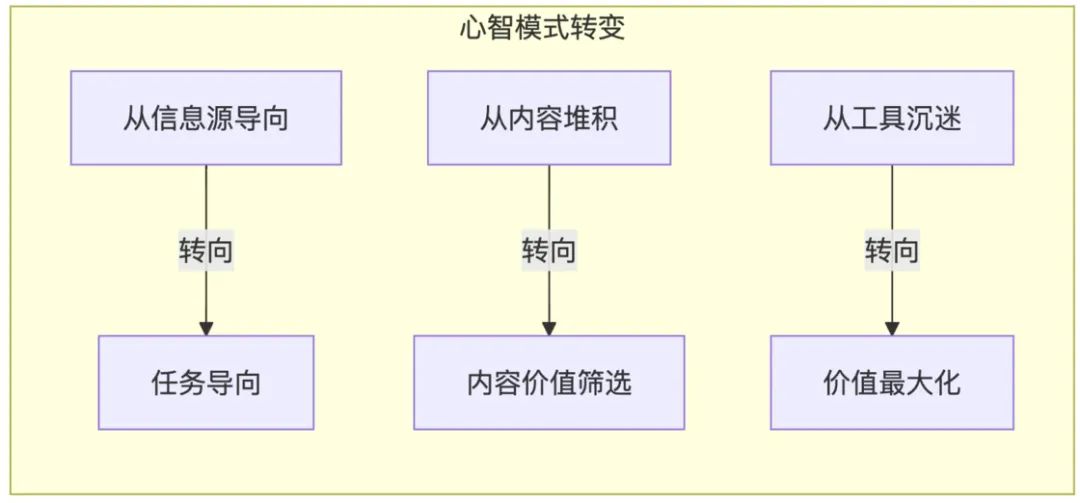
Core Insights - The article emphasizes that information anxiety arises not from a lack of knowledge but from an overwhelming abundance of information sources [1] - It advocates for a structured approach to information consumption, focusing on quality over quantity [1][3] Information Input System - A useful information input system should be based on personal goals and actively controlled, answering three key questions: what to follow, where the information comes from, and how to execute [3][7] - The first question helps avoid being led by trends, the second clarifies the sources of information, and the third relates to the ability to accumulate knowledge over time [3] Filtering Strategies - The first step in filtering information is selecting the right platforms, as different platforms have unique characteristics and content quality [4] - The second step involves choosing the right creators, focusing on those who provide depth, originality, and transparency in their work [10][11] - The third step is categorizing information based on its type, distinguishing between generalized and specialized information [13][14] Principles for Information Processing - The first principle is that content must be relevant to current goals, which helps in filtering out unnecessary information [18][19] - The second principle involves separating browsing and deep reading phases to maintain focus and efficiency [22][24] - The third principle is to use tools effectively without overcomplicating the process, ensuring that the focus remains on solving actual problems [25][26] Continuous Improvement - Building an information input system is an ongoing practice that requires regular updates and adjustments based on personal needs and the evolving information landscape [27]