Investopedia

Search documents
Tesla EV Sales Fall for Second Straight Year as Investors Shift Focus to New Growth Areas
Investopedia· 2026-01-02 17:26
Core Insights - Tesla experienced a disappointing year in electric vehicle sales, reporting 418,227 deliveries in Q4, a 16% decline year-over-year and below the consensus estimate of 422,850 [1] - The total vehicle deliveries for Tesla in 2025 were 1,636,129, which is 9% lower than the previous year, marking the company's second consecutive yearly decline [1] - BYD, a Chinese competitor, surpassed Tesla in 2025 with 2,256,714 deliveries, reflecting a 28% year-over-year increase [2] Sales Performance - Tesla's vehicle deliveries declined for the second straight year, allowing BYD to take the lead in global EV sales [3][7] - Despite the decline in sales, Tesla saw revenue growth in Q3, likely due to buyers capitalizing on expiring tax credits for EVs [4] - Tesla's stock saw a significant recovery, more than doubling from its March lows, driven by excitement around its plans for robotics, AI, and the rollout of its robotaxi service [5][7] Future Outlook - Analysts are optimistic about Tesla's future, with predictions that 2026 could be a "game changer" for the company, driven by advancements in AI [6] - Dan Ives, a Wedbush analyst, believes Tesla stock could rise to $800 by the end of 2026 as the company moves towards an AI-driven valuation [6]



These Economists Nailed Their 2025 Forecast: Here's What They Say About 2026
Investopedia· 2026-01-02 17:00
Economic Outlook - The U.S. economy is expected to experience solid growth in 2026, with lower unemployment and slightly reduced inflation compared to 2025 [2][9] - Vanguard's forecast for 2026 includes a drop in the unemployment rate to 4.2% from 4.6% in November 2025, driven by increased investments in AI and other projects [7] Employment and Job Market - The job market is anticipated to rebound in 2026 after a sluggish performance in 2025, as businesses increase investments and economic growth drives demand for workers [7][9] Economic Growth - GDP growth is projected at 2.25% for 2026, supported by strong investment numbers and fiscal policy changes, particularly tax cuts from the "One Big, Beautiful Bill" [7][10] Inflation Trends - Inflation is expected to remain elevated due to the continued impact of tariffs, with consumer prices rising by 2.6% in 2026, slightly down from 2.8% in September 2025 [10][11]

Here's How Much Mortgage Rates Must Fall To Make Housing Affordable for Buyers
Investopedia· 2026-01-02 13:00
Core Insights - Some housing markets remain unaffordable even if mortgage rates drop significantly, while in other areas, a slight decrease in rates could enable homeownership for many buyers [2][4]. Mortgage Rate Affordability - A Zillow report indicates that mortgage rates would need to decrease by more than 4% for a typical home to be affordable for a median-income family, with current average rates around 6.18% [3]. - Major cities like New York, Los Angeles, and Miami have average home values exceeding $800,000 and $1 million, making them unaffordable even at a 0% mortgage rate [4]. Regional Variations - In cities such as Boston and Seattle, mortgage rates would need to fall below 1% to achieve affordability, while Dallas, New Orleans, and Nashville would require rates to drop by over two percentage points [4][6]. - Conversely, areas with lower home prices, like Pittsburgh, Pennsylvania, have an average home value of $231,518, allowing affordability even if rates rise to 9% [5]. Specific City Insights - Birmingham, Alabama, has an average home value of $132,725, making homes affordable even if rates reach 7.62%, while Detroit's average home value of $76,340 allows for affordability at rates of 7.02% [6]. - Cities like Buffalo, Indianapolis, and St. Louis also maintain affordability with home values low enough to withstand higher mortgage rates [6].

IRS Discontinues Free Direct File Tool—What Can Taxpayers Use Now Instead?
Investopedia· 2026-01-02 13:00
Core Insights - The IRS Direct File program, which provided free tax software to taxpayers in 25 states, will not be available for the upcoming filing season due to its low utilization and cost concerns [1][2][7] - The program cost approximately $41 million to operate during the 2024 tax year, with only 0.2% of tax returns filed using it [2] - Despite low usage, a survey indicated that nearly three-fourths of tax filers were interested in using Direct File, and 94% of users rated their experience positively [3] Program Suspension - The Direct File program has been suspended as part of a broader initiative to explore more effective alternatives, with Treasury Secretary Scott Bessent stating that the private sector could provide better solutions [1][7] - An IRS task force was created to assess the costs associated with Direct File and potential replacements, following directives from the "One Big, Beautiful Bill" [1] Taxpayer Options - For the 2026 filing season, other free federal tax preparation programs will still be available, including the IRS Free File program for taxpayers with an adjusted gross income of $84,000 or less [5][8] - Additional options include the Volunteer Income Tax Assistance program for individuals earning $67,000 or less, and Tax Counseling for the Elderly for those aged 60 and above [8]

Social Security and the New Reality of Retirement: Work That Doesn’t Stop with Benefits
Investopedia· 2026-01-02 13:00
Core Insights - A significant portion of Social Security recipients continue to work after claiming benefits due to insufficient income to cover rising expenses [2][10] - Social Security benefits have not kept pace with inflation, resulting in a loss of approximately 20% in purchasing power for beneficiaries from 2010 to 2024 [3] Group 1: Employment Trends Among Beneficiaries - Approximately 40% of Social Security recipients worked at some point after claiming benefits, with many needing to supplement their income [2][10] - About 68% of working beneficiaries claimed their Social Security benefits before reaching their full retirement age (FRA) [5] - Early claimants tend to have lower educational attainment and are less likely to be in good health compared to those who claim after their FRA [5][6] Group 2: Financial Pressures and Adjustments - Many beneficiaries are facing increased financial stress, leading to a need for additional income through work [9][10] - Medicare Part B premiums are expected to reduce beneficiaries' payments, with Social Security benefits projected to increase by only 2.6% in 2026, failing to match rising costs [11] - A survey indicated that about half of retired Social Security recipients have cut discretionary spending, and over a third have reduced essential expenses due to financial pressures [12]

Dow Jones Today: Stock Futures Point Higher to Begin 2026; Major Indexes Look to Snap 4-Session Skids
Investopedia· 2026-01-02 13:00
Market Overview - Stock futures for Nasdaq 100, S&P 500, and Dow Jones Industrial Average increased by 0.9%, 0.5%, and 0.4% respectively, indicating a positive start to the new year after a four-session losing streak [1] - Major equity indexes finished 2025 with gains of approximately 20% for Nasdaq, 16% for S&P 500, and 13% for Dow Jones, driven by strong performances from AI-related companies [2] Company Highlights - Baidu's U.S.-listed shares surged by 11% following its AI chip unit, Kunlunxin, filing for a public offering in Hong Kong [3] - Micron Technology's stock rose about 3% after a remarkable 239% increase in 2025, while Palantir's shares were up more than 2% after a 135% surge last year [3] - Tesla shares increased by 1.5% ahead of anticipated fourth-quarter delivery figures, while RH and Wayfair shares advanced by approximately 5% and 2.5% respectively due to tariff delays on imported furniture [4] Commodity and Currency Movements - Gold futures rose about 1.5% to $4,405 per ounce, while West Texas Intermediate crude oil futures decreased by 0.6% to $57.05 per barrel [4] - The 10-year Treasury yield decreased to 4.15% from 4.17%, impacting interest rates on various loans [5] - Bitcoin traded around $89,400, recovering from a low of below $88,200, and the U.S. dollar index increased to 98.45 [5]

The State of Student Loan Forgiveness as 2025 Ends: Who Got Relief and Who Didn't
Investopedia· 2026-01-02 13:00
Core Insights - Many federal student loan borrowers are experiencing challenges in accessing forgiveness due to ongoing court cases and changes in the student loan system, but the Department of Education has resumed several delayed forgiveness programs as the new year approaches [1][4] Group 1: Forgiveness Programs - The Biden administration approved billions in forgiveness for borrowers through various programs, including income-based repayment plans, Public Service Loan Forgiveness (PSLF), and borrower defense, before leaving office in January 2025 [2] - The Department of Education paused processing forgiveness for income-driven repayment plans in mid-2025 due to a court ruling, but has since announced the resumption of forgiveness under Income-Based Repayment, Income-Contingent Repayment, and Pay As You Earn plans [6][7] - Between November 1 and November 30, the Department approved 170 loan discharges through the Income-Based Repayment Plan, with thousands of applications being processed by loan servicers [8] Group 2: Public Service Loan Forgiveness - The PSLF program allows public service workers to receive forgiveness after 10 years of payments, and a "buy-back" option is available for those who have reached this milestone but skipped months due to deferment or forbearance [11] - Applications for PSLF buyback have surged, with 280 loan discharges granted in November, while 80,210 applications remain pending [12] - A new rule from the Trump Administration will restrict PSLF access for workers if their organization is deemed to engage in illegal activities, set to take effect in July 2026 [13]
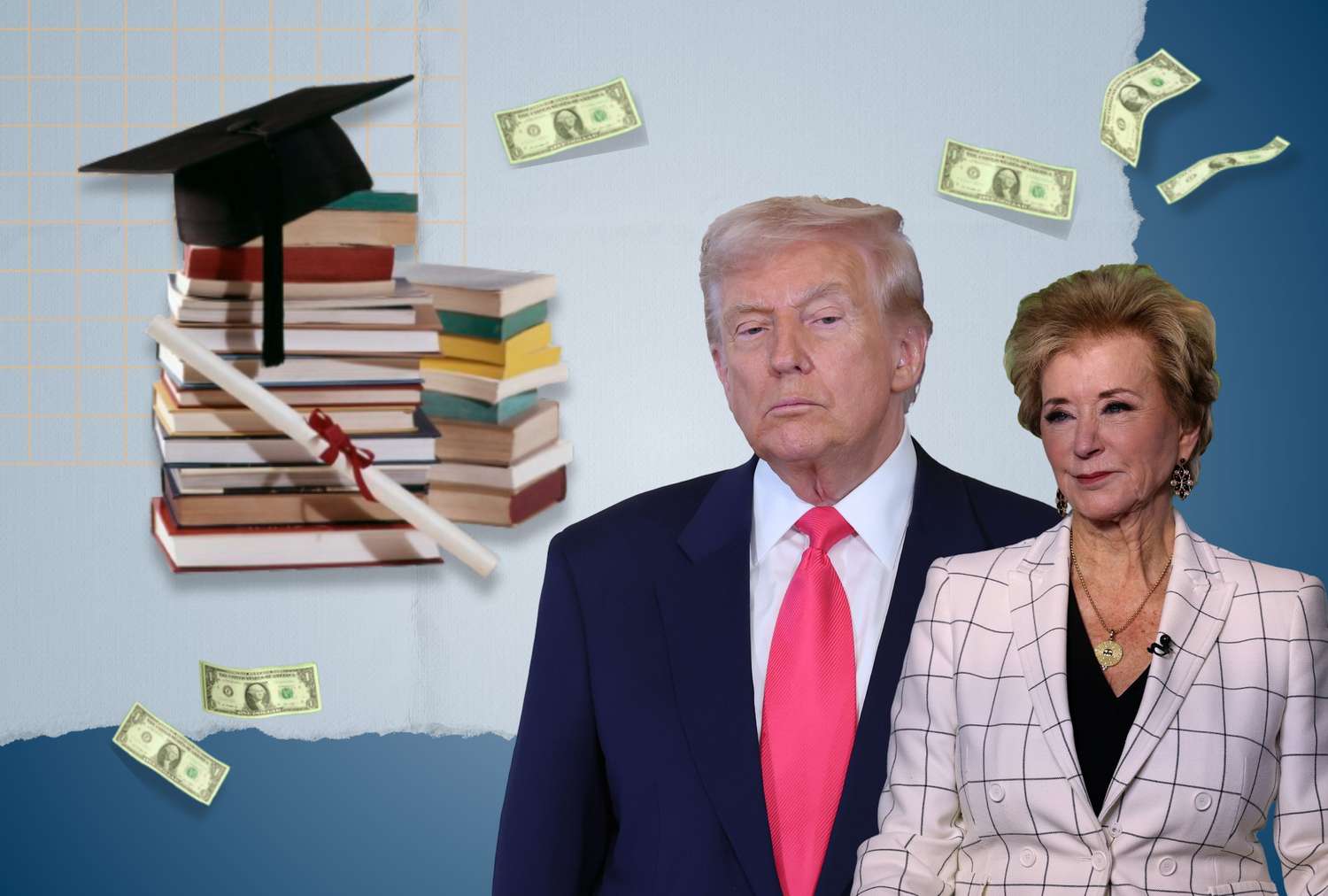
Will 2026 Bring Inflation Relief? Economists Weigh In
Investopedia· 2026-01-01 21:00
Core Insights - The article discusses the ongoing inflation trends and forecasts, indicating that consumer price increases are expected to remain above pre-pandemic levels until at least 2026 [2][3][6] - Economists predict that core Personal Consumption Expenditures (PCE) inflation will stabilize but not return to the Federal Reserve's target of 2% for some time [5][6][11] Inflation Trends - Prior to 2021, core PCE inflation typically rose less than 2% annually, but surged to 5.6% in 2022, the highest in nearly four decades [3] - As of September, core PCE inflation was reported at 2.8%, indicating a slight increase over the year [5][11] Economic Predictions - The median forecast from economists suggests core PCE inflation will be 2.4% by the end of 2026, reflecting a cooling trend but still above pre-pandemic levels [6] - Deutsche Bank economists predict inflation will remain at 2.25% or more through at least 2028, despite lower tariff rates and a slowdown in housing costs [7] Varied Forecasts - Oxford Economics forecasts a more optimistic scenario, expecting core PCE inflation to cool to 2.2% by the end of 2026, driven by decelerating housing costs [8][9] - Conversely, Bank of America predicts core PCE inflation will remain at 2.8% through 2026, attributing this to ongoing tariff impacts [12]

Federal Loan Access for Graduate Students Is Shrinking. These Are Alternative Financing Options
Investopedia· 2026-01-01 17:00
Core Insights - Starting from the 2026-2027 school year, graduate students will lose access to the Grad PLUS loan program, necessitating alternative financing options for their education [1][10] - The legislation has reduced the overall loan amounts available to students and their families for educational expenses [1] Affected Students - Approximately 545,000 graduate students utilized Grad PLUS loans in the 2024-25 award year, indicating a significant number will be impacted by this change [2] - Students who borrowed Grad PLUS loans before July 1, 2026, can continue to borrow for up to three more years or until their program concludes [3] - Non-professional graduate students will face a borrowing cap of $100,000, while professional students, such as those in medicine and law, can borrow up to $200,000 in unsubsidized loans throughout their education [3] Implications of Changes - The reduction in federal loan access may compel graduate students to seek more expensive loans with unfavorable terms, potentially leading to long-term financial distress [4] - The new borrowing limits replace a previous cap of $138,500, which applied to all graduate students, but the new limit for non-professional students is unlikely to affect many, as the average debt for these students is $80,550 [5] - Professional graduate students, particularly medical students with average costs of $232,100, may face significant financing challenges due to the loss of Grad PLUS loans [6] Alternative Financing Options - Experts recommend that graduate students explore scholarships and grants before resorting to loans, as well as employment opportunities at their universities [9][10] - Students working for companies should check for tuition reimbursement programs, which can provide up to $5,250 in tax-free education assistance [11] - The Lifetime Learning Credit allows eligible taxpayers to deduct up to $2,000 of education expenses from their taxes, providing additional financial relief [12] Private Loan Considerations - If federal loans and grants are insufficient, private student loans may be an option, but students should be cautious about the terms [13] - State and nonprofit lenders often offer loans with lower interest rates compared to private loans, making them a preferable choice [14] - Private loans can offer competitive rates and flexible repayment options, but borrowers must understand the details before committing [16][17]

High School Seniors Enter a New Student Loan Era in 2026
Investopedia· 2026-01-01 17:00
Core Insights - High school seniors entering college in fall 2026 will encounter a transformed federal student loan landscape due to the 'One Big Beautiful Bill' which implements significant changes effective July 1, 2026 [1][2] Loan Limits - Stricter loan limits will be imposed on Parent PLUS loans, allowing families to borrow only up to $20,000 per year with an aggregate limit of $65,000 per child, contrasting with the current system that has no aggregate limit [4][5] - Nearly 30% of Parent PLUS loan borrowers will be impacted by these new limits, primarily affecting middle-to-higher income families not eligible for Pell Grants [5][6] Repayment System Changes - A new repayment system will be introduced for college students taking loans after July 1, 2026, which will differ significantly from current options [7][9] - Borrowers will be placed in a standard repayment plan based on their loan size, with repayment periods ranging from 10 to 25 years [11][12] - The new Repayment Assistance Plan (RAP) will replace two existing income-driven repayment plans by 2028, potentially increasing monthly payments for lower-income borrowers compared to current plans [13][14]