
Investopedia

Search documents
Gas Has Stayed Near a 4-Year Low for Weeks—Here’s Where Prices Are Cheapest
Investopedia· 2026-02-12 17:07
-- Gas Has Stayed Near a 4-Year Low for Weeks—Here's Where Prices Are Cheapest [Stocks End Little Changed After Jobs Report][Job Market Surprisingly Bounced Back In January][It's So Cold Out You Can See It In Economic Statistics][Trump Expects Economic Miracle From New Fed Chair]- Top StoriesTable of ContentsExpandTable of ContentsGas Prices Remain Near Lowest Level Since 2021Where Gas Is Cheapest—And Most Expensive—Right NowWhy Gas Prices Vary So Widely by StateDrivers in some Southern states are paying ne ...

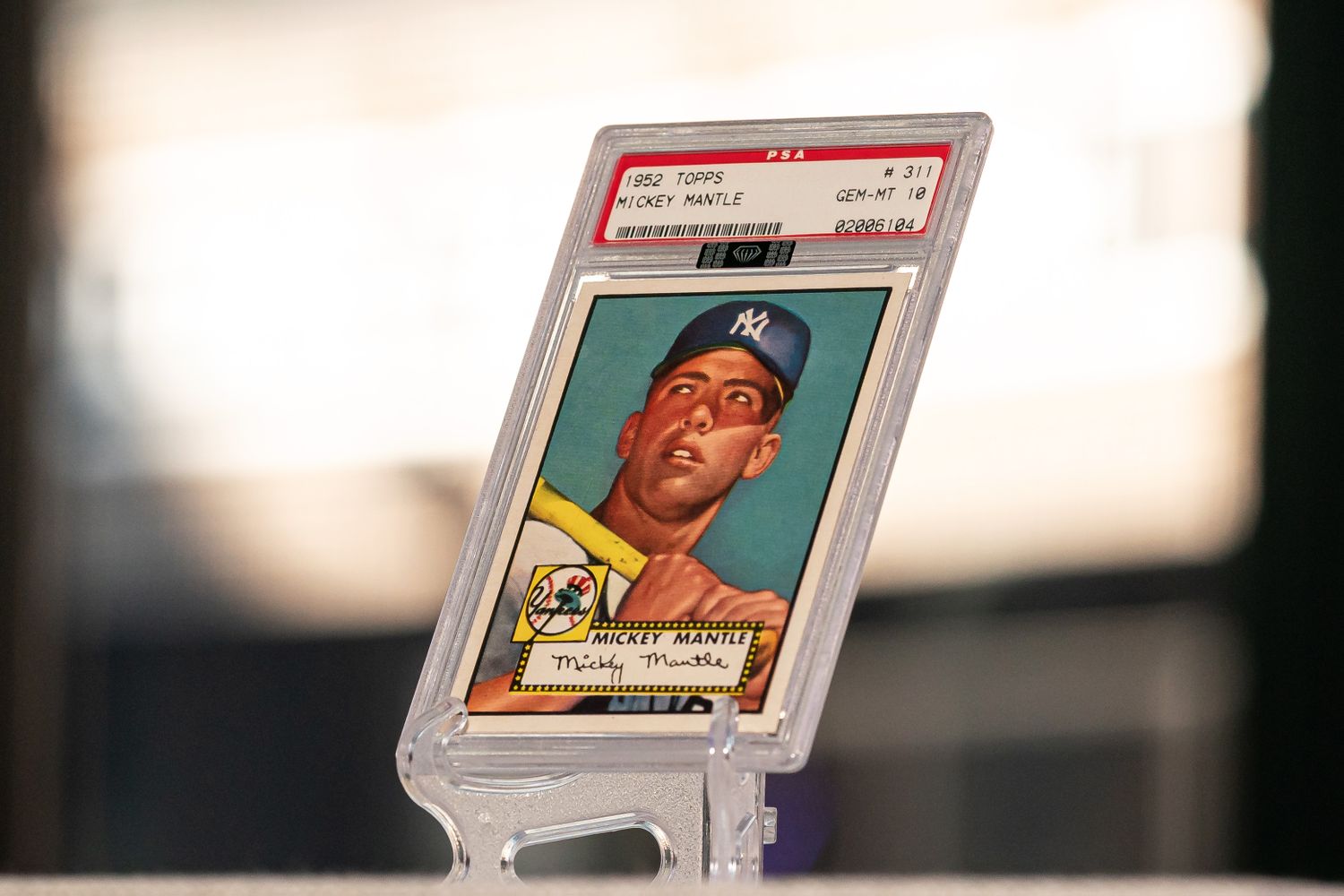
There's a Legendary—and Valuable—Baseball Card Out There. The Hunt for Mickey Mantle Is On
Investopedia· 2026-02-12 01:00
Core Insights - The 1952 Mickey Mantle rookie card is highly sought after, with pristine versions selling for over $12 million, while others still hold significant value [1][1][1] Company Overview - Topps, owned by Fanatics Inc., is launching a new baseball card set that includes a chance to find a card redeemable for the legendary Mickey Mantle card, celebrating the 75th anniversary of baseball cards from Topps [1][1][1] - The new "Topps Series 1" set aims to generate excitement among collectors, emphasizing the thrill of the chase for rare collectibles [1][1][1] Market Dynamics - The trading card market is experiencing a resurgence, driven by collector demand for rare items, which can lead to bidding wars [1][1][1] - Topps has priced its value box of six packs at around $25, with higher-end offerings exceeding $1,000, indicating a diverse pricing strategy to cater to different segments of collectors [1][1][1]
Robinhood's CEO Says a Prediction Markets 'Supercycle' Is Just Starting
Investopedia· 2026-02-11 23:01
Core Insights - Robinhood's CEO Vlad Tenev predicts a "supercycle" in prediction markets that could lead to trillions of dollars in annual trading volume [1][2] - The company's quarterly sales fell short of estimates, primarily due to a significant drop in cryptocurrency trading volumes [1][2] Company Performance - Robinhood's shares dropped nearly 9% following the announcement of disappointing fourth-quarter results, with revenue missing analysts' expectations [1][2] - The company reported that its prediction markets volume more than doubled in the fourth quarter, reaching $12 billion in contracts for the first full year of operations in 2025, with $4 billion already recorded this year [1][2] Industry Trends - Prediction markets have seen substantial growth recently, with Robinhood aiming to compete against established players like Kalshi and Polymarket [1][2] - The company plans to launch its own prediction market, operated as a joint venture with Susquehanna International Group, later this year, which may enhance its control over contract offerings and improve profit margins [1][2] Future Outlook - Investors can expect more details on Robinhood's upcoming projects during the "Take Flight" event scheduled for March 4, where new products are anticipated to be introduced [1][2] - Despite the recent downturn, Tenev remains optimistic about the long-term prospects of the cryptocurrency industry and plans to expand crypto offerings alongside the prediction markets business [1][2]


These 5 Software Stocks Could Double in Price This Year, Says Morgan Stanley
Investopedia· 2026-02-11 20:40
Core Insights - Morgan Stanley analysts suggest that five software stocks could potentially double in value within the next 12 months if fears surrounding AI subsist and the stocks rebound to their fair value [1] Group 1: Market Overview - Software stocks have faced significant declines this year, with the iShares Expanded Tech-software Sector ETF (IGV) losing over 20% of its value since the beginning of the year, primarily driven by concerns regarding AI's impact on the industry [1] - Major companies like Intuit, ServiceNow, and Salesforce have seen substantial drops in their stock prices due to fears that AI-native startups will pressure profit margins and reduce corporate headcounts, limiting revenue growth [1] Group 2: Investment Opportunities - Morgan Stanley identifies that some software stocks are currently trading at more than a 50% discount to their fair value, creating potential buying opportunities for investors [1] - The five software stocks highlighted by Morgan Stanley include large caps Intuit and Salesforce, which have potential upsides of 101% and 109% respectively from their recent closing prices [1] - Mid-cap stocks such as ServiceTitan, CCC Intelligent Solutions, and Vertex are also expected to more than double in value according to the analysts [1] Group 3: Market Sentiment and Future Outlook - The uncertainty surrounding AI's development has led to volatility in the stock market, but historical trends show that investors have often rebounded from such concerns, driving stock prices higher [1] - Experts, including Nvidia's CEO, have expressed skepticism about the notion that AI will severely disrupt the software industry, suggesting that nimble software providers could leverage AI to their advantage [1] - The market for tech stocks is expected to remain turbulent as uncertainty continues to loom over the software sector, with Morgan Stanley indicating that disruption-related volatility is likely to persist [1]




How Are Investors Dealing With AI Fears These Days? ‘Sell First, Ask Questions Later'
Investopedia· 2026-02-11 19:50
Group 1 - The focus of the week has shifted to financials, indicating a change in market attention and investment trends [1] - The previous week highlighted software and legal services, suggesting a rotation in sector performance [1]

Kraft Heinz Is Ending Its Planned Split. Its CEO Thinks Its 'Challenges Are Fixable.
Investopedia· 2026-02-11 17:46
Core Insights - Kraft Heinz has decided to remain a single entity, reversing its previous plan to split into two companies, with CEO Steve Cahillane stating that the company's challenges are manageable and within their control [1][1][1] Financial Performance - In Q4, Kraft Heinz reported a net sales decline of 3.4% year-over-year, totaling $6.35 billion, which was slightly below analyst expectations [1][1] - The adjusted earnings per share for Q4 were $0.67, exceeding estimates, but the fiscal 2026 adjusted EPS guidance range of $1.98 to $2.10 fell short of the consensus estimate of $2.48 [1][1] Strategic Direction - The decision to pause the planned separation indicates a focus on addressing operational declines, suggesting a cautious near-term strategy that may exert pressure on stock performance [1][1] - CEO Cahillane emphasized that it is prudent to halt work related to the separation to avoid incurring dis-synergies this year [1][1]


This Toy Maker's Stock Plummets 25% After Disappointing Holiday Earnings Report
Investopedia· 2026-02-11 17:26
Core Insights - Mattel's stock dropped nearly 25% following disappointing fourth-quarter earnings, which fell short of analyst expectations, indicating potential ongoing challenges for the company in the toy market [1] Financial Performance - Mattel reported an adjusted earnings per share (EPS) of 39 cents and revenue of $1.77 billion for the fourth quarter, both below analyst consensus estimates [1] - The company projected adjusted EPS for 2026 to be between $1.18 and $1.30, a decline from $1.41 in 2025, despite expected revenue growth of 3% to 6% [1] Market Dynamics - The slowdown in December order growth was attributed to retailers catching up on orders delayed by tariff uncertainties, particularly affecting U.S. sales, while international business performed as expected [1] - Mattel and Hasbro had raised prices in the previous year to mitigate tariff impacts, but retailers have been cautious with orders due to ongoing tariff uncertainties [1] Strategic Moves - Mattel announced plans to acquire the remaining stake in Mattel163, enhancing its digital gaming portfolio, and entered a multi-year licensing agreement with Paramount Skydance for Teenage Mutant Ninja Turtles toys [1] - Analysts from JPMorgan downgraded Mattel's stock to "underweight" and reduced the price target from $23 to $14, citing concerns over the Barbie business and potential margin impacts from planned investments [1] - UBS maintained a "buy" rating with a price target of $30, acknowledging the company's long-term potential but cautioning that a $150 million investment in its businesses may delay profit growth [1]


Job Market Surprisingly Bounced Back In January
Investopedia· 2026-02-11 17:02
Core Insights - The U.S. job market showed unexpected strength in January 2026, with employers adding 130,000 jobs, significantly surpassing forecasts of 55,000 jobs [1][1][1] - The unemployment rate decreased to 4.3%, the lowest level since August 2025, down from 4.4% [1][1][1] Economic Implications - The job creation in January may alleviate concerns regarding a hiring downturn and could influence the Federal Reserve's focus on inflation, potentially reducing pressure to cut interest rates [1][1][1] - Revisions to previous job creation data revealed that 2025 was worse than initially reported, with only 181,000 jobs added instead of 584,000, marking it as the worst year for job creation outside a recession since 2003 [1][1][1] Sector Performance - The health care sector was the primary driver of job growth, adding 137,000 jobs, which offset losses in government, finance, and transportation sectors [1][1][1] - Manufacturing saw a modest increase, adding 5,000 jobs, marking the first rise in manufacturing employment since November 2024 [1][1][1] Market Sentiment - Despite the positive job growth, public sentiment remains pessimistic due to strained household budgets and a stagnant job market, indicating a disconnect between economic indicators and public perception [1][1][1] - The job market is described as stabilizing but still largely frozen, with ongoing uncertainty leading workers to hold onto their current jobs and limited choices for unemployed individuals [1][1][1]
It's So Cold Out You Can See It In Economic Statistics
Investopedia· 2026-02-11 17:02
Economic Impact of Severe Winter Weather - The severe winter weather in late January and early February has significantly impacted economic activity across the U.S., particularly affecting car sales and natural gas prices [1] - Economists predict that the effects of the storms will be mostly temporary, with a rebound expected in economic activity as consumers catch up on spending [1] Car Sales and Retail Activity - Vehicle sales dropped to a three-year low in January, attributed to the harsh winter conditions that discouraged potential buyers from visiting dealerships [1] - Despite the decline in car sales, overall retail sales may not be severely impacted as consumers tend to stock up on essentials before storms [1] Natural Gas Prices - Natural gas prices surged by 81% in January compared to December, with the week ending January 30 marking the largest inventory drawdown since 2010 [1] - The Energy Information Administration has revised its forecast for natural gas prices to be 25% higher than previously estimated for the year [1] Housing Market Outlook - The cold weather is expected to negatively affect housing construction, with residential investment growth projected to decline by 3% in the first quarter [1] - Although snowstorms typically reduce economic activity without causing extensive damage, the impact on housing data is anticipated to be significant [1] Future Economic Projections - Experts believe that the economy, as measured by Gross Domestic Product (GDP), will recover from the downturn caused by the winter storms, provided there are no further severe weather events [1] - The timing of the storms early in the quarter suggests that any lost output is likely to be compensated in February and March, minimizing the overall impact on Q1 GDP [1]
Trump Accounts Are Supposed To Help Children Build Wealth. But Could They Worsen Inequality?
Investopedia· 2026-02-11 17:02
Core Insights - Trump Accounts are designed to help children build wealth but may inadvertently widen the wealth gap, particularly affecting lower-income families who may struggle to contribute [1] - Wealthy families could benefit significantly from these accounts due to their ability to make additional contributions, potentially exacerbating income and racial wealth disparities [1] Summary by Sections Overview of Trump Accounts - Established by the "One Big, Beautiful Bill" in 2025, Trump Accounts will launch on July 5, 2026, providing an initial $1,000 investment for eligible children born between 2025 and 2028 [1] - Contributions can come from various sources, including the government, parents, employers, and nonprofits, with companies like JPMorgan and Charles Schwab pledging to match the government’s contribution for their employees [1] Potential Impact on Wealth Inequality - Experts suggest that the structure of Trump Accounts may favor wealthier children, as lower-income families may not have the means to contribute additional funds [1] - David Radcliffe, an expert on wealth inequality, highlights that while Trump Accounts may provide a head start, they could ultimately increase income inequality, particularly among racial groups [1] Comparison with Baby Bonds - Baby bonds, a policy providing publicly funded investment accounts for low-income children, offer more substantial funding compared to Trump Accounts, which require families to contribute [1] - In Connecticut, for example, babies covered by Medicaid receive $3,200 in seed funding, which is three times the amount provided by Trump Accounts [1] - The design of Trump Accounts, being opt-in rather than automatic enrollment, may disadvantage those with fewer resources, as they may not have the financial literacy or means to engage with the program effectively [1]