The Motley Fool

Search documents
Is This CLO-Focused Fixed Income ETF a Buy After O'Donnell Financial Bought Shares Worth $6.8 Million?
The Motley Fool· 2026-02-02 02:57
Core Viewpoint - The iShares AAA CLO Active ETF (CLOA) is designed for income generation through an actively managed portfolio of U.S. dollar-denominated AAA-rated collateralized loan obligations (CLOs) [6][10]. Group 1: Recent Transactions - O'Donnell Financial Services, LLC increased its stake in CLOA by acquiring 131,914 shares, valued at approximately $6.83 million based on the average closing price during Q4 2025 [2][11]. - Post-transaction, CLOA accounts for 2.47% of O'Donnell Financial's reportable assets under management [3]. Group 2: Performance Metrics - As of January 28, 2026, CLOA shares were priced at $52.02, with a one-year total return of 5.5%, underperforming the S&P 500 by 9.5 percentage points [3]. - The ETF has an annualized dividend yield of 5.32% and is priced 0.07% below its 52-week high [3][4]. Group 3: Fund Overview - CLOA has an asset under management (AUM) of $1.38 billion and an expense ratio of 0.2% [4][10]. - The fund targets institutional and income-focused investors seeking exposure to high-grade securitized credit [10]. Group 4: Investment Strategy - The investment strategy focuses on actively managing a portfolio of AAA-rated CLOs, aiming to deliver attractive income while maintaining high credit quality [10]. - The fund's holdings are primarily AAA-rated CLO tranches, with flexibility to invest across maturities while maintaining a non-diversified structure [10]. Group 5: Investor Outlook - O'Donnell Financial's increased stake in CLOA indicates a positive outlook towards the ETF, which is suitable for conservative investors interested in generating income [12]. - CLOA's robust yield and monthly dividend payments, along with its focus on AAA-rated CLOs, help to mitigate risk [12][13].


Is This Short-Term Bond ETF a Buy After Merit Financial Bought Shares Worth $8.6 Million?
The Motley Fool· 2026-02-02 02:17
Core Viewpoint - Merit Financial Group, LLC has increased its position in the VictoryShares USAA Core Short-Term Bond ETF, indicating a positive outlook towards the ETF's performance and potential for income generation [2][6]. Group 1: Investment Activity - Merit Financial Group acquired an additional 167,898 shares of the ETF during Q4 2025, valued at approximately $8.55 million based on average closing prices [2]. - The valuation of Merit’s stake in the ETF increased by $8.17 million due to new purchases and price changes [2]. - The USTB position now represents about 1.05% of Merit’s total 13F assets under management [3]. Group 2: ETF Performance Metrics - As of January 25, 2026, USTB shares were priced at $50.90, reflecting a 5.9% increase over the past year, although underperforming the S&P 500 by 7.11 percentage points [3]. - The trailing 12-month dividend yield for the ETF is 4.60%, with shares priced 0.37% below their 52-week high as of January 26, 2026 [3]. - The ETF has $1.73 billion in assets under management, indicating strong liquidity [4][8]. Group 3: ETF Overview and Strategy - VictoryShares USAA Core Short-Term Bond ETF focuses on capital preservation and income generation through a portfolio of short-term debt securities, targeting a dollar-weighted average maturity of three years or less [5][7]. - The ETF can invest up to 20% of its net assets in foreign debt securities, including those from emerging markets [5][7]. - The fund is structured as an exchange-traded fund and is listed on NASDAQ, appealing to income-minded investors seeking low-risk, high-quality fixed-income options [8].

Why AT&T Stock Surged This Week
The Motley Fool· 2026-02-02 01:40
Core Insights - AT&T's shares rose over 10% following a strong quarterly financial report and a positive long-term growth outlook [1][2] Financial Performance - The company generated $16.6 billion in free cash flow in 2024, with expectations to exceed $21 billion by 2028 [5] - AT&T's current dividend yield stands at 4.2%, and a new $10 billion share buyback program has been approved by the board [1][5] Customer Growth - AT&T attracted 421,000 postpaid phone and 283,000 fiber subscribers in the fourth quarter [2] - The fiber convergence rate increased by 200 basis points year over year to 42%, marking the fastest annual growth since tracking began [3] Customer Retention - The postpaid churn rate was reported at less than 1%, indicating effective customer retention despite competition from rivals like Verizon and T-Mobile [4]


This Dirt Cheap Stock Is Expected to Quadruple Its Earnings This Year
The Motley Fool· 2026-02-02 01:35
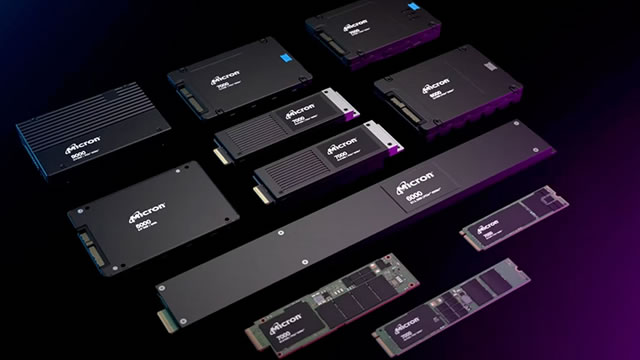
Group 1 - Micron's stock is considered cheap despite the expected growth in the AI sector, indicating a potential investment opportunity [1][2] - The company specializes in memory chips, which are commoditized and lack pricing power compared to logic chips [2] - Current market conditions show a significant spike in RAM prices due to high demand from data centers supporting generative AI [5] Group 2 - Micron's earnings per share (EPS) are projected to rise from $8.29 in FY 2025 to $33.31 in FY 2026, with further growth expected to $42.79 in FY 2027, driven by AI demand [6] - The cyclical nature of memory demand poses a risk, as prices may drop once production capacity meets demand, leading to a potential stock slump [7] - Analysts estimate that the demand for AI-related memory chips will continue through at least 2030, providing a window for Micron to capitalize on high prices [9]

Forget Tech Stocks: The Utility That's Solving AI's Biggest Problem
The Motley Fool· 2026-02-02 01:30
Core Insights - The utility sector is not homogeneous, and Constellation Energy is positioned to capitalize on the growing demand for electricity driven by artificial intelligence [1][2] Industry Overview - The demand for electricity from data centers is projected to increase by 165% from 2023 to 2030, primarily due to the expansion of AI [1] - Utilities are well-positioned to meet this rising demand, with significant growth expected in the sector [2] Company Analysis - Constellation Energy is the largest producer of carbon-free electricity in the U.S., operating 21 nuclear reactors that account for 86% of its output [4] - The company has the potential to quickly ramp up electricity production, which is expected to accelerate its revenue growth in the coming years [5] - Constellation's nuclear capabilities position it as a key player in the evolving energy landscape, with global nuclear production anticipated to grow over 50% by 2040 [7] Financial Metrics - Current market capitalization of Constellation Energy is $88 billion, with a recent stock price of $280.57 [8] - The stock has experienced volatility, with a recent decline attributed to government threats of capping electricity rates, presenting a potential buying opportunity [9]


Is This Artificial Intelligence (AI) Winner About to Take Off in 2026?
The Motley Fool· 2026-02-02 01:25
Group 1 - Nvidia's stock performance in 2025 was relatively weak, with only a 39% increase compared to over 800% growth from 2023 to 2024 [1] - For fiscal year 2026, analysts project a significant revenue growth of 63%, indicating potential for stock price appreciation [2] - Fiscal year 2027 is expected to see a 52% revenue growth, suggesting sustained demand for Nvidia's GPUs and a long-term growth trend driven by artificial intelligence [3] Group 2 - Nvidia's current market capitalization is $4.6 trillion, with a current stock price of $191.12 [4] - Analysts estimate Nvidia will generate $7.66 in earnings per share (EPS) next year, with a fair valuation based on a P/E ratio of 33 leading to a target price of $253, representing a 35% gain [5][7] - If Nvidia maintains a higher P/E ratio of 46, the stock price could reach $352, indicating a potential return of 87% [8]


Why I'm Loading Up on These 3 High-Dividend ETFs for Passive Income
The Motley Fool· 2026-02-02 01:00
Core Viewpoint - The equity market is undergoing a significant rotation in 2026, favoring dividend ETFs and previously underperforming sectors such as small caps, energy, and materials stocks [1][2]. Dividend ETFs Performance - Dividend stocks and ETFs are benefiting from the outperformance of value stocks and those with strong balance sheets, with yields of 3%-4% making dividend ETFs early winners in 2026 [2]. - Not all high-dividend ETFs are the same, and specific funds are highlighted as strong investment options for 2026 [2]. Schwab U.S. Dividend Equity ETF - The Schwab U.S. Dividend Equity ETF (SCHD) has seen a resurgence due to its focus on quality fundamentals, stable dividend growth, and above-average yield, making it a top performer in the U.S. dividend ETF category [4][7]. - The fund currently offers a yield of 3.7% and has a low expense ratio of 0.06%, making it an attractive long-term investment [6]. Vanguard High Dividend Yield ETF - The Vanguard High Dividend Yield ETF (VYM) employs a straightforward strategy of selecting the top half of dividend-paying stocks based on yield, which has proven effective for investors seeking higher yields [8][9]. - The fund has a diverse allocation across seven sectors, with a 2.5% yield that positions it well for the current market rotation [10][11]. SPDR Portfolio S&P 500 High Dividend ETF - The SPDR Portfolio S&P 500 High Dividend ETF (SPYD) focuses on the 80 highest-yielding securities from the S&P 500 and employs an equal-weighting strategy for diversification [13]. - With a yield of 4.5% and a low expense ratio of 0.07%, this ETF is among the most cost-effective options available, potentially benefiting from expected interest rate cuts in 2026 [15][16].

One Thing That's Even Better for Boeing Than Its Q4 Revenue Beat
The Motley Fool· 2026-02-02 00:40
Core Insights - Boeing's recent quarterly revenue reached nearly $24 billion, exceeding analysts' expectations of $22.6 billion and marking a 57% increase compared to the previous year [1] - The company has returned to profitability, providing optimism for investors [1] Financial Performance - The revenue comparison is against a weak fourth quarter of 2024, where revenue fell 31% year over year, and is significantly lower than the $24 billion generated in the final quarter of 2018 [2] - Boeing's market capitalization stands at $183 billion, with a current stock price of $233.94 [5] Order Backlog - Boeing has a record backlog of $682.2 billion in airplane orders as of the end of last year, with growth in this backlog appearing to accelerate [3] - The company projects a need for 43,600 new passenger jets in the air travel industry between 2025 and 2044, while the current active fleet consists of 30,300 planes, plus 5,250 in storage [4] Market Outlook - Although orders can be canceled, it is uncommon, and the demand for new aircraft is expected to remain strong [4] - The persistent growth of the backlog supports the notion that any temporary dips in Boeing's stock could represent long-term buying opportunities [6]


The Artificial Intelligence (AI) Winner Hiding in Plain Sight for 2026
The Motley Fool· 2026-02-02 00:11
Core Viewpoint - The semiconductor company Marvell Technology is poised for significant growth driven by the demand for AI infrastructure, despite its stock not reflecting its strong performance [1][2]. Industry Overview - AI infrastructure spending is projected to reach nearly $1.4 trillion in 2026, marking a 41% increase from the previous year [1]. - The market for custom ASICs in AI data centers is expected to grow at a compound annual growth rate (CAGR) of 27% through 2033, potentially generating $118 billion in revenue [5]. Company Analysis - Marvell Technology specializes in application-specific integrated circuits (ASICs), which are increasingly favored over GPUs for AI data centers due to their cost and performance advantages [3]. - The company is expected to capture 20% to 25% of the custom ASIC market by the end of the forecast period, translating to annual revenues between $23.6 billion and $29.5 billion, more than triple its revenue from the previous year [5]. - Marvell's partnerships with major players like Amazon and Microsoft enhance its ability to capitalize on the growing demand for custom AI processors [6]. - The addressable market for Marvell is projected to grow at a 35% CAGR through 2028, reaching $94 billion [7]. - Marvell currently supplies 18 custom processor designs to top U.S. hyperscalers and aims to expand this to over 50 designs [7]. Financial Metrics - Marvell's stock trades at 22 times forward earnings estimates, which is a slight discount compared to the Nasdaq-100 index's multiple of 26 [10]. - Earnings are anticipated to increase by 80% in the current fiscal year, with continued healthy growth expected in subsequent years [10].


This Fund Locked In Gains With a $14.5 Million Biotech Exit Amid a Staggering Stock Rally
The Motley Fool· 2026-02-02 00:09
Core Insights - Tanager Wealth Management has completely divested its stake in Centessa Pharmaceuticals, selling 598,044 shares for an estimated value of $14.50 million [2][3] - Centessa Pharmaceuticals has a market capitalization of $3.46 billion and focuses on developing therapies for rare and serious diseases [4][5] - The company's stock price increased by approximately 56.7% over the past year, significantly outperforming the S&P 500's 14% gain during the same period [3][10] Company Overview - Centessa Pharmaceuticals is a clinical-stage biotechnology company based in the UK, with a diversified pipeline targeting nephrology, hematology, immunology, and respiratory diseases [5][7] - The company reported a total revenue of $15 million and a net income loss of $242.7 million for the trailing twelve months [4] - Centessa's strategy involves developing differentiated therapies for underserved patient populations, aiming to leverage innovation and clinical expertise [5][7] Financial Position - As of January 26, Centessa had $349 million in cash, equivalents, and investments, along with $250 million raised from investors in November [9] - The company's stock price as of January 26 was $25.73, reflecting a strong performance in the biotech sector [4][3] Market Context - The exit of Tanager Wealth Management indicates a shift in the allocation of assets, as CNTA now represents 0% of their reportable 13F AUM, down from 1.5% in the previous quarter [3] - Centessa's focus on clinical-stage products includes candidates like Lixivaptan for polycystic kidney disease and SerpinPC for hemophilia, among others [7]