The Motley Fool

Search documents
1 AI Stock I'm Buying in 2026 and Holding Forever
The Motley Fool· 2026-01-24 02:11
Core Viewpoint - Meta Platforms is considered an attractive investment opportunity due to its strong user base, profitable advertising business, and reasonable valuation compared to other AI stocks in the market [1]. Group 1: User Base and Engagement - Meta has an extensive user base, with an average of 3.54 billion daily active people (DAP) as of September 2025, which includes users across its platforms like Facebook, Instagram, Messenger, and WhatsApp [3]. Group 2: Financial Performance - In Q3 2025, Meta reported revenues of $51.2 billion, with 98% of this revenue generated from advertising [4]. - Despite significant capital expenditures, Meta maintains high operating margins at 40% [4]. - The company has a gross margin of 82% and a dividend yield of 0.32% [6]. Group 3: Stock Valuation - Meta's current stock price is $659.12, trading at 20 times forward earnings, which is lower than other major tech companies like Microsoft, which trades at 27 times forward earnings [5][7]. - The stock has experienced volatility following its Q3 earnings report, but the current price is viewed as a good buying opportunity [6].



Altria Group: Is This High-Yield Dividend Stock Too Cheap to Ignore?
The Motley Fool· 2026-01-24 01:30
Core Viewpoint - Altria Group is facing challenges as revenue declines despite high dividend returns and low stock prices, raising concerns about the sustainability of its dividend payments [1][12]. Financial Performance - Altria's stock price has increased since the beginning of 2024, with a current price-to-earnings (P/E) ratio of 12, leading to mixed investor sentiment regarding its valuation [2][11]. - The company has an annual dividend payout of $4.24 per share, yielding 6.8%, and has consistently raised its dividend since 2009 [5][10]. - Over the past 12 months, Altria generated approximately $9.2 billion in free cash flow, which covered $6.9 billion in dividend costs, leaving limited cash for other investments [8]. Strategic Missteps - Altria's attempts to diversify into e-cigarettes and cannabis have not yielded positive results, with significant investments in Juul and Cronos Group leading to substantial losses [7][8]. - The company's market cap for Cronos Group has fallen below $1 billion, indicating poor performance in its cannabis investment [8]. Market Position - Despite the appealing dividend yield, the company's revenue struggles due to declining smoking rates and failed business ventures may deter investors [12][13]. - The stock's low valuation may not be enough to attract investors unless there is a turnaround in business conditions [11][13].


Why Intel Stock Crashed Today
The Motley Fool· 2026-01-24 01:08
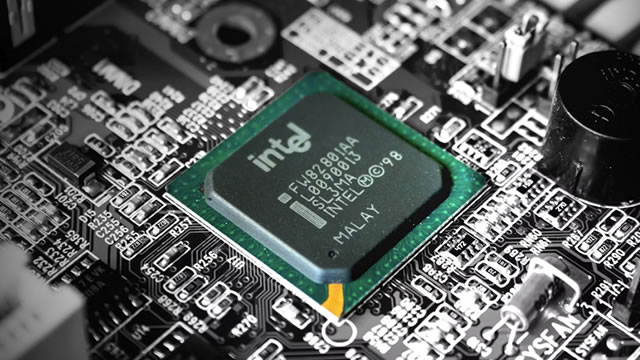
Core Viewpoint - Intel's stock price dropped over 17% following a disappointing sales and profit forecast, alongside warnings of supply disruptions [1][6]. Financial Performance - Intel's revenue for the fourth quarter decreased by 4% year over year to $13.7 billion, primarily due to declining sales in the Client Computing Group, despite growth in the Data Center and AI division [3]. - The company reported adjusted earnings per share (EPS) of $0.15, surpassing Wall Street's expectations of $0.08 [3]. Market Reaction - Following the earnings report, Intel's stock closed at $45.07, reflecting a decrease of $9.25 for the day [4]. - The market capitalization of Intel stands at $271 billion, with a trading volume of 295 million shares [5]. Future Outlook - Intel's management provided a first-quarter revenue guidance of $11.7 billion to $12.7 billion, which is below analysts' expectations of $12.5 billion [6]. - The company anticipates breaking even on an adjusted earnings basis, while consensus estimates had projected adjusted profits of $0.05 per share [6]. Supply Chain Concerns - CEO Lip-Bu Tan expressed disappointment regarding the company's inability to fully meet market demand, highlighting supply shortfalls as a significant concern [7]. - The supply issues raise doubts about Intel's capability to attract foundry customers from competitors like Taiwan Semiconductor Manufacturing, which is critical for Intel's long-term growth strategy [8].

Up 1,000% in Less Than a Year, Is This AI Stock a Buy to Start 2026?
The Motley Fool· 2026-01-24 00:30
Core Insights - Sandisk has experienced a significant stock price increase of nearly 1,030% over the past 11 months, making it the best-performing stock in the S&P 500 for 2025 [1][3] Company Performance - The spin-off from Western Digital has allowed Sandisk to focus on its core storage device business, which is crucial for the growing demand in AI infrastructure [3][4] - Sandisk's revenue from data centers currently accounts for about 12% of total revenue, but it is expected to be a major growth driver in the coming years as hyperscalers invest heavily in storage solutions [5] Market Dynamics - The demand for high-speed storage devices is increasing due to the complexities of AI, while the supply has not kept pace, allowing Sandisk to raise prices and achieve its cash goals ahead of schedule [4][5] - Sandisk's market capitalization stands at $74 billion, with a current trading price of $473.83, reflecting a high price-to-earnings ratio of 30.8, which is considered expensive compared to some tech giants [6][8] Investment Considerations - While Sandisk's stock has surged, there are concerns about potential corrections, and a gradual investment strategy such as dollar-cost averaging is suggested for building a stake in the company [7][9] - The long-term growth of Sandisk will depend on sustained demand for AI technologies, which will drive the need for storage solutions [9]

Is the Global X AIQ ETF a Buy After Intelligence Driven Advisers Initiated a Position Worth Nearly $8 Million?
The Motley Fool· 2026-01-24 00:23
Core Viewpoint - The Global X Artificial Intelligence & Technology ETF (AIQ) is gaining attention as it tracks companies advancing in artificial intelligence and big data, reflecting a bullish sentiment in the rapidly evolving tech segment [1][10]. Group 1: ETF Overview - AIQ has assets under management (AUM) of $7.36 billion, with a share price of $52.45 as of January 22, 2026 [4]. - The ETF has an annualized dividend yield of 0.18% and a one-year total return of 29.31% [4]. - The fund's strategy is to replicate the returns of its underlying index, focusing on leading firms in AI innovation [6][8]. Group 2: Recent Transactions - Intelligence Driven Advisers, LLC initiated a new position in AIQ by acquiring 153,047 shares valued at approximately $7.78 million [2]. - This new position represents 1.11% of the fund's 13F reportable assets under management as of December 31, 2025 [3]. Group 3: Performance and Holdings - As of January 22, 2026, AIQ shares have increased by 29.3% over the past year, outperforming the S&P 500 by 15.73 percentage points [3]. - AIQ's holdings include global AI companies, providing broad exposure across the AI ecosystem [11]. Group 4: Investment Strategy and Outlook - AIQ seeks to track the performance of an index focused on companies involved in AI and big data technologies, operating with a passive management approach [8]. - The positive outlook towards AIQ is supported by the rapid expansion of the artificial intelligence industry, with many companies in the sector experiencing strong sales growth [10][12].

Stock Market Today, Jan. 23: Applied Digital Jumps After Breaking Ground on New AI Factory
The Motley Fool· 2026-01-23 23:08
Company Overview - Applied Digital (APLD) is a next-generation artificial intelligence (AI) data center operator that has seen significant stock growth, closing at $37.69, up 8.49% [2][6] - The company has experienced over 700% growth since its IPO in 2022 [3] Recent Developments - Applied Digital has begun construction on a new "AI Factory," named Delta Forge 1, which is expected to have a capacity of 430MW and start operations in mid-2027 [6] - The announcement of the new AI factory reflects strong demand for purpose-built AI infrastructure [2][6] Market Performance - Trading volume for Applied Digital reached 47.5 million shares, which is approximately 52% above its three-month average of 30.1 million shares [3] - The stock has gained over 300% in the past year, indicating strong investor interest despite some analysts suggesting profit-taking [6] Analyst Ratings - Texas Capital upgraded Applied Digital's stock from "Buy" to "Strong Buy," while Roth Capital and Needham reiterated their "Buy" ratings [7]


Can a $10,000 Investment in CoreWeave Turn Into $1 Million?
The Motley Fool· 2026-01-23 23:05
Core View - CoreWeave is experiencing significant growth, with its stock rising over 40% at the start of 2026, leading to speculation about its potential for high returns [1][3] Market Opportunity - CoreWeave operates in a large market by building data centers filled with GPUs for AI training, capitalizing on the increasing demand for AI computing power [3][4] - The company aims to replicate the success of major cloud providers like Amazon, Alphabet, and Microsoft in the AI sector [4] Financial Performance - CoreWeave's market cap is currently $50 billion, and achieving a 100x return would require it to grow to a $5 trillion company, which is deemed unrealistic [5][10] - A more attainable goal is a 10x return, which would turn a $10,000 investment into $100,000, still representing a significant return [6][9] Growth Projections - In Q3, CoreWeave reported a 134% year-over-year revenue increase to $1.3 billion, with expectations of $1.54 billion for Q4 and 135% growth for 2026 [7][9] - The company has a $56 billion backlog, indicating strong future revenue potential [7] Profitability Concerns - CoreWeave is currently prioritizing growth over profitability, which raises questions about its long-term sustainability compared to established cloud providers [8][10] - For fiscal year 2026, Wall Street expects CoreWeave to generate $12 billion in revenue, which is significantly lower than the $83 billion needed for a 10x return [9][10] Investment Comparison - While CoreWeave shows promise, investing in Nvidia, its GPU supplier, may be a more prudent choice due to Nvidia's stronger profitability and similar market advantages [11]


Intel Is Still Making Too Many Unforced Errors. Can the Chip Giant Get Out of Its Own Way?
The Motley Fool· 2026-01-23 22:30
Core Viewpoint - Intel has experienced significant stock price volatility, with a 150% increase over five months due to investor optimism about a turnaround, but recent guidance indicates potential declines in revenue and profits, leading to a sharp stock drop [1][2]. Company Performance - Intel's stock fell by double digits following weaker-than-expected guidance for the first quarter, which projected declines in both revenue and profits [2]. - Despite the recent sell-off, Intel maintains a market capitalization exceeding $200 billion, although it is currently experiencing flat revenue growth and losses on a GAAP basis [9]. Strategic Challenges - The company has faced strategic and execution mistakes in the past, which it must overcome to establish a healthy and growing business [3]. - Intel's foundry division has been a significant source of losses, and while there is hope for improvement with the deployment of the 18A process, the company is still struggling to leverage this division effectively [5]. Management Insights - CEO Lip-Bu Tan highlighted the need to improve fab yields and production cycle speed, with a goal set for 2026 [6]. - CFO David Zinsner acknowledged that the company underestimated demand for data center chips and is actively working to rectify supply chain issues [6]. Market Position - Intel is central to the semiconductor industry, known primarily for its PC CPUs, and investors view the stock as a long-term recovery bet [2]. - The company's gross margin stands at 35.58%, but the stock is currently priced as if it has already resolved its challenges, which may not be the case [8].

3 AI Infrastructure Stocks to Buy as the Market Heads Toward $1.4 Trillion by 2030
The Motley Fool· 2026-01-23 22:05
Core Insights - The AI market is experiencing rapid growth, driven by the popularity of generative AI platforms like ChatGPT, leading to increased investments in AI infrastructure by companies [1][2] - Nvidia, Equinix, and Digital Realty are positioned to benefit significantly from this AI boom, with Nvidia being the leading AI chipmaker and the data center REITs providing essential infrastructure [4][11] Nvidia - Nvidia's discrete GPUs are optimized for parallel processing, making them more suitable for AI applications compared to traditional CPUs [5] - The company has shifted its revenue focus from gaming GPUs to high-end data center GPUs, which now constitute the majority of its revenue [5] - Nvidia holds over 90% of the discrete GPU market, benefiting from a first-mover advantage and a proprietary programming platform (CUDA) that locks in customers [8] - Analysts project Nvidia's revenue and earnings per share (EPS) to grow at a CAGR of 47% and 45% respectively from fiscal 2025 to fiscal 2028 [9] Data Center REITs - Equinix and Digital Realty are two of the largest data center REITs, with Equinix operating over 270 data centers and Digital Realty managing more than 300 [11] - Both companies are required to distribute at least 90% of their taxable income as dividends, making them attractive for income-oriented investors [10] - Equinix focuses on smaller units to serve a wider range of industries, while Digital Realty typically leases larger spaces to major enterprises [13] - Both companies provide interconnection services, with Equinix offering denser connections compared to Digital Realty [14] - Despite challenges in 2022 and 2023 due to rising interest rates, both stocks are expected to become compelling investments as interest rates decline and the AI market expands [16] - Equinix is valued at 21 times its projected adjusted funds from operations (AFFO) per share for 2025, with a forward yield of 2.4%, while Digital Realty trades at the same multiple with a forward yield of 3.1% [17]




Ferrari Stock: Buying Opportunity or Value Trap at the 52 Week Low?
The Motley Fool· 2026-01-23 19:40
Core Viewpoint - Ferrari's stock is currently at a lower price point than it has been in many years, presenting a potential buying opportunity for investors [1] Group 1: Stock Performance - The stock has experienced a double-digit sell-off, indicating a significant decline in its market value [1] - The stock prices referenced were from the afternoon of January 22, 2026, highlighting the timing of the analysis [1] Group 2: Investment Recommendation - Contributors from Motley Fool advocate for Ferrari as a strong buy, suggesting confidence in the company's future performance despite recent stock price declines [1]