海外独角兽

Search documents
从 AI 招聘到数据标注,Mercor 能否打造下一个 Scale AI?
海外独角兽· 2025-06-13 10:56
Core Insights - Mercor operates at a critical intersection in the AI sector, addressing the demand for high-quality human data in specialized fields, which synthetic data cannot fully replace [3] - The company transitioned from an AI recruitment platform to a direct competitor in the data annotation market, providing human data services to AI labs [3][35] - Mercor's business model has proven effective, achieving an ARR of $75 million by early 2025 and a valuation of $2 billion following a $100 million Series B funding round [4][5] Investment Logic - Mercor's evolution from a recruitment platform to a direct competitor in the human data annotation market allows it to fill a gap left by larger players like Scale AI, particularly in small-scale, high-difficulty projects [12] - The company leverages its early recruitment experience to provide speed and flexibility for projects typically under $50,000, which are often neglected by larger firms [12][16] - The core investment question revolves around the market size and profitability of the segment Mercor is targeting, as well as its ability to improve data quality before Scale AI adjusts its strategy [12] Market Opportunities for Expert Data - The demand for human data is surging, particularly in specialized fields like healthcare, law, and finance, where expert judgment is crucial [13][14] - Mercor addresses inefficiencies in traditional data outsourcing models, offering a transparent and flexible solution [15] - The market for high-quality human data is expected to grow significantly, with estimates suggesting a CAGR of 23.5% from $3.7 billion in 2023 to $17.1 billion by 2030 [31] Business Evolution - Mercor's core business lines include AI recruitment and human data services, with the latter being the primary growth driver [36][37] - The company has developed an end-to-end human data delivery system, integrating a vast network of over 300,000 experts and flexible workflows [38][40] Differentiated Competition - Mercor positions itself as a more agile and flexible alternative to Scale AI, targeting the long-tail market that requires quick turnaround and specialized expertise [16][50] - The company sacrifices some data quality for speed, which is acceptable to clients needing rapid iterations [18][50] - Mercor's competitive edge lies in its ability to quickly deploy expert resources for complex tasks, which is highly valuable during the experimental phases of AI model development [18][52] Team and Execution - The founding team, with an average age of 21, demonstrates exceptional product sensitivity and execution capabilities, rapidly scaling the business from dormitory startup to significant revenue [19] - The team includes experienced professionals from Scale AI and OpenAI, enhancing Mercor's operational efficiency and market understanding [71] PMF Validation - Mercor's rapid growth and substantial funding from top-tier investors validate its product-market fit, particularly in the burgeoning demand for human data in AI labs [20] - The company has established itself in a niche market that is currently underserved, with no direct competitors matching its speed and small-scale project capabilities [20][26] Talent Structure and Funding Story - Mercor's funding journey has attracted significant interest from top investors, with a unique approach that emphasizes proactive engagement rather than traditional fundraising [74] - The company has successfully raised $100 million in its Series B round with minimal equity dilution, reflecting strong investor confidence in its business model and growth potential [76]


对谈 DeepSeek-Prover 核心作者辛华剑:Multi Agent 天然适合形式化数学 |Best Minds
海外独角兽· 2025-06-12 13:27
Group 1 - The core idea of the article emphasizes the importance of "experience" in achieving AGI, particularly through reinforcement learning (RL) and the accumulation of high-quality data that is not present in human datasets [3][4] - The article discusses the significant advancements in AI's mathematical proof capabilities, highlighting the success of models like DeepMind's AlphaProof and OpenAI's o1 in achieving superhuman performance in mathematical reasoning [3][4] - The transition from static theorem provers to self-planning, self-repairing, and self-knowledge accumulating Proof Engineering Agents is proposed as a necessary evolution in formal mathematics [4][5] Group 2 - The article outlines the challenges faced by contemporary mathematics, likening them to issues in distributed systems, where communication bottlenecks hinder collaborative progress [26][27] - It emphasizes the need for formal methods in mathematics to facilitate better communication and understanding among researchers, thereby accelerating overall mathematical advancement [24][30] - The concept of using formalized mathematics as a centralized knowledge base is introduced, allowing researchers to contribute and extract information more efficiently [30] Group 3 - The DeepSeek Prover series is highlighted as a significant development in the field, with each iteration showing improvements in model scaling and the ability to handle complex mathematical tasks [35][36][38] - The article discusses the role of large language models (LLMs) in enhancing mathematical reasoning and the importance of long-chain reasoning in solving complex problems [41][42] - The integration of LLMs with formal verification processes is seen as a promising direction for future advancements in both mathematics and code verification [32][44] Group 4 - The article suggests that the next phase of generative AI (GenAI) will focus on Certified AI, which emphasizes not only generative capabilities but also quality control over the generated outputs [5] - The potential for multi-agent systems in formal mathematics is explored, where different models can collaborate on complex tasks, enhancing efficiency and accuracy [50][51] - The vision for future agents includes the ability to autonomously propose and validate mathematical strategies, significantly changing how mathematics is conducted [54][58]

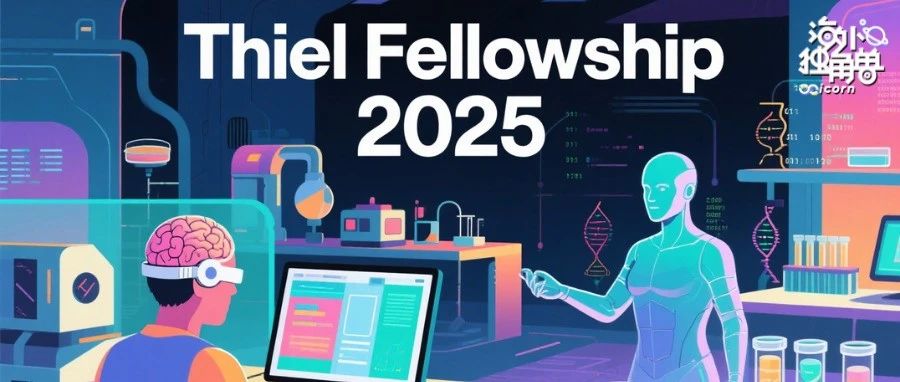
押中 Figma、Scale AI 的 Thiel Fellowship, 今年下注哪些 AI 方向?
海外独角兽· 2025-06-10 12:22
Core Insights - The Thiel Fellowship has shifted its focus towards AI-driven paradigm shifts, supporting young entrepreneurs in the AI sector [3][4] - The 2025 cohort showcases a diverse range of projects, primarily centered around AI infrastructure, financial technology, and biocomputation [7][9] Group 1: Thiel Fellow Overview - The 2025 Thiel Fellows are characterized as "Builders" focusing on foundational AI infrastructure, human-computer interaction, and financial systems [7] - Key themes include AI infrastructure, new financial infrastructure, and programmable life systems [7][9] Group 2: Notable Projects - **Canopy Labs** aims to create indistinguishable virtual humans for various applications, emphasizing real-time interaction and open-source development [13][14] - **Intempus** focuses on enhancing human-robot interaction by adding emotional expression capabilities to robots, improving collaboration efficiency [23][24] - **Phase Labs** is developing a platform for organ regeneration through bioelectric signaling and system modeling, targeting a multi-trillion dollar market [31][32] - **Orbit** is pioneering non-invasive brain-computer interfaces to enhance VR experiences and medical applications, addressing motion sickness and mental health [38][39] - **AUG Therapeutics** aims to accelerate the development of rare disease drugs through asset acquisition and formulation optimization, addressing unmet medical needs [45][46] Group 3: Market Potential and Trends - The AI infrastructure projects are positioned as foundational elements for future human interaction, with a focus on emotional intelligence and real-world applications [12][20] - The financial technology projects, such as Ivy, are addressing the fragmentation in cross-border payments, aiming to establish a new standard for A2A payments [62][63] - The biotech initiatives, particularly in regenerative medicine, are tapping into a largely unexplored market, with significant potential for innovation and commercialization [36][50] Group 4: Founders and Team Dynamics - The founders of these projects are predominantly young, with interdisciplinary backgrounds that combine technology, biology, and engineering [10][11] - Many founders have prior project experience and a strong sensitivity to long-term structural problems, aiming to redefine the future of AI and technology [10][11]
专访张祥雨:多模态推理和自主学习是未来的 2 个 「GPT-4」 时刻
海外独角兽· 2025-06-09 04:23
本期内容是拾象 CEO 李广密对大模型公司阶跃星辰首席科学家张祥雨的访谈, 首发于「张小珺商业 访谈录」。 张祥雨专注于多模态领域,他提出了 DreamLLM 多模态大模型框架,这是业内最早的图文生成理解 一体化的多模态大模型架构之一,基于这个框架,阶跃星辰发布了中国首个千亿参数原生多模态大 模型 Step-1V。此外,他的学术影响力相当突出,论文总引用量已经超过了 37 万次。 一直以来,业界都相当期待一个理解、生成一体化的多模态,但直到今天这个模型还没出现,如何 才能达到多模态领域的 GPT-4 时刻?这一期对谈中,祥雨结合自己在多模态领域的研究和实践历 程,从纯粹的技术视角下分享了自己对多模态领域关键问题的全新思考,在他看来,虽然语言模型 领域的进步极快,但多模态生成和理解的难度被低估了: • 接下来 2-3 年,多模态领域会有两个 GPT-4 时刻:多模态推理和自主学习; • 多模态生成理解一体化难以实现的原因在于,语言对视觉的控制能力弱,图文对齐不精确,数据质 量有限,生成模块往往无法反向影响理解模块等; • 模型 scale 到万亿参数后,在文本生成和知识问答能力增强的同时,推理能力,尤其是数学, ...

专访张祥雨:多模态推理和自主学习是未来的 2 个 「GPT-4」 时刻
海外独角兽· 2025-06-08 04:51
本期内容是拾象 CEO 李广密对大模型公司阶跃星辰首席科学家张祥雨的访谈。 张祥雨专注于多模态领域,他提出了 DreamLLM 多模态大模型框架,这是业内最早的图文生成理解 一体化的多模态大模型架构之一,基于这个框架,阶跃星辰发布了中国首个千亿参数原生多模态大 模型 Step-1V。此外,他的学术影响力相当突出,论文总引用量已经超过了 37 万次。 一直以来,业界都相当期待一个理解、生成一体化的多模态,但直到今天这个模型还没出现,如何 才能达到多模态领域的 GPT-4 时刻?这一期对谈中,祥雨结合自己在多模态领域的研究和实践历 程,从纯粹的技术视角下分享了自己对多模态领域关键问题的全新思考,在他看来,虽然语言模型 领域的进步极快,但多模态生成和理解的难度被低估了: • 接下来 2-3 年,多模态领域会有两个 GPT-4 时刻:多模态推理和自主学习; • o1 范式的技术本质在于激发出 Meta CoT 思维链:允许模型在关键节点反悔、重试、选择不同分 支,使推理过程从单线变为图状结构。 目录 01 研究主线: 重新回归大模型 • 多模态生成理解一体化难以实现的原因在于,语言对视觉的控制能力弱,图文对齐不精确, ...

为什么 AI Agent 需要新的商业模式?
海外独角兽· 2025-06-04 11:50
Group 1 - The article discusses the evolution of Agent capabilities and the potential for new business models in the AI sector, particularly focusing on the emergence of companies like Paid AI that are redefining revenue models based on Agent outputs [2][3] - Manny Medina emphasizes the importance of vertical specialization in AI applications, suggesting that companies focusing on specific problems can create significant value, particularly in areas where BPO (Business Process Outsourcing) is prevalent [6][10] - The article highlights the four effective pricing models for AI services: Activity-based pricing, Workflow-based pricing, Outcome-based pricing, and Agent-based pricing, with a focus on the shift towards value-based pricing as companies mature [13][19] Group 2 - The BPO outsourcing market is identified as an ideal area for AI implementation, as it often involves tasks that are difficult to fill with human labor, thus presenting opportunities for AI Agents to replace traditional roles [9][11] - Companies like Quandri, Happy Robot, and Expo are cited as examples of successful AI applications in niche markets, demonstrating the effectiveness of AI in automating specific tasks that were previously labor-intensive [7][8] - The article discusses the challenges of defining success metrics for AI implementations, emphasizing the need for customized contracts that align with client expectations and outcomes [20][24] Group 3 - Paid AI's mission is to provide a comprehensive backend operational system for AI companies, addressing issues related to pricing, billing, revenue recognition, and profit management [25][26] - The article outlines the importance of understanding unit economics in the AI business model, highlighting the need for companies to accurately assess the value delivered by their AI Agents [24][26] - The cultural environment at Paid is described as fun and innovative, with a focus on rapid prototyping and close customer engagement, fostering a dynamic work atmosphere [30][31]

AI-Native 的 Infra 演化路线:L0 到 L5
海外独角兽· 2025-05-30 12:06
Core Viewpoint - The ultimate goal of AI is not just to assist in coding but to gain control over the entire software lifecycle, from conception to deployment and ongoing maintenance [6][54]. Group 1: AI's Impact on Coding - The critical point where AI will replace human coding is expected to arrive within the next 1-2 years [7]. - AI's capabilities should extend beyond coding to encompass the entire software lifecycle, including building, deploying, and maintaining systems [7][10]. - Current backend systems are designed with the assumption of human programmer involvement, making them unsuitable for AI use [7][12]. Group 2: Evolution of AI-Native Infrastructure - An evolutionary model (L0-L5) is proposed to describe the progression of AI infrastructure [7][14]. - The future software paradigm will trend towards "Result-as-a-Service," where human roles shift from engineers to quality assurance, while AI handles generation and maintenance [7][54]. - AI is transitioning from being a tool user to becoming a system leader, indicating a significant shift in its role within software development [18][54]. Group 3: Challenges in Current Systems - Existing backend tools are fundamentally designed for human interaction, which limits AI's operational efficiency [12][13]. - Current systems often present ambiguous error messages that are not machine-readable, creating barriers for AI [12][13]. - The lack of standardized error codes and automated recovery mechanisms in traditional systems hinders AI's ability to function autonomously [12][13]. Group 4: Stages of AI Capability Development - The L0 stage represents AI being constrained by traditional infrastructure, functioning like an intern mimicking human actions [18][20]. - The L1 stage allows AI to perform actions through standardized interfaces but lacks a comprehensive understanding of system architecture [21][22]. - The L2 stage enables AI to assemble systems by understanding module relationships, marking a shift from task execution to system assembly [27][30]. Group 5: Future Infrastructure Requirements - To achieve true AI-Native infrastructure, systems must be designed to eliminate human-centric assumptions and allow AI to operate independently [14][57]. - The infrastructure must provide a complete system view, enabling AI to query and manage all components effectively [31][45]. - AI must have the autonomy to design and manage the entire infrastructure, transitioning from a service manager to a system architect [39][45].

AI x 保险图谱:第一家 AI-Native 的保险独角兽会长什么样?
海外独角兽· 2025-05-29 12:09
Group 1 - The insurance industry is one of the largest globally, with annual premiums exceeding $7.4 trillion, and the U.S. market alone accounts for approximately $2.5 trillion, representing 38% of the global market [8][9] - Despite its size, the industry suffers from low operational efficiency, with over 60% of processes still relying on manual judgment and data entry, leading to high operational costs and low customer satisfaction [9][10] - The introduction of AI, particularly through LLMs, presents unprecedented opportunities to automate core insurance processes such as underwriting, quoting, claims, compliance, and customer support [10][12] Group 2 - AI-native insurance companies like Harper and Corgi are emerging, leveraging AI to build their entire business models from the ground up, directly competing with traditional insurers [5][36] - The potential for AI to disrupt the insurance industry is significant, as it can lead to structural changes in business models and cost structures, creating new market participants [5][13] - The insurance value chain includes various roles such as providers, agents, brokers, and policyholders, with clear opportunities for AI applications across both front-office and back-office functions [14][19] Group 3 - AI can automate repetitive tasks in the insurance industry, such as document processing and claims handling, significantly improving efficiency and reducing human error [20][46] - The market for AI in the insurance sector is estimated to be substantial, with potential savings from automating human labor costs alone ranging from $30 billion to $70 billion [22][28] - AI's role in enhancing decision-making processes, such as risk assessment and fraud detection, is expected to drive further improvements in operational efficiency and customer satisfaction [27][29] Group 4 - Companies like Strada and Fair Square are utilizing voice AI to enhance customer acquisition and service, automating sales calls and simplifying complex insurance decisions for elderly clients [19][30] - The back-office automation of standard operating procedures (SOPs) is being driven by AI technologies, which can read, understand, and execute tasks based on unstructured data [31][46] - AI-native platforms are expected to redefine the insurance infrastructure, offering API-first architectures that facilitate seamless integration and data flow across various insurance processes [25][28] Group 5 - The investment thesis highlights the potential for AI to transform front-end interactions in insurance, particularly through voice agents that can handle standardized tasks and improve customer engagement [29][30] - Representative projects such as FurtherAI and Anterior are demonstrating the effectiveness of AI in automating insurance processes, leading to significant time and cost savings [33][51] - The emergence of AI-native insurance companies signifies a paradigm shift, where AI is not just a tool but a core driver of business models, potentially reshaping the competitive landscape [35][36]

Claude 4 核心成员:Agent RL,RLVR 新范式,Inference 算力瓶颈
海外独角兽· 2025-05-28 12:14
Core Insights - Anthropic has released Claude 4, a cutting-edge coding model and the strongest agentic model capable of continuous programming for 7 hours [3] - The development of reinforcement learning (RL) is expected to significantly enhance model training by 2025, allowing models to achieve expert-level performance with appropriate feedback mechanisms [7][9] - The paradigm of Reinforcement Learning with Verifiable Rewards (RLVR) has been validated in programming and mathematics, where clear feedback signals are readily available [3][7] Group 1: Computer Use Challenges - By the end of this year, agents capable of replacing junior programmers are anticipated to emerge, with significant advancements expected in computer use [7][9] - The complexity of tasks and the duration of tasks are two dimensions for measuring model capability, with long-duration tasks still needing validation [9][11] - The unique challenge of computer use lies in its difficulty to embed into feedback loops compared to coding and mathematics, but with sufficient resources, it can be overcome [11][12] Group 2: Agent RL - Agents currently handle tasks for a few minutes but struggle with longer, more complex tasks due to insufficient context or the need for exploration [17] - The next phase of model development may eliminate the need for human-in-the-loop, allowing models to operate more autonomously [18] - Providing agents with clear feedback loops is crucial for their performance, as demonstrated by the progress made in RL from Verifiable Rewards [20][21] Group 3: Reward and Self-Awareness - The pursuit of rewards significantly influences a model's personality and goals, potentially leading to self-awareness [30][31] - Experiments show that models can internalize behaviors based on the rewards they receive, affecting their actions and responses [31][32] - The challenge lies in defining appropriate long-term goals for models, as misalignment can lead to unintended behaviors [33] Group 4: Inference Computing Bottleneck - A significant shortage of inference computing power is anticipated by 2028, with current global capacity at approximately 10 million H100 equivalent devices [4][39] - The growth rate of AI computing power is around 2.5 times annually, but a bottleneck is expected due to wafer production limits [39][40] - Current resources can still significantly enhance model capabilities, particularly in RL, indicating a promising future for computational investments [40] Group 5: LLM vs. AlphaZero - Large Language Models (LLMs) are seen as more aligned with the path to Artificial General Intelligence (AGI) compared to AlphaZero, which lacks real-world feedback signals [6][44] - The evolution of models from GPT-2 to GPT-4 demonstrates improved generalization capabilities, suggesting that further computational investments in RL will yield similar advancements [44][47]

多邻国的「AI-first」到底是什么?|AGIX投什么
海外独角兽· 2025-05-27 11:03
Core Viewpoint - Duolingo has established an "AI-first" strategy from its inception, focusing on leveraging AI technologies to enhance personalized education and content creation efficiency, rather than being a reactive transformation to current trends [3][7]. Group 1: Duolingo's AI Practices - Duolingo's core vision is to provide the best education globally, believing that technology can democratize access to high-quality education [7]. - The company has utilized machine learning since 2016 for personalized learning, significantly improving learning efficiency through adaptive testing and algorithms [8]. - AI has drastically increased content creation efficiency, with 148 new courses developed in one year after AI implementation, compared to 100 courses over 12 years previously [8][9]. - AI is also used in product features like "Video Call with Lily," allowing users to engage in personalized conversations, enhancing the learning experience [10]. Group 2: Early Lessons - Duolingo initially hesitated in commercializing its product, delaying the implementation of a monetization strategy for too long, which could have been initiated two years earlier [22][23]. - The company faced challenges in hiring experienced management early on, relying too heavily on recent graduates, which led to operational inefficiencies [26]. Group 3: Key Weapons for User Growth - Duolingo's success is attributed to a culture of extensive A/B testing, leading to continuous improvements in user retention and engagement [33]. - The decision to consolidate various educational content into a "Super App" rather than creating separate applications has streamlined user experience and engagement [32]. Group 4: Team Culture - The strong working relationship between the founders, established through prior collaboration, has been crucial for effective decision-making and conflict resolution [36]. - The CEO remains highly involved in product development, which is relatively uncommon in companies of Duolingo's size, ensuring alignment with the company's vision [37].