海外独角兽

Search documents
“10x Cursor”开发体验, Claude Code 如何带来 AI Coding 的 L4 时刻?|Best Ideas
海外独角兽· 2025-07-06 13:26
Core Insights - The main variable in the coding field this year is the entry of AI labs, with major model companies and startups competing in this critical area [3] - Claude Code has rapidly gained popularity among developers since its launch in February, leading to a migration from Cursor to Claude Code due to its superior capabilities [3][4] Developer Perspective on Claude Code - Developers are migrating to Claude Code due to its significantly lower costs compared to Cursor, with monthly expenses reduced to $200 from $4000-5000 for high-frequency developers [8][9] - Claude Code offers higher efficiency with its ability to autonomously break down tasks and provide real-time feedback, unlike Cursor which lacks this capability [12][13] - The asynchronous development and memory management capabilities of Claude Code allow for a more agentic experience, reducing the need for human intervention [14] Claude Code as the First L4 Coding Agent - Claude Code has reached L4 level, significantly reducing the time developers need to manually intervene in coding tasks [67] - It can autonomously read entire codebases and perform cross-file operations, distinguishing it from previous tools like Cursor [68] - The current AI coding products struggle with niche or proprietary knowledge, indicating a need for agents to access external knowledge bases [69] Anthropic as a Potential AWS of Coding - Anthropic's Artifacts feature allows users to generate, preview, and edit code directly in the chat interface, integrating AI prototyping tools into conversations [80] - The long-term value of products like Lovable is diminishing as Claude Code can replicate and enhance their capabilities through optimized prompts [77] - The demand for AI coding products in the ToC market faces challenges in user experience and deployment environments, necessitating simpler, more accessible solutions [81][82] Importance of Core Concepts Over Front-End Forms - The talent concentration effect at Anthropic has strengthened Claude Code's position in the market, as resources are focused on coding capabilities [83] - Claude Code's CLI design reflects a clear product vision, contrasting with Gemini CLI's rushed development and lack of clarity [84] - The core capabilities of the agent are more critical than the front-end interface, with users ultimately prioritizing effectiveness over form [87]


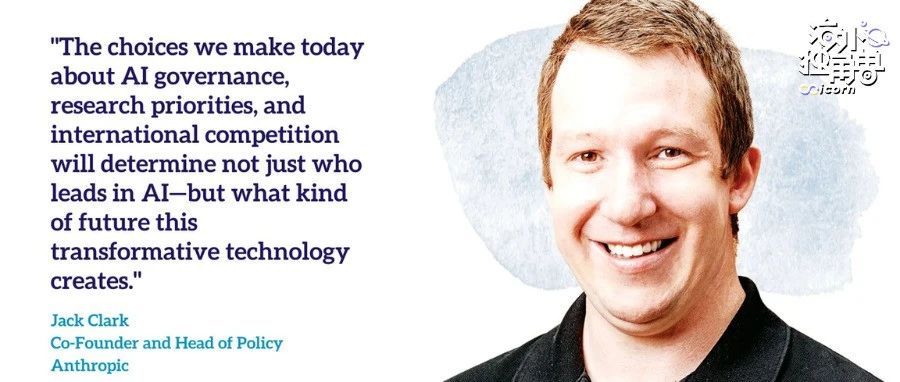
Jack Clark: 美国 AI 政策的隐形推手,时代的良心还是囚徒?
海外独角兽· 2025-07-04 07:58
Core Viewpoint - Jack Clark is a significant figure in the AI landscape, recognized for his insights into China's advancements in AI and his role in shaping U.S. policy towards AI competition with China [3][4]. Group 1: Introduction and Background - The article introduces Jack Clark as a key player in defining AI competition, emphasizing the intertwining of technology and social factors [10][13]. - Clark's journey began as a journalist, where he uniquely reported on neural networks, eventually transitioning to a pivotal role at OpenAI and later co-founding Anthropic [14][15][17]. Group 2: Policy and Strategy - Clark is characterized as having a gentle demeanor but is assertive regarding computational power, which he identifies as the driving force behind AI competition [18][20]. - He has proposed a five-pronged strategy for the U.S. to counter China's AI advancements, focusing on controlling computational resources, enhancing government technical capabilities, and fostering international alliances [29][35]. Group 3: Governance and Regulation - Clark advocates for a "regulatory market" approach, where the government sets goals and private entities compete to provide compliance services, aiming to balance rapid AI development with public interest [25][28]. - His pragmatic institutionalism philosophy emphasizes the need for flexible governance mechanisms to address the challenges posed by AI technology [26][28]. Group 4: Personal Philosophy and Future Implications - Clark's motivations stem from a deep-seated belief in making the rapidly evolving tech landscape comprehensible to the public, reflecting a tension between his humanistic concerns and realist policy advocacy [36][37]. - The article raises questions about whether Clark's actions will lead to a constructive framework for AI governance or contribute to a new technological arms race [40].
Cluely:最具争议的 00 后 AI 创业者,用一款 “作弊神器”2 个月实现 600 万美金 ARR
海外独角兽· 2025-07-03 10:12
Core Insights - Cluely is an AI startup that leverages "realistic viral marketing" to gain attention, evolving from a controversial tool for interview cheating to a comprehensive AI overlay assistant for various scenarios [4][5][8] - The company has achieved significant traction, with over 1 billion views on its content and a rapid growth in annual recurring revenue (ARR) to $6 million within two months [4][5] Group 1: What is Cluely? - Cluely was founded by 21-year-old Roy Lee and initially gained popularity as a Chrome extension called "Interview Copilot," later evolving into a real-time AI assistant for exams, interviews, meetings, and sales [8][10] - The product is defined as a "screen overlay AI assistant platform," allowing users to seamlessly access AI-generated suggestions during various online interactions [8][10] Group 2: Roy Lee's Dramatic Growth Trajectory - Roy Lee's journey began after being expelled from Harvard, which led him to focus on entrepreneurship and eventually create Cluely [14][15] - His experiences shaped his approach to business, emphasizing the importance of rapid iteration and real-time feedback from users [15][16] Group 3: Z Generation Founders' Traffic Logic - The rise of platforms like TikTok has democratized content creation, shifting the focus from quality to quantity, which Cluely capitalizes on by producing controversial content [17][18] - Cluely's strategy involves adapting successful content strategies from platforms like Instagram to others like X and LinkedIn, where such approaches are less common [18][19] Group 4: Talent Perspective of a "Viral Marketing" Company - Cluely employs only engineers and creators, emphasizing the need for individuals who understand viral marketing dynamics [21][22] - The company has successfully utilized a low-cost approach to achieve significant marketing impact, spending only $20,000 to generate results equivalent to traditional companies' multi-million dollar advertising efforts [22] Group 5: Product Iteration Rules in the AI Era - Cluely's rapid product development cycle allows for quick iterations based on user feedback, contrasting with traditional companies that take months to develop and test products [25][27] - The company leverages user behavior data to inform product optimization, enabling a more agile response to market demands [26][27] Group 6: Cluely's AI Competitive Moat and Industry Ambitions - Cluely has introduced a novel "semi-transparent AI overlay" interaction model, which Roy Lee believes will become a standard in the industry [28][30] - The company aims to establish a strong market presence by focusing on product dissemination and user engagement, positioning itself as a leader in the evolving AI landscape [28][32]

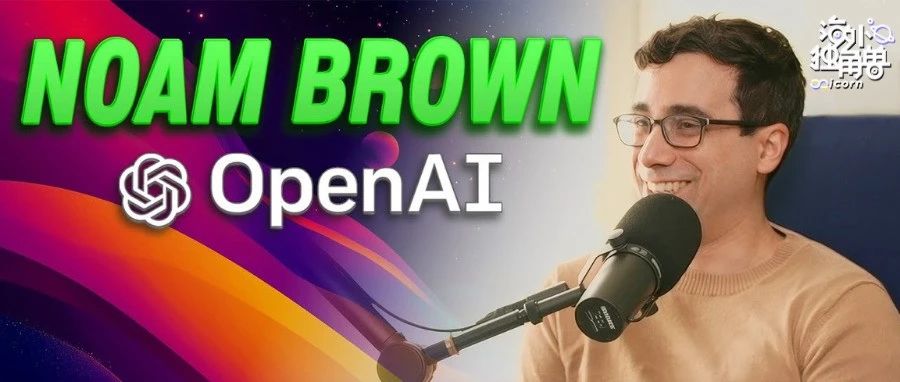
OpenAI 研究员 Noam Brown:Mid-training 是新的 pre-training
海外独角兽· 2025-07-02 11:03
Core Insights - The article discusses the emergence of reasoning capabilities in AI models, highlighting a shift from mere pattern matching to complex cognitive reasoning, which is essential for scientific discovery and decision-making [4][5]. Group 1: Reasoning as an Emergent Capability - Reasoning is an emergent ability that models can only benefit from once pre-training reaches a certain level [5][11]. - The analogy of "fast thinking and slow thinking" is used to explain the relationship between non-reasoning and reasoning models, where the former corresponds to intuitive responses and the latter to deliberate reasoning [8][11]. - The performance of models in multi-modal tasks depends on their ability to integrate complex information and logical reasoning [12][13]. Group 2: Need for a Universal Reasoning Paradigm - Achieving superintelligence requires a universal reasoning paradigm, as merely scaling pre-training is insufficient [20][21]. - OpenAI's leadership recognized the need for a shift towards reasoning paradigms and reinforcement learning, leading to significant resource allocation in these areas [21][24]. Group 3: Efficient Data Utilization through Reinforcement Learning - Reinforcement learning can enhance the efficiency of data usage, which is crucial as data becomes scarcer than computational power [25]. - Current machine learning models require significantly more samples than humans to learn new concepts, highlighting the need for improved sample efficiency [25][26]. Group 4: Non-Consensus Views on Reasoning Ability - Reasoning is not limited to tasks with clear reward functions; it can also excel in subjective fields where results are harder to quantify [33]. - The alignment of AI with user preferences is critical, and reasoning capabilities can help achieve this alignment while mitigating ethical risks [34][35]. Group 5: Bottlenecks in Test-Time Compute Development - Test-time compute faces cost limitations similar to those encountered during pre-training scaling, where increased model size leads to exponentially rising costs [36]. - The absolute time constraints on model responses hinder the speed of experimental iterations, impacting research efficiency [37][38]. Group 6: Mid-Training as a New Pre-Training Phase - Mid-training is introduced as a phase that adds new capabilities to models before the completion of pre-training, enhancing their generalization and practicality [40][41]. - OpenAI has adopted mid-training strategies in its model training processes to improve alignment and safety [41][42]. Group 7: Insights from The Bitter Lesson for Multi-Agent Systems - The concept of multi-agent systems may lead to the emergence of an "AI civilization" through long-term collaboration and competition among AI agents [44]. - Noam's team is exploring a principled research path that contrasts with traditional heuristic-based approaches in multi-agent research [45][46].
从 Co-pilot 到 Agentic AI,Sierra 如何改变客服的游戏规则
海外独角兽· 2025-07-01 07:26
Core Insights - The core value of AI Agents lies in their ability to solve complex business problems that previously required human intervention, with customer service being a primary focus area [3][4] - Sierra AI, founded by former Salesforce co-CEO Bret Taylor, aims to integrate deeply into enterprise processes, functioning as a new workforce rather than just a productivity tool [4][5] - Sierra's AI assistants have demonstrated significant success, achieving over 65% case resolution rates and 95% customer satisfaction during peak seasons, leading to substantial market interest and a valuation of $4.5 billion [5] Group 1: Deployment and Customization - Sierra employs specialized deployment teams that understand client needs, creating tailored solutions that serve as a competitive barrier [8] - The company focuses on delivering successful outcomes rather than just AI tools, emphasizing improved customer satisfaction and revenue growth [8] - Sierra's AI Agents come in three forms: Personal Agents for consumers, Role-Based Agents for employees, and Company Agents for overall business operations [9] Group 2: Customization and Technology - Sierra's competitive edge lies in its ability to provide highly customized solutions, adjusting parameters and workflows to meet specific industry needs [11] - The AI Agents utilize advanced data analysis and machine learning to create customer profiles and tailor interactions accordingly [11] - Sierra has developed a proprietary Voice Activity Detection (VAD) system to enhance voice recognition and interaction quality, significantly outperforming traditional models [15][16] Group 3: Business Model and Market Strategy - Sierra adopts a results-based pricing model, charging clients only when AI Agents successfully complete tasks, aligning the company's success with client outcomes [30][31] - The shift from traditional software sales to a results-oriented model allows Sierra to foster closer relationships with clients and ensure accountability [30][31] - The AI market is evolving towards a focus on specific business solutions rather than generic technology, with Sierra positioning itself to meet these demands [43][44] Group 4: Case Studies and Applications - Sierra's collaboration with SiriusXM led to the development of a customized AI assistant, Harmony, which effectively automates customer interactions and improves service efficiency [36][37] - Minted, a platform for personalized products, achieved over 65% case resolution and 95% customer satisfaction by deploying Sierra's AI assistant during peak seasons [39][40] - These case studies illustrate Sierra's ability to enhance customer experience and operational efficiency across various industries [35][41] Group 5: Future Trends and Leadership - The future of AI Agents will focus on providing specific business solutions rather than just technological advancements, requiring a deep understanding of customer needs [43][44] - Bret Taylor's career trajectory from programmer to strategic CEO reflects the importance of adapting to market demands and leveraging technology for business innovation [52][53] - The rise of AI Agents signifies a shift in the labor market, where AI can take on roles traditionally held by humans, enhancing productivity and creating new business opportunities [34][35]

FutureHouse 联合创始人:AI Scientist 不是“全自动化科研”
海外独角兽· 2025-06-26 12:25
Group 1 - FutureHouse is an AI lab focused on "AI for Science," aiming to create AI systems that can autonomously ask questions, plan experiments, and iterate hypotheses [3][4][5] - The lab has launched four AI research agents: Crow (general intelligence), Falcon (automated literature review), Owl (research agent), and Phoenix (experimental agent), which can access full scientific literature and assess information quality [3][4] - FutureHouse's approach emphasizes scientific automation, transforming laboratories into "black box laboratories" and creating a software pipeline for research [4][5] Group 2 - FutureHouse is building a research API, focusing on automating scientific research through non-traditional mechanisms [19][22] - The founders aim to tackle "moonshot" challenges that require sustained investment and commercial strategies, with a focus on AI-driven scientific automation [22][23] - The ChemCrow project integrates language models and tools to achieve a complete scientific discovery process, demonstrating the value of scientific literature [23][24] Group 3 - The development of FutureHouse's research agents involves a clear distinction between agents and environments, with memory integrated into the agents for better performance [29][30] - The agents are designed to interact with their environments through language, observations, and actions, allowing for flexible combinations of different agents and environments [29][30] - The focus on full-text search and filtering relevant information is crucial for enhancing the performance of the research agents [32][33] Group 4 - FutureHouse believes that AI will not fully replace human involvement in scientific research, emphasizing the need for a semi-autonomous approach [46][47] - The complexity of biological systems requires human oversight, as AI cannot independently conduct experiments without human-defined frameworks [47][48] - The lab is exploring modular approaches to drug discovery and literature research, integrating human resources into the scientific process [51] Group 5 - AI technologies like AlphaFold and ESM-3 are expected to significantly enhance experimental efficiency, potentially increasing hit rates by tenfold or more [53] - The integration of computational predictions with experimental validation is becoming increasingly important in biological research [53][54] - Despite advancements, the complexity of biological systems means that experimental measurements remain the most reliable method for understanding biological mechanisms [55][56]

对谈斯坦福 Biomni 作者黄柯鑫:AI Scientist 领域将出现 Cursor 级别的机会|Best Minds
海外独角兽· 2025-06-20 11:18
Group 1 - The article discusses the rapid advancement of AI in the fields of science and biomedicine, particularly focusing on the emergence of AI scientist agents that can autonomously conduct research and drug discovery [3][4]. - AI scientist agents are defined as agentic systems that can autonomously propose hypotheses, design experiments, and iteratively refine their approaches, distinguishing them from general-purpose agents [4][19]. - The development of Biomni, a biomedical agent environment, aims to integrate various tools, databases, and software to facilitate autonomous research tasks across different biomedical subfields [4][34][38]. Group 2 - FutureHouse, an AI lab backed by former Google CEO Eric Schmidt, has developed AI scientist agents that have reportedly discovered new drugs, showcasing the potential of AI in drug development [3][22][25]. - The article emphasizes that while general-purpose agents like OpenAI's Deep Research can perform many research tasks, they lack the specialized environment and expert knowledge necessary to fully function as AI scientists [28][29]. - The Biomni project aims to create a flexible environment that allows AI agents to perform a wide range of biomedical research tasks, addressing the challenge of integrating numerous specialized tools and databases [34][38][42]. Group 3 - The article highlights the importance of designing benchmarks for AI in biology, as the field currently lacks standardized metrics similar to those in other domains like image recognition [70]. - AI scientist agents are expected to automate routine tasks and potentially exceed human capabilities in specific areas, such as rare disease diagnosis, by leveraging their ability to process large datasets [30][31]. - The integration of AI tools like AlphaFold into the workflows of AI scientists is seen as a way to enhance their capabilities in protein design and other biological tasks [53][54].

AI4Science 图谱,如何颠覆10年 x 20亿美金成本的药物研发模式
海外独角兽· 2025-06-18 12:27
Core Insights - The article discusses the convergence of life sciences and digital internet technologies through AI for Science, highlighting the transformative potential of large models in accelerating scientific discovery [3][6]. - It emphasizes the shift from traditional trial-and-error methods in drug development, which typically require 10 years and $2 billion, to automated processes enabled by AI, significantly reducing costs and time [7][8]. Group 1: Background and Framework - The 1950s saw two revolutions: Shannon and Turing's information theory laid the groundwork for the digital revolution, while Watson and Crick's discovery of the DNA double helix initiated the information age in biology [6]. - The article introduces a mapping framework for understanding AI in life sciences, with axes representing Generalist vs. Specialist and Tech vs. Bio, assessing the breadth and depth of startups in biopharmaceutical development [9][11]. Group 2: Biology Foundation Models - AlphaFold 3 represents a milestone in AI for science, solving the long-standing challenge of protein structure prediction, which previously took months or years [14]. - Isomorphic Labs, a spinoff from Google DeepMind, has secured significant partnerships with Eli Lilly and Novartis, validating its technology's commercial value [15]. - Other models like ESM3 and Evo2 are exploring different paths in biological foundation models, focusing on multi-modal inputs and genome language modeling [17][22]. Group 3: AI Scientist and Automation - The AI Scientist concept aims to automate research processes, addressing the inefficiencies of traditional biological research, which is often lengthy and costly [24]. - FutureHouse is developing a multi-agent system to enhance research efficiency, demonstrating the potential for AI to significantly increase productivity in scientific discovery [38]. Group 4: AI-native Therapeutics - AI-native therapeutics companies aim to integrate AI throughout the drug discovery and clinical development process, focusing on complex therapies like RNA and cell therapies [40]. - Companies like Xaira Therapeutics and Generate Biomedicines are building comprehensive platforms that leverage AI for end-to-end drug development, aiming to reduce time and costs associated with traditional methods [49][51]. Group 5: AI Empowered Solutions - Companies in this category focus on optimizing specific stages of drug development using AI, such as drug repurposing and clinical trial acceleration [68][75]. - Tahoe Therapeutics has released a large single-cell perturbation dataset, enhancing AI model training and drug discovery processes [64]. Group 6: Conclusion - The article concludes that the integration of foundation models and automated AI scientists is driving exponential advancements in scientific exploration, shifting value from traditional CROs to AI-native companies [78].

Granola:ChatGPT、Notion 都入场的 AI 纪要,能真正沉淀工作流吗?
海外独角兽· 2025-06-17 12:03
Group 1 - Granola is gaining attention due to its ability to capture valuable context from meetings, which is essential for LLMs and agents to perform tasks accurately [9][10] - The company offers a differentiated feature of AI supplementing human notes, providing users with greater control and enhancing their cognitive abilities rather than replacing them [10][13] - Granola's early user base included venture capitalists and company executives, which facilitated its initial growth and funding [4][14] Group 2 - The AI meeting notes tool industry is characterized by a variety of functionalities, including transcription, collaboration, and analysis, with many products offering similar features [18][23] - The market for transcription in the U.S. was valued at $21.6 billion in 2020 and grew to $23.8 billion in 2021, with significant contributions from sectors like healthcare and legal [21] - Users prioritize integration and accuracy when selecting meeting note tools, indicating a strong demand for seamless workflow integration [27][28] Group 3 - Granola's valuation reached $250 million after raising $43 million in Series B funding in May 2025 [4][75] - The company aims to become a "second brain" for users, enhancing their workflow and productivity through innovative AI interactions [48][51] - Granola's user base has expanded beyond its initial focus on venture capitalists to include professionals from various industries, achieving a user retention rate of 70% within the first week of use [72]

巨头博弈下,Agent 的机会和价值究竟在哪里?
海外独角兽· 2025-06-14 11:42
Core Insights - The article discusses the evolution and potential of AI Agents, emphasizing that 2025 will be a pivotal year for their development, yet many products struggle to create a true user value loop [6] - The conversation highlights the importance of infrastructure in the success of AI Agents, suggesting that the real barriers to practical applications lie in memory systems, context awareness, and tool utilization [6] Group 1: General Agent as the Main Battlefield - General Agents are seen as the primary battleground for large model companies, with successful examples being those where the model itself acts as the agent [11][13] - The demand for General Agents primarily revolves around information retrieval and light coding tasks, indicating a challenging environment for startups to thrive solely on general needs [13] Group 2: Transition from Copilot to Agent - Cursor exemplifies the transition from a Copilot to a fully functional Agent, highlighting that starting with a Copilot approach allows for user data collection and experience enhancement before evolving into a more autonomous Agent [17][22] - The development of Agents can be categorized by their operational environments, which significantly influence their functionality and user interaction [18][22] Group 3: Coding as a Key Indicator for AGI - Coding is identified as a crucial environment for achieving AGI, as it provides clean, verifiable data that can facilitate reinforcement learning and iterative improvement [24][25] - The ability to perform end-to-end software development is seen as a prerequisite for broader advancements in AI capabilities across various fields [25] Group 4: Conditions for a Good Agent - A successful Agent must have an environment that fosters a data flywheel, where user interactions yield verifiable feedback to guide product optimization [26][28] - The design of AI Native products should consider the needs of both AI and human users, ensuring that the product can evolve to serve both effectively [34] Group 5: Evolution of Pricing Models - The pricing model for Agents is shifting from cost-based to value-based, with various innovative pricing strategies emerging, such as charging based on results or workflows [37][39] - Future models may include direct payments for Agent services, reflecting their growing value in the market [40] Group 6: Human-Agent Interaction - The concepts of "Human in the loop" and "Human on the loop" are discussed, emphasizing the need for effective collaboration between humans and Agents, particularly in decision-making processes [41][42] - The future of interaction will likely involve asynchronous collaboration, where Agents operate independently while humans oversee critical decisions [43] Group 7: Infrastructure as a Foundation for Agent Growth - The development of Agents is heavily reliant on robust infrastructure, including secure environments for execution and effective context management tools [56][57] - The demand for infrastructure will grow significantly as the number of Agents increases, necessitating innovative solutions to support their operations [59] Group 8: Key Milestones in Agent Evolution - Significant advancements in model technology, such as the scaling laws and the ability for models to engage in complex reasoning, are seen as critical milestones for the future of AGI [60][61] - The integration of multi-modal capabilities and improved memory systems are anticipated to enhance the functionality and user engagement of Agents [64]