量子位

Search documents
37岁获诺奖、遭受10年学术不端争议,逆转录酶发现者大卫·巴尔的摩去世,生前最后一周还在发表论文
量子位· 2025-09-09 08:06
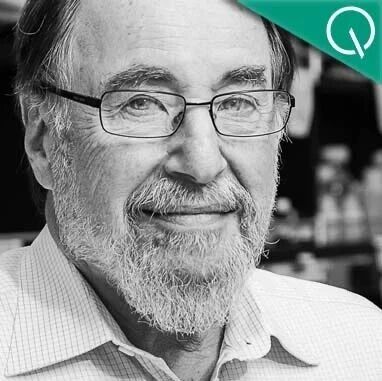
Core Viewpoint - The article discusses the life and contributions of David Baltimore, a Nobel laureate who passed away at the age of 87, highlighting his groundbreaking discovery of reverse transcriptase and its impact on molecular biology and virology [1][6][25]. Group 1: Key Contributions - David Baltimore discovered reverse transcriptase in 1970, which challenged the traditional flow of genetic information and added a pathway from RNA to DNA [4][5][19]. - His work laid the foundation for understanding retroviruses, including HIV, and significantly influenced the fields of molecular biology and cancer research [6][25]. - Baltimore was awarded the Nobel Prize in Physiology or Medicine in 1975, becoming one of the youngest laureates at that time [7][25]. Group 2: Academic Journey - Baltimore was born on March 7, 1938, and showed exceptional academic prowess, earning his Ph.D. by the age of 25 and publishing 10 papers in 18 months during his time at Rockefeller University [11][12][13]. - He collaborated with Howard M. Temin, who also independently discovered reverse transcriptase, leading to their simultaneous recognition in the scientific community [19][25]. Group 3: Later Research and Achievements - After receiving the Nobel Prize, Baltimore shifted his focus to immunology and virology, establishing the Whitehead Institute for Biomedical Research with a significant donation of $135 million [26]. - He made critical discoveries in immunology, including the identification of the NF-κB transcription factor and the RAG proteins essential for immune system function [29][30]. - Baltimore's research on the BCR-ABL fusion protein contributed to the development of the cancer drug imatinib, which is effective in treating chronic myeloid leukemia [29][30]. Group 4: Controversies - Baltimore faced a significant controversy known as the "Baltimore affair," which involved allegations of scientific misconduct related to a paper co-authored with Thereza Imanishi-Kari [36][37]. - The investigation lasted nearly a decade and raised questions about the integrity of scientific research processes in the U.S. [37][45]. Group 5: Legacy and Final Years - Baltimore continued to contribute to science until his last week, emphasizing his lifelong commitment to research and exploration [9][62]. - He maintained a collaborative relationship with the Chinese scientific community and served as a founding board member of Westlake University [60][61].

马斯克机器人出街卖爆米花,还会捉弄顾客
量子位· 2025-09-09 05:22
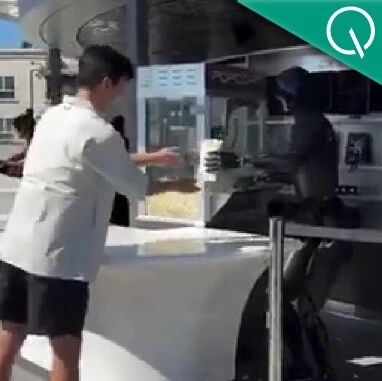
一水 发自 凹非寺 量子位 | 公众号 QbitAI 马斯克的机器人,开始捉弄人了(doge)! 画面中的小哥一上来就伸出了试探的小手: 结果机器人也不惯着,默默装好爆米花之后,反手就是一波"复仇"——一次次捉弄小哥伸手去拿。 一番拉扯结束后,双方终于决定言和,又是比大拇哥又是挥手say goodbay! 不过调侃归调侃,Optimus最近的一系列新动作确实颇引人注目: 先是被曝出可能是Optimus第三代的炫酷金色款 (不仅外观大变样,而且手部设计非常接近人类) ,后又开通了中国区微博账号,现在又走 上街头开始卖爆米花了。 怎么不算另一个角度的"机器人一小步,人类生活一大步"呢~ 拍照还会比剪刀手 从Optimus卖爆米花的更多角度视频来看,这家伙真是"成精"了。 以上小剧场由 特斯拉Optimus机器人 倾情出演,从网友们分享的一众视频来看,它最近都在餐厅门口卖爆米花。 而且眼尖的朋友想必发现了,这款机器人并非最近引起热议的金色款,而是 全黑款 。 看来Optimus最近沉迷于换肤,这次走的是哥特暗黑风(手动狗头)。 面对好奇上前的小朋友,不仅温柔递过爆米花 (毕竟有的小朋友是真的会被逗哭) ,而且拍照环 ...
18岁女孩做养老机器人,上线2天卖爆了
量子位· 2025-09-09 05:22
Core Insights - The article highlights the entrepreneurial success of 18-year-old Audrey Lo and her team, who developed a robot named Sam aimed at enhancing the safety and companionship of elderly individuals [1][4][20] - Sam has gained significant traction, with overwhelming pre-orders leading to website crashes and interest from nursing homes [3][18] Product Features - Sam is designed to monitor elderly safety 24/7, featuring fall detection and autonomous mobility to ensure home safety and provide companionship [6][20] - The robot can send emergency alerts with real-time camera footage if a fall is detected, allowing family members to respond promptly [8] - It assists with medication reminders, task management, and can communicate with elderly users, enhancing user engagement [10][11] - Sam also serves as a support tool for nursing homes, helping with safety inspections and providing entertainment through interactive games and conversations [13][16] Market Opportunity - The global elderly population is projected to reach 1.4 billion by 2030, highlighting a significant market gap in elderly care solutions [20] - The product addresses the pressing needs of families concerned about the safety and companionship of their elderly members [21] Entrepreneurial Journey - Audrey Lo has previously launched two startups, including an esports community platform and a writing company, demonstrating her resilience and adaptability in entrepreneurship [24][30] - Her latest venture, Quo Labs, focuses on AI caregiving for the elderly, stemming from her personal experiences and market insights [34][35] - Audrey is currently studying at the University of Pennsylvania while continuing to innovate in the tech space [37]

Hinton万万没想到,前女友用ChatGPT跟他闹分手
量子位· 2025-09-08 09:00
Core Viewpoint - Hinton expresses concerns about AI while sharing a personal anecdote about his breakup facilitated by ChatGPT, highlighting the intersection of personal life and technology [1][2][6]. Group 1: Hinton's Perspective on AI - Hinton suggests that the relationship between AI and humans should resemble that of a mother and child, emphasizing care and protection [6][8][9]. - He raises the question of how to maintain control over AI that is significantly more intelligent than humans, drawing parallels to the dependency of infants on their mothers [7][8]. - Hinton's views have evolved, and he acknowledges the support of Ilya in his "mother-child" analogy, indicating a shift in his approach to AI [11]. Group 2: Personal Insights and Career Reflections - Hinton clarifies that his departure from Google was not solely about discussing AI risks but also due to a decline in his programming skills and a desire for personal freedom [18][21][22]. - He reflects on his long career and the importance of AI in sectors like healthcare and education, while expressing concerns about wealth inequality exacerbated by AI [23][24]. - Hinton contemplates the potential impact of AI on human creativity and productivity, suggesting that AI can be a valuable tool if it aids humanity [26][27]. Group 3: Future Speculations - Hinton acknowledges the unpredictability of future developments in AI, stating that those who claim to know what will happen are likely misleading [29][30]. - He emphasizes that society is at a pivotal moment, with the potential for both positive and negative outcomes from AI advancements [30][31].

OpenAI新幻觉论文惹争议!GPT-5拉胯是测试基准有问题??
量子位· 2025-09-08 09:00
Core Viewpoint - OpenAI's recent paper discusses the phenomenon of "hallucination" in language models, attributing it to the current training and evaluation processes that favor guessing over admitting uncertainty [2][14]. Group 1: Definition and Implications of Hallucination - OpenAI defines hallucination as the generation of seemingly reasonable but incorrect answers by language models [8]. - The paper highlights that even simple questions can lead to hallucinations, where models provide multiple incorrect answers confidently [10][11]. - The current evaluation methods incentivize models to guess rather than express uncertainty, leading to a culture of "confidently wrong" responses [15][17]. Group 2: Evaluation Metrics and Model Performance - The paper suggests that the evaluation metrics should be redesigned to penalize guessing more than abstaining from answering, and to reward appropriate expressions of uncertainty [22]. - GPT-5, according to the paper, has a higher abstention rate (52%) compared to previous models, indicating it is less likely to guess [6]. - The performance of GPT-5 is framed as a consequence of the flawed evaluation metrics rather than a failure of the model itself [6][19]. Group 3: Community Reactions and Philosophical Discussions - The paper has sparked discussions on whether all outputs from large language models are hallucinations and the implications of this for understanding model capabilities [26][27]. - Some argue that the nature of language and its relationship to truth complicates the notion of hallucination, as language does not equate to truth [34][35]. - The limitations of statistical models are also highlighted, suggesting that errors in predictions are expected outcomes rather than failures [39][40]. Group 4: Practical Applications and Concerns - There are concerns about the practical implications of models that might choose to say "I don't know" instead of providing a plausible answer, which could affect user experience [45]. - The discussion includes the potential utility of hallucinations in creative writing, where a degree of fictional output is acceptable [43][44]. - The balance between providing confident answers and admitting uncertainty remains a critical point of debate among users and developers [46].

马斯克xAI自研推理芯片曝光!代号X1、台积电3纳米工艺、明年就量产
量子位· 2025-09-08 07:00
Core Viewpoint - xAI, founded by Elon Musk, is developing its own inference chip, codenamed X1, using TSMC's 3nm process, with mass production expected in Q3 2026, starting with 300,000 units [1][2]. Group 1: xAI's Chip Development - xAI has been facing a "chip shortage" and plans to raise $12 billion to purchase NVIDIA chips [2]. - The goal is to achieve a computing power equivalent to 50 million H100 chips within five years, significantly more than the 100,000 H100 chips in the world's strongest AI cluster [3][5]. - The move to self-develop chips is seen as a necessary step to meet ambitious targets and reduce reliance on suppliers like NVIDIA and AMD [6][7]. Group 2: Competitive Landscape - Other major tech companies, including Google, Meta, and OpenAI, are also pursuing self-developed chips, indicating a trend in the industry [8][24]. - OpenAI is reportedly working with Broadcom on a custom AI inference chip, expected to be produced in 2026, which mirrors xAI's strategy [21][22]. - xAI's establishment of an office in Seattle is viewed as a strategic move to compete directly with other AI firms already present in the area [14][18]. Group 3: Tesla's Chip Initiatives - Tesla is also developing its own inference chips, with recent updates indicating a focus on the AI5 and AI6 chips, which will support Tesla's AI and autonomous driving efforts [26][34]. - The AI5 chip is positioned as a transitional chip, while the AI6 is intended to be the core of Tesla's future AI ecosystem, with production handled by TSMC and Samsung respectively [34][35]. - The shift from a dual-chip strategy to a single-chip focus reflects a commitment to enhancing chip performance and efficiency [31][33].

Meta超级智能实验室首篇论文:重新定义RAG
量子位· 2025-09-08 07:00
Core Insights - Meta's Superintelligence Lab has introduced a new decoding framework called REFRAG, which redefines Retrieval-Augmented Generation (RAG) and can accelerate Time-to-First-Token (TTFT) by up to 30 times [1][24]. Group 1: RAG Overview - RAG enhances large language models (LLMs) by retrieving relevant information from external knowledge bases to improve the accuracy and timeliness of responses [6]. - The current RAG model faces challenges in balancing reasoning efficiency and information volume, leading to increased computational complexity and delays in generating responses [7][8]. Group 2: REFRAG Framework - REFRAG optimizes the way LLMs process external knowledge through a three-step process: Compress, Sense, and Expand [14]. - The compression step involves using a lightweight encoder to convert long reference texts into compact vector representations, significantly reducing input sequence length and computational load [17]. - The sensing step employs a reinforcement learning-based strategy network to identify and retain key information from the compressed representations [20][21]. - The expansion step combines compressed representations with essential original text blocks to provide LLMs with optimized input for generating responses [23]. Group 3: Performance Improvements - REFRAG has demonstrated a maximum acceleration of 30.85 times in TTFT and a 3.75 times improvement compared to previous advanced methods [24]. - The framework maintains performance accuracy in perplexity and various downstream tasks, such as question answering and summarization, without any loss in performance [27]. - The compression technique allows the model to handle more information within the same computational budget, effectively expanding the context window by 16 times, which can enhance performance in certain tasks [28]. - REFRAG is applicable not only to RAG but also to multi-turn dialogues and long document summarization tasks, addressing core efficiency issues in processing long-context information [29].

大模型破译甲骨文创下新SOTA!复旦团队推出新框架
量子位· 2025-09-08 05:04
Core Viewpoint - The article discusses a novel explainable framework for deciphering oracle bone script based on radical and pictographic analysis, achieving state-of-the-art (SOTA) accuracy in character recognition and zero-shot decoding capabilities [1][5][71]. Group 1: Framework and Methodology - The proposed method integrates radical recognition and pictographic semantic understanding to bridge the gap between the visual forms and meanings of oracle bone characters [5][71]. - A progressive training strategy is introduced, guiding the model from radical identification to pictographic analysis, culminating in a joint analysis phase [6][15]. - The framework employs a dual matching mechanism that enhances zero-shot decoding performance by selecting appropriate candidates from a dictionary based on analysis results [28][71]. Group 2: Dataset and Training - The research team created the PD-OBS dataset, which includes 47,157 Chinese characters annotated with oracle bone images and pictographic analysis texts, providing a valuable resource for future studies [9][73]. - The dataset comprises characters linked to oracle bone images, ancient script images, and modern script images, with annotations for radical and pictographic analysis [10][73]. Group 3: Experimental Results - The proposed method was evaluated against existing methods on the HUST-OBC and EV-OBC datasets, demonstrating superior performance in both validation and zero-shot settings [36][38]. - In zero-shot scenarios, the new method outperformed all other approaches, achieving a Top-10 accuracy improvement of 26.2% on the HUST-OBC dataset and 13.6% on the EV-OBC dataset [45][46]. - The explainability of the model's outputs was quantitatively assessed using BERT-Score, showing significant improvements over other large visual language models [47][49]. Group 4: Qualitative Analysis - The model exhibited strong recognition capabilities in the validation set and demonstrated good generalization in zero-shot settings, even for previously undeciphered characters [66][68]. - The dual analysis of radicals and pictographs provided a comprehensive visual-semantic mapping, enhancing the model's ability to generate semantically grounded and interpretable outputs [68][70].

英伟达推出通用深度研究系统,可接入任何LLM,支持个人定制
量子位· 2025-09-08 05:04
Core Viewpoint - NVIDIA has introduced a Universal Deep Research (UDR) system that supports personalized customization and can interface with any large language model (LLM) [1][2]. Summary by Sections General Overview - The UDR system allows users to fully customize deep research strategies and delegate tasks to intelligent agents [2][10]. - A user interface prototype for UDR is available for download on GitHub, showcasing its versatility [3]. Features and Innovations - UDR enables users to create, edit, and optimize their customized deep research strategies without the need for additional training or fine-tuning [6]. - The system can compile strategies from natural language into executable research orchestration code, delivering final reports to users [11]. - Key innovative features include: - Customizable research strategies defined in natural language, which the system converts into executable code [12]. - A decoupled architecture that allows any LLM to be integrated into a complete deep research tool [13]. - Enhanced product design flexibility, enabling the use of advanced AI models alongside tailored research solutions [14]. User Interface and Control - The prototype showcases four practical functions: real-time strategy modification, preset strategy library selection, progress notifications, and report viewing [15]. - The interface includes a code agent for coordinating LLMs and tools, but lacks user control over resource prioritization and information verification [16]. Efficiency and Cost Management - UDR improves computational efficiency by separating control logic from LLM reasoning, with the entire research process managed by generated code running on the CPU [19]. - The system only calls the LLM when user-defined strategies require it, significantly reducing GPU resource consumption and overall execution costs [20]. Limitations and Future Improvements - The accuracy of UDR's execution of research strategies depends on the quality of the underlying AI model's code generation [21]. - The system assumes user-designed strategies are reasonable and executable, performing only basic checks [21]. - Current limitations include a lack of user intervention during execution and the need for all decisions to be pre-set, which reduces flexibility for long-term or exploratory research tasks [22]. - Proposed improvements include customizable strategy libraries and enhanced user control over LLM reasoning processes [23]. Current Status - The UDR system is still in the prototype phase and has not been officially launched, but there are expectations for a fully functional version in the future [25].

开放全栈!超越π0,具身智能基础大模型迎来真·开源,开发者狂喜
量子位· 2025-09-08 05:04
Core Viewpoint - The article highlights the launch of WALL-OSS, an open-source embodied intelligence model in China, which surpasses previous models like π0 in various metrics [1][5][17]. Group 1: Model Features - WALL-OSS is a general-purpose embodied model with excellent generalization and reasoning capabilities, allowing for quick fine-tuning on proprietary systems [2]. - It is a multimodal model capable of processing and outputting data in various forms, including language, video, and actions, demonstrating strong causal reasoning and spatial understanding [3]. - With 4.2 billion parameters, WALL-OSS is the only open-source embodied model that provides end-to-end unified output across language, vision, and action [5][27]. Group 2: Team and Development - The development team, 自变量机器人, was established in late 2023 and has focused on end-to-end models, launching WALL-A, the largest unified embodied model globally [9]. - The team recently completed nearly 1 billion yuan in Series A+ financing, with major investors including Alibaba Cloud and Sequoia [13][14]. Group 3: Performance and Evaluation - WALL-OSS exhibits superior performance in both ID and OOD evaluations, maintaining high task success rates even in varied scenarios [17]. - It outperforms baseline models in long-term tasks requiring instruction breakdown and in reasoning tasks reliant on CoT [19][20]. - The model retains core functionalities of VLM while enhancing capabilities through multimodal benchmark tests [22]. Group 4: Technical Innovations - WALL-OSS addresses the "impossible triangle" of modality unification, action precision, and capability generalization through systematic architectural and training paradigm innovations [32]. - The model employs a novel architecture combining shared attention and expert flow mechanisms, allowing for effective information processing across modalities [34]. - It utilizes a two-stage training strategy to enhance spatial and semantic understanding while maintaining the original VLM capabilities [41][45]. Group 5: Open Source Strategy - WALL-OSS is fully open-sourced, providing a complete reproducible model solution, including pre-trained weights, training code, and deployment documentation [52][53]. - This initiative significantly lowers the entry barrier for developers, enabling rapid adaptation and deployment of advanced embodied intelligence [56]. - The open-source approach aims to foster industry growth by providing a robust foundational model that can be utilized across various applications [68].