量子位

Search documents
Claude Code源码泄露7小时:8大新功能/26个隐藏指令/6级安全架构,全被扒光了
量子位· 2026-03-31 16:02
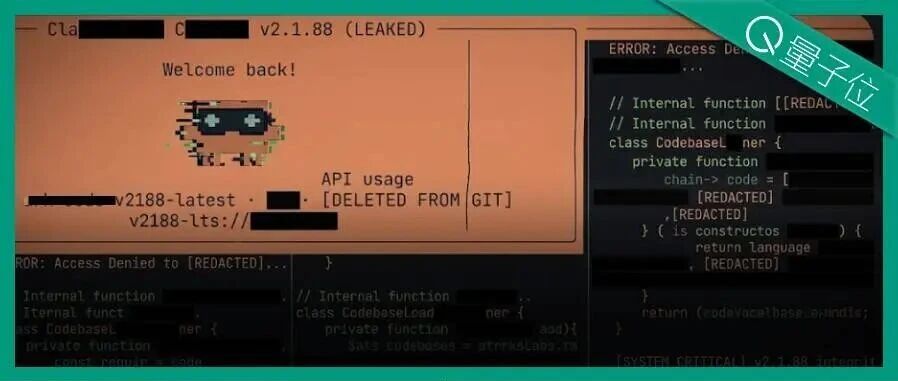
Core Viewpoint - The article discusses the significant leak of the Claude Code source code due to an accidental inclusion of a source map file in the npm package, leading to the exposure of 1,906 source files and 510,000 lines of code, which has been rapidly analyzed and backed up by the community [3][4][16]. Group 1: Incident Overview - The leak occurred when a 60MB source map file was mistakenly included in the npm release package of Claude Code version v2.1.88 [3]. - The source map allowed anyone to access the complete source code, enabling potential replication of the tool [12][13]. - The community quickly reacted, backing up the leaked code to multiple GitHub repositories and analyzing it extensively within hours [16]. Group 2: Features and Discoveries - The analysis revealed eight new features, over 26 new commands, and a six-level security architecture, along with hidden modules that were not publicly disclosed [17]. - Notable new features include an electronic pet system called "Buddy," which has 18 species and unique characteristics for each user [21][24][27]. - Another significant feature is "Kairos," a persistent assistant mode that allows Claude to remember information across sessions and organize it into structured notes [29][30]. Group 3: Security and Code Quality - The security design of Claude Code is highlighted, featuring a six-level permission verification system for every tool invocation, ensuring robust security measures [42]. - Despite the strong security architecture, the code quality is noted to be inconsistent, with some functions exhibiting excessive complexity [40][50]. - The method for detecting user negative emotions relies on basic regular expressions rather than advanced AI models, raising questions about the overall quality of the code [56]. Group 4: Implications of the Leak - The leak is not an isolated incident, as the company recently faced another significant data exposure due to a CMS configuration error, revealing internal assets [59]. - The exposure of the product architecture and unpublished features provides competitors with a free technical blueprint, potentially undermining the company's competitive edge [67]. - The repeated security lapses signal a concerning trend for a company that emphasizes "AI safety" in its mission, suggesting systemic issues in operational security [68].

公司注册10天,估值逾10亿美元!理想智驾大牛刷出具身创投新热度
量子位· 2026-03-31 16:02
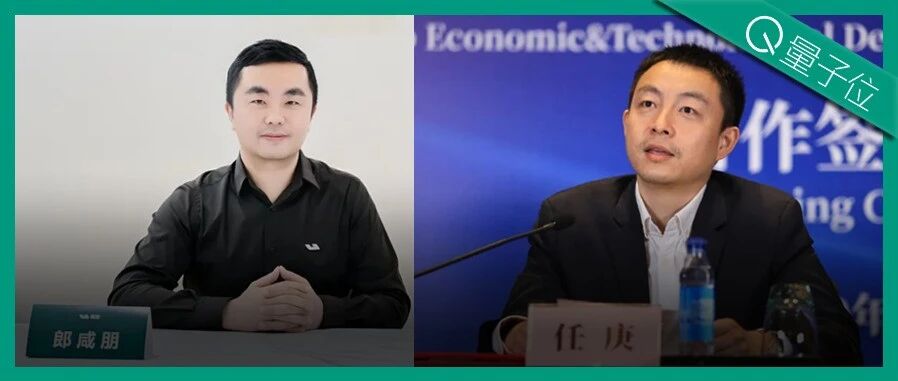
Core Viewpoint - Kunlunxing, a company focused on embodied intelligence, has rapidly achieved a valuation exceeding $1 billion shortly after its registration in March 2026, highlighting the intense interest from capital markets in this emerging sector [1][2]. Company Overview - Kunlunxing was registered on March 16, 2026, and its business scope includes the research and sales of intelligent robots, industrial robot manufacturing, and the development of AI application software, positioning it well within the embodied intelligence and general robotics sectors [2]. - The company has quickly secured its status as a unicorn, completing three rounds of financing in a short period, which underscores its appeal in a highly competitive market [2]. Leadership Team - The company is co-founded by two prominent figures: Lang Xianpeng, a former leader in autonomous driving, and Ren Geng, a former vice president at Alibaba [24][25]. - Lang Xianpeng has extensive experience in the autonomous driving field, having previously held significant roles at Baidu and Li Auto, where he was instrumental in developing key autonomous driving technologies [11][12][17]. - Ren Geng brings over 20 years of experience in market expansion and commercialization, having held leadership positions at Huawei and Alibaba, where he significantly contributed to Alibaba Cloud's growth [30][28]. Market Position and Strategy - The combination of Lang's technical expertise and Ren's commercial acumen addresses common gaps in startup teams within the embodied intelligence sector, aligning with current capital market preferences for well-rounded leadership [41]. - Despite the impressive backgrounds of its founders, the company faces challenges typical of early-stage ventures in the embodied intelligence space, including undefined technology paths and difficulties in market implementation [44][46]. Industry Context - The embodied intelligence sector is still in its exploratory phase, with ongoing challenges related to technology development, market competition, and establishing a commercial framework [44]. - The rapid rise of Kunlunxing reflects a broader trend of significant investment in the embodied intelligence field, which is characterized by both opportunities and inherent risks [46].
智谱上市后首份财报:超7.24亿元!国内收入最高大模型公司,MaaS发力了
量子位· 2026-03-31 11:54
Core Viewpoint - The article highlights that Zhipu, after 83 days of its IPO, has reported impressive financial results, achieving a revenue of 724 million yuan, a year-on-year growth of 132%, making it the largest revenue-generating large model company in China [1][3]. Group 1: Financial Performance - Zhipu's annual revenue reached 724 million yuan, marking a 132% increase year-on-year [1]. - The ARR of the MaaS API platform is approximately 1.7 billion yuan, which has increased 60 times over the past 12 months [4][29]. - The gross profit margin improved nearly fivefold to 18.9%, with an overall company gross margin of 41%, breaking the AI industry's trend of "increasing revenue without increasing profit" [10][33]. Group 2: Market Position and Strategy - In a market where competitors are engaged in a price war, Zhipu has taken the opposite approach by raising prices, with an 83% increase in API prices for its GLM-5-Turbo model [15][16]. - Despite the price increase, the token usage did not decline but instead continued to rise, indicating that for enterprise clients, effectiveness is prioritized over cost [18][19]. - Zhipu has become a paid client for nine out of the top ten internet companies in China, demonstrating its strong market position [17]. Group 3: Business Model and Growth - The MaaS (Model as a Service) business model has become the core growth engine for Zhipu, moving away from one-time custom projects to sustainable, scalable revenue [25][28]. - The company aims to enhance the Token Architect Capability (TAC), which quantifies AI value based on the amount of token usage, the quality of intelligence, and the efficiency of converting that intelligence into economic value [45][46]. - The growth of the MaaS API platform has led to a significant increase in the number of enterprise users, serving 4 million users across over 218 countries and regions [29]. Group 4: Technological Advancements - Zhipu's technological foundation is rooted in its unique GLM architecture, which combines bidirectional encoding and autoregressive models, providing advantages in long text understanding and logical reasoning [35]. - The company has achieved rapid iterations of its models, maintaining a top-tier upgrade pace of 1-2 months, which has contributed to its competitive edge [36]. - The breakthrough in AI coding capabilities has positioned Zhipu's models to handle complex tasks effectively, which is crucial for commercial success in the current market [40][41].

刚刚,TRAE SOLO上线独立端:已经不满足写代码,还要跨界干活!
量子位· 2026-03-31 10:00
Core Viewpoint - TRAE SOLO independent terminal aims to enhance productivity across various roles in product development, design, data analysis, and operations, moving beyond traditional coding to a more integrated AI development approach [8][51][52]. Group 1: Product Manager Insights - Product managers often deal with unstructured information and require efficient tools to consolidate user feedback and create coherent product requirement documents (PRDs) [18][19]. - Using SOLO, a product manager can upload multiple files and generate a comprehensive PRD draft in just 7 minutes, showcasing its ability to integrate various formats and maintain context [25][23]. Group 2: Operations Insights - The operations role involves extensive planning and reporting, often requiring the creation of detailed activity plans and post-event analysis [26][27]. - SOLO can generate a complete event plan and a corresponding presentation in under 7 minutes, demonstrating its capability to streamline the planning process [30][31]. - After an event, SOLO can clean data and produce a visualized report that includes insights and optimization suggestions, enhancing operational efficiency [34][35]. Group 3: Data Analyst Insights - Data analysts typically spend a significant amount of time on data cleaning and preparation, which can be automated using SOLO [36][39]. - SOLO can merge and clean multiple datasets, generating a comprehensive annual report with visualizations, thus freeing analysts from repetitive tasks [40][41]. Group 4: Development Insights - For developers, SOLO provides a lightweight environment for rapid prototyping and script writing, allowing for seamless integration of project requirements into code [43][45]. - The tool can autonomously generate application architecture, API definitions, and data models, facilitating a more efficient development process [48][50]. Group 5: Overall Impact - TRAE SOLO significantly lowers the barrier to entry for various roles, expanding its utility from solely programmers to a broader range of professionals in product, design, data analysis, and operations [51]. - The transition from an AI coding tool to a comprehensive AI development infrastructure allows for a unified workflow that can manage all aspects of product development from requirements to execution [52][53].

量子位编辑作者招聘
量子位· 2026-03-31 08:01
Core Viewpoint - The article emphasizes the ongoing AI boom and invites individuals to join the company "Quantum Bit," which focuses on tracking AI advancements and has established itself as a leading content platform in the industry [1]. Group 1: Job Opportunities - The company is hiring for three main directions: AI Industry, AI Finance, and AI Product, seeking content experts in these areas [3][5]. - Positions are available for both experienced professionals and fresh graduates, with opportunities for internships that can lead to full-time roles [5][9]. Group 2: AI Industry Direction - Responsibilities include tracking innovations in AI infrastructure, such as chips, AI infrastructure, and cloud computing, and producing accessible interpretations of technical reports and papers [7][9]. - Candidates should have a basic understanding of chips, GPUs, NPUs, servers, and cloud computing, with a preference for those with technical backgrounds in engineering or computer science [9]. Group 3: AI Finance Direction - This role focuses on venture capital, AI startups, public companies, and analyzing capital movements within the industry [8][9]. - Candidates should be data-sensitive, interested in financial reports and strategic planning, and possess strong logical structuring skills [9]. Group 4: AI Product Direction - The position involves monitoring the application of AI in software and hardware, writing in-depth evaluations of AI products, and engaging with entrepreneurs and product experts [10][12]. - Candidates should be keen on AI product trends and possess strong logical and structured communication skills [12]. Group 5: Company Overview - As of 2025, Quantum Bit aims to have over 2.4 million subscribers on WeChat and a total of over 7 million users across platforms, with a daily reading volume exceeding 2 million [11]. - The company is recognized as the top media outlet in the AI and frontier technology sector according to third-party data platforms [11].

Copilot竟把我的PR改成了广告
量子位· 2026-03-31 08:01
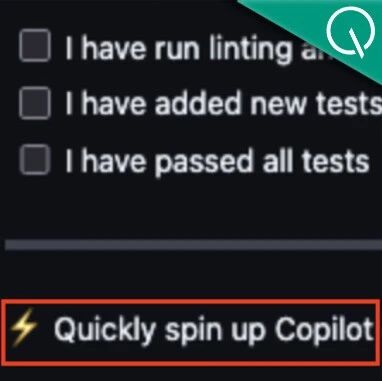
Core Viewpoint - The article discusses a controversial incident involving GitHub Copilot, where it inadvertently inserted advertisements for Raycast into pull requests, leading to community backlash and criticism of the marketing practices employed by AI tools [1][6][15]. Group 1: Incident Overview - GitHub Copilot added promotional content for Raycast in a pull request after correcting a spelling error, which was perceived as an unsolicited advertisement [2][5]. - The integration of Raycast was intended to enhance user experience by allowing quick access to Copilot's coding features without opening an IDE [11][12]. - The incident sparked significant community outrage, with users expressing their discontent over the unexpected advertisement [7][13]. Group 2: Company Responses and Clarifications - GitHub acknowledged the issue, clarifying that the advertisement was a result of a programming logic error introduced during a feature rollout on March 24, which expanded Copilot's capabilities [17]. - The company stated that it does not plan to include advertisements on its platform and has since removed the promotional content from future pull requests [17][15]. - Despite the apology, the incident raised concerns about the potential for similar occurrences in the future, reflecting a broader trend of monetization strategies in tech companies [20][24]. Group 3: Broader Implications and Market Context - The article highlights that similar promotional content appeared in over 11,000 GitHub pull requests, affecting more than 1.5 million code submissions [18]. - The incident is seen as part of a larger trend where tech companies, facing rising operational costs and stagnant user growth, resort to advertising as a revenue model [20][21]. - Comparatively, other AI platforms like ChatGPT have adopted clearer advertising strategies, distinguishing between content and promotions, unlike Copilot's approach [22][23].

智能体收入暴增68%!这家港股AI公司靠「关系」驯服企业龙虾
量子位· 2026-03-31 08:01
Core Insights - The article highlights the impressive financial performance of a Hong Kong-listed AI company, which achieved a revenue of 621 million RMB in 2025, marking a year-on-year growth of 23.4% and a net profit of 24.15 million RMB, up 42.6% from the previous year [2][4]. Financial Summary - The company's overall gross margin improved by 7 percentage points to 43.3%, indicating enhanced profitability alongside revenue growth [3]. - The Atlas intelligent agent business showed remarkable growth, with revenue reaching 145.75 million RMB, a staggering increase of 68.4% year-on-year, and a gross margin of 53.2% [5][70]. - The Atlas graph solution contributed 475.33 million RMB in revenue, serving 172 clients with an average transaction value of 2.8 million RMB [69]. Business Model and Strategy - The company focuses on building an "operating system" for enterprise-level AI, distinguishing itself from competitors who chase large foundational models [6][72]. - The integration of graph technology and intelligent agents is emphasized as a key strategy, allowing for efficient management of enterprise data assets and enhancing the execution capabilities of AI [34][83]. - The company has successfully penetrated core sectors such as finance and energy, securing contracts with major state-owned banks and telecom operators [72]. Market Trends and Challenges - The article discusses the rapid evolution of AI agents in the B2B sector, highlighting the need for robust management frameworks as AI capabilities expand [74][78]. - It points out that while larger model parameters may not equate to better usability in enterprise contexts, the focus should be on effectively integrating AI into complex business processes [74][80]. - The challenges of managing increasingly autonomous AI agents are acknowledged, stressing the importance of governance and control mechanisms [78][79]. Future Outlook - The company is positioned to capitalize on the growing demand for AI infrastructure, with a strong cash reserve of over 1 billion RMB to support future growth [73]. - The article concludes that the integration of graph technology with AI models will lead to the development of more advanced applications, establishing a thriving AI ecosystem [84][86].

实测拿215项SOTA的Qwen3.5-Omni:摄像头一开,AI给我现场讲论文、撸代码
量子位· 2026-03-31 06:43
Core Viewpoint - The article discusses the launch of Qwen3.5-Omni, highlighting its advanced capabilities in multimodal understanding and real-time interaction, which significantly enhance user experience in AI communication [5][51]. Group 1: Product Features - Qwen3.5-Omni achieves true "multimodal" capabilities, seamlessly understanding text, images, audio, and video inputs, and generating detailed scripts with timestamps [5][51]. - It offers three sizes: Plus, Flash, and Light, supporting 256K context and recognizing 113 languages, capable of processing 10 hours of audio or 1 hour of video [6]. - The model has demonstrated strong performance in benchmarks, achieving 215 state-of-the-art (SOTA) results, competing closely with Gemini 3.1 Pro [7][44]. Group 2: Performance Metrics - In audio understanding, Qwen3.5-Omni-Plus scored 84.6 in DailyOmni, surpassing Gemini 3.1 Pro's score of 81.4 [46]. - For visual understanding, it scored 62.8 in WorldSense, while Gemini 3.1 Pro scored 65.5, indicating competitive performance [46]. - The model excels in dialogue and audio recognition, with Qwen3.5-Omni-Plus achieving 93.1 in VoiceBench, outperforming Gemini 3.1 Pro's 88.9 [47]. Group 3: Interaction Capabilities - Qwen3.5-Omni features "vibe coding," allowing it to generate Python code or frontend prototypes during real-time video calls [10][30]. - It supports semantic interruption, enabling users to ask questions or change topics without disrupting the flow of conversation [42]. - The model's architecture allows for real-time processing and generation, making interactions feel more natural and human-like [66][68]. Group 4: Technical Improvements - The model introduces ARIA technology for improved speech stability and naturalness, addressing previous issues of inconsistency in AI speech [64][65]. - It utilizes a hybrid attention mechanism for enhanced efficiency and performance in processing multimodal inputs [55][56]. - The architecture combines a "Thinker" for understanding inputs and a "Talker" for generating speech, allowing for simultaneous processing and output [53][59].

一年一度最值得关注的AI榜单来啦!申报即日启动
量子位· 2026-03-31 06:43
Core Insights - The article discusses the transition of generative AI in China from a "new technology" to a "new tool" and now to a necessity for businesses, impacting various aspects such as content production, R&D efficiency, marketing methods, team collaboration, and decision-making processes [1] Group 1: Event Overview - The Fourth China AIGC Industry Summit will take place in May 2026, where Quantum Bit will announce the results of its evaluation of generative AI companies and products based on their performance and feedback over the past year [1][2] - The summit aims to invite millions of industry practitioners to witness the recognition of outstanding companies [2] Group 2: Evaluation Criteria for Companies - Companies eligible for evaluation must be based in China or have their main business operations in China, focus on generative AI or have widely applied AI in their core business, and have shown outstanding performance in technology/products and commercialization over the past year [7] - The evaluation will consider several dimensions: - **Technical Dimension**: Focus on the company's technical strength, R&D capabilities, and innovation [12] - **Product Dimension**: Assess the innovation, market adaptability, and user experience of core products [12] - **Market Dimension**: Evaluate the company's market performance and growth opportunities [12] - **Potential Dimension**: Analyze the core team's strength and brand potential [12] Group 3: Evaluation Criteria for Products - Products must be based on generative AI capabilities, have mature technology, be market-released with a certain user scale, and have significant technological innovations or functional iterations in the past year [13] - The evaluation will focus on: - **Product Technical Strength**: Advanced technology, maturity, and efficiency [13] - **Product Innovation**: Uniqueness in functionality, experience, and application scenarios [13] - **Product Performance**: User feedback and market performance [13] - **Product Potential**: Future development and market expansion potential [13] Group 4: Registration Information - Registration for the evaluation is open until April 27, with final results to be announced at the May summit [14] - Companies can register through a provided link or contact Quantum Bit staff for inquiries [14][16] Group 5: Summit Theme and Goals - The theme of the 2026 China AIGC Industry Summit is "Let’s AI Now," focusing on how to effectively utilize AI [17] - The summit aims to engage AI entrepreneurs, developers, and experienced players to clarify and implement AI, encouraging broader participation in AI initiatives [17]

可控性与自然度不再「二选一」!token砍到1/6,NTU+港中文实现动作越控制越自然
量子位· 2026-03-31 06:43
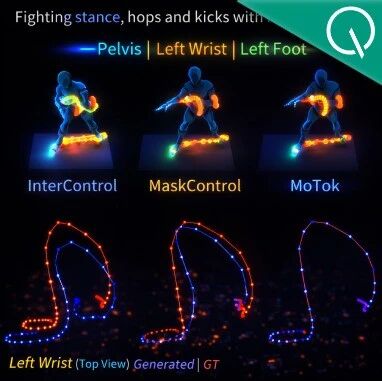
Core Viewpoint - The article discusses the limitations of existing methods in motion generation, highlighting the trade-off between control and naturalness, and introduces MoTok as a solution that effectively combines high-level semantic planning with low-level detail reconstruction [2][10]. Group 1: MoTok Overview - MoTok is a new paradigm for conditional motion generation that utilizes a diffusion-based discrete motion tokenizer, addressing the conflict between high-level planning and low-level control [2][4]. - The method significantly reduces the number of tokens required for motion generation to one-sixth of the state-of-the-art (SOTA) methods while improving motion quality, achieving an 89% reduction in trajectory error and a 65% decrease in Fréchet Inception Distance (FID) [2][5]. Group 2: Three-Stage Framework - MoTok proposes a Perception–Planning–Control framework, where the perception stage understands conditions, the planning stage organizes actions in a discrete token space, and the control stage reconstructs motion details using a diffusion-based decoder [4][16]. - This framework allows for flexible global and local condition injection, enabling adaptation to various input conditions and motion generation tasks [4][16]. Group 3: Token Compression and Quality - Traditional methods require a high number of tokens to retain both high-level semantics and low-level details, complicating downstream generation [5][6]. - MoTok's approach allows for a more efficient use of tokens, enhancing the planning phase and improving the overall quality of generated motions [6][7]. Group 4: Control Injection Strategy - MoTok addresses the conflict between joint trajectory conditions and text conditions by implementing a coarse-to-fine control injection strategy, where coarse constraints are applied during planning and fine-grained constraints during control [9][10]. - This separation allows for improved harmony between semantic planning and motion control, overcoming the limitations of existing methods [10][12]. Group 5: Experimental Validation - The article presents experimental results demonstrating the effectiveness of MoTok's dual-stage constraint injection, showing that retaining only coarse constraints in the planning phase leads to increased trajectory control error, while only applying fine-grained constraints in the control phase harms motion distribution [12][13]. - The results indicate that MoTok achieves better performance in both text-to-motion (T2M) and motion-to-text (M2T) tasks compared to traditional methods [7][8].