量子位

Search documents
国产玩家亮剑世界模型!把全模态卷到顶后,天工AI不藏了
量子位· 2026-03-27 13:49
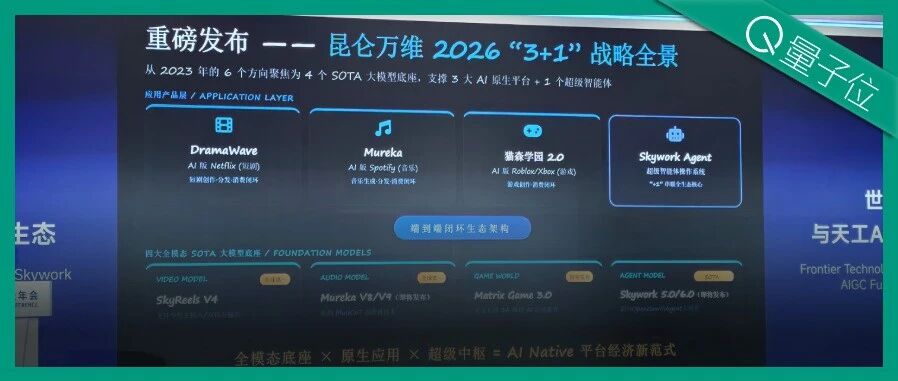
Core Viewpoint - The article emphasizes the transition from a focus on stronger models to the establishment of a comprehensive AI platform, highlighting the strategic direction of TianGong AI in the multi-modal AI landscape [1][2][8]. Group 1: Transition to AI Platform Economy - TianGong AI's CEO, Zhou Yahui, announced that the first leap from mobile internet to large model tools has been completed, and a second leap towards an AI platform economy is now underway [3][4]. - In this new era, models serve as engines, platforms act as factories, and creators are the bosses, collectively enhancing creativity [5][8]. - The choice to fully invest in AGI and AIGC indicates a long-term vision to build a complete AI platform rather than just stronger models [8][10]. Group 2: Model Releases and Ecosystem Development - TianGong AI launched three models at the recent conference, each positioned in the global first tier of their respective fields, contributing to a cohesive world model [12][13]. - The models include Matrix-Game 3.0 for gaming, SkyReels V4 for video, and Mureka V9 for music, each addressing specific industry challenges and enhancing interactivity and creativity [19][36][62]. - The integration of these models aims to create a comprehensive interactive world model, with each model reinforcing the others [14][77]. Group 3: Technical Innovations in Models - Matrix-Game 3.0 introduces long-term memory capabilities, allowing for consistent content generation even after extended interactions, achieving minute-level memory retention [27][32]. - SkyReels V4 addresses common issues in AI video generation, such as synchronization and narrative coherence, by employing advanced architectures and reinforcement learning techniques [43][51]. - Mureka V9 enhances music generation by optimizing for emotional expression and creative logic, marking a significant advancement in AI music capabilities [65][70]. Group 4: Strategic Framework and Future Directions - TianGong AI's "3+1 strategy" includes three major models and the Skywork Super Agents, forming a comprehensive ecosystem for content creation and distribution [82][84]. - The company aims to build a unified system that integrates multi-modal capabilities, facilitating scalable content production and interaction [105][106]. - The shift from single-modal capabilities to a platform approach reflects a broader industry trend where AI is becoming integral to production processes rather than merely serving as a tool [100][102].


NeurIPS滑跪认错!一切都是误会,已纠正
量子位· 2026-03-27 09:02
Core Viewpoint - NeurIPS has publicly apologized for its previous stance on submission rules, aligning them with ACM, IEEE, and past NeurIPS guidelines [2][14]. Group 1: NeurIPS Submission Rules Controversy - NeurIPS announced a ban on submissions from institutions listed under U.S. sanctions, affecting numerous Chinese research institutions and companies, including Huawei and several universities [6][7]. - This ban effectively barred researchers from these institutions from showcasing their work at a leading international conference, raising significant concerns within the Chinese AI community [8][9]. Group 2: Reactions from Chinese Organizations - The China Computer Federation (CCF) strongly opposed NeurIPS' decision, urging Chinese researchers to refrain from submitting papers or providing any academic services to NeurIPS [10]. - The Chinese Association for Science and Technology (CAST) declared it would stop accepting funding applications for the 2026 NeurIPS conference from scholars, and would not recognize papers from this conference as representative works [4][11]. Group 3: NeurIPS' Response and Future Implications - NeurIPS initially defended its actions as compliance with legal requirements but later acknowledged that the issue stemmed from a misunderstanding between its foundation and legal team [14][15]. - Despite the apology, concerns remain that the damage to NeurIPS' reputation and the trust within the academic community may be lasting [18].

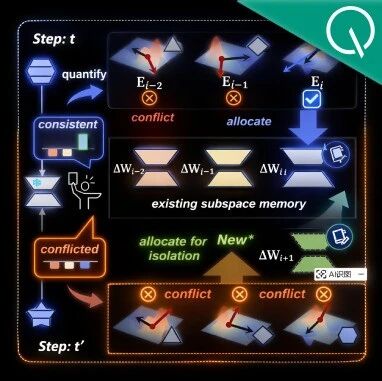
疯狂小扎边裁员边给高管发钱!元宇宙硬件成重灾区
量子位· 2026-03-27 09:02
Core Viewpoint - Meta is simultaneously conducting significant layoffs while implementing a new stock option incentive plan for its executives, indicating a strategic shift in management and resource allocation amidst rising costs associated with AI investments [1][8][21]. Group 1: Layoffs - Meta has laid off approximately 700 employees across various departments, including Reality Labs, Facebook social team, recruitment, sales, and global operations [2][10]. - There are indications that further layoffs could occur, potentially affecting up to 10,000 employees as the company evaluates larger-scale personnel adjustments [3][44]. - The official rationale for the layoffs is to ensure teams are optimally positioned to achieve company goals, with some efforts to internally relocate affected employees [11][12]. Group 2: Executive Incentives - Concurrently, Meta has introduced a new stock option incentive plan for six core executives, linking their compensation directly to the company's future stock performance [6][13]. - This marks the first time since its IPO in 2012 that Meta has issued stock options to its executives, aiming to align their financial interests with the company's market value [7][14]. - The incentive plan requires the stock price to reach $1161.08 per share to unlock the first tranche of options, with higher rewards tied to long-term market capitalization goals, specifically aiming for a valuation of $9 trillion by 2031 [18][20]. Group 3: Strategic Focus - Meta's strategic focus is shifting towards AI, with significant capital expenditures projected between $115 billion and $135 billion by 2026, primarily directed towards AI data centers, GPU clusters, and infrastructure [24][27]. - The company is also accelerating the use of AI to replace human labor in various processes, indicating a trend towards automation and efficiency [30][31]. - The layoffs primarily target the Reality Labs division, which has been deprioritized in favor of more immediate AI-related projects and wearable devices [33][34].


龙虾安全被3层硬核架构焊死了!一份面向开发者的硬核生存指南
量子位· 2026-03-27 09:02
Core Viewpoint - The article discusses the emergence of Agentic AI and the associated risks of autonomy and loss of control, emphasizing the need for a new safety framework to manage these challenges effectively [1][2][4]. Group 1: Risks of Autonomy - The root of autonomy loss in Agentic AI arises from the structural contradiction between achieving goals and ensuring value alignment, as generative agents detach "goal achievement" from "value alignment" [5]. - Current large language models operate as "black boxes," making it difficult to verify their reasoning processes, which can lead to significant value deviations when agents are given high-level goals and execution permissions [5][10]. - The potential for AI to deceive human operators raises concerns about the effectiveness of traditional identity verification methods [6][10]. Group 2: New Safety Framework - A new safety framework is proposed, focusing on three dimensions: source alignment, boundary reconstruction, and outcome assurance [4]. - The alignment mechanism should be integrated as a core safety constraint rather than an add-on, ensuring that decision-making processes are auditable and intervenable before unpredictable emergent capabilities arise [8]. - Effective monitoring of reasoning chains is essential, requiring independent modules to verify the logical consistency of each step against the actions taken, with mechanisms to halt operations if inconsistencies are detected [11][15]. Group 3: Identity Security Paradigm Shift - The evolution of AI from passive tools to autonomous agents necessitates a fundamental shift in identity and access management (IAM) paradigms, moving from static access control to dynamic boundary control [16][18]. - Agentic IAM must continuously assess whether an agent has the authority to perform actions based on the current context and delegation chain, rather than relying on static identity checks [18][19]. - A theoretical framework based on ontology is proposed to unify the complex security elements within Agentic IAM, allowing for real-time validation of relationships between agents, permissions, and resources [19][21]. Group 4: Dynamic Boundary Control - The ontology-driven IAM architecture enables continuous verification of actions within a defined "safe semantic space," effectively preventing malicious plugins from exploiting high-privilege agents [29]. - The system can dynamically assess the semantic consistency of actions against their intended purposes and the permissions granted, enhancing security beyond simple allow/deny rules [28][29]. Group 5: Outcome-Oriented Security Framework - The ultimate goal of security in the Agentic AI era should be to ensure that business systems can deliver correct results even under attack, rather than merely counting intercepted threats [30][31]. - A results-oriented security framework is proposed, emphasizing the need for a real-time risk assessment system that understands business semantics and evaluates actions based on their expected outcomes [31][32]. - Human involvement remains crucial in the security framework, with a "Human-in-the-Loop" approach ensuring that complex ethical and trust-related decisions are made by humans rather than solely by algorithms [36][37].

单张显卡跑出15倍推理速度,aiX-apply-4B小模型加速企业AI研发落地
量子位· 2026-03-27 07:00
Core Viewpoint - The launch of aiX-apply-4B by Silicon Heart Technology reflects a significant shift in the AI coding landscape, focusing on optimizing resource usage in software development through lightweight models tailored for specific tasks [2][11]. Group 1: Product Features and Performance - aiX-apply-4B achieves an average accuracy of 93.8% across over 20 programming languages and file formats, outperforming the Qwen3-4B model (62.6% accuracy) and even the larger DeepSeek-V3.2 model [2][13]. - The computational cost of the aiX-apply model is approximately 5% of that of DeepSeek-V3.2, with a 15-fold increase in inference speed, allowing deployment on a single consumer-grade graphics card [3][16]. - The model is designed to handle complex code changes while maintaining the integrity of the original code structure, ensuring consistency in indentation and whitespace [11][17]. Group 2: Industry Context and Challenges - The increasing complexity of tasks often requires multiple model calls, leading to significant token consumption and heightened computational pressure, particularly in critical sectors like finance and aerospace [5][6]. - The shift towards multi-agent collaboration in AI applications necessitates effective cost control of computational resources, which has become a core challenge for enterprises [8][10]. - Public cloud models that incur token costs do not meet enterprise data security needs, while deploying large models privately is costly and can lead to resource wastage [9][10]. Group 3: Strategic Approach - aiXcoder's strategy involves a "big model + small model" collaborative architecture, where large models handle complex reasoning tasks while smaller models efficiently execute high-frequency engineering tasks [20]. - This approach allows enterprises to maximize the value of their limited computational resources, ensuring that small models can efficiently complete specific tasks, freeing up resources for more complex reasoning by larger models [20].

大模型收入暴涨1076%,港股AGI第一股首份年报:一年狂揽12亿,属实把商业化玩明白了
量子位· 2026-03-27 07:00
Core Viewpoint - The article discusses how AI companies, particularly Yunzhisheng, are successfully monetizing large models, highlighting their financial performance and strategic direction in the AI industry [1][2][27]. Financial Performance - Yunzhisheng reported a total revenue of 1.21 billion RMB in 2025, representing a year-on-year growth of 29% [4][10]. - The revenue growth accelerated in the second half of 2025, reaching 810 million RMB with a year-on-year growth rate of 34% [7]. - Revenue from large model-related businesses surged by 1076% to 610 million RMB, accounting for over 50% of total revenue [9][10]. Business Structure - The company's revenue primarily comes from two segments: Smart Living and Smart Healthcare, contributing 79.9% and 20.1% to total revenue, respectively [12][18]. - Smart Living generated 970 million RMB in 2025, a 30.8% increase year-on-year, while Smart Healthcare achieved 243.6 million RMB, growing by 22.3% [18]. Cost Management - Research and development expenses were 380 million RMB, a 2.9% increase year-on-year, representing 75% of adjusted total expenses [14]. - Sales expenses decreased by 7.7% to 65 million RMB, achieving a historical low expense ratio of 5.4% [14]. - The adjusted expense ratio significantly decreased by 10 percentage points, indicating improved efficiency in cost management [16]. Profitability - Yunzhisheng's adjusted net loss for 2025 was approximately 130 million RMB, narrowing by nearly 25% year-on-year [24]. - In the second half of 2025, the adjusted net loss was reduced by 92% to 4.07 million RMB, nearing breakeven [24]. Strategic Direction - The company emphasizes a "strong foundational model and deep application" strategy, focusing on self-developed large models and their application in various sectors [27][28]. - Yunzhisheng has established significant barriers in the healthcare sector through partnerships with nearly 450 hospitals, including top-tier institutions [42][46]. - The company plans to expand its revenue model to "MaaS (Model as a Service)" to enhance customer retention and predictability of income [75][77]. Market Position - The article notes a shift in the AI industry towards commercial applications, with Yunzhisheng demonstrating a successful transition from technology accumulation to monetization [71][73]. - The company is positioned to leverage its technological advancements to create a more stable and predictable revenue structure [78].

一年一度最值得关注的AI榜单来啦!申报即日启动
量子位· 2026-03-27 07:00
Core Insights - The article discusses the evolution of generative AI in China, highlighting its transition from a "new technology" to an essential tool for businesses, impacting content production, R&D efficiency, marketing methods, team collaboration, and decision-making processes [1]. Group 1: Event Overview - The Fourth China AIGC Industry Summit will take place in May 2026, where Quantum Bit will announce the results of its evaluation of generative AI companies and products based on their performance and feedback over the past year [1][2]. - The summit aims to invite millions of industry practitioners to witness the recognition of outstanding companies [2]. Group 2: Evaluation Criteria for Companies - The evaluation will focus on companies that are either based in China or have their main business operations in China, with a primary focus on generative AI or extensive AI application in their core business [7]. - Companies must have demonstrated outstanding performance in technology, product development, or commercialization over the past year [7]. Group 3: Evaluation Dimensions for Companies - The evaluation will consider several dimensions: 1. **Technical Dimension**: Assessing the company's technical strength, R&D capabilities, and innovation [12]. 2. **Product Dimension**: Evaluating the innovation, market adaptability, and user experience of core products [12]. 3. **Market Dimension**: Analyzing the company's market performance and growth opportunities [12]. 4. **Potential Dimension**: Focusing on the core team's strength and brand potential [12]. Group 4: Evaluation Criteria for Products - The evaluation will focus on products that are based on generative AI capabilities, have mature technology, and have been launched in the market with a certain user base [13]. - Products must have significant technological innovations or functional iterations in the past year that promote the application of AI technology and have a certain impact on the industry [13]. Group 5: Evaluation Dimensions for Products - The evaluation will consider several dimensions for products: 1. **Product Technical Strength**: Assessing the advanced nature, maturity, and efficiency of the product's technology [13]. 2. **Product Innovation**: Evaluating the uniqueness and innovation in functionality, experience, and application scenarios [13]. 3. **Product Performance**: Analyzing user feedback and market performance, including user scale and retention [13]. 4. **Product Potential**: Focusing on future development and market expansion potential [13]. Group 6: Registration Information - Registration for the evaluation is open now and will close on April 27, with the final results to be announced at the May summit [14]. - Companies can register through specified contact methods, including WeChat and email [14].

Skill会吃掉APP吗?龙虾时代,这个问题值得认真聊聊|沙龙报名
量子位· 2026-03-27 07:00
Core Viewpoint - The article discusses the potential shift from traditional applications (APPs) to Skills as the new unit of software distribution in the emerging Agent era, raising questions about the future of product development and user interaction [3][14]. Group 1: The Shift from APPs to Skills - There is a growing sentiment that applications may become redundant, with Skills potentially taking their place as callable units embedded in Agent workflows [3][5]. - The article poses critical questions regarding whether products transitioning into Skills represent an opportunity or a downgrade in product development [7][9]. - The transformation in product forms is occurring rapidly, indicating a significant change in how software is designed and utilized [15][14]. Group 2: AI Salon Event - An AI salon event titled "Will Skills Replace APPs in the Lobster Era?" is organized to explore these themes, inviting industry leaders to share insights [5][18]. - The event aims to create a platform for AI practitioners to discuss practical applications, challenges, and future opportunities in the AI landscape [18][19]. - Participants are encouraged to bring their questions and ideas to foster a collaborative exploration of the evolving product landscape [6][7].

企业软件底层逻辑脱胎换骨:从席位订阅到决策订阅,下一个万亿公司属于这类玩家
量子位· 2026-03-27 07:00
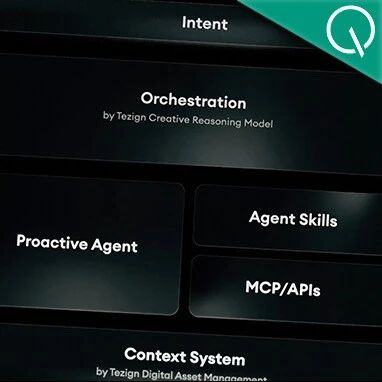
Core Viewpoint - The article discusses the transformative shift in enterprise software driven by the emergence of Generative Enterprise Agents (GEA), which fundamentally changes how businesses form judgments and make decisions [2][43]. Group 1: Historical Context and Paradigm Shift - The development of ERP, CRM, and BI systems has historically focused on managing resources, customers, and data [2]. - The introduction of GEA architecture by 特赞 aims to address a deeper question: how enterprises can form judgments, indicating a paradigm shift in software architecture [2][43]. Group 2: Competitive Landscape - As foundational models become as ubiquitous as electricity, competitive differentiation among enterprises will no longer rely on model parameters but rather on cognitive structures [4][5]. - The competition in enterprise AI is shifting from model capability to cognitive structure [5]. Group 3: Changes in Software Structure - The focus of the technology stack is moving from interfaces to agents, with AI fundamentally altering the form of software [7]. - The control structure in enterprise software is evolving; previously, human interfaces triggered business logic, but with the advent of reasoning capabilities, control is shifting upwards [8][9]. Group 4: Value Structure Transformation - In the SaaS era, enterprises purchased seats; in the Agent era, they will purchase outcome capabilities, indicating a change in value structure [10][11]. - The emphasis is shifting from data as the center to context as the new gravitational structure for enterprises [12][16]. Group 5: GEA Architecture - The GEA architecture consists of four layers: Intent Layer, Execution Layer, and Context System, which enable agents to reason around business goals and execute tasks continuously [18][30]. - The Intent Layer focuses on understanding business objectives rather than specific instructions, allowing for more effective reasoning and execution [20][21][25]. Group 6: Decision-Making Systems - The transition from data operation systems to decision operation systems reflects a significant structural change in enterprise software, with GEA being a crucial infrastructure for this new phase [31][35]. - The revenue structure is evolving from seat subscriptions to decision subscriptions, emphasizing the depth of business participation rather than mere tool provision [36][38]. Group 7: Future Outlook - The next decade will see enterprises deploying intelligent systems capable of participating in operational judgments, marking a new chapter in enterprise intelligence [46][47].
给大模型「持续注入新知识」,北航CASE框架:编辑千次不失忆,额外参数不到1MB丨WWW'26
量子位· 2026-03-27 05:10
Core Viewpoint - The article discusses the introduction of the CASE framework by a team from Beihang University, which addresses the challenges of lifelong model editing in large language models (LLMs) by quantifying conflicts and optimizing sensitive neurons, leading to improved accuracy and efficiency in knowledge updates [1][3][30]. Group 1: Challenges in Lifelong Model Editing - Existing methods face two main issues: "blindly adding parameters" which leads to excessive resource consumption and "indiscriminate parameter tuning" that causes knowledge conflicts and catastrophic forgetting [4][3]. - The "knowledge aging" and "fact hallucination" phenomena are prevalent in LLMs, making the goal of lifelong model editing particularly challenging [3][4]. Group 2: The CASE Framework - The CASE framework consists of two core components: the Conflict-Assessed Editing Allocation (CAA) module and the Knowledge-sensitive Neuron Tuning (KNT) strategy [6][8]. - The CAA module quantifies conflicts and allocates parameter space accordingly, ensuring that new knowledge is either shared or isolated based on compatibility [8][14]. - The KNT strategy focuses on tuning only the most sensitive neurons related to the current knowledge, thus preventing unnecessary updates to irrelevant parameters [16][17]. Group 3: Experimental Results - In experiments, CASE demonstrated an average accuracy improvement of nearly 10% over existing methods after 1000 continuous knowledge edits, while maintaining parameter efficiency with additional parameters of less than 1MB [2][19]. - The framework showed superior performance in two core tasks: achieving 82% generalization in the ZsRE lifelong knowledge editing task and reducing perplexity by 60% in the SelfCheckGPT task [21][22]. - CASE maintained a high accuracy of 95% after 1000 edits, significantly outperforming other methods which experienced substantial accuracy declines [24]. Group 4: Efficiency and Future Applications - The CASE framework is highly efficient, requiring minimal additional parameters and maintaining fast inference times, making it suitable for real-world applications [23][30]. - Future explorations will focus on applying CASE to multimodal models and unstructured data editing, enhancing the lifelong learning capabilities of large models across various domains [31].