机器之心

Search documents
深度拆解沐曦MXMACA软件栈功能,算力自主+生态兼容,破解国产GPU落地难题
机器之心· 2025-12-29 04:44
Core Viewpoint - The article discusses the significant technological release of MXMACA software stack version 3.3.0.X by the newly listed domestic GPU company, Muxi Co., which aims to enhance the usability of domestic GPUs in various applications [1][2][4]. Group 1: Software Stack and Compatibility - The MACA software stack is defined as a core computing platform that includes a complete set of self-developed tools, covering compilers, performance analysis tools, and format conversion components, enabling multi-language support and automatic optimization [6][9]. - MACA serves as a critical link between Muxi's self-developed GPU hardware and upper-layer application ecosystems, addressing the compatibility issues faced by domestic GPUs in the AI development landscape [7][9]. - The new version of MACA focuses on deep adaptation to various scenarios, achieving a high success rate of 92.94% in adapting existing CUDA projects, with 4,173 out of 4,490 projects able to run directly on the Muxi platform [10][12]. Group 2: AI Framework Compatibility - MACA 3.3.0.X has achieved deep compatibility with PyTorch 2.8, covering all 2,650 core operators, and supports other mainstream frameworks like TensorFlow, PaddlePaddle, and JAX [15][16]. - The software stack is designed to ensure seamless usage of existing models without requiring adjustments to project build logic, thus enhancing the platform's usability for developers [16][18]. Group 3: Performance Optimization and Integration - MACA includes a complete toolchain for performance analysis and optimization, enabling developers to identify computational bottlenecks and ensuring a full workflow from development to deployment on the Muxi platform [24][25]. - The software stack is designed to support high-performance computing, with optimizations for distributed training and inference, achieving over 95% linearity in training and improving GPU utilization by 15%-30% [30][31]. Group 4: Strategic Positioning and Ecosystem Development - The launch of MACA 3.3.0.X represents a long-term strategy for Muxi to redefine the ecosystem through software-defined computing, ensuring compatibility with existing CUDA projects while maintaining a self-developed instruction set for security and performance [37][38]. - Muxi's approach aims to lower the migration costs for AI developers, facilitating their transition to the domestic computing ecosystem while maximizing commercial efficiency [39][40].

上线不到一年,收徒百万,首个真人级AI导师技术底牌首次曝光
机器之心· 2025-12-29 04:44
Core Insights - The article discusses the innovative AI tutoring product "AiXue," which utilizes a human-level AI tutor to enhance student engagement and learning outcomes, particularly for students who struggle with traditional classroom interactions [3][10][62] - The product has shown significant improvements in student performance, with one student increasing their math exam score by 40 points after using the AI tutor [2][4] Group 1: Product Overview - "AiXue" is a one-on-one AI tutoring application that has been used by over one million students within a year of its launch [3] - The app boasts a high course completion rate of 92.4%, with individual students logging up to 9000 minutes of learning [4] - The accuracy of answers in AI-led classes improved from 59.1% to 83.2% [5] Group 2: Market Context - The current AI education market is characterized by a reliance on large language models (LLMs) that often fail to provide meaningful educational interactions, primarily serving as advanced chatbots [8][10] - Many existing products in the market focus on rote learning and do not effectively engage students in a way that fosters understanding [9] Group 3: Technological Framework - The company has developed a comprehensive AI education framework that integrates digital personas, voice recognition, large models, and engineering to create a seamless learning experience [13] - The AI tutor is designed as a real-time teaching decision system, moving beyond simple Q&A interactions to a more dynamic educational process [21][22] Group 4: Data Utilization - The AI tutor's effectiveness is enhanced by a robust data ecosystem that captures real-time student interactions, allowing for continuous improvement of teaching strategies [27][33] - The system employs a self-play mechanism similar to AlphaGo to generate training samples, ensuring a diverse and rich dataset for model training [32] Group 5: Interaction and Engagement - The AI tutor is capable of maintaining high interaction frequency, with dozens of one-on-one interactions per class, significantly improving student attention [37] - The quality of interactions has led to an effective response rate of over 95% from students, indicating heightened engagement [38] Group 6: Technical Innovations - The AI tutor's speech recognition and synthesis capabilities have been significantly enhanced, achieving over 95% accuracy in understanding spoken language [41] - The system has been optimized for low latency, achieving response times of 1.0 to 1.6 seconds even under high concurrency conditions [54][60] Group 7: Educational Impact - The AI tutor has demonstrated the ability to personalize learning paths based on individual student needs, resulting in improved accuracy rates from below 60% to over 83% in some courses [38] - The product represents a new paradigm in education, where AI tutors can effectively engage with students in real-time, adapting to their unique learning requirements [62]

QwenLong-L1.5发布:一套配方,三大法宝,让30B MoE模型长文本推理能力媲美GPT-5
机器之心· 2025-12-29 04:44
Core Insights - The article discusses the challenges faced by large models in long-text reasoning, highlighting issues such as false prosperity in performance metrics and difficulties in multi-hop reasoning tasks [2][3] - It introduces QwenLong-L1.5, a new model designed to address these challenges through a comprehensive post-training framework that includes data synthesis, reinforcement learning optimization, and memory management [4][32] Group 1: Challenges in Long-Text Reasoning - Models often achieve high scores in simple tasks but struggle with complex multi-hop reasoning, revealing limitations in deep understanding [2] - The training data for long-text tasks is complex and heterogeneous, leading to instability in reinforcement learning algorithms and potential performance degradation [14][16] - The physical memory limitations of models restrict their ability to process extensive knowledge, necessitating compromises that can result in loss of critical information [3] Group 2: QwenLong-L1.5 Model Features - QwenLong-L1.5 is built on the Qwen3-30B-A3B architecture and aims to provide a systematic solution to long-text reasoning challenges [4] - The model incorporates a high-quality data synthesis pipeline that generates multi-hop reasoning tasks, enhancing the model's ability to think critically [9] - It employs a stable and efficient reinforcement learning strategy to address challenges such as distributional drift and credit assignment problems [12][17] Group 3: Performance Improvements - QwenLong-L1.5 has shown significant performance improvements, achieving an average score increase of 9.9 points compared to its predecessor [26] - The model's enhancements are particularly evident in complex reasoning tasks, with notable performance gains in benchmarks like MRCR and CorpusQA [26][27] - It demonstrates superior capabilities in handling ultra-long tasks, showcasing its potential to process information beyond traditional memory limits [28][29] Group 4: Conclusion and Open Source - The article concludes that the combination of data synthesis, reinforcement learning optimization, and memory management in QwenLong-L1.5 provides a validated path for addressing long-text reasoning challenges [32] - The company encourages open collaboration and sharing of the technology, with relevant details available in the published paper and on GitHub [32]

AAAI 2026 Oral|LENS:基于统一强化推理的分割大模型
机器之心· 2025-12-29 04:44
Core Insights - The article discusses the LENS framework, which aims to overcome the limitations of traditional supervised fine-tuning (SFT) methods in text-prompted image segmentation by integrating reasoning and segmentation processes through reinforcement learning [2][3][9]. Group 1: LENS Framework Overview - LENS introduces an end-to-end reinforcement learning mechanism that combines high-level reasoning with pixel-level execution, enhancing the model's robustness and generalization capabilities in complex tasks [3][9]. - The framework addresses two key issues in segmentation models: limited generalization to unseen prompts and the hidden information bottleneck between reasoning and segmentation processes [6][9]. Group 2: Core Components of LENS - The architecture consists of three main components: 1. **Multimodal Large Language Model (MLLM)**: Acts as the reasoning core, generating a chain of thought and initial bounding box predictions from input images and text instructions [12][13]. 2. **Context Module**: Serves as an information bridge, transforming the reasoning output into a format usable by the segmentation model [12][14]. 3. **Segmentation Model (SAM-2)**: Executes precise pixel-level mask generation based on the processed information from the context module [13][14]. Group 3: Performance Evaluation - LENS achieved state-of-the-art performance in text-prompted segmentation tasks, with an average cIoU of 81.2% on the RefCOCO benchmark and 78.3% on the more challenging GroundingSuite-Eval, outperforming the second-best method by nearly 10% [18][19]. - The framework's unified reinforcement learning reward mechanism enhances both reasoning and segmentation quality, allowing for self-correction even from imperfect initial predictions [16][17].

个人电脑也能进行智能体RL训练?尤佳轩团队开源OpenTinker
机器之心· 2025-12-29 03:04
摘要 随着大模型走向 "智能体元年",强化学习(RL)逐渐被公认为通往通用人工智能的关键技术,但它长期停留在少数实验室的象牙塔里。传统 RL 框架的单体式设 计、昂贵的显存开销以及复杂的工程流程,让许多有想法的团队望而却步。 近期,由 UIUC Jiaxuan You 教授领衔的 U Lab 团队开源了 OpenTinker—— 一个全新的 "强化学习即服务"(RL-as-a-Service, RLaaS)系统。它通过精细的解耦架构 和友好的 API,让算力不再限制算法的开发,无论是在拥有 GPU 集群的研究机构还是在仅有 CPU 的个人电脑上,都能让更多开发者以极少的代码启动智能体训 练。 序言:后训练时代的挑战与突破 进入 2025 年,竞争的核心从模型规模的比拼转向能够进行长程决策的智能体。强化学习正是驱动这一范式转变的发动机。然而,对于大多数学者、创业公司甚至 一些大型科技企业来说,部署一套可靠的智能体训练管线仍然是一场艰难的工程战役。现有 RL 基础设施的瓶颈不只是算法问题,更是工程上的 "阿喀琉斯之踵": 很多人理解理论,却难以真正跑通一套面向落地应用的强化学习系统。 该研究团队来自伊利诺伊大学厄 ...
Groq被收购,失去梦想的员工,人均拿到英伟达的500万美元
机器之心· 2025-12-29 03:04
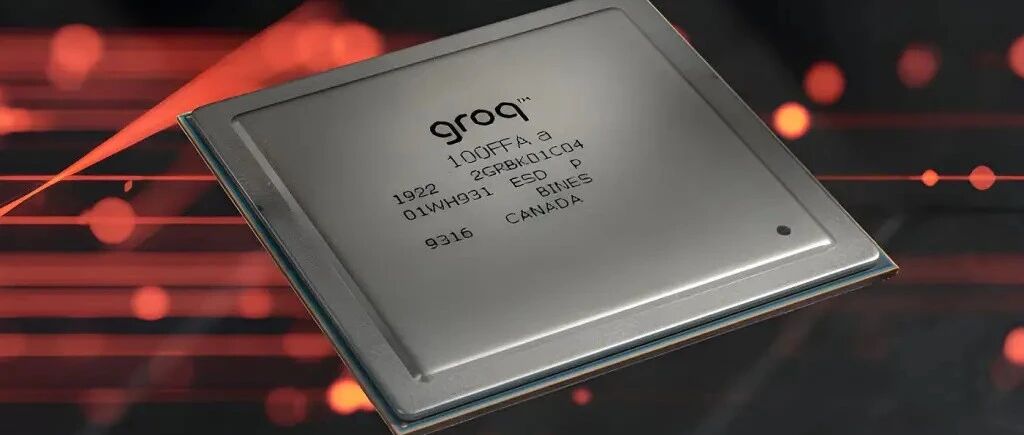
Core Viewpoint - Nvidia's acquisition of Groq for $20 billion, structured as a non-exclusive licensing agreement, marks a significant move in the AI chip sector, allowing Nvidia to absorb a key competitor while navigating antitrust concerns [1][3]. Group 1: Transaction Details - Groq's valuation was only $6.9 billion three months prior, indicating Nvidia paid nearly three times the market value in this deal [3]. - The payment structure involves approximately 85% of the total amount being paid by mid-2026, with 10% at the end of 2026, and the remaining balance settled later [3][19]. - About 90% of Groq's employees will transition to Nvidia, receiving cash for vested shares and Nvidia stock for unvested shares, with a special arrangement for around 50 employees to receive accelerated cash payments [3][19]. Group 2: Employee Impact - Groq employees are estimated to receive between $4 million to $6 million each, based on the company's stock options and the total valuation [6]. - Employees who choose to remain at Groq will receive compensation for vested shares and a package that includes economic participation in the company's future [4][19]. - A special clause allows Groq employees with less than one year of service to bypass the vesting cliff, ensuring they receive some immediate liquidity [5][19]. Group 3: Industry Implications - This transaction reflects a growing trend in Silicon Valley where companies are being "acqui-hired" for their talent and technology rather than being fully acquired [14][15]. - Concerns are raised about the long-term viability of companies left with diminished leadership and resources, as seen in similar past transactions [21]. - The deal is perceived as a strategic move by Nvidia to enhance its AI dominance while providing substantial payouts to Groq's investors and key personnel [10][20].

百万人围观,「上下文图谱」火了,万亿美元新机遇?
机器之心· 2025-12-28 09:00
Core Insights - The emergence of AI agents (Agents) is reshaping the necessity of traditional record systems, leading to debates on their relevance in both consumer and enterprise contexts [2][10] - Some argue that Agents may render record systems obsolete, while others believe they will elevate the standards for effective record systems, revealing a potential trillion-dollar opportunity in new record structures [2][15] Group 1: Understanding Record Systems - Record systems serve as the "ledger" for companies, documenting actions, timestamps, data modifications, and process statuses for accountability and compliance [7][8] - Previous enterprise software ecosystems thrived by establishing themselves as authoritative record systems, creating strong user retention and migration barriers [10] - The introduction of Agents challenges the traditional reliance on record systems, as they can autonomously access data and execute tasks without requiring manual updates to these systems [10][11] Group 2: The Role of Agents - Agents are inherently cross-system and action-oriented, capable of executing workflows across various platforms, thus shifting the user interface from traditional systems to Agents [14][21] - The effectiveness of Agents depends on their understanding of which systems hold the "truth" and the relationships between these truths, indicating a need for robust record systems [14][15] - The demand for well-defined sources of truth will increase as automation rises, necessitating a reevaluation of how record systems are structured and utilized [15][16] Group 3: Decision Traces and Context Graphs - Decision traces, which document the rationale behind specific decisions, are often missing from traditional record systems, leading to a lack of understanding of past actions [22][26] - The concept of a context graph emerges as a living record of decision-making processes, connecting historical precedents and providing a searchable, reusable asset for organizations [26][61] - Capturing decision traces will enable organizations to audit and refine autonomous systems, transforming one-time decisions into reusable knowledge [33][34] Group 4: Challenges and Opportunities - Traditional record systems struggle to capture the full context of decisions, as they often operate in isolation and focus solely on current states rather than historical contexts [39][40] - New startups are positioned to create systems that not only automate processes but also preserve the decision-making context, thus addressing a significant gap in current enterprise solutions [44][46] - The integration of operational context and decision context is essential for building effective AI systems that can learn from past decisions and improve over time [86][88] Group 5: Future Directions - The future of enterprise platforms will hinge on the ability to capture and utilize decision traces, rather than merely layering AI on existing record systems [50][51] - The current market dynamics, including the rise of AI and the need for contextual understanding, present a critical opportunity for companies to innovate in this space [89][93] - Building a foundational context infrastructure will be crucial for enabling Agents to function effectively and for organizations to leverage their full potential [94]

SIGGRAPH Asia 2025最佳论文 | 港中大、曼彻斯特大学获奖
机器之心· 2025-12-28 09:00
Core Insights - SIGGRAPH Asia is a leading conference in computer graphics and 3D visualization, showcasing the latest breakthroughs in the field, with 1,106 technical papers submitted for the 2025 review, resulting in 201 conference papers and 100 journal papers accepted, including only 5 Best Paper Awards [2] - The rise of consumer-grade 3D printing has shifted focus from merely generating aesthetically pleasing 3D models to ensuring their manufacturability in the real world, highlighting the importance of practical applications [5] - The Best Paper Award at SIGGRAPH Asia 2025 was awarded to a study on a new slicing framework for multi-axis DLP 3D printing, which optimizes the slicing process using mathematical tools from neural network training [6] Group 1 - The study introduces a novel slicing framework that redefines the DLP 3D printing process, utilizing a continuous trajectory optimization approach to improve the manufacturing of complex geometries without support structures [6][7] - Traditional DLP 3D printing faces physical limitations due to fixed planar slicing, leading to challenges such as the need for support structures and visible layer lines on printed models [10][11] - The research proposes a multi-axis concept that allows for the adjustment of the build platform's angle, enabling smoother surfaces and reducing the need for support structures [11] Group 2 - The core contribution of the study is the transformation of the slicing problem into a continuous mathematical optimization problem, moving away from discrete geometric rules [14][50] - The optimization framework incorporates both soft objectives, such as surface quality, and hard constraints, ensuring physical feasibility during the printing process [24][27] - The algorithm demonstrates high convergence efficiency, with most test cases generating trajectories in under 30 seconds, showcasing its practical applicability [44] Group 3 - The research team implemented advanced strategies, including joint optimization of the initial pose of the model and adaptive multi-curve segmentation, to enhance the algorithm's solving capabilities for complex geometries [32][39] - The physical experiments validated the manufacturability and surface quality of the generated trajectories, confirming the effectiveness of the proposed optimization framework [48][53] - The study emphasizes the potential for numerical optimization methods to revolutionize manufacturing process planning, with implications for other fields such as CNC machining and robotic welding [52][56]

马斯克的「移动客厅」又火了:20人座无方向盘,每公里才3毛钱
机器之心· 2025-12-28 04:44
Core Viewpoint - The article discusses Tesla's Robovan, highlighting its innovative design and potential applications in urban transportation, as well as the significant increase in Elon Musk's net worth due to a court ruling regarding his compensation plan. Group 1: Tesla Robovan Features and Design - The Robovan is designed without a steering wheel or pedals, relying entirely on an autonomous driving system, similar to the Robotaxi [7][12] - It features a unique aesthetic inspired by 1950s art deco, with a painted aluminum exterior and one-way glass for passenger privacy [7][10] - The vehicle has a low ground clearance, adjustable through an automatic load leveling suspension system, enhancing comfort on uneven roads [9] - The interior can accommodate up to 20 passengers, with a layout that includes a central aisle and large display screens for information and entertainment [10][12] - Robovan is positioned as a multifunctional vehicle, suitable for public transport, logistics, and various service applications, including a wheelchair-accessible version [12][13] Group 2: Technical Specifications and Market Position - Although specific specifications are not disclosed, it is anticipated that the Robovan will utilize a dual-motor system and a battery capacity of approximately 200 kWh [14] - The vehicle is expected to have a cost of operation between 5 to 10 cents per mile, significantly lower than traditional public transport [15] - The Robovan is still in the conceptual stage, with production expected to begin no earlier than 2027, following the Robotaxi's launch in 2026 [15] - Pricing for the Robovan is expected to be higher than the Robotaxi, which is projected to be under $30,000, but exact figures are yet to be announced [16] Group 3: Elon Musk's Net Worth Surge - Elon Musk's net worth recently surged to approximately $749 billion, making him the first person in history to exceed $700 billion [19] - This increase is primarily attributed to a Delaware Supreme Court ruling that reinstated his 2018 compensation plan, which had been previously deemed invalid [20][21] - The reinstatement of the compensation plan, originally valued at $56 billion, has now escalated to a value of $139 billion due to rising Tesla stock prices [21]


AI 真能看懂物理世界吗?FysicsWorld:填补全模态交互与物理感知评测的空白
机器之心· 2025-12-28 04:44
Core Insights - The article discusses the rapid paradigm shift in multimodal large language models, focusing on the development of unified full-modal models capable of processing and generating information across various modalities, including language, vision, and audio [2][4] - The driving force behind this shift is the complexity of the real physical world, where humans have historically relied on multimodal information to understand and interact with their environment [3] - A new benchmark called FysicsWorld has been introduced to evaluate models' capabilities in understanding, generating, and reasoning across multiple modalities in real-world scenarios [4][10] Summary by Sections Introduction to Multimodal Models - Multimodal models are evolving from simple combinations of visual and textual data to more complex integrations that include audio and other sensory modalities [12] - There is a growing expectation for these models to accurately understand and interact with complex real-world environments [12] FysicsWorld Benchmark - FysicsWorld is the first unified benchmark designed to assess models' abilities in multimodal tasks, covering 16 tasks that span various real-world scenarios [6][10] - The benchmark includes a cross-modal complementarity screening strategy to ensure that tasks require genuine multimodal integration, avoiding reliance on single-modal shortcuts [8][23] Evaluation Framework - The evaluation framework of FysicsWorld is comprehensive, covering tasks from basic perception to high-level interactions, ensuring a thorough assessment of models' capabilities [15][17] - The benchmark aims to address the limitations of existing evaluation systems, which often focus on text-centric outputs and lack real-world applicability [16] Performance Insights - Initial evaluations using FysicsWorld reveal significant performance gaps among current models, particularly in tasks requiring deep cross-modal reasoning and interaction in real-world contexts [31] - The results indicate that while models have made progress in basic multimodal tasks, they still struggle with complex scenarios that require robust integration of multiple sensory inputs [31][34] Future Directions - The article emphasizes the need for further advancements in cross-modal integration, dynamic environment understanding, and physical constraint reasoning to achieve true full-modal intelligence [35] - FysicsWorld serves as a critical tool for researchers to map and improve models' capabilities in real-world multimodal interactions [36]