a16z

Search documents
Why Creativity Will Matter More Than Code
a16z· 2025-10-22 13:57
In this episode, a16z's Anish Acharya joins Kevin Rose for an in-depth, fast-paced conversation on the rebirth of consumer technology, and how AI is reshaping what it means to build, invest, and create. They talk about why AI has reignited the consumer renaissance, what it means to build “weird and working” products, and how the next wave of apps will blend emotion, utility, and creativity in entirely new ways. From AI companions and “emotional interfaces” to the tools making it possible to build entire sta ...


Reid Hoffman on AI, Consciousness, and the Future of Humanity
a16z· 2025-10-20 15:09
AI Investing Framework - The AI investing landscape is being navigated with uncertainty, likened to looking through a fog with strobe lights [3] - Obvious AI investments include chatbots and productivity/coding assistance, but differential investment is harder due to widespread awareness [4] - Significant changes are expected due to AI disruption, prompting consideration of new opportunities, such as new LinkedIns enabled by AI [5] - Focus should be on Silicon Valley blind spots, areas where AI will be transformative but outside the conventional software-centric view [6][7] Silicon Valley & AI - Silicon Valley's culture, while fostering coopetition and invention, has blind spots, particularly regarding non-software applications of AI [6][7] - A classic blind spot is the tendency to prioritize software-based solutions, overlooking areas where AI's impact will be significant outside of traditional CS [7] - Silicon Valley tends to overemphasize simulation as a solution, which may not be effective for complex problems like drug discovery [16][18] AI's Impact on Professions - AI diagnostic capabilities are superior knowledge stores compared to human doctors, suggesting a shift in the doctor's role [21] - The future role of doctors will be as expert users of AI knowledge stores, not as mere repositories of memorized information [22] - LLMs are currently limited in reasoning capabilities, often providing consensus opinions rather than lateral thinking [25][28] - Professionals need to develop more sideways and lateral thinking to effectively utilize AI, questioning consensus opinions [28] AI & Automation - Automation of physical tasks (atoms) is more challenging than automating information-based tasks (bits) due to factors like capital expenditure and robotics limitations [33][34] - The economics of robotics depend on the crossover point between capital expenditure (capex) and operational expenditure (opex) [46] - Current AI systems often lack common sense awareness and context awareness, leading to nonsensical outputs [47] AI Adoption & Hype - AI is currently underhyped because many people judge it based on past experiences and haven't seen its recent advancements [54][57] - AI adoption is driven by the "lazy and rich" concept, where it enables users to work fewer hours and make more money [52] - Skepticism towards AI often stems from judging it based on its present capabilities rather than extrapolating its future potential [59] AI Development & Future - AI development involves combining different models, such as LLMs and diffusion models, to achieve complex tasks [59] - Making AI models more predictable and reliable is a crucial goal to alleviate fears about potential misuse [59] - Achieving logical proof and validation in AI, particularly in mathematics, remains a significant challenge [60] - The development of agency and goal-setting capabilities in AI is almost certain, raising concerns about control and alignment with human values [60] LinkedIn's Durability - LinkedIn's durability stems from its large network, which is difficult to replicate due to the lack of sizzle compared to social media platforms [62][63] - LinkedIn has built a network that fosters collaboration and professional connections, making it a valuable resource for its users [63] - LinkedIn's success is attributed to staying true to its purpose, providing a platform for professional networking and collaboration [63] Friendship in the Age of AI - Friendship is a joint relationship where two people agree to help each other become the best possible versions of themselves [64][65] - True friendship involves mutual support and tough love, helping each other grow and improve [65] - AI companions, while potentially awesome, cannot replace human friends because they lack the bidirectional relationship and mutual growth [66][67]

Is AI Slowing Down? Nathan Labenz Says We're Asking the Wrong Question
a16z· 2025-10-14 15:29
AI Development & Progress - The discussion revolves around whether AI progress is slowing down or if society is simply adapting to the rapid advancements [1] - The debate includes considerations around GPT-5, its potential capabilities, and how its launch perception might impact the industry [1] - Scaling laws are mentioned in the context of GPT-4.5 and the changes anticipated with GPT-5, suggesting a focus on model scaling and its effects [1] - Longer context windows and improved reasoning capabilities are highlighted as key areas of AI development [1] AI Applications & Impact - AI's potential role as a scientist and its ability to facilitate new discoveries are explored [1] - The discussion covers the future of coding, AI agents, and recursive self-improvement, indicating an interest in AI's transformative impact on software development and automation [1] - The potential of multimodal AI and robotics beyond chatbots is considered, suggesting a broader view of AI's applications [1] Societal & Economic Implications - The conversation addresses the impact of AI on jobs and automation, referencing the METR study, which is often misunderstood [1] - The importance of building a positive vision for the future of AI is emphasized, highlighting the need for ethical considerations and responsible development [1]
Marc Andreessen's Advice
a16z· 2025-10-07 22:55
be so good they can't ignore you. That remains the best advice I think which is just like quality shows. >> The thing that you want from your venture firm is power.You need the ability to be able to like actually go meet customers and have them take you seriously. >> For most of these people it's years and years and years of of applied effort. The best entrepreneurs of the future, I think, will probably be like quite skilled at like six or eight. ...

Marc Andreessen explains venture investing
a16z· 2025-10-03 17:21
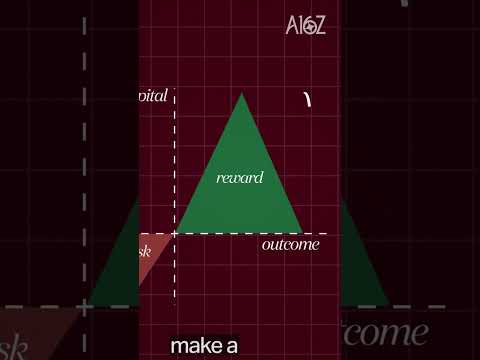
Venture doesn't run on leverage. >> It's asymmetric. You can only lose 1x.>> Yeah. >> Um but you can essentially make a thousandx. And there's two errors in venture.There's the error of commission where you invest in the thing that fails. And then the area of omission where you don't invest in the thing that succeeds. Just in the math overwhelmingly the error of the air that matters is the error of emission. ...
Software is Eating Labor
a16z· 2025-10-03 13:01
The worldwide SAS market is about $300 billion uh per year. The labor market in the US alone is 13 trillion. What software is now going after, the prize that it's going after is the labor market. Almost every software company has basically taken a filing cabinet and turned it into a database. But what's happening now is the whole thing is effectively done endto end. I'm going to talk about how software eats labor. Um and uh you know first Mark wrote an essay for the Wall Street Journal a long time ago about ...

China Has Mass. Can America Catch Up?
a16z· 2025-09-29 13:00
Manufacturing & Industrial Base - US technological superiority is not sufficient for winning conflicts; industrial production has a deterrence factor and mass matters [1] - The US systematically outsourced key-scaled manufacturing, eroding skill sets, and now lags in mass manufacturing at scale [1] - The US needs to address the skilled labor replacement problem in manufacturing, as many skilled workers are nearing retirement [2] - China has strategically controlled rare earths and magnet-making technology, creating supply chain bottlenecks [3] - China's manufacturing autonomy is estimated to be 20 years ahead of the US due to a lack of pressure to put software engineering automation in manufacturing [3] Defense & National Security - US war games show that the US would run out of key high-end munitions in about 8 days, which is not a deterrence factor [1] - Russia is currently outproducing NATO on 155 munitions, highlighting the need for increased production capacity [4] - The US lacks a strategic plan for preserving supply in a catastrophic situation [4] - China has invested in technologies that push back the US and cripple the US war apparatus, such as space-based sensing and carrier killer missiles [20][21] - The US military is better at infusing technology into war fighting, but faces challenges in producing enough at scale and affording it [4] Policy & Economic Strategies - The US government should create large offtake agreements to support domestic manufacturing and create a commercial market [5] - The US needs to identify key supply chain constraints and implement strategies such as stockpiling and regulatory relaxation [5] - The US should leverage its capital market system to create incentives for industries to grow, such as low-cost loans and risk-sharing with banks [5][9] - China's success is due to subsidizing capex, energy, and export subsidies, creating an uneven playing field [7] - The US should counteract unfair practices from other countries and incentivize growth through targeted policies and protectionism [13]

The Common Thread of All Technology: Monitoring the Situation, Ep.1
a16z· 2025-09-27 15:02
Investment Philosophy & Strategy - A16Z views technology as a unifying force across various sectors, including gaming, crypto, and American Dynamism, emphasizing their interconnectedness and shared foundations in technological progress [2] - The firm emphasizes the importance of the "Techno Optimist Manifesto" as a coherent thesis underlying all building and innovation, highlighting the universal journey of founders across different sectors [1] - A16Z sees crypto as a freedom-promoting technology that complements American values by providing mechanisms for capital movement, property rights, and free payments, especially in scenarios where America may not be freedom-promoting [2] - The company recognizes the philosophical alignment between founders in crypto and American Dynamism, noting their shared understanding of America's problems and the need for building solutions [2] Industry Trends & Observations - The discussion highlights a shift in how the current generation understands medicine, with the internet becoming a primary source of information and individuals actively engaging with medical data and seeking second opinions [3][4] - The report notes a potential over-diagnosis of ADHD in young boys, with 23% of 17-year-old boys in America receiving such a diagnosis, raising questions about the incentives driving these diagnoses [6] - The analysis points out the fragmentation of internet culture, with isolated pockets forming around specific interests like gaming, making it difficult for outsiders to understand their nuances [56][58] - X (formerly Twitter) is identified as a unifying platform and a valuable source of ground truth due to its open graph, dialogical nature, and the presence of a generation adept at translating across different platforms [61][64][71] Societal & Cultural Commentary - The discussion touches on the increasing opportunity cost of having children due to career aspirations and international travel, as well as the decline of the multigenerational family unit, which traditionally provided support for childcare [41][42] - The report reflects on the reactions to the Charlie Kirk assassination, highlighting a gap between Zoomer culture and mainstream understanding, emphasizing the need to recognize the diversity and unintelligibility of online cultures [49][55] - The company acknowledges the potential benefits of boredom and exposure to diverse perspectives in traditional schooling, suggesting that these experiences can be valuable for children's development [32][33]

Why Hyperlinks are Blue
a16z· 2025-09-26 15:27
Design Choice - Hyperlinks are blue because the speaker prefers blue [1] - Blue was chosen as it is easily visible [1] - Early graphics computers with limited color palettes (256 total colors) necessitated a color that stood out [1] Color Options - Potential color choices included blue, red, purple, and green [1] - The speaker disliked the other color options [1]

From Vibe Coding to Vibe Researching: OpenAI’s Mark Chen and Jakub Pachocki
a16z· 2025-09-25 13:00
Research & Development Focus - OpenAI is targeting the production of an automated researcher to automate the discovery of new ideas, with a focus on economically relevant advancements [1][3] - The company is extending the reasoning horizon of models, aiming for them to autonomously operate for longer periods, measured by performance in math and programming competitions [3] - OpenAI is working on improving the ability of models to handle more difficult and messy real-world coding environments, focusing on style, proactivity, and latency [12][13] Model Capabilities & Advancements - GPT-5 aims to bring reasoning into the mainstream, improving upon previous models like O3 by delivering reasoning and more agentic behavior by default [1] - The company observed significant progress in models' ability to solve hard science problems, with instances of discovering non-trivial new mathematics [1] - Reinforcement Learning (RL) continues to be a versatile method for continuous improvements, especially when combined with natural language modeling [4][5] Talent & Culture - OpenAI emphasizes fundamental research and innovation, discouraging copying and fostering a culture where researchers are inspired to discover new things [35][36] - The company looks for individuals who have solved hard problems in any field, possessing strong technical fundamentals and the intent to work on ambitious challenges [40] - OpenAI protects fundamental research by delineating researchers focused on algorithmic advances from those focused on product, ensuring space for long-term research questions [46][57] Resource Allocation & Strategy - OpenAI prioritizes core algorithmic advances over product research in compute allocation, but remains flexible to adapt to changing needs [59] - The company believes compute remains a critical resource for advancing AI, not expecting to be data-constrained anytime soon [62][63] - OpenAI acts from a place of strong belief in its long-term research program, not tying it too closely to short-term product reception [70]