
CHINA TELECOM(00728)

Search documents
智通港股通持股解析|2月9日
智通财经网· 2026-02-09 00:31
Group 1 - The top three companies by Hong Kong Stock Connect holding ratio are China Telecom (00728) at 71.46%, Green Power Environmental (01330) at 68.82%, and Haotian International Construction Investment (01341) at 68.17% [1] - The latest holding ratio rankings for the top 20 companies show significant ownership levels, with China Telecom leading at 99.18 billion shares [1] - The recent five trading days saw Tencent Holdings (00700) increase its holding by 51.95 billion, Southbound Hang Seng Technology (03033) by 17.79 billion, and Xiaomi Group-W (01810) by 15.84 billion [1] Group 2 - The top three companies with the largest decrease in holdings over the last five trading days are Yingfu Fund (02800) with a decrease of 35.48 billion, SMIC (00981) with a decrease of 23.60 billion, and Zhaojin Mining Industry (01818) with a decrease of 6.58 billion [3] - Other notable companies in the reduction list include Huahong Semiconductor (01347) with a decrease of 6.56 billion and CSPC Pharmaceutical Group (01093) with a decrease of 5.59 billion [3] - The data reflects significant trading activity and shifts in investor sentiment within the Hong Kong stock market [2]



中国电信公布国际专利申请:“信息传输方法及相关设备”
Sou Hu Cai Jing· 2026-02-07 22:32
今年以来中国电信已公布的国际专利申请27个,较去年同期减少了64%。结合公司2025年中报财务数 据,2025上半年公司在研发方面投入了47.82亿元,同比增2.65%。 数据来源:企查查 以上内容为证券之星据公开信息整理,由AI算法生成(网信算备310104345710301240019号),不构成 投资建议。 证券之星消息,根据企查查数据显示中国电信(601728)公布了一项国际专利申请,专利名为"信息传 输方法及相关设备",专利申请号为PCT/CN2025/110644,国际公布日为2026年2月5日。 专利详情如下: 图片来源:世界知识产权组织(WIPO) ...



抢占人工智能和量子科技产业制高点 打造绿色算力新标杆
Xin Lang Cai Jing· 2026-02-07 20:46
Group 1 - The core viewpoint of the article emphasizes the acceleration of high-quality development in the digital economy and the promotion of the national digital economy innovation development pilot zone in Sichuan Province [3] - Sichuan Telecom has implemented the provincial government's strategic deployment to support the development of artificial intelligence and quantum technology industries by providing essential infrastructure [3][4] - The company launched the self-developed artificial intelligence platform, the Starry MaaS platform, which offers comprehensive services covering data, models, and applications [3] Group 2 - Sichuan Telecom has established a quantum metropolitan area network in Chengdu and Mianyang, successfully creating several demonstration projects, including the first international quantum 0TN dedicated line for major events and the first commercial quantum encryption line for finance [3] - The company has developed the first fully domestic "four-computing integration" super node in Western China, achieving deep integration of quantum computing with general computing, intelligent computing, and supercomputing [3] - The recent construction of the first distributed green computing cluster in a high-altitude area in Ganzi Prefecture demonstrates the effective utilization of local hydropower resources and natural geographical conditions, significantly reducing operational costs [5]

工信部撑腰,降套餐不用跑了
猿大侠· 2026-02-07 04:09
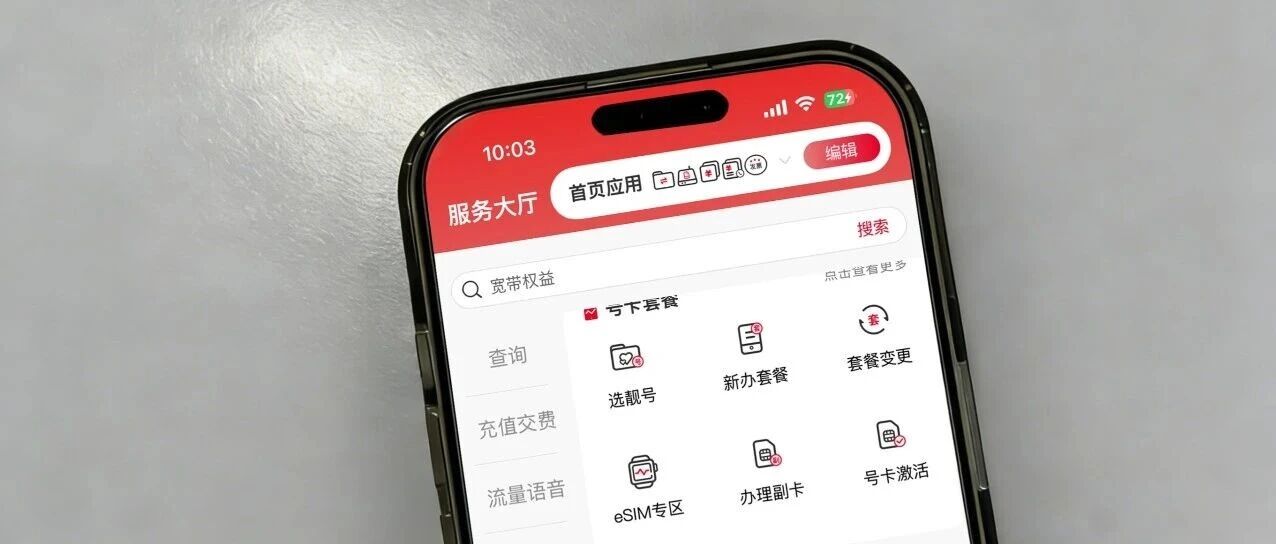
Core Viewpoint - The article discusses the implementation of the Ministry of Industry and Information Technology's (MIIT) initiative "Clear Handling, Safe Use" for telecom services, which aims to simplify package changes and enhance transparency in pricing starting from January 1, 2026 [1]. Group 1: Implementation of New Regulations - Telecom operators are required to provide equal convenience for online and offline package changes, allowing users to downgrade their plans through mobile apps without needing to visit physical stores [1][2]. - Users can easily navigate the official app to find options for changing their packages, including low-cost basic plans [2]. Group 2: Customer Service Improvements - If users cannot find the option to downgrade in the app, they can contact online customer service and reference the new regulations to expedite the process [4][5]. - Mentioning the possibility of filing a complaint with the MIIT often leads to immediate resolution of issues with customer service [5]. Group 3: Transparency in Pricing - The new regulations mandate telecom operators to clearly display pricing information, including monthly fees, data limits, and contract terms, in a dedicated section of their apps [5]. - Following the MIIT's initiative, complaints in the telecom sector decreased by 21.74% in the second half of 2025, indicating improved customer satisfaction [5][6]. Group 4: Consumer Empowerment - Users have reported successfully downgrading their plans to significantly lower prices, demonstrating increased consumer autonomy in managing telecom services [6].


国务院国资委重磅发布!中核集团、中国石油、国家电网、中国华能等榜上有名
中国能源报· 2026-02-06 06:01
Core Viewpoint - The State-owned Assets Supervision and Administration Commission (SASAC) has announced the "Model Central Enterprises" for 2025, emphasizing the importance of promoting advanced deeds and spirits of model enterprises to inspire high-quality development in central enterprises [1][3]. Group 1: Announcement of Model Central Enterprises - The 2025 "Model Central Enterprises" include notable teams and individuals such as Chen Liang from China National Nuclear Corporation, the "9·3" military parade aviation equipment support team from Aviation Industry Corporation of China, and the deep well attack team from China National Petroleum Corporation [3]. - Zhang Yuzhuo, the Secretary of the SASAC Party Committee, expressed high respect for the awarded teams and individuals, highlighting their contributions to the high-quality development of state-owned enterprises [3]. Group 2: Inspirational Messages and Responsibilities - Zhang emphasized that the new era is one for strivers, and the model representatives embody the spirit of dedication and patriotism, motivating countless employees to pursue progress and innovation [4]. - Central enterprise party committees are urged to pay attention to and care for the model representatives, widely publicizing their advanced deeds to inspire employees to contribute to the national economic and social development [4].


数字经济ETF工银(561220)开盘跌0.47%,重仓股中芯国际跌1.48%,海光信息跌1.00%
Xin Lang Cai Jing· 2026-02-06 01:41
Group 1 - The Digital Economy ETF (工银561220) opened at 1.480 yuan, experiencing a decline of 0.47% [1] - Major holdings in the ETF include companies like SMIC, which fell by 1.48%, and Haiguang Information, which dropped by 1.00% [1] - The ETF's performance benchmark is the China Securities Index for State-Owned Enterprises in the Digital Economy, managed by ICBC Credit Suisse Asset Management [1] Group 2 - Since its inception on May 21, 2025, the ETF has achieved a return of 48.72%, with a monthly return of 0.79% [1]






中国时空携手三大运营商推出北斗短信业务,华为、荣耀、小米、vivo、OPPO 等近 60 款手机支持
Xin Lang Cai Jing· 2026-02-06 01:25
Core Insights - China Time-Space Information Group has announced that China Mobile, China Telecom, and China Unicom will support the Beidou SMS service based on its service capabilities [1][3] Group 1: Beidou SMS Service - Beidou SMS is a public satellite communication service based on the short message function of the Beidou satellite navigation system [3][4] - The official launch of the Beidou SMS service is scheduled for November 2024, allowing users to send and receive messages via Beidou satellites in areas without ground network signals [3][4] - Nearly 60 models of smartphones from major domestic brands such as Huawei, Honor, Xiaomi, Vivo, and OPPO have been released to support Beidou SMS [3][4] Group 2: User Accessibility - Users of China Mobile, China Telecom, and China Unicom can easily activate the Beidou SMS service without changing their SIM cards or phone numbers [3][4] - The service aims to enhance user experience by providing a reliable communication method in remote areas [3][4] Group 3: Future Developments - The company plans to leverage its role as the national Beidou system operator to drive industry growth, expand terminal coverage, and promote more smartphones to support Beidou SMS [3][4] - There is a focus on product innovation, accelerating feature iterations, and enriching application scenarios [3][4] - The company aims to optimize services to create a comfortable, secure, and reliable user experience [3][4] Group 4: Regulatory Approval - China Unicom and China Telecom have received approval from the Ministry of Industry and Information Technology to conduct commercial trials of the Beidou III short message public application [3][4]

北斗短信业务正式推出
Ke Ji Ri Bao· 2026-02-06 01:07
Core Viewpoint - The launch of Beidou SMS services by major Chinese telecom companies enhances emergency communication and various public services, integrating satellite communication technology into daily life [1] Group 1: Service Overview - Beidou SMS is a satellite communication service based on the Beidou satellite navigation system, allowing users to send and receive messages without ground network signals [1] - The service is set to officially launch in November 2024, with nearly 60 smartphone models from brands like Huawei, Honor, Xiaomi, Vivo, and OPPO already supporting Beidou SMS [1] Group 2: User Accessibility - Users of China Mobile, China Telecom, and China Unicom can easily activate the Beidou SMS service without changing their SIM cards or phone numbers [1] - The service is designed to provide reliable communication in various scenarios, including hiking in mountainous areas, maritime operations, and emergency rescue situations [1] Group 3: Future Development - China Time Space aims to enhance the Beidou system's operational capabilities by expanding terminal coverage and promoting more smartphones to support Beidou SMS [1] - The company plans to innovate products, accelerate feature iterations, and enrich application scenarios to improve user experience [1]
智通港股通持股解析|2月6日
智通财经网· 2026-02-06 00:31
Core Insights - The top three companies by stockholding ratio in the Hong Kong Stock Connect are China Telecom (71.39%), Gree Power Environmental (68.80%), and Haotian International Construction Investment (67.58%) [1] - Tencent Holdings, Xiaomi Group-W, and Pop Mart have seen the largest increases in stockholding amounts over the last five trading days, with increases of +36.02 billion, +22.89 billion, and +13.06 billion respectively [1] - Conversely, SMIC, Alibaba-W, and Zijin Mining International experienced the largest decreases in stockholding amounts, with reductions of -18.54 billion, -15.48 billion, and -11.14 billion respectively [2] Stockholding Ratios - The latest stockholding ratios for the top 20 companies in the Hong Kong Stock Connect are as follows: - China Telecom (00728): 99.09 million shares, 71.39% - Gree Power Environmental (01330): 2.78 million shares, 68.80% - Haotian International Construction Investment (01341): 75.00 million shares, 67.58% - Other notable companies include: - Kaisa New Energy (01108): 67.54% - Tianjin Chuangye Environmental Protection (01065): 66.84% [1] Recent Stock Increases - The top 10 companies with the largest stockholding increases in the last five trading days are: - Tencent Holdings (00700): +36.02 billion, +6.44 million shares - Xiaomi Group-W (01810): +22.89 billion, +6.55 million shares - Pop Mart (09992): +13.06 billion, +5.39 million shares - Other significant increases include: - Industrial and Commercial Bank of China (01398): +11.23 billion - China Merchants Bank (03968): +11.16 billion [1] Recent Stock Decreases - The top 10 companies with the largest stockholding decreases in the last five trading days are: - SMIC (00981): -18.54 billion, -2.75 million shares - Alibaba-W (09988): -15.48 billion, -0.97 million shares - Zijin Mining International (02259): -11.14 billion, -0.54 million shares - Other notable decreases include: - Zijin Mining (02899): -10.96 billion - Jiangxi Copper (00358): -6.97 billion [2]

三大运营商均推出北斗短信业务!深山荒漠里也能发短信
Bei Jing Ri Bao Ke Hu Duan· 2026-02-05 23:46
Group 1 - The core viewpoint of the articles is that China Telecom and China Unicom have officially received approval from the Ministry of Industry and Information Technology to launch commercial trials for the BeiDou short message service, marking a new phase in satellite communication services in China [1][2] - The commercial trials aim to promote the integration of satellite communication with terrestrial mobile communication, providing services in areas where traditional networks are difficult to cover, such as remote mountains, deserts, and seas [1] - The entry of China Telecom and China Unicom into the BeiDou short message service market signifies the end of the single-operator pilot phase and the beginning of a competitive landscape among the three major telecom operators in China [2] Group 2 - Nearly 60 models of smartphones from major domestic brands like Huawei, Honor, Xiaomi, Vivo, and OPPO now support BeiDou short messages, establishing a hardware foundation for the service's widespread adoption [2] - The development of 6G technology is underway, and the trend of "integrated air and space communication" is becoming increasingly clear, indicating a shift towards more advanced communication technologies [2]