ACC(00914)

Search documents
海螺水泥:传统主业承压、新业务难扛大旗
Xin Lang Zheng Quan· 2025-07-21 09:53
Core Viewpoint - The company, Conch Cement, faces significant challenges due to a combination of cyclical downturns in the industry and structural adjustments, leading to a substantial decline in revenue and profit in 2024 [1] Group 1: Financial Performance - In 2024, Conch Cement achieved operating revenue of 91.03 billion yuan, a significant decrease of 35.51% year-on-year; net profit attributable to shareholders was 7.70 billion yuan, down 26.19% year-on-year [1] - The main business revenue was 74.16 billion yuan, reflecting a year-on-year decline of 14.18%, primarily due to ongoing pressure from falling product prices [1] Group 2: Market Challenges - The core business of Conch Cement is under severe pressure from weak domestic real estate investment and slowing infrastructure growth, which directly undermines demand in the cement market [2] - Despite maintaining a relatively stable gross margin through cost control, the simultaneous decline in both volume and price has significantly impacted profitability [2] - The industry is plagued by overcapacity, leading to persistent low-price competition risks, forcing companies into a passive position of "letting profits go to maintain volume" [2] Group 3: New Business Developments - The aggregate and manufactured sand business showed strong performance, generating revenue of 4.69 billion yuan, a year-on-year increase of 21.40%, with a gross margin of 46.91%, surpassing the main cement business's 24.51% [3] - Conch Cement is actively expanding into aggregates, commercial concrete, and overseas markets, as well as green energy, but the aggregate business currently accounts for less than 10% of total revenue, making it a short-term performance pillar [3] - Overseas projects in Cambodia and Uzbekistan have been initiated, but challenges such as geopolitical risks, local operational pressures, and long return cycles limit their contribution to growth [3] Group 4: Strategic Imbalance - The company attempts to hedge risks in its main business through diversification, but resource allocation reveals contradictions, such as cutting capital expenditure in the cement sector while directing resources to non-core areas [4] - In 2024, the company significantly increased fixed deposits while issuing bonds, reflecting insufficient cash generation capability from new businesses and low capital utilization efficiency [4] - This "broad net" approach without "deep roots" in expansion makes the transformation appear more as a stopgap measure rather than a sustainable strategic overhaul [4]
中证沪港深互联互通中小综合原材料指数报4406.56点,前十大权重包含赤峰黄金等
Jin Rong Jie· 2025-07-21 08:44
Group 1 - The CSI Hong Kong-Shanghai-Shenzhen Interconnection Small Comprehensive Materials Index reported a value of 4406.56 points, showing a monthly increase of 7.39%, a three-month increase of 14.25%, and a year-to-date increase of 15.75% [1] - The index is categorized into 11 industries based on the classification standards of the CSI Hong Kong-Shanghai-Shenzhen Index Series, which includes the CSI 500, CSI Hong Kong-Shanghai-Shenzhen Interconnection Small Comprehensive Index, and the CSI Hong Kong-Shanghai-Shenzhen Comprehensive Index [1] - The top ten weighted stocks in the index include Chifeng Jilong Gold Mining (1.53%), Zhaojin Mining Industry (1.28%), China Rare Earth (1.16%), and others, indicating a diverse representation of companies in the materials sector [1] Group 2 - The market share of the index's holdings shows that Shenzhen Stock Exchange accounts for 49.61%, Shanghai Stock Exchange for 38.62%, and Hong Kong Stock Exchange for 11.76% [2] - In terms of industry composition, non-ferrous metals represent 40.64%, chemicals 37.39%, non-metallic materials 9.51%, steel 8.03%, and paper and packaging 4.43% [2] - The index samples are adjusted biannually, with adjustments occurring on the next trading day after the second Friday of June and December, ensuring that the weight factors are updated accordingly [2]




重大水电项目落地,水利水电板块大幅拉升,中国电建等涨停
Zheng Quan Shi Bao Wang· 2025-07-21 02:43
Group 1 - The establishment of China Yajiang Group and the commencement of the Yarlung Tsangpo River downstream hydropower project inject new growth momentum into the hydropower industry [1] - The Yarlung Tsangpo River downstream hydropower project involves the construction of five cascade power stations with a total investment of approximately 1.2 trillion yuan, aiming for an annual power generation of about 300 billion kilowatt-hours [1] - The project is expected to enhance the long-term growth potential of the hydropower sector, with installed capacity projected between 60 to 70 million kilowatts [1] Group 2 - Central state-owned enterprises in the construction sector, particularly China Power Construction Corporation, are poised to benefit significantly from hydropower engineering projects [2] - China Power Construction Corporation is responsible for over 80% of river planning and more than 65% of the construction tasks for large and medium-sized hydropower stations in China, holding over 50% of the global market share in this area [2] - The demand for cement in Tibet is expected to rise, with a projected cement production of 13.1 million tons in 2024, primarily driven by six leading companies [2] Group 3 - The demand for explosives in Tibet is anticipated to increase due to the scale of the hydropower projects, with an estimated usage of approximately 139,300 tons of explosives for the Yarlung Tsangpo River downstream project [3] - Major players in the explosives market in Tibet include Gaozheng Minexplosion, Yipuli, and Guangdong Hongda, which hold significant market shares [3]





行业周报:中央城市工作会强调城市更新,关注建材投资机会-20250720
KAIYUAN SECURITIES· 2025-07-20 11:43
Investment Rating - The investment rating for the construction materials industry is "Positive" (maintained) [1] Core Views - The central urban work conference emphasized urban renewal, which is expected to drive demand for construction materials such as pipes, waterproofing, and coatings. This will lead to significant improvements in the real estate chain's fundamentals [3] - The report recommends several companies in the consumer building materials sector, including Sankeshu (channel expansion), Dongfang Yuhong (waterproofing leader), Weixing New Materials (high retail business ratio), and Jianlang Hardware. Beneficiary companies include Beixin Building Materials (gypsum board leader) [3] - The National Development and Reform Commission's action plan for the cement industry aims to control cement clinker capacity at around 1.8 billion tons by the end of 2025, which is expected to accelerate energy-saving and carbon reduction efforts [3] Market Performance - The construction materials index fell by 0.23% in the week from July 14 to July 18, 2025, underperforming the CSI 300 index by 1.32 percentage points. Over the past three months, the CSI 300 index rose by 7.17%, while the construction materials index increased by 4.36%, underperforming by 2.82 percentage points. In the past year, the CSI 300 index rose by 14.68%, and the construction materials index increased by 16.62%, outperforming by 1.94 percentage points [4][13] Cement Sector - As of July 18, 2025, the average price of P.O42.5 bulk cement nationwide was 280.87 CNY/ton, down 0.71% month-on-month. The clinker inventory ratio was 67.24%, up 1.35 percentage points [6][27] - The report highlights regional price variations, with Northeast China stable, North China up by 0.74%, and East China down by 1.90% [26] Glass Sector - The spot price of float glass as of July 18, 2025, was 1214.63 CNY/ton, an increase of 0.71% from the previous week. The inventory of float glass nationwide decreased by 175 million weight boxes, a decline of 3.05% [82][84] - The average price of photovoltaic glass remained stable at 116.02 CNY/weight box [89] Fiberglass Sector - The market price for non-alkali 2400tex direct yarn ranged from 3300 to 4100 CNY/ton, with variations depending on the manufacturer [6] Consumer Building Materials - As of July 18, 2025, the price of asphalt was 4570 CNY/ton, stable week-on-week, and up 2.93% year-to-date. The price of titanium dioxide was 13050 CNY/ton, down 1.14% month-on-month [6]


中泰红利量化选股股票发起A:2025年第二季度利润6.93万元 净值增长率0.58%
Sou Hu Cai Jing· 2025-07-18 02:40
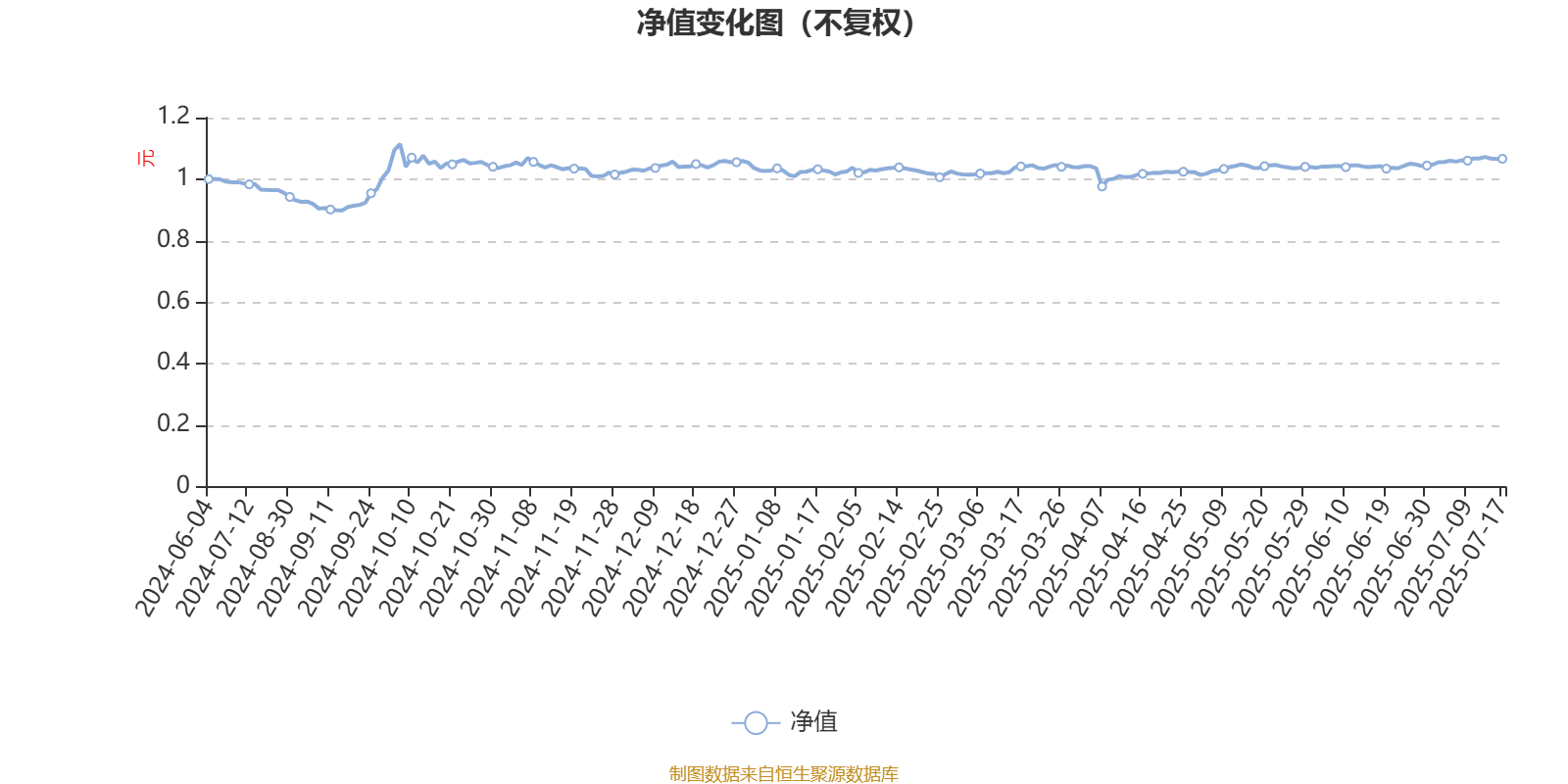
Core Viewpoint - The AI Fund Zhongtai Dividend Quantitative Stock Selection A (021167) reported a profit of 69,300 yuan in Q2 2025, with a net value growth rate of 0.58% for the period, and a total fund size of 12.2475 million yuan as of the end of Q2 2025 [3][16]. Fund Performance - As of July 17, the fund's unit net value was 1.066 yuan [3]. - The fund's performance over different periods includes a 4.66% growth rate over the last three months, 3.23% over the last six months, and 8.37% over the last year, ranking 93rd, 97th, and 92nd respectively among comparable funds [4]. Investment Strategy - The fund employs a quantitative investment strategy based on objective indicators, focusing on dividend yield, historical volatility, and stability of historical dividend yields when selecting stocks [3]. - The investment portfolio is constructed to minimize exposure to non-dividend-related factors such as scale and industry [3]. Portfolio Composition - As of Q2 2025, the fund's investment portfolio is heavily weighted in the industrial, financial, and consumer discretionary sectors [3]. - The top ten holdings include China National Offshore Oil Corporation, Agricultural Bank of China, China State Construction Engineering, Kweichow Moutai, China Merchants Bank, Anhui Conch Cement, Industrial and Commercial Bank of China, Gree Electric Appliances, Jiuli Special Materials, and Meihua Holdings [19]. Risk Metrics - The fund's Sharpe ratio since inception is 0.616 [9]. - The maximum drawdown since inception is 12.37%, with the largest quarterly drawdown occurring in Q2 2025 at 6.3% [11]. Fund Positioning - The average stock position since inception is 90.04%, compared to the industry average of 88.05%. The fund reached a peak stock position of 92.43% at the end of H1 2025 and a low of 85.08% at the end of Q3 2024 [14].





中证香港300原材料指数报2311.34点,前十大权重包含山东黄金等
Jin Rong Jie· 2025-07-16 07:40
Core Viewpoint - The China Securities Hong Kong 300 Materials Index has shown significant growth, with a 41.40% increase year-to-date, indicating strong performance in the materials sector [1][2]. Group 1: Index Performance - The China Securities Hong Kong 300 Materials Index reported a value of 2311.34 points, with a 6.83% increase over the past month and a 23.83% increase over the past three months [1]. - The index is designed to reflect the overall performance of different industries in the Hong Kong market, classified according to the China Securities industry classification standards [1]. Group 2: Index Composition - The top ten holdings in the China Securities Hong Kong 300 Materials Index include Zijin Mining (26.28%), China Hongqiao (10.9%), and Zhaojin Mining (7.98%) among others [1]. - The index is fully composed of stocks listed on the Hong Kong Stock Exchange, with a 100% representation [1]. Group 3: Industry Breakdown - The industry composition of the index shows that non-ferrous metals account for 78.94%, non-metallic materials for 15.04%, chemicals for 4.62%, and paper and packaging for 1.41% [2]. - The index samples are adjusted biannually, with changes implemented on the next trading day following the second Friday of June and December [2].


城市工作会议联合解读电话会议
2025-07-16 00:55
Summary of Conference Call on Urban Development and Industry Insights Industry and Company Involved - **Industry**: Real Estate, Building Materials, Energy Drinks - **Companies Mentioned**: Dongpeng Beverage, Conch Cement, Taipai Group, Huaxin Cement, China Resources, Binjiang, Greentown, Jianfa Zhonghai Key Points and Arguments Urban Development and Real Estate Policy - The Central Urban Work Conference emphasizes a shift from large-scale expansion to improving existing urban stock, indicating a focus on urban renewal rather than large-scale stimulus, which benefits post-cycle industries like building materials and home appliances [1][2][3] - The policy aims to steadily advance the renovation of urban villages and dilapidated housing, avoiding a return to the monetization of shantytown renovations seen in 2015-2016, suggesting limited demand for incremental cyclical products [1][3][5] - The real estate market is transitioning from expansion to quality enhancement, focusing on improving existing housing quality and surrounding environments rather than new construction [1][6][7] Regional Market Performance - The real estate markets in first and second-tier core cities and their metropolitan areas are expected to outperform the national average, with regional developers like China Resources, Binjiang, Greentown, and Jianfa Zhonghai being noteworthy [1][8] Energy Drink Consumption Trends - Population movement significantly impacts energy drink consumption, with higher preferences in first and second-tier cities. As population density increases, energy drink consumption is expected to rise, making Dongpeng Beverage a recommended investment [1][9][10] - The consumption of energy drinks varies across provinces, with Guangdong leading in market share for Red Bull and Dongpeng, which is projected to maintain a 35% revenue growth rate [1][11] Building Materials Industry Insights - Urban renewal and village renovation will have limited demand pull for the building materials industry, with the consumption of building materials being most affected, particularly in segments like waterproofing, piping, and coatings [2][12][15] - The cement sector is expected to benefit from demand growth and supply-side reforms, with recommendations for Conch Cement, Taipai Group, and Huaxin Cement as investment targets due to their strong market positions and profitability [2][15][16] Market Outlook and Investment Strategy - The overall sentiment from the conference indicates a cautious approach to large-scale stimulus, with the market expected to remain within a relatively stable range [3][5] - Investment strategies should focus on a "barbell" approach, balancing technology and military sectors with dividend-paying assets like bank stocks and high-dividend service sector stocks [3] Conclusion - The conference highlights a significant policy shift in urban development and real estate, with implications for various industries. The focus on quality over quantity in housing and urban infrastructure suggests a need for investors to adapt their strategies accordingly, particularly in the building materials and consumer goods sectors.


港股收评:午后强势拉升!科指大涨2.8%,稳定币、生物医药股走高





Ge Long Hui· 2025-07-15 08:41
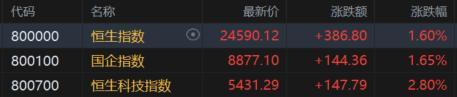
Group 1 - China's Q2 GDP growth reached 5.2%, exceeding expectations, leading to a rally in Hong Kong stocks [1] - The Hang Seng Technology Index surged by 2.8%, while the Hang Seng Index and the National Enterprises Index rose by 1.6% and 1.65% respectively [1][2] - Major technology stocks performed strongly, with Alibaba rising nearly 7%, Meituan and Baidu up over 4%, and Tencent increasing by 3.5% [2][4] Group 2 - The cryptocurrency sector faced challenges, with Bitcoin dropping below $117,000, leading to a decline in related stocks [2] - Real estate development investment in China fell by 11.2% year-on-year in the first half of the year, impacting domestic property stocks significantly [2][13] - The construction materials and cement stocks also saw declines, with major players like Jinyu Group and Anhui Conch Cement dropping over 6% and 4% respectively [11][12] Group 3 - The innovative drug sector showed strength, with companies like BeiGene and CSPC Pharmaceutical rising over 7% [7][8] - Stablecoin-related stocks performed well, with Yunfeng Financial increasing by 19.5% and Weishi Jiajie up by 11% [9][10] - The entertainment sector saw gains, with China Star Group rising over 10% and Tencent Music increasing by over 5% [15] Group 4 - Southbound funds recorded a net inflow of HKD 3.824 billion, indicating strong interest in Hong Kong stocks [18] - Analysts noted a shift in investor sentiment towards undervalued stocks, with some funds looking to capitalize on recent price corrections in major internet companies [17]