
LENOVO GROUP(00992)

Search documents
恒指迎四月,有望打破短期弱势
Guodu Securities Hongkong· 2026-04-01 01:34
Group 1: Market Overview - The Hang Seng Index showed a slight increase of 37 points or 0.15%, closing at 24,788 points after fluctuating throughout the day [3] - In March, the Hang Seng Index experienced a decline of 1,842 points or 6.92%, and a cumulative drop of 842 points or 3.29% in the first quarter of the year [2] - The total market turnover for the day was HKD 255.76 billion, with a net inflow of HKD 705 million from northbound trading [3] Group 2: Industry Dynamics - Goldman Sachs maintains a bullish outlook on gold, predicting prices could reach USD 5,400 per ounce by the end of the year, driven by central bank purchases and anticipated interest rate cuts in the U.S. [6] - The Hong Kong securities industry reported a significant increase in net profits, rising 62% year-on-year to HKD 71.7 billion, with total trading volume increasing by 52% to HKD 219 trillion [7] - The number of active clients among all securities traders and margin financiers in Hong Kong reached 5.1 million, a 17% increase year-on-year, indicating growing investor confidence in the market [8] Group 3: Company News - Lenovo Holdings reported a substantial profit increase of 696% year-on-year, with net profit reaching RMB 10.61 billion and total revenue of RMB 605.945 billion, up 18.16% [10] - China Overseas Development saw a decline in profit by 18.83% year-on-year, with net profit of RMB 12.691 billion and total revenue of RMB 168.089 billion, down 9.22% [12] - Despite the downturn in the real estate market, China Overseas Development expresses confidence in future recovery, citing macroeconomic growth drivers and policy support [13]


联想集团与大卫·贝克汉姆达成全球合作
Bei Jing Shang Bao· 2026-03-31 06:40
Core Viewpoint - Lenovo Group has officially announced a global partnership with David Beckham, aiming to deepen its strategic layout in the global football sector as the official technology partner for the 2026 FIFA World Cup and the 2027 FIFA Women's World Cup [1] Group 1 - David Beckham will be deeply involved in the implementation and exploration of Lenovo's "AI + Sports" solutions [1] - Lenovo's AI technology aims to empower the transformation of the football industry, enhancing team performance, optimizing fan viewing experiences, and improving event operational efficiency [1] - The collaboration seeks to innovate and create new commercial value and revenue models through Lenovo's AI technology [1]
Omdia:Windows 11换机需求与成本压力叠加,2025年第四季度,美国PC市场同比增长3%
Canalys· 2026-03-31 04:13
Core Insights - The article highlights a significant recovery in the U.S. PC market, with a projected 3% year-over-year growth in Q4 2025, reaching 18.2 million units, driven by the Windows 11 commercial upgrade cycle, holiday season demand, and preemptive stocking by manufacturers ahead of anticipated supply constraints in 2026 [2][4]. Market Performance - In Q4 2025, both consumer and commercial segments showed robust performance, with consumer PC shipments increasing by 6% to 8.2 million units, marking the fourth consecutive quarter of growth. The commercial PC segment saw a 4% increase, fueled by enterprises accelerating Windows 11 upgrades before the end of Windows 10 support [4]. - The education market, however, remained weak, with a year-over-year decline of 11% in Q4 2025, although this was an improvement from previous quarters [4][6]. Future Outlook - Looking ahead to 2026, the market outlook is cautious due to a 40-70% increase in memory and storage costs since early 2025, with an expected further rise of at least 60% in Q1 2026. This will particularly impact models priced below $500, which are prevalent in the education and entry-level consumer markets [6]. - Omdia forecasts a 13% decline in U.S. PC shipments in 2026, totaling approximately 6.19 million units, with a modest recovery anticipated in 2027 [6]. Manufacturer Insights - Dell experienced a significant 22% year-over-year increase in Q4 2025, capturing a 25% market share, primarily driven by strong demand in the commercial sector. HP maintained its leading position with a 25% market share, despite only a 1% growth [7][8]. - Apple gained market share in the U.S. enterprise sector, reaching 11% in 2025, an increase of 2.4% from 2024, largely due to the popularity of the MacBook Air [7].





联想集团:将发布两款AI原生智能终端YOGA AI Mini和Think AI Tiny
Bei Jing Shang Bao· 2026-03-30 13:33
Core Insights - Lenovo Group announced the official launch of two AI-native intelligent terminals, YOGA AI Mini and Think AI Tiny, on March 31 [1] - Both products are equipped with Intel's high-performance mobile platform and feature strong integrated graphics capabilities, supporting core AI-native technologies such as Native UI natural language interaction and multi-IM software remote collaboration [1] - YOGA AI Mini targets the personal consumer market, while Think AI Tiny is aimed at enterprise office scenarios, marking a significant step in Lenovo's strategy to cover both consumer and business markets with edge AI intelligent terminals [1] Product Details - YOGA AI Mini focuses on the personal consumer market [1] - Think AI Tiny is designed for enterprise office environments [1] - Both products utilize advanced AI technologies for enhanced user experience and security [1] Strategic Implications - The launch of these products represents Lenovo's commitment to expanding its presence in the edge AI intelligent terminal market [1] - The dual focus on both consumer (ToC) and business (ToB) markets indicates a comprehensive approach to market coverage [1]
卖不出了?2026开年笔记本电脑线上销量近乎腰斩
猿大侠· 2026-03-29 04:21
Core Viewpoint - The notebook market is experiencing a significant downturn, with sales volume dropping by 40.5% year-on-year to 947,000 units, and sales revenue falling to 5.99 billion yuan, also down over 40% [1][2]. Group 1: Market Dynamics - Lenovo holds the largest market share at approximately 35%, followed by HP at around 14%, ASUS at about 12%, and Mechanical Revolution and Apple at approximately 8% and 7% respectively [4]. - A typical fluctuation in consumer electronics sales ranges from 10% to 20% annually, but a decline exceeding 40% indicates deeper issues, such as high previous year demand or market problems like rising costs and lack of consumer interest [4]. Group 2: Causes of Decline - The 40.5% drop in notebook sales is attributed to a combination of rising storage chip prices and demand being pulled forward from future periods [5]. - The surge in storage chip prices is identified as a direct trigger for the sales decline [6]. - By the second half of 2025, AI server demand is expected to significantly reduce the production capacity available for consumer-grade DRAM and NAND Flash, leading to substantial price increases [7]. Group 3: Price Trends - NAND Flash contract prices are projected to rise by 33% to 38% quarter-on-quarter by Q4 2025, while DRAM prices may increase by 45% to 50% [7]. - In Q1 2026, consumer electronic storage prices are anticipated to rise over 60%, with NAND prices exceeding 70% [7]. - The government subsidies released in 2024-2025 have led to a concentrated demand for upgrades, resulting in a 30% to 40% reduction in terminal prices during promotional periods, which is expected to normalize in Q1 2026 [7]. Group 4: Future Outlook - According to Wedbush Securities, DRAM and NAND prices are expected to rise significantly, with potential increases of 130% to 150% for DRAM and similar levels for NAND in the first half of 2026 [8]. - The cost structure of notebooks is likely to be affected as both storage chips and CPUs are set to increase in price, with CPU price hikes of 10% to 15% announced by Intel and AMD [10]. - The combined cost of storage chips and CPUs in the bill of materials (BOM) could rise from approximately 45% to 58%, potentially leading to a 40% increase in the retail price of mainstream notebooks [10].



联想集团:"AI工厂"解决方案助力制造业智能化转型
Zhong Guo Jing Ji Wang· 2026-03-28 11:05AI Processing
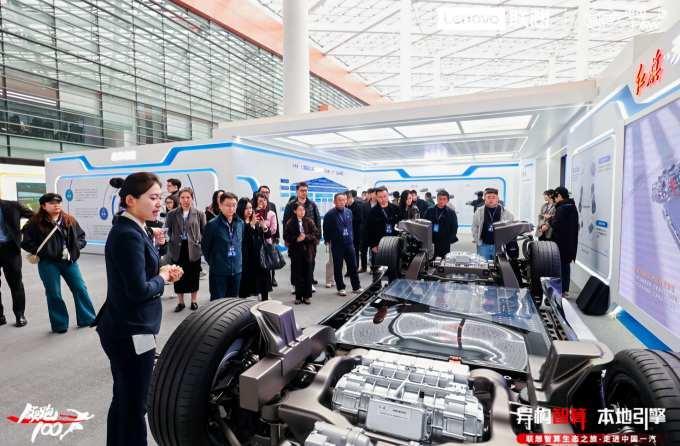
联想控股 联想集团-R 联想集团 分时图 日K线 周K线 月K线 8.15 0.01 0.12% 1.23% 0.86% 0.37% 0.00% 0.37% 0.86% 1.23% 8.04 8.07 8.11 8.14 8.17 8.21 8.24 09:30 10:30 12:00/13:00 14:00 16:10 0 5万 11万 16万 3月26日,"异构智算本地引擎——领跑100|联想智算生态之旅走进中国一汽"活动在吉林长春举行。 "坚实的AI算力基础设施是汽车智造稳定高效流转的基石。"联想中国基础设施业务群战略管理总监黄山 表示,依托混合式AI战略,联想构建出一套可管理、可复制且支持持续运营的"AI工厂"解决方案。从场 景定义到数据采集,再到智能体开发平台与AI训练引擎的深度处理,联想"AI工厂"解决方案为AI应用的 开发与部署流程提供了底层基础设施保障,将原本复杂且孤立的AI开发任务转变为一条标准、高效的 现代化"AI生产线"。 中国一汽企业生态战略营销部企业板块负责人李春喜介绍,中国一汽集团作为中国汽车工业成长的见证 者与推动者,始终坚定自主创新之路,突破核心技术壁垒,实现了红旗、解放全自主 ...
数据中心市场洞察- 第一部分:服务器整体情况-Hardware Technology-Datacenter Market Insights – Part 1 Overall Servers
2026-03-26 13:20
Summary of Datacenter Market Insights – Overall Servers Industry Overview - The report focuses on the **Datacenter Market**, specifically the **server segment** within the **Asia Pacific** region, highlighting trends and insights for the **hardware technology** industry. Key Insights 1. **Overall Server Shipments Growth**: - Total server shipments increased by **10% year-over-year (y/y)** in **4Q25**, driven primarily by cloud demand, with enterprise demand also recovering from previous lows [1][2]. 2. **Global Server Shipments**: - Global server shipments reached **4.4 million units** in **4Q25**, reflecting a **4% quarter-over-quarter (q/q)** and **10% y/y** increase. The growth was largely attributed to cloud services, particularly from US hyperscalers like **Microsoft** and **Meta** [2]. 3. **Future Projections**: - For **2026**, a **5-10% increase** in full-year shipments is anticipated, with cloud services expected to grow by over **20%** based on supply chain checks [2]. 4. **AI Server Market Dynamics**: - In **4Q25**, AI server yield constraints diminished, leading to an increase in average selling prices (ASPs) for major OEMs. For instance, **Dell's** server ASP rose by **14% q/q**, and high-value server shipments surged by **261% q/q**. **Super Micro** experienced a **140%** increase in ASP and a **165%** growth in high-value server shipments [3]. 5. **ODM Direct Shipments**: - Aggregate ODM direct shipments totaled **2,050k units** in **4Q25**, marking a **10% q/q** and **36% y/y** increase. However, AI server shipments likely saw a slight decline due to product transitions, evidenced by a **34% q/q** drop in high-value server shipments [4]. 6. **GB Rack Shipments**: - Demand for AI remains strong, with **GB300 racks** shipping in higher volumes. Shipments increased from approximately **8.3k** in **3Q25** to **15.5k** in **4Q25**, with expectations to reach **20-21k** in **1Q26** [5]. 7. **Preferred Picks**: - The report highlights preferred companies for investment, including **Wistron**, **Wiwynn**, **Hon Hai**, **Quanta**, and others, indicating a positive outlook for these firms in the hardware technology sector [6]. Additional Insights 1. **Regional Performance**: - The US market outperformed others, with shipments up **32% y/y** in **4Q25**, while regions like Japan and APeJ saw declines of **10%** and **7%** respectively [10]. 2. **Segment Performance**: - High-end server shipments grew by **176% y/y** in **4Q25**, while entry-level and mid-range servers saw more modest growth of **10% y/y** and **4% y/y** respectively [11]. 3. **Market Share by Vendor**: - In terms of market share, **Dell** held **9.2%**, **HP** at **6.9%**, and **Super Micro** at **5.2%** in **4Q25**, with notable changes in shares for other vendors as well [13]. 4. **Value Growth**: - High-end servers saw a **157% y/y** increase in value, while mid-range and entry-level servers increased by **42% y/y** and **24% y/y** respectively [12]. This comprehensive overview provides insights into the current state and future expectations of the datacenter server market, highlighting key players, growth areas, and potential investment opportunities.



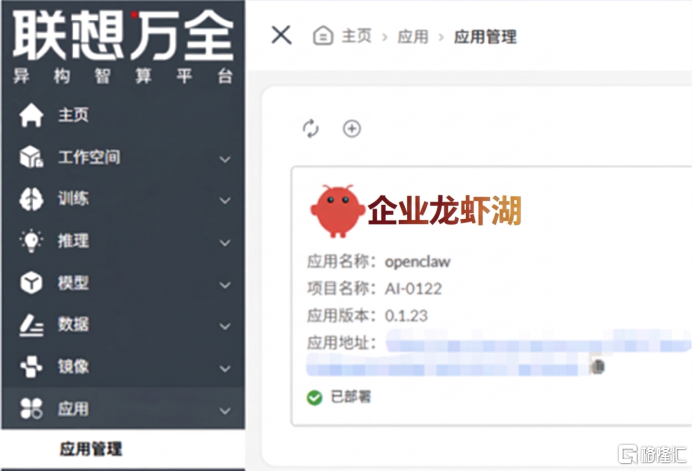
联想集团发布企业级"龙虾湖"解决方案,每百万Tokens成本降至1元以下
Ge Long Hui· 2026-03-26 10:24
Core Insights - Lenovo Group has launched the "Lobster Lake" intelligent solution aimed at the enterprise market, integrating various computing platforms and servers to provide a high-performance, private deployment solution for businesses [1] Group 1: Solution Features - The "Lobster Lake" solution offers high intelligence, security, cost-effectiveness, and integrated delivery, with a focus on private deployment [1] - It can achieve a cost of less than 1 yuan per million high-quality tokens, which is one-third of similar cloud service solutions, while maintaining a response latency of under 12 milliseconds [1] - The solution supports up to 1,000 concurrent intelligent agents and can output up to 10 billion tokens daily with a 4K context length [1] Group 2: Addressing Enterprise Challenges - The solution addresses multiple challenges faced by enterprises when transitioning from personal to business applications, including data leakage risks, reasoning errors, context memory loss, insufficient high-concurrency performance, and high operational costs [2] - It features a private deployment architecture that allows enterprises to fully control data flow and access permissions, ensuring data sovereignty [2] Group 3: Security Measures - The "Lobster Lake" solution includes a four-layer security mechanism to protect sensitive industries such as finance and government [2] - Security measures include container-level logical isolation, self-developed core systems with high-intensity security scans, and various protective technologies like WAF and DDoS protection [2] Group 4: Performance Optimization - The solution supports the deployment of large models with parameter scales ranging from 32 billion to 671 billion, allowing for simultaneous operation of multiple models [3] - It features a multi-instance QMD long-term memory system that overcomes single-instance memory limitations, enhancing retrieval accuracy while reducing token consumption [4] Group 5: Deployment Options - The "Lobster Lake" solution offers two deployment modes: centralized and distributed, catering to different enterprise efficiency needs [5] - It supports one-click deployment and uninstallation, along with comprehensive upgrade and maintenance management [5]
手机涨价潮
投资界· 2026-03-21 08:22
Core Viewpoint - The consumer electronics industry is facing significant pressure from rising memory prices, leading to price increases across various brands, including Xiaomi, Transsion, Lenovo, OPPO, and vivo, as they attempt to offset the impact on profit margins [3][4][5]. Group 1: Memory Price Surge - Memory prices have skyrocketed, with Xiaomi's president stating that in Q1 2026, memory prices increased by 400% year-on-year, rising from $30 to over $120 [4][5]. - The surge in memory prices has led to a structural impact on the Bill of Materials (BOM) costs for smartphones, with low-end devices particularly affected, as memory now constitutes 43% of total material costs [10][11]. - Counterpoint's report indicates that DRAM prices increased by over 50% and NAND prices by over 90% in Q1 2026, significantly affecting the cost structure of low-end smartphones [10][11]. Group 2: Impact on Companies - Transsion, known as the "king of African phones," has been particularly affected by rising storage costs, leading to a decline in overall gross margins [4][5]. - Apple is also feeling the pressure from memory price increases, with CEO Tim Cook highlighting supply constraints and cost pressures during earnings calls [6][7]. - Lenovo has responded to the rising memory prices by signing long-term supply contracts to ensure adequate supply, but has also announced price increases for some of its computer products [8][9]. Group 3: Market Dynamics - The current market is characterized by a shift from a buyer's market to a seller's market, with companies now negotiating memory prices on a quarterly basis rather than annually [7][9]. - The demand for memory is being driven by the AI sector, which is squeezing supply for consumer electronics, particularly in the low-end market [10][12]. - Companies are facing a dilemma where they must raise prices to maintain margins, but this could lead to decreased consumer demand for their products [10][12]. Group 4: Future Outlook - Analysts predict that memory prices will remain high until at least the end of 2027, with no immediate relief in sight due to ongoing demand from AI applications [13][14]. - The structural changes in the memory market are expected to persist, with companies needing to adapt their product lines and pricing strategies to cope with the new reality [11][15]. - The potential for a market correction, such as an AI bubble burst, could alter the dynamics, but for now, the focus remains on navigating the high-cost environment [16].



GTC 2026:联想集团发布全新"AI+体育"方案,FIFA世界杯成落地样板
Ge Long Hui· 2026-03-20 01:02
Core Insights - Lenovo Group, in collaboration with NVIDIA, launched three AI solutions aimed at enhancing sports operations and fan experiences during the ongoing GTC 2026 conference [1][2][3] - The global sports technology market is currently valued at approximately $23 billion and is expected to triple in size within five years [1] - The AI solutions address key pain points in sports management, including fragmented venue systems, network latency risks during broadcasts, and the disconnection between competitive and commercial data [1] Group 1: AI Solutions Overview - The first solution is a Smart Command Center that enables event organizers to identify potential risks earlier and coordinate teams more efficiently [1] - The second solution, the Sports AI Super Agent, utilizes structured analysis of competitive data to help teams make data-driven decisions, improving performance and aligning on-field results with long-term business goals [2] - The third solution involves AI Data Annotation, which transforms fragmented information into usable data assets to support content production and enhance fan engagement [2] Group 2: Long-term Commitment and Application - Lenovo Group has demonstrated a long-term commitment to the "AI + Sports" sector by developing customized end-to-end solutions for various clients, accumulating practical experience [2] - The company has full-stack AI capabilities covering devices, infrastructure, solutions, and services, successfully implemented in challenging live sports environments [2] - As the official technology partner for the 2026 FIFA World Cup, Lenovo plans to deploy an AI technology package that includes enhanced digital broadcasting visualization, AI video enhancement systems, and a generative AI analysis platform for data management across venues [3] Group 3: Strategic Goals and Collaboration - Lenovo aims to not only promote AI applications in sports but also ensure efficient operation in critical scenarios [3] - The collaboration with NVIDIA is expected to help sports organizations manage complex operational challenges, enhance resilience, and drive both competitive performance and commercial value growth [3] - NVIDIA's advanced AI platform, in conjunction with Lenovo's full-stack capabilities, will enable timely and efficient processing of vast amounts of data, unlocking deeper operational insights and fostering content innovation [3]
