CHINA GLASS(03300)

Search documents
中国玻璃(03300) - 根据上市规则第13.19条作出之公告
2025-08-20 12:48
香港交易及結算所有限公司及香港聯合交易所有限公司對本公告的內 容 概 不 負 責,對 其 準 確 性 或 完 整 性 亦 不 發 表 任 何 聲 明,並 明 確 表 示,概 不對因本公告全部或任何部份內容而產生或因倚賴該等內容而引致的 任 何 損 失 承 擔 任 何 責 任。 根據上市規則第13.19條作出之公告 本 公 告 乃 由 中 國 玻 璃 控 股 有 限 公 司(「本公司」,連 同 其 附 屬 公 司 統 稱「本 集 團」)根 據 香 港 聯 合 交 易 所 有 限 公 司 證 券 上 市 規 則(「上市規則」)第13.19 條 及 證 券 及 期 貨 條 例(香 港 法 例 第571章)第XIVA部 內 幕 消 息 條 文(定 義 見 上 市 規 則)而 作 出。 於 二 零 二 二 年 七 月 八 日,本 公 司(作 為 借 款 人)與 由 渣 打 銀 行(香 港)有 限 公 司(作 為 代 理 人)代 表 之 銀 團(「貸款人」)就 若 干 貸 款 融 資 訂 立 融 資 協 議 (「融資協議」)。該 等 融 資 以(其 中 包 括)押 記 本 公 司 持 有 之 賬 戶 作 為 擔 保。 截 ...
陕西投资集团有限公司 103300 万元 22 陕投集团 MTN003 即将兑付
Sou Hu Cai Jing· 2025-08-15 02:59
2025 年 8 月 15 日,上海清算所网站披露公告,为保证 22 陕投集团 MTN003(债券代码:102281416) 兑付工作的顺利进行,方便投资者及时领取兑付资金,现将有关事宜公告如下:发行人是陕西投资集团 有限公司;债券名称为陕西投资集团有限公司 2022 年度第三期中期票据;债券简称 22 陕投集团 MTN003;债券代码 102281416;发行总额人民币 10 亿元;发行时间 2022 年 8 月 18 日;发行期限 3 (3+N)年;债券余额人民币 10 亿元;评级情况主体评级 AAA,债项评级 AAA;本计息期债券利率 3.3%;本金兑付日 2025 年 8 月 22 日;本期应偿付本息金额 103300 万元;主承销商是中信证券股份有 限公司、中国工商银行股份有限公司;存续期管理机构是中信证券股份有限公司;受托管理机构无;信 用增进安排无;登记托管机构是银行间市场清算所股份有限公司;其他对投资者决策有重大影响的信息 无 。还说明了付息/兑付流程及各方联系方式等情况 。本公司等相关主体承诺所披露信息真实、准确、 完整、及时,并将履行相关后续信息披露义务 。 来源:金融界 ...
中国玻璃(03300.HK)拟8月27日举行董事会会议批准中期业绩
Ge Long Hui· 2025-08-13 08:51
格隆汇8月13日丨中国玻璃(03300.HK)宣布,董事会会议将于2025年8月27日(星期三)举行,以(其中 包括)考虑及批准本公司及其附属公司截至2025年6月30日止六个月的中期业绩及其发布,以及考虑派 付中期股息(如有)。 ...
中国玻璃(03300) - 董事会会议召开日期
2025-08-13 08:33
香港交易及結算所有限公司及香港聯合交易所有限公司對本公告之內 容 概 不 負 責,對 其 準 確 性 或 完 整 性 亦 不 發 表 任 何 聲 明,並 明 確 表 示,概 不對因本公告全部或任何部份內容而產生或因倚賴該等內容而引致的 任 何 損 失 承 擔 任 何 責 任。 執 行 董 事: 呂國先生 (行 政 總 裁), 非 執 行 董 事: 董事會會議召開日期 中 國 玻 璃 控 股 有 限 公 司(「本公司」)之 董 事 會(「董事會」)謹 此 宣 佈,董 事 會會議將於 二 零 二 五 年 八 月 二 十 七 日(星 期 三)舉 行,以(其 中 包 括)考 慮 及批准本公司及其附屬公司截至二零二五年六月三十日止六個月之中 期 業 績 及 其 發 佈,以 及 考 慮 派 付 中 期 股 息(如 有)。 承董事會命 中國玻璃控股有限公司 執行董事 呂 國 香 港,二 零二五年八月十三 日 於 本 公 告 日 期,本 公 司 的 董 事 如 下: 湯李煒先生 (主 席) 、解長青先生 及 楊昕宇先生,及 獨 立 非 執 行 董 事: 張佰恒先生、陳華晨先生 及 藍海青女士。 * 僅供識別 ...
2025年中国玻璃微珠行业产业链、产需情况、市场规模、竞争格局及发展趋势研判:玻璃微珠应用前景广阔,市场规模达27.67亿元[图]
Chan Ye Xin Xi Wang· 2025-08-12 01:12
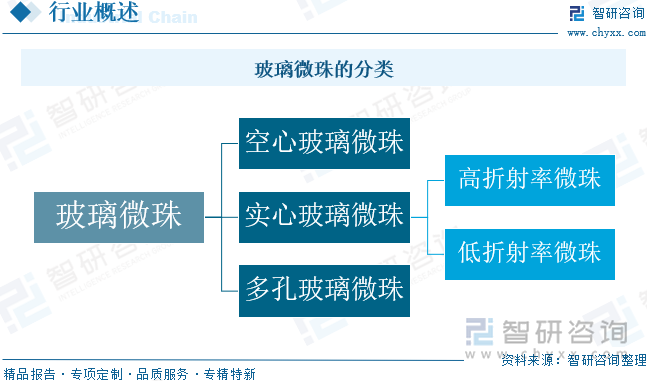
Core Insights - Glass microspheres exhibit significant competitive advantages in material applications compared to traditional materials, with widespread use in plastics, coatings, oil extraction, and aerospace [1][11] - The market demand for glass microspheres is continuously growing, driven by the transformation of traditional industries and the rapid development of emerging industries [1][11] Industry Overview - Glass microspheres are a new type of material developed from borosilicate raw materials, with a particle size of 10-250 microns and a wall thickness of 1-2 microns, offering lightweight, low thermal conductivity, high strength, and good chemical stability [2][10] - The market size of China's glass microsphere industry is projected to grow from 1.432 billion yuan in 2015 to 2.767 billion yuan in 2024, with a compound annual growth rate (CAGR) of 7.59% [1][11] - The hollow glass microsphere segment is expected to grow from 716 million yuan in 2015 to 1.522 billion yuan in 2024, with a CAGR of 8.74% [1][11] Industry Chain - The upstream of the glass microsphere industry includes raw materials such as quartz sand, limestone, feldspar, and soda ash, which are crucial for the supply and quality of glass microsphere production [3][6] - The midstream involves the manufacturing of glass microspheres, while the downstream applications include reflective materials, coatings, ceramics, rubber, plastics, filtration materials, oil extraction, and aerospace [3] Production and Demand - China's glass microsphere production is expected to increase from 85,200 tons in 2015 to 170,300 tons in 2024, with a CAGR of 8% [10] - The demand for glass microspheres is projected to rise from 101,600 tons in 2015 to 201,700 tons in 2024, with a CAGR of 7.92% [10] - Hollow glass microspheres are gaining traction, with production expected to grow from 21,300 tons in 2015 to 51,100 tons in 2024, and demand from 25,400 tons to 60,500 tons during the same period [10] Market Trends - The glass microsphere industry is gradually moving towards high-end applications, focusing on high refractive index, high wear resistance, and high purity to meet the needs of aerospace, precision optics, and 5G communications [23] - The industry is expected to diversify its applications into emerging markets such as renewable energy, biomedicine, and electronic packaging, while also developing functional microspheres [24] - Environmental sustainability is becoming a key focus, with efforts to optimize production processes, reduce energy consumption, and explore recycling technologies [25] Key Players - Major players in the global glass microsphere industry are concentrated in developed countries, with significant contributions from companies like 3M, Swarco, and Potters Industries [14] - In China, notable companies include China Steel Group, Wanda Glass Microspheres, and Langsheng Kaibo, which are rapidly expanding their production capabilities [14][17]


中国玻璃(03300) - 二零二五年八月八日举行之股东特别大会投票表决结果
2025-08-08 08:54
香港交易及結算所有限公司及香港聯合交易所有限公司對本公告之內 容 概 不 負 責,對 其 準 確 性 或 完 整 性 亦 不 發 表 任 何 聲 明,並 明 確 表 示,概 不對因本公告全部或任何部份內容而產生或因倚賴該等內容而引致的 任 何 損 失 承 擔 任 何 責 任。 二零二五年八月八日舉行之 股東特別大會投票表決結果 茲 提 述 中 國 玻 璃 控 股 有 限 公 司(「本公司」)日 期 為 二 零 二 五 年 七 月 二 十 四 日 標 題 為「主 要 交 易-威 海 中 玻 融 資 租 賃 安 排 及 股 東 特 別 大 會 通 告」之 通 函(「通 函」)。除 文 義 另 有 所 指 外,本 公 告 所 用 詞 彙 與 通 函 所 界 定 者 具 有 相 同 涵 義。 股東特別大會投票表決結果 本公司董事會宣佈,於二零二五年八月八日舉行之本公司股東特別大會(「股 東特別大會」)上 提 呈 之 該 普 通 決 議 案 已 以 投 票 表 決 方 式 獲 得 正 式 通 過。 投 票 表 決 結 果 如 下: | | 普通決議案 | | | | 票 數(概 | 約%) | | --- | --- ...
中国玻璃(03300) - 截至2025年7月31日止月份之股份发行人的证券变动月报表
2025-08-01 08:31
股份發行人及根據《上市規則》第十九B章上市的香港預託證券發行人的證券變動月報表 截至月份: 2025年7月31日 狀態: 新提交 致:香港交易及結算所有限公司 公司名稱: 中國玻璃控股有限公司 呈交日期: 2025年8月1日 I. 法定/註冊股本變動 | 1. 股份分類 | 普通股 | 股份類別 | 不適用 | | 於香港聯交所上市 (註1) | | | 是 | | | --- | --- | --- | --- | --- | --- | --- | --- | --- | --- | | 證券代號 (如上市) | 03300 | 說明 | | | | | | | | | | | 法定/註冊股份數目 | | | 面值 | | | 法定/註冊股本 | | | 上月底結存 | | | 3,600,000,000 | HKD | | 0.05 | HKD | | 180,000,000 | | 增加 / 減少 (-) | | | 0 | | | | HKD | | | | 本月底結存 | | | 3,600,000,000 | HKD | | 0.05 | HKD | | 180,000,000 | 本月底法定/ ...
研判2025!中国玻璃纤维电子布行业特点、技术迭代路径、市场规模及企业产能布局情况分析:有望实现高端领域从“跟跑”到“并跑”[图]
Chan Ye Xin Xi Wang· 2025-07-29 01:12
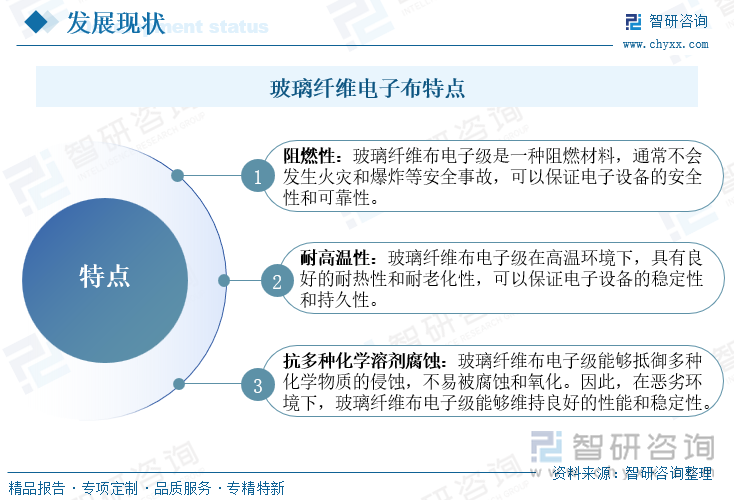
Industry Overview - Glass Fiber Electronic Cloth, also known as electronic cloth, is a high-performance fabric made from glass fiber, essential for the electronic information industry [1][8] - The demand for glass fiber electronic cloth in China is directly related to its status as a global PCB manufacturing center, driven by strong downstream applications such as consumer electronics, communication, automotive electronics, and AI computing [14][27] - The market size for glass fiber electronic cloth in China is projected to grow from 18.52 billion yuan in 2020 to 28.65 billion yuan in 2024 [14] Product Segmentation - Glass fiber electronic cloth can be categorized based on thickness into thick, thin, ultra-thin, and extremely thin types [4][5] - High-end products include ultra-thin cloth (thickness <28 micrometers) and super-thin cloth (28-35 micrometers), primarily used in high-end smartphones and IC substrates [5][7] - Different types of electronic cloth serve various applications, such as Low Dk/Df cloth for high-speed signal transmission and Low CTE cloth for advanced IC substrates [7][9] Technological Advancements - The industry is experiencing rapid technological iteration, with a focus on performance upgrades, material innovation, and process breakthroughs to meet the demands of high-frequency and high-speed applications in sectors like 5G and AI [11][29] - The transition from first-generation electronic cloth (Dk≈4.0) to third-generation quartz cloth (Dk<3.0) illustrates significant advancements in signal transmission capabilities [29] Market Dynamics - The global supply of electronic-grade glass fiber cloth is increasingly concentrated in China, with domestic companies accelerating the pace of high-end market localization [16][17] - Major players in the market include China Jushi, Owens Corning, and others, with significant production capacities being developed to meet rising demand [16][18] Company Performance - Honghe Technology, a key player in the industry, has seen fluctuations in revenue from 793 million yuan in 2021 to 780 million yuan in 2024, influenced by market conditions and competition [20][23] - The company has successfully developed ultra-thin and extremely thin cloth products, achieving international quality standards and gaining recognition from major global smartphone manufacturers [19][20] Future Trends - The market for glass fiber electronic cloth is expected to continue expanding, driven by the increasing demand for high-performance electronic materials in AI servers and advanced communication devices [27][28] - The shift towards high-end electronic cloth products, such as Low-Dk and Low-CTE materials, is anticipated to be a core growth driver in the coming years [27][29]



中国建筑材料_专家来电谈中国玻璃纤维周期观察-China Construction Materials_ Takeaways from Expert Call with SCI on China Glassfiber Cycle Watch
2025-07-28 01:42
Summary of Expert Call on China Glassfiber Cycle Watch Industry Overview - The glass fiber industry is primarily dominated by China, which accounts for over 50% of global capacity. [2] - Major players include Jushi with a market share of 27%, Taishan GF at 12%, and CPIC at 10%, collectively holding around 50% of the market. [2] Supply and Demand Dynamics - As of June 2025, operating capacity reached 8.4 million tons (mt), with full-year production expected to be approximately 8 mt. [2] - Domestic production in the first half of 2025 increased by 10.5% year-over-year (YoY). [2] - Leading producers have shifted their product focus, with over 60% of their output now high-end products, primarily serving the wind power, thermoplastics, and construction sectors. [2] Import and Export Trends - Import volume for the first five months of 2025 rose by 2% YoY, with a preference for high-end products. [3] - Exports declined by 3% YoY, particularly in Europe and the US, while markets in the Middle East, Japan, and Korea saw increases. [3] Inventory and Market Conditions - Price increases at the beginning of the year did not stimulate market demand, leading to effective destocking efforts by manufacturers. [4] - Inventory levels rose gradually in the second quarter, with leading producers experiencing less inventory pressure compared to tier 2 and tier 3 producers. [4] Consumption and Profitability - Apparent consumption for the full year is estimated to exceed 6 mt, reflecting a 13% YoY increase, driven mainly by demand from wind power and thermoplastics. [5] - Wind power installations in 2025 are projected to reach 140 gigawatts (GW), a 75% increase YoY. [5] - Average gross profit per ton in the first half of 2025 was a net loss of RMB 263, with leading producers remaining above the break-even line while tier 2 and tier 3 producers incurred losses. [5] Price Forecast and Market Outlook - Glass fiber prices are expected to remain weak in August, with potential increases in September and October to around RMB 3,500 per ton, before possibly falling to approximately RMB 3,000 per ton by the end of the year. [7] - Low-Dk fabric is identified as a structural bright spot, offering profits approximately ten times higher than normal E-fabric, with a short-term supply gap still present. [7] Key Insights - The glass fiber market is currently at a low point, but differentiated advantages are anticipated to emerge among leading producers. [1] - The shift towards high-end products indicates a strategic response to evolving market demands, particularly in renewable energy sectors. [2][5] - The overall profitability challenges faced by tier 2 and tier 3 producers highlight the competitive pressures within the industry. [5]
研判2025!中国玻璃绝缘子行业发展背景、产业链、市场规模、竞争格局、企业分析和发展趋势分析:行业市场规模达到26.41亿元,未来发展空间广阔[图]
Chan Ye Xin Xi Wang· 2025-07-13 01:55
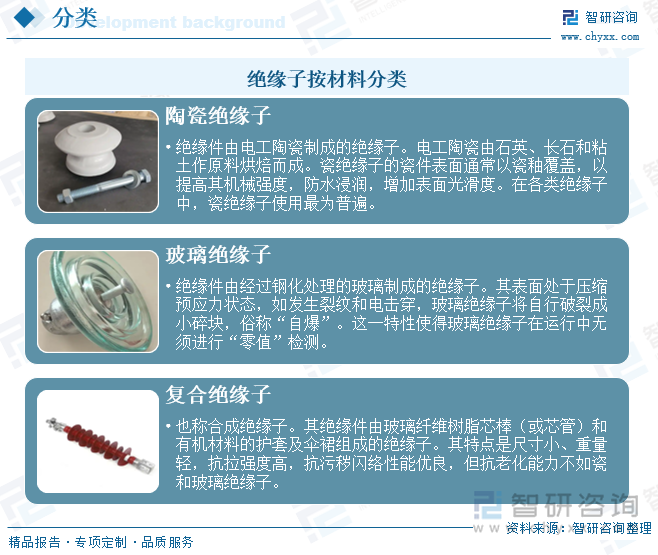
Core Viewpoint - The glass insulator market in China is experiencing rapid growth driven by the continuous development of the power infrastructure and the rise of smart grids and renewable energy, with the market size expected to reach 2.641 billion yuan in 2024, a 2.56% increase from 2023 [1][15]. Industry Overview - Insulators are essential components of power systems, providing electrical insulation and mechanical support, typically made from solid insulating materials like ceramics, glass, and composite materials [3]. - Glass insulators, made from tempered glass, are crucial for supporting wires and preventing current leakage, exhibiting excellent resistance to harsh conditions [5]. Market Demand and Supply - The total electricity consumption in China is projected to grow from 7,511 billion kWh in 2020 to 9,852 billion kWh in 2024, leading to increased demand for glass insulators due to accelerated grid construction [9]. - The production of glass insulators is expected to reach 282,500 tons in 2024, reflecting a 1.22% year-on-year increase, driven by significant energy projects [17]. Investment Trends - China's investment in power grid construction is projected to rise from 469.9 billion yuan in 2020 to 608.3 billion yuan in 2024, with a 19.80% increase in the first five months of 2025, indicating a growing demand for glass insulators [13]. Competitive Landscape - The glass insulator market is fragmented, with major players including well-known domestic power equipment manufacturers and specialized insulator manufacturers, leading to intense competition [19]. - Key companies in the industry include Jinlihua Electric, Nanjing Electric Group, Sediver Glass Insulators, and Shandong Ruitai Glass Insulators, among others [20]. Future Development Trends - The glass insulator market is expected to expand due to increasing global energy demands and the need for reliable and efficient power transmission systems, particularly in emerging markets [24]. - The industry's future will focus on green and low-carbon transformations, aligning with national carbon reduction goals, while enhancing international competitiveness through expanded global trade [24].