技术迭代

Search documents
苏试试验(300416) - 300416苏试试验投资者关系管理信息20260327
2026-03-27 13:24
Financial Performance - The company's main business revenue for 2025 was 213,689.67 million CNY, representing a year-on-year growth of 11.27% [2] - The net profit attributable to shareholders was 25,744.28 million CNY, with a year-on-year increase of 12.22% [3] - The net profit after deducting non-recurring gains and losses grew by 18.60%, amounting to 24,622.79 million CNY [3] - Operating cash flow net amount increased by 34.95%, reaching 65,511 million CNY [3] Business Segment Performance - Revenue from the testing equipment segment was 67,436.58 million CNY, up 8.28% year-on-year [3] - Revenue from environmental and reliability testing services reached 110,602.70 million CNY, growing by 9.57% [3] - Integrated circuit verification and analysis services generated 35,650.40 million CNY, with a year-on-year growth of 23.72% [3] Strategic Focus and Development - The company is enhancing new product development and core technology innovation in the testing equipment segment [3] - In environmental and reliability testing, the focus is on key industries such as aerospace, new energy, and energy storage [3] - The integrated circuit segment aims to optimize production structure and accelerate market expansion [3] Profitability and Margin Outlook - The gross margin for the testing equipment segment decreased by approximately 2%, while the environmental testing services segment saw a decline of about 4% [4] - Factors affecting margins include order structure, market price competition, and prior capacity expansion [4] - The company plans to increase R&D investment in high-value sectors to optimize profitability structure [4] Order and Market Trends - Overall, the order situation for testing equipment remains stable, with positive trends in the aerospace sector [5] - The company is committed to international expansion, focusing on global customer needs and leveraging local market conditions [6] Aerospace Sector Development - Revenue from the aerospace sector reached 42,633.07 million CNY, reflecting a year-on-year growth of 43.20% [8] - The company offers a comprehensive range of testing services for the aerospace industry, including environmental testing and integrated circuit verification [8] - Continuous investment in capacity expansion and technological innovation is planned to support high-quality development in the aerospace sector [8]

锂电观点更新-推荐隔膜-铜箔
2026-03-13 04:46
Summary of Key Points from Conference Call Records Industry Overview - The focus is on the lithium battery industry, specifically the supply and demand dynamics of separators and copper foils, which are expected to experience significant price increases starting in 2026, leading into a year-long price hike cycle until 2027 [1][2][4]. Core Insights and Arguments - **Supply and Demand Gap**: A supply-demand gap for separators and copper foils is anticipated to emerge by 2027, with a notable price increase expected in 2026 due to long production expansion cycles of 1.5 to 2 years [1][2]. - **Profit Recovery in Copper Foils**: The profit per ton for lithium battery copper foil has significantly improved from over 1,000 RMB in Q4 2025 to 5,000 RMB by February 2026, indicating a strong recovery and high elasticity in Q1 performance [1][2][3]. - **Challenges in Separator Industry**: The separator industry faces heavy asset burdens and financing difficulties, with production capacity expected to reach full utilization by 2026, and profit margins projected to recover to 0.2-0.3 RMB per square meter [1][2][7]. - **Technological Advancements**: The industry is undergoing rapid technological changes, with separators transitioning to 5-micron wet processes and copper foils reducing thickness to 4.5 microns. Smaller companies lacking technology and capital are likely to be eliminated [1][2][5][6]. - **Demand Growth**: Global lithium battery demand is projected to grow by 26% in 2026, driven by the revival of electric vehicle subsidies and "green electricity direct connection" energy storage policies [1][2][4]. - **Capital Expenditure Trends**: Capital expenditures are diverging, with copper foil companies prioritizing investments in high-margin electronic circuit foils (HVLP), which may further suppress new supply in lithium battery copper foils [1][2][8]. Additional Important Insights - **Market Dynamics**: The separator and copper foil segments are currently experiencing tight supply-demand relationships, with both sectors expected to see significant price increases due to their long production expansion cycles [2][4]. - **Profitability Outlook**: The profitability of lithium battery copper foil is expected to improve significantly, with some companies potentially achieving profits equivalent to their entire 2025 earnings in Q1 2026 [3][9]. - **Investment Recovery Period**: The investment recovery period for separators is long, with current profit levels making it difficult to recoup costs quickly. The anticipated rise of solid-state battery technology by 2030 poses additional risks to investment in the separator sector [7]. - **Competitive Landscape**: The transition to thinner separator technologies (5 microns) is expected to create barriers for smaller firms, leading to a consolidation of the market as only those with sufficient capital and technology can compete effectively [6][9]. This summary encapsulates the critical insights and projections regarding the lithium battery industry's separators and copper foils, highlighting the expected trends in supply, demand, and profitability over the coming years.
比亚迪想换一种赢法
财富FORTUNE· 2026-03-07 13:14
Core Viewpoint - BYD has officially launched its second-generation blade battery and announced the "Flash Charge China" strategy, marking a significant technological advancement in the electric vehicle (EV) sector [1][2]. Group 1: Technological Advancements - The second-generation blade battery features rapid charging capabilities, allowing the battery to charge from 10% to 70% in just 5 minutes and from 10% to 97% in 9 minutes, achieving the fastest charging speed for mass-produced vehicles globally [2][3]. - The new technology retains the safety advantages of lithium iron phosphate batteries while improving energy density and charging speed [3]. Group 2: Infrastructure Development - BYD plans to establish 20,000 flash charging stations by the end of 2026, with 4,239 already built, aiming to become the leading Chinese automaker in charging station numbers [5]. - The plan includes 18,000 "flash charging stations within stations," which can be quickly constructed by modifying existing public charging stations, facilitating rapid network expansion [10]. Group 3: Market Position and Strategy - BYD has surpassed Tesla in the EV market across 22 countries and regions, with a goal to become the global leader in pure electric vehicle sales by 2025 [7]. - The company is shifting its competitive strategy from price advantages to leveraging technological advancements to enhance user experience [8]. Group 4: Challenges and Market Dynamics - Despite technological advancements, BYD faces increasing competition, with rivals potentially closing the technology gap within 18 months [9][12]. - The company reported a 35.80% year-on-year decline in February EV sales, highlighting challenges in maintaining market share amid aggressive pricing strategies from competitors [13]. - BYD's overseas sales exceeded domestic sales for the first time in February, with over 100,000 units sold, aligning with its focus on international expansion and premium market positioning [14].



千问林俊旸离职:传言大多是错的,真相比你想的朴素得多
美股研究社· 2026-03-05 13:50
Core Viewpoint - The recent departure of Lin Junyang, the technical head of Alibaba's Qwen, has sparked significant speculation regarding internal conflicts and strategic shifts within the company. However, the reality is that this change is part of a broader organizational upgrade to adapt to a more complex AI landscape, focusing on enhancing talent density and aligning responsibilities with the evolving strategic goals of Qwen [3][10]. Group 1: Organizational Changes - Lin Junyang's resignation was not due to any alleged conflicts over technology direction or commercialization pressures, but rather a necessary adjustment as Qwen transitioned from a technical project to a core strategic initiative for Alibaba [4][10]. - The restructuring aims to bring in more top-tier talent to strengthen the foundational model team, indicating a shift towards a more collaborative and scalable approach in AI development [10][19]. - The departure reflects a gap between individual expectations and organizational needs, emphasizing that talent movement is a normal part of innovation within tech ecosystems [12]. Group 2: Strategic Context - The AI landscape has shifted dramatically, with a move from merely achieving technical benchmarks to focusing on practical value realization, necessitating a reevaluation of strategies among major players [9][20]. - Alibaba's Qwen team has maintained a rare stability in the industry, allowing it to thrive and expand its model offerings significantly, with over 200,000 derivative models developed [7][13]. - The competitive environment is evolving, with other tech giants like OpenAI and Meta making significant strategic shifts, highlighting the need for Alibaba to adapt its approach to remain competitive [8][20]. Group 3: Future Directions - Alibaba's AI strategy is expected to focus on three main trends: exponential resource density enhancement, deeper application penetration, and a continued ambition to lead the fourth technological revolution [18][22]. - The establishment of a foundational model support group led by key executives signifies a commitment to breaking down barriers between resources, funding, and cross-department collaboration [19]. - The integration of AI applications into various business scenarios, such as the launch of Qwen AI glasses, indicates a strategic push towards embedding AI more deeply into everyday applications [20][21].


被誉下一代光伏路线的技术再获突破,行业关注“技术驱动的新一轮扩产窗口”
Xuan Gu Bao· 2026-02-26 23:29
Industry Insights - The photovoltaic industry is undergoing a critical technological iteration phase, with TOPCon prices declining, compressing profit margins and necessitating the introduction of new technologies [1] - By 2026, the photovoltaic equipment industry is expected to enter a new structural expansion window driven by technological upgrades, supported by favorable policies for high efficiency and low energy consumption routes [1] - The global share of China's photovoltaic main industry chain has increased to approximately 90%, showcasing its core competitiveness in equipment technology and mass production capabilities [2] Company Developments - Jincheng Co. has successfully entered the semiconductor field with its PERTOP + HJT + perovskite + component equipment, alongside successful shipments of horizontal PVD equipment [3] - Jiejia Weichuang is focusing on the development and process optimization of equipment suitable for space environments, leveraging its self-developed PECVD and PVD core equipment [3]
逆势并购,通威股份有何战略考量
Xin Lang Cai Jing· 2026-02-26 06:25
Core Viewpoint - Tongwei Co., Ltd. announced a significant acquisition of 100% equity in Qinghai Lihua Qingneng Co., Ltd., which has led to a halt in trading for up to 10 days, reflecting the market's mixed reactions to this move during a challenging period for the photovoltaic industry [2][3][4]. Group 1: Acquisition Details - The acquisition is seen as a strategic move to consolidate Tongwei's leading position in the photovoltaic sector, where it currently holds over 900,000 tons of high-purity silicon production capacity, accounting for approximately 30% of the global market share [3][4]. - Qinghai Lihua has a production capacity of over 200,000 tons, ranking sixth in the industry, which would increase Tongwei's total silicon production capacity to over 1 million tons if the acquisition is successful [3][4]. Group 2: Industry Context - The photovoltaic industry is currently facing severe challenges, including overcapacity and plummeting prices, with polysilicon prices falling below the cost line since Q4 2023, leading many companies to incur significant losses [3][4]. - The acquisition is viewed as a potential means to improve market concentration and reduce vicious price competition, as Tongwei aims to enhance its market power amid regulatory challenges to previous collaborative pricing strategies [4][10]. Group 3: Strategic Considerations - The timing of the acquisition may allow Tongwei to capitalize on lower costs due to the current market downturn, as valuations are not high, making it an opportune moment for mergers and acquisitions [11][12]. - Qinghai Lihua's capabilities in electronic-grade polysilicon, with purity levels reaching 11N, align with the industry's shift towards N-type technology, providing Tongwei with a strategic advantage in high-quality silicon materials [11][12]. Group 4: Management Dynamics - The relationship between Tongwei and Qinghai Lihua's chairman, Duan Yong, who previously held key positions at Tongwei, may facilitate smoother integration post-acquisition, potentially reducing integration risks [12]. - Concerns remain regarding the valuation of the acquisition and the impact on Tongwei's shareholders, particularly given Qinghai Lihua's previous valuation of 13.849 billion yuan during a funding round in 2022 [12].


除了自嗨锅,其他自热火锅品牌如颐海国际目前的经营状况如何?
Sou Hu Cai Jing· 2026-02-16 10:13
Core Insights - The self-heating hot pot market is undergoing significant contraction, exemplified by the bankruptcy of self-heating pot company, which had a valuation of 7.5 billion yuan and liabilities exceeding 140 million yuan, indicating overall industry shrinkage [1] - Leading companies like Yihai International are showing resilience through supply chain and channel transformations despite a slowdown in growth [1] Industry Overview - The self-heating hot pot market saw a 32.67% year-on-year decline in sales in Q4 2024, with market share dropping from 1.84% in 2022 to below 1% [1] - Price sensitivity among consumers has increased, with products priced above 30 yuan dropping to 44.02% of sales, alongside concerns over food safety and taste defects accelerating industry consolidation [1] Yihai International - Yihai International reported revenue of 6.54 billion yuan in 2024, a 6.4% increase, with third-party business accounting for 69.8% of revenue and growing at 10.4% [1] - The company is implementing three strategies to address growth challenges: 1. Expanding distribution channels and international presence through 3,000 distributors and a factory in Thailand covering 49 countries [1] 2. Diversifying product offerings, including a 56.7% growth in non-hot pot items like sour and spicy noodles [1] 3. Controlling costs by establishing raw material bases, although investment in health-oriented product development remains a shortcoming [1][2] Tianwei Foods - Tianwei Foods achieved revenue of 3.476 billion yuan in 2024, a 10% year-on-year increase, with net profit soaring by 36.77% [4] - Key success factors include: - Focus on specific product categories, with Chinese cuisine condiments generating 1.771 billion yuan, accounting for 50.9% of revenue and a market share of 11.1% [4] - Strong distribution network with 2,207 distributors covering 700,000 terminals and over 80% penetration in county-level markets [4] - Health-oriented innovations, such as fresh matsutake soup base and reduced-salt series, responding to consumer demand [4] Industry Future - Future competition will focus on three dimensions: 1. Precise scene targeting, emphasizing self-heating food as an "emergency need" rather than a substitute for daily meals [6] 2. Technological upgrades to improve safety and freshness of heating packs and ingredients [6] 3. Empowering B-end clients, with Yihai providing customized base materials to chain restaurants and Tianwei acquiring companies to enter the restaurant supply chain [6] - Leading companies are shifting towards "value competition," with Yihai replicating its "hot pot + dining" model in Southeast Asia and Tianwei exploring overseas Chinese markets through H-share listings [6]
和光同程:天下武功,唯快不破
第一财经· 2026-02-15 01:23
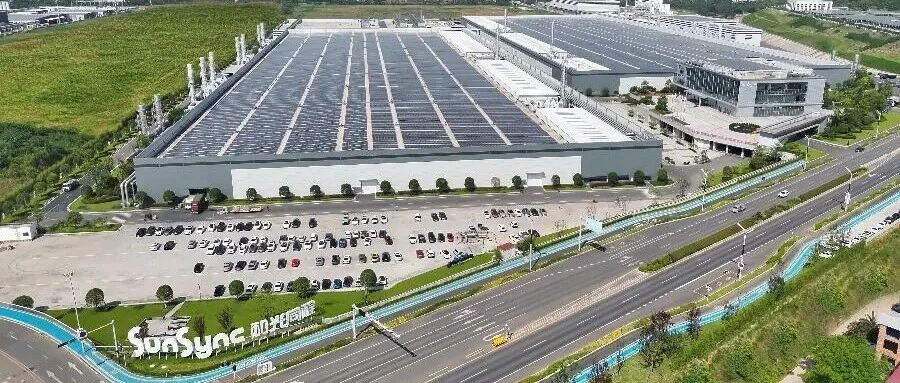
Core Viewpoint - The article highlights the rapid growth and resilience of He Guang Tong Cheng, a photovoltaic company that has thrived in a challenging industry environment, achieving continuous cash profitability and recognition despite the overall downturn in the solar sector [4][12]. Group 1: Company Overview - He Guang Tong Cheng was established in Yibin, Sichuan, and has been operational for only 29 months, yet it has achieved significant milestones such as being recognized as a "zero-carbon factory" and a "black light factory" [4][25]. - The company has demonstrated remarkable speed in its operations, completing the registration, signing, construction, and production phases within a year, which is notably fast for the photovoltaic industry [5][6]. Group 2: Business Strategy - The company's strategy emphasizes quick decision-making and market responsiveness, allowing it to adapt swiftly to changes and capitalize on opportunities [9][12]. - He Guang Tong Cheng's founder, Xie Yi, has adopted a hands-on approach, living on-site to ensure effective management and problem-solving [13][14]. Group 3: Industry Context - The photovoltaic industry is characterized by rapid technological advancements and long investment return cycles, creating a paradox that requires companies to be agile and responsive to market shifts [12][19]. - Despite the industry's downturn, He Guang Tong Cheng has reported a 49% year-on-year revenue growth and has managed to significantly reduce losses, showcasing its ability to navigate through tough market conditions [12][25]. Group 4: Team and Leadership - The leadership team at He Guang Tong Cheng consists of experienced professionals from the photovoltaic sector, contributing to the company's innovative and efficient operations [18][19]. - The company has attracted significant investment from top venture capital firms and industry players, indicating strong confidence in its business model and team [19]. Group 5: Location Advantage - Yibin was chosen as the operational base due to its evolving industrial landscape and supportive local government, which aligns with the company's fast-paced operational philosophy [21][24]. - The city has transformed from a traditional economy to one focused on digital and green industries, providing a conducive environment for He Guang Tong Cheng's growth [22][24].
电子气体-半导体需求有望加速扩张-国产替代或重塑供给格局
2026-02-13 02:17
Summary of Conference Call on Electronic Gases Industry Industry Overview - The electronic gases market in China is projected to grow from 9.2 billion RMB in 2016 to 19.5 billion RMB by 2024, driven by global semiconductor expansion and technological advancements [2][4] - The global wafer fab equipment spending is expected to reach 374 billion USD from 2026 to 2028, with China leading at 94 billion USD due to policy support, significantly increasing the demand for high-purity electronic gases, especially specialty gases [2][5] Key Insights and Arguments - The complexity of etching processes is increasing geometrically due to advancements in technology, leading to a significant rise in the consumption of high-purity fluorocarbon specialty gases [2][6][7] - By 2030, the market size for specialty gases in China's semiconductor sector is expected to soar from 7.9 billion RMB in 2024 to 39.4 billion RMB, indicating a long-term upward trend in the industry [2][9] - The overall electronic gases market in China, including other sectors, is projected to reach approximately 42 billion RMB by 2024, with bulk electronic gases market size expected to reach 28.8 billion RMB by 2030 [9][10] Competitive Landscape - The global specialty gases market is dominated by four major international players: Linde Group, Air Liquide, Taiyo Nippon Sanso, and Air Products, which hold over 70% of the market share [9][10] - Domestic companies have made significant progress in replacing mid-to-low-end products but still lag in high-end categories, covering only 20%-30% of the required categories for integrated circuit manufacturing [10][11] Policy Impact - Recent policies from the Ministry of Commerce, including restrictions on the export of key semiconductor materials, have increased compliance costs for cross-border procurement, prompting downstream wafer fabs to accelerate the validation of local suppliers [11][12] - These policies create opportunities for domestic companies with high-purity production capabilities to increase market share [11] Investment Considerations - The long-term outlook for China's electronic specialty gases industry is positive, supported by the expansion of wafer fabs, advanced processes, and the growth of 3D NAND technology [12] - Investors are advised to monitor companies like Guanggang, China Shipbuilding, and Jinghong, which have core competitive advantages [12] - Risks to consider include potential underperformance in wafer fab expansions, raw material supply risks, and the lengthy validation period for domestic replacements [12]
最高900万元补助!北京工业互联网与工业软件扶持项目申报指南
Sou Hu Cai Jing· 2026-02-12 04:29
Core Insights - The policy aims to encourage independent research and development in key technologies, particularly in industrial internet, industrial software, and cybersecurity, by providing financial support to qualifying projects [1][4]. Policy Focus - The policy targets three main technology areas with seven specific directions: 1. **Key Technologies in Industrial Internet Platforms**: - Industrial intelligent algorithms, knowledge graphs, mechanism models, and microservice components [2]. 2. **Key Technologies in Industrial Software**: - Computer-aided design (CAX), electronic design automation (EDA), and product lifecycle management (PLM) [2]. 3. **New Network and Security Technologies**: - Software-defined networking (SDN), network virtualization, and core security systems [2]. Subsidy Details - The subsidy is set at 30% of the total funding received from national or municipal support, with a maximum limit of 9 million yuan per project [3]. Policy Implications - The policy emphasizes continuous technological iteration rather than one-time development, highlighting the importance of ongoing R&D capabilities [4]. - It stresses the need for practical applications of innovations, indicating that theoretical results without industrial validation will not receive support [4]. - Cybersecurity is treated as a distinct area, reflecting the growing importance of compliance and safety in smart manufacturing [4]. Application Strategy for Enterprises - Companies are advised to clearly define their technical challenges, industrialization paths, and funding usage in their project proposals [5][6]. - Prioritizing applications for national or municipal key project status is recommended to enhance eligibility for subsidies [6]. - Forming joint applications with technology and application partners is encouraged to address verification challenges [7]. - Attention to intellectual property rights is crucial, with a need to clarify core technology patents and software copyrights in proposals [8].