
BRAINAURORA-B(06681)

Search documents
脑动极光(06681) - 自愿公告 -签署认知数字疗法项目合作协议
2026-01-04 10:08
香港交易及結算所有限公司及香港聯合交易所有限公司對本公告的內容概不負責,對其準確性 或完整性亦不發表任何聲明,並明確表示,概不對因本公告全部或任何部分內容而產生或因倚 賴該等內容而引致的任何損失承擔任何責任。 BrainAurora Medical Technology Limited 腦動極光醫療科技有限公司 (於開曼群島註冊成立的有限公司) (股份代號:6681) 自願公告 簽署認知數字療法項目合作協議 本公告為腦動極光醫療科技有限公司(「本公司」,連同其附屬公司統稱「本集團」) 自願發佈的公告,目的是使廣大投資者瞭解本集團最新業務發展情況。 本公司董事會(「董事會」)欣然宣佈,本公司之間接全資附屬公司浙江腦動極光醫 療科技有限公司(「浙江腦動極光」)已與北京健國醫療科技有限公司(「北京健國醫 療」)正式簽署《認知數字療法項目合作協議》(「本項目」)。雙方將於2026年1月1 日至2026年12月30日期間,圍繞「認知功能評估訓練精神衛生應用場景構建與推 廣應用」課題開展深度合作,共同推動認知障礙數字療法的標準化、規模化與可 及化(「本次合作」)。 背景介紹與本項目總體目標 合作的理由及其裨益 本次合作是 ...
智通港股沽空统计|1月1日
智通财经网· 2026-01-01 00:21
Group 1 - The top three companies with the highest short-selling ratios are Cheung Kong (00001), CLP Holdings (00002), and Hong Kong and China Gas (00003), all reporting a short-selling ratio of 0.00% [1][2] - The top three companies by short-selling amount are also Cheung Kong (00001), CLP Holdings (00002), and Hong Kong and China Gas (00003), with amounts not specified [1][2] - The companies with the highest deviation values are Energy and Energy Global (01142), Hu Shang Ayi (02589), and China Shipbuilding Defense (00317), with deviation values of -0.41%, -0.41%, and -0.66% respectively [1][2] Group 2 - The top ten short-selling ratios include Cheung Kong (00001), CLP Holdings (00002), and Hong Kong and China Gas (00003), all at 0.00%, with significant negative deviation values [2] - The top ten short-selling amounts also feature Cheung Kong (00001), CLP Holdings (00002), and Hong Kong and China Gas (00003), all at 0.00% short-selling ratio and notable negative deviation values [2] - The top ten companies with the highest deviation values include Energy and Energy Global (01142), Hu Shang Ayi (02589), and China Shipbuilding Defense (00317), with deviation values indicating a decline compared to their average short-selling ratios over the past 30 days [2][3]


多重利好催化!脑机接口板块活跃,心玮医疗涨逾11%
Sou Hu Cai Jing· 2025-12-29 12:01
Core Viewpoint - The brain-computer interface (BCI) sector is experiencing significant growth driven by favorable policies, technological advancements, and increased investment interest, as evidenced by the recent surge in stock prices of related companies in both Hong Kong and A-share markets [2][6][7]. Policy Developments - The National Medical Products Administration has included implantable brain-computer interface medical devices in the "Priority Approval List for High-end Medical Devices (2025 Edition)" [2]. - A joint initiative by seven ministries, including the Ministry of Industry and Information Technology, has set phased goals for the BCI industry by 2027 and 2030 [3]. - The "14th Five-Year Plan" emphasizes the BCI sector as a key area for fostering new economic growth [4]. - The National Healthcare Security Administration has introduced new pricing guidelines for invasive BCI procedures, facilitating reimbursement pathways [4]. Technological Advancements - Recent breakthroughs in BCI technology include the first domestically developed fully implanted, wireless BCI product by Brain Tiger Technology, which successfully completed its first clinical trial [5]. - The National Medical Products Administration has approved the world's first invasive BCI product for treating addiction-related mental disorders [5]. - Ongoing clinical trials and collaborations among research institutions and medical units are yielding significant progress in the field [5]. Market Insights - The BCI industry is entering a rapid commercialization phase, supported by policy backing, technological breakthroughs, and increased capital influx [5][6]. - The market for BCI is projected to be a nearly $10 billion opportunity globally, with domestic companies making strides in flexible electrodes and real-time Chinese language decoding [7]. - Investment interest in the BCI sector is rising, particularly in rehabilitation applications and non-invasive BCI technologies, as companies strategically position themselves for future growth [6][7].




港股异动 | 脑动极光-B一度涨超8% 与莱贺思宝达成合作开拓新加坡市场
Sou Hu Cai Jing· 2025-12-29 07:10
Group 1 - The stock of Brainstorm Cell Therapeutics Inc. (脑动极光-B) experienced a significant increase, rising over 8% to a peak of 6.82 HKD per share on December 29, with a current price of 6.73 HKD per share at 14:41 [1][4] Group 2 - On December 29, Brainstorm Cell Therapeutics announced a strategic cooperation agreement with LaHespa Health Management Holdings Group (莱贺思宝), focusing on product promotion and market expansion in Singapore [4] - This partnership marks the official launch of the company's market layout and business development in Southeast Asia, leveraging its digital therapy experience and technology accumulated in the Chinese market [4] - The collaboration is expected to enhance the company's brand influence and accelerate product implementation in local medical institutions, thereby shortening the market introduction cycle and expanding into diverse markets in digital health management [4]
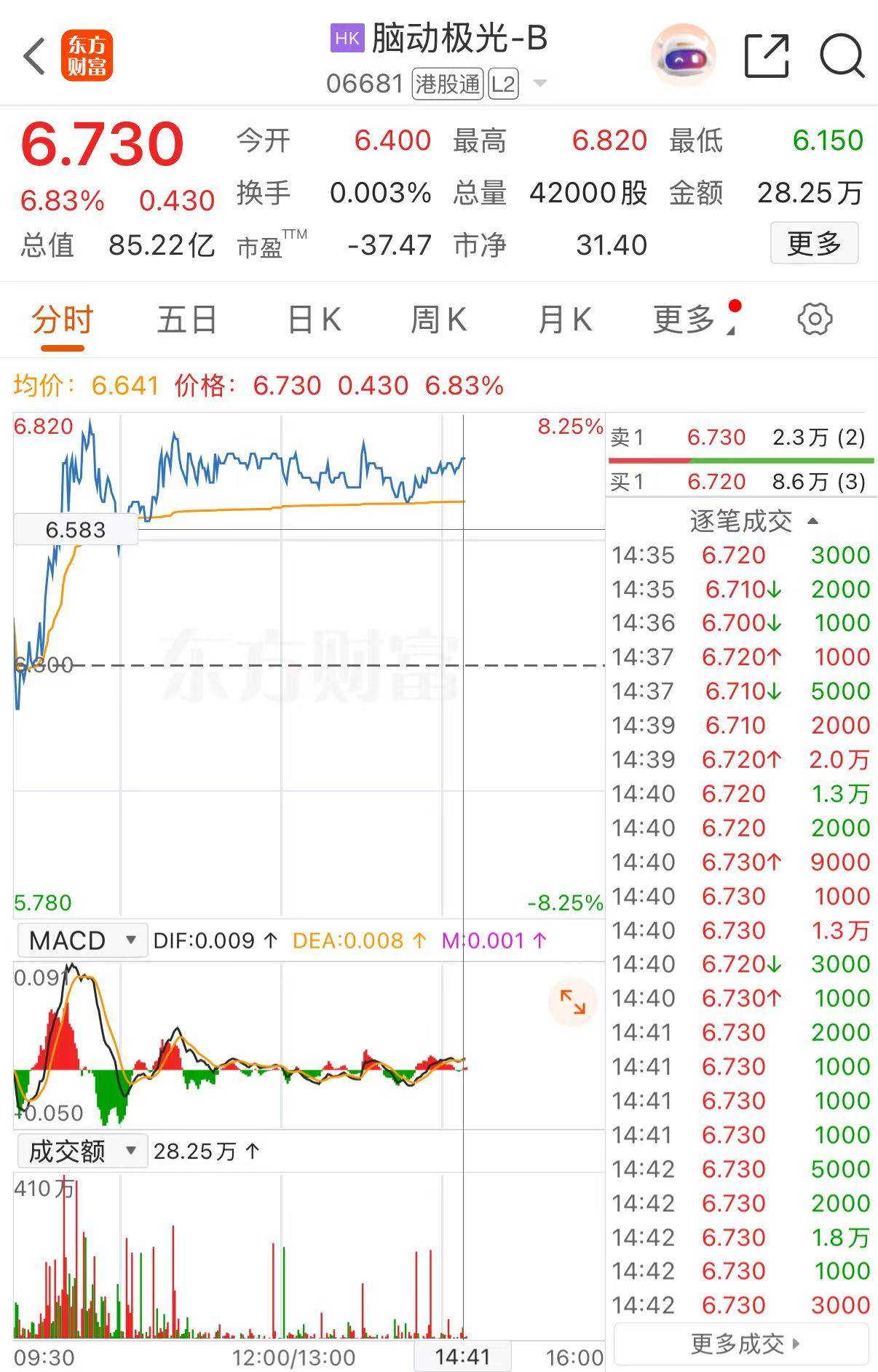
港股异动 脑动极光-B(06681)现涨近6% 公司携手莱贺思宝拓展新加坡市场
Jin Rong Jie· 2025-12-29 06:10
Group 1 - The core viewpoint of the article highlights that Brainstorm Cell Therapeutics (06681) has seen a significant stock price increase, rising over 8% during trading and currently up 5.87% to HKD 6.67, with a trading volume of HKD 110 million [1] - The company announced a strategic cooperation agreement with Singapore's Laheyspring Health Management Group to promote product marketing and market expansion in Singapore, aiming to advance the digital health industry [1] - In terms of product promotion, the company will localize and implement its cognitive impairment digital therapy products in Singapore, providing system support and personnel training, while Laheyspring will leverage its offline stores and member resources to recommend the company's products to target users [1] Group 2 - For market expansion collaboration, both parties will integrate resources such as products, channels, brands, and technology to jointly explore the Singapore market, focusing on introducing the company's products into leading private and public hospitals in Singapore to enhance their application and popularity within the local healthcare system [1]
脑动极光-B现涨近6% 公司携手莱贺思宝拓展新加坡市场
Zhi Tong Cai Jing· 2025-12-29 05:54
Core Viewpoint - The company, Brainstorm Cell Therapeutics (脑动极光-B), has seen its stock price increase by over 8% during trading, currently up by 5.87% at HKD 6.67, with a trading volume of HKD 110 million, following the announcement of a strategic partnership with Singapore's Lehe Health Management Group [1] Group 1: Strategic Partnership - The company has entered into a strategic cooperation agreement with Lehe Health Management Group to promote and expand its products in the Singapore market [1] - The collaboration will focus on the localization, system implementation, and personnel training support for cognitive impairment digital therapy products in Singapore [1] - Lehe Health Management Group will utilize its offline stores and member resources to target users for the company's products, providing comprehensive services including product introduction, trial guidance, purchase conversion, and after-sales support [1] Group 2: Market Expansion - Both companies will integrate their resources in products, channels, branding, and technology to jointly explore the Singapore market [1] - The partnership aims to facilitate the entry of the company's products into leading private and public hospitals in Singapore, enhancing the application and popularity of its products within the local healthcare system [1]
港股异动 | 脑动极光-B(06681)现涨近6% 公司携手莱贺思宝拓展新加坡市场
智通财经网· 2025-12-29 05:46
Core Viewpoint - The company Brainstorm Aurora-B (06681) has entered a strategic cooperation agreement with Singapore's Lehasiba Health Management Group to promote and expand its digital health products in the Singapore market [1] Group 1: Strategic Cooperation - The agreement focuses on product promotion and market expansion collaboration in Singapore [1] - Brainstorm Aurora will localize its cognitive impairment digital therapy products, support system implementation, and provide personnel training [1] - Lehasiba will utilize its offline stores and member resources to recommend the company's products to target users and manage the entire service process, including product introduction, trial guidance, purchase conversion, and after-sales support [1] Group 2: Market Expansion - Both companies will integrate resources such as products, channels, brands, and technology to jointly explore the Singapore market [1] - The collaboration aims to promote the company's products into leading private hospitals and public hospital systems in Singapore, enhancing the application and popularity of the products within the local healthcare system [1]
脑动极光-B(06681.HK)与莱贺思宝订立战略合作协议 拓展新加坡市场及推动国际化布局
Jin Rong Jie· 2025-12-29 04:32
Group 1 - The company, Brainstorm Cell Therapeutics Inc. (06681.HK), has recently entered into a strategic cooperation agreement with Natural Health Solutions Programme Group Holdings to promote product marketing and market expansion in Singapore [1] - The collaboration aims to jointly advance the development of the digital health industry [1]
脑动极光-B(06681)与莱贺思宝订立战略合作协议 拓展新加坡市场及推动国际化布局
智通财经网· 2025-12-29 04:18
Core Viewpoint - The company has entered into a strategic cooperation agreement with Natural Health Solutions Programme Group Holdings to promote digital health products in the Singapore market, addressing the challenges of an aging population and increasing rates of cognitive disorders [1][2]. Group 1: Strategic Cooperation Details - The cooperation includes product promotion, where the company will localize its cognitive disorder digital therapy products for Singapore, while Natural Health Solutions will leverage its offline stores and member resources for targeted recommendations and full-service support [2]. - Market expansion efforts will involve integrating resources such as products, channels, brands, and technology to penetrate Singapore's healthcare system, focusing on private and public hospitals [2]. Group 2: Long-term Development Opportunities - This partnership is expected to enhance the company's international presence and expand into Southeast Asia, building on previous experiences in Hong Kong and Macau [3]. - The collaboration aims to strengthen the company's brand authority in digital healthcare and expedite product integration into local medical institutions, thereby broadening its market reach [3].
脑动极光-B与莱贺思宝订立战略合作协议 拓展新加坡市场及推动国际化布局
Zhi Tong Cai Jing· 2025-12-29 04:18
Core Viewpoint - The company has entered into a strategic cooperation agreement with Natural Health Solutions Programme Group Holdings to promote and expand its digital health products in the Singapore market, addressing the challenges of an aging population and increasing rates of cognitive disorders [1][2]. Group 1: Strategic Cooperation Details - The cooperation includes product promotion, where the company will localize its cognitive disorder digital therapy products for Singapore, while Natural Health Solutions will leverage its offline stores and member resources to recommend the products to target users and provide full-service support [2]. - Market expansion collaboration will involve integrating resources such as products, channels, brands, and technology to jointly develop the Singapore market, focusing on introducing the company's products into leading private and public hospitals [2]. Group 2: Long-term Development Opportunities - The cooperation is expected to deepen the company's international presence and expand into overseas markets, marking the official launch of its Southeast Asia market strategy, building on prior experiences in Hong Kong and Macau [3]. - This partnership is anticipated to enhance the company's brand influence and commercial network in the digital healthcare sector, facilitating quicker product integration into local medical institutions and diversifying into various digital health management markets [3].