
YONGHUI SUPERSTORES(601933)

Search documents
永辉超市:高级管理人员减持股份结果公告
Zheng Quan Ri Bao Zhi Sheng· 2025-11-07 14:14
Summary of Key Points Core Viewpoint - Yonghui Supermarket announced the completion of a share reduction plan by its Vice President, Ms. Luo Wenxia, who reduced her holdings in the company [1]. Group 1: Shareholding Details - Before the implementation of the reduction plan, Ms. Luo held 435,160 shares, which accounted for 0.0048% of the company's total share capital [1]. - As of November 7, 2025, Ms. Luo reduced her holdings by 108,700 shares through centralized bidding, representing 0.0012% of the company's total share capital [1]. - The share reduction plan has been fully implemented as of November 7, 2025 [1].
11月7日增减持汇总:永辉超市等14家公司减持 江苏有线增持(表)


Xin Lang Zheng Quan· 2025-11-07 13:51
Core Viewpoint - On November 7, Jiangsu Cable announced a plan for share repurchase, while 14 listed companies disclosed share reduction plans by their shareholders and executives [1][2]. Group 1: Share Buyback - Jiangsu Cable's controlling shareholder intends to increase its stake in the company by investing between 100 million to 150 million yuan [2]. Group 2: Share Reduction - Huahong Technology's director plans to reduce holdings by up to 2.1 million shares [2]. - Shenzhou Information's board members and senior management plan to reduce holdings by up to 0.039% of shares [2]. - Zhongying Technology's shareholder plans to reduce holdings by up to 0.77% of shares [2]. - Yong'an Pharmaceutical's directors and executives plan to collectively reduce holdings by up to 0.08% of shares [2]. - Yingshi Sheng's actual controller plans to reduce holdings by up to 1.86% of shares [2]. - Qiming Star's shareholder plans to reduce holdings by up to 0.07% of shares [2]. - Weiteou's controlling shareholder and its concerted parties plan to reduce holdings by up to 3% of shares [2]. - Diansheng Co.'s shareholders plan to reduce holdings by up to 4% of shares [2]. - Demingli's second-largest shareholder reduced holdings by 782,200 shares on November 7 [2]. - Fuchin Technology's controlling shareholder plans to reduce holdings by up to 2% of shares [2]. - Xinlong Holdings' shareholder plans to reduce holdings by up to 3% of shares [2]. - Yonghui Supermarket's executive completed a reduction of 108,700 shares on November 7 [2]. - Fangda Carbon's share repurchase account plans to reduce holdings by up to 1.88% of shares [2]. - Changbai Mountain's shareholder plans to reduce holdings by up to 1% of shares [2].


永辉超市:副总裁罗雯霞减持10.87万股,减持计划实施完毕
Mei Ri Jing Ji Xin Wen· 2025-11-07 11:36
Group 1 - The core point of the news is that Yonghui Supermarket announced the completion of a share reduction plan by Vice President Luo Wenxia, who reduced her holdings by 108,700 shares, accounting for 0.0012% of the company's total share capital [1] - As of November 7, 2025, Yonghui Supermarket's revenue composition for the first half of 2025 shows that retail accounts for 95.19% and services account for 4.81% [1] - The current market capitalization of Yonghui Supermarket is 41.5 billion yuan [2]
永辉超市(601933) - 永辉超市股份有限公司高级管理人员减持股份结果公告
2025-11-07 11:33
证券代码:601933 证券简称:永辉超市 公告编号:2025-063 永辉超市股份有限公司 高级管理人员减持股份结果公告 本公司董事会、全体董事及相关股东保证本公告内容不存在任何虚假记载、误导 性陈述或者重大遗漏,并对其内容的真实性、准确性和完整性承担法律责任。 重要内容提示: 股东名称 罗雯霞 股东身份 控股股东、实控人及一致行动人 □是 √否 直接持股 5%以上股东 □是 √否 董事、监事和高级管理人员 √是 □否 其他:不适用 持股数量 435,160股 持股比例 0.0048% 一、减持主体减持前基本情况 1 当前持股股份来源 股权激励取得:435,160股 上述减持主体无一致行动人。 二、减持计划的实施结果 高级管理人员持股的基本情况 本次减持计划实施前,永辉超市股份有限公司(以下简称"公司")副总裁 罗雯霞女士持有公司股份 435,160 股,占公司总股本的 0.0048%。 减持计划的实施结果情况 2025 年 10 月 16 日,公司在上海证券交易所网站(www.sse.com.cn)披 露了《永辉超市股份有限公司关于高管集中竞价减持股份计划公告》(公告编号: 2025-059)。罗雯霞女士 ...
永辉超市(601933.SH):股东罗雯霞减持10.87万股公司股份
Ge Long Hui A P P· 2025-11-07 11:27
Core Points - Yonghui Supermarket (601933.SH) announced the completion of a share reduction plan by Ms. Luo Wenxia on November 7, 2025 [1] - Ms. Luo reduced her holdings by 108,700 shares, which represents 0.0012% of the company's total share capital [1] Summary by Category - **Company Actions** - The share reduction plan has been fully implemented as of November 7, 2025 [1] - The reduction was executed through centralized bidding [1] - **Shareholder Activity** - Ms. Luo Wenxia's total share reduction amounted to 108,700 shares [1] - This reduction reflects a minor percentage of the overall share capital, indicating limited impact on the company's ownership structure [1]
永辉超市:副总裁罗雯霞完成减持0.0012%公司股份
Ge Long Hui· 2025-11-07 11:13
Core Viewpoint - Yonghui Supermarket's Vice President, Ms. Luo Wenxia, has completed her share reduction plan, selling a total of 108,700 shares, which represents 0.0012% of the company's total share capital [1] Summary by Sections - **Share Reduction Details** - The share reduction was executed through centralized bidding on November 7, 2025, with a transaction price range of 4.59 to 4.59 yuan per share, resulting in a total transaction amount of 498,900 yuan [1] - Prior to the reduction, Ms. Luo held 435,200 shares, accounting for 0.0048% of the total shares; after the reduction, her holdings decreased to 326,500 shares, representing 0.0036% of the total shares [1] - **Plan Consistency** - This share reduction plan aligns with the previously disclosed plan on October 16, 2025, confirming that the implementation has been completed as scheduled [1]
晨会纪要:开源晨会 1107-20251107
KAIYUAN SECURITIES· 2025-11-07 00:50
Group 1: Market Overview - The performance of the CSI 300 and ChiNext indices over the past year shows significant fluctuations, with a notable increase in the last few months [1] - The top five industries by yesterday's performance include non-ferrous metals, electronics, communications, basic chemicals, and automobiles, with gains ranging from 1.784% to 3.051% [1][2] Group 2: Fund Management Insights - In October 2025, the performance of industry rotation-type fund advisory products was relatively strong, with stock-type advisory products outperforming mixed equity funds [5] - The average returns for different types of fund advisory products in October were 0.31% for pure bond, 0.41% for fixed income+, 0.01% for mixed equity, and -0.90% for stock-type products [5][6] - Fund advisory products showed a shift in asset allocation, with an increase in exposure to non-bank financials and non-ferrous metals, while reducing exposure to the pharmaceutical and biological sectors [7] Group 3: Banking Sector Analysis - The banking sector is characterized by a low interest rate environment and a focus on stable high-dividend assets, highlighting the scarcity of such investments [12] - The investment strategy emphasizes buying high-dividend, defensive stocks while also considering the growth potential and long-term value of banks [12][16] - Recommendations include a three-tiered approach: large state-owned banks for core holdings, banks with strong wealth management capabilities for core configurations, and high-growth regional banks for flexible allocations [16] Group 4: Non-Bank Financials - The Hong Kong Stock Exchange reported a significant increase in revenue and profit for the first three quarters of 2025, with total revenue reaching HKD 218.5 billion, a year-on-year increase of 37% [18] - The trading and settlement fees, which are directly linked to ADT, saw substantial growth, indicating a robust performance in the trading sector [19] - The outlook for the Hong Kong Stock Exchange remains positive, with expectations of continued growth driven by the return of quality assets and sustained inflows from southbound capital [18][19] Group 5: Retail Sector Insights - The baby products retailer reported steady growth in its main business, with revenue for the first three quarters of 2025 reaching CNY 2.725 billion, a year-on-year increase of 10.4% [23] - The company is expanding its store network and enhancing its product offerings through partnerships, which are expected to drive future growth [25] - The jewelry retailer experienced a decline in revenue but improved profitability due to adjustments in product and channel strategies, focusing on enhancing operational quality [28][29] Group 6: Supermarket Sector - The supermarket chain faced significant revenue decline in the first three quarters of 2025, with total revenue of CNY 42.434 billion, down 22.2% year-on-year [32] - The company is undergoing a transformation towards quality retail, with ongoing supply chain reforms and store optimization efforts [32][34] - Despite short-term challenges, the long-term outlook remains optimistic as the company aims to improve operational efficiency and adapt to changing consumer habits [32][34]


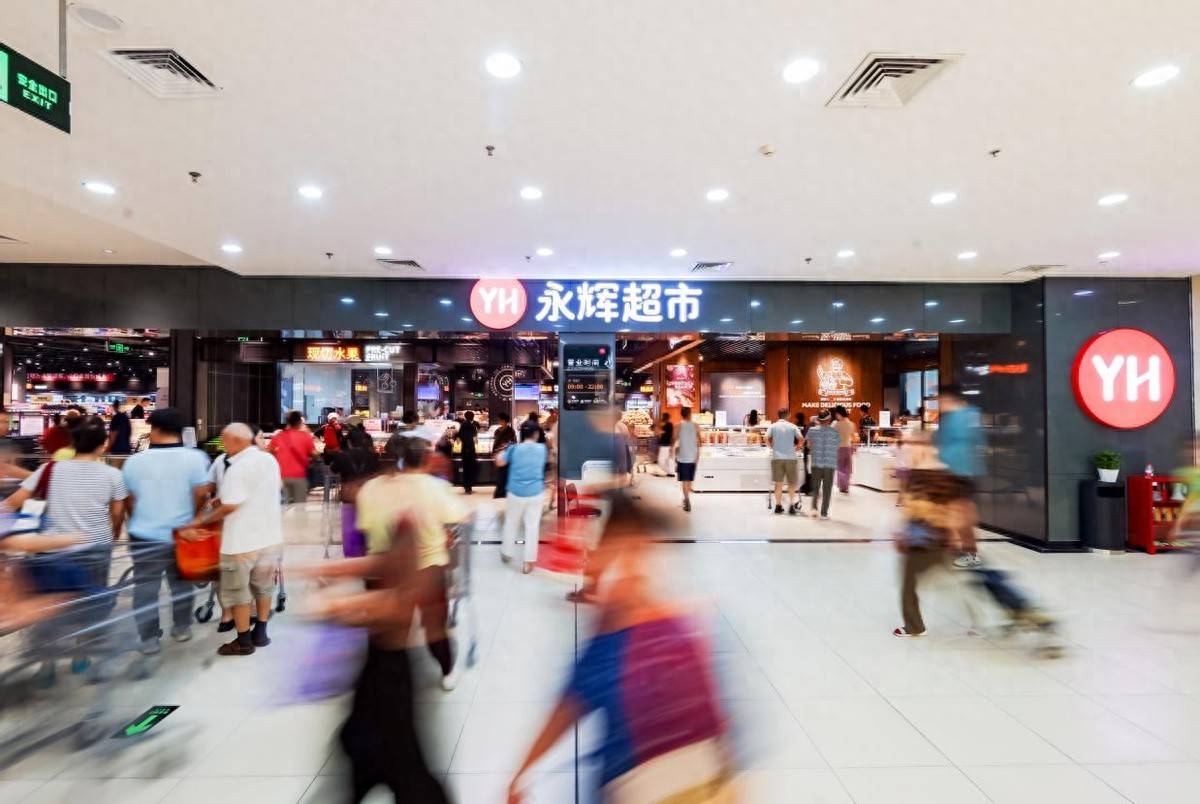
永辉超市“胖东来模式”渭南首店落户吾悦广场,以品质零售重构消费体验
Sou Hu Cai Jing· 2025-11-06 10:54
Core Viewpoint - Yonghui Supermarket has launched a new store in Weinan, marking the 100th store to adopt the "Fat Donglai model," emphasizing quality retail and providing a fresh shopping experience during the "Double Eleven" shopping festival [1][16]. Group 1: Store Launch and Model Adoption - The new Yonghui store in Weinan is designed to offer a different shopping experience compared to online platforms, focusing on immediate satisfaction and quality lifestyle [1][3]. - The store's opening signifies the nationwide expansion of the "Fat Donglai model," which aims to enhance the quality of retail across 100 cities in China [1][4]. Group 2: Product and Service Innovations - The store has optimized its product structure by removing 4,744 items and adding 5,425 high-quality products, achieving a 47% increase in new offerings [4]. - Yonghui has committed to strict quality standards, including the "468 principle," which ensures that unsold fresh products are removed within eight hours, enhancing consumer trust in product freshness [3][13]. Group 3: Supply Chain and Pricing Strategy - Yonghui's supply chain capabilities allow for high-quality, affordable custom products, such as fresh milk priced at 7.9 yuan for 950ml, which meets stringent quality standards [8]. - The store emphasizes "quality and affordability," providing a shopping experience that is immediate and tangible, contrasting with the complexities of online shopping [8][13]. Group 4: Fresh Food and Culinary Offerings - The fresh food section has been highlighted as a key upgrade, featuring organic vegetables and a variety of ready-to-eat products, ensuring freshness for family meals [8][10]. - The prepared food area has been revamped to include diverse offerings, catering to various meal occasions and preferences, enhancing the overall dining experience [10][11]. Group 5: Customer Experience and Store Layout - The store layout has been redesigned for a more comfortable shopping experience, with wider aisles and lower shelving to improve visibility and accessibility [13]. - Over 40 customer service enhancements have been implemented, including rest areas and personalized services at meat and seafood counters, to create a welcoming environment [13][14]. Group 6: Employee Welfare and Service Quality - The store has increased its workforce from 99 to 145 employees, improving overall service quality through enhanced employee benefits and training [14]. - Employee welfare initiatives, such as paid leave and improved working conditions, contribute to a more professional and sincere customer service experience [14].
研报掘金丨开源证券:维持永辉超市“买入”评级,长期经营拐点可期
Ge Long Hui A P P· 2025-11-06 07:45
Core Viewpoint - Yonghui Supermarket's revenue for the first three quarters of 2025 decreased by 22.2% year-on-year, with significant pressure on profits. The company is actively upgrading its supply chain and optimizing its store operations, indicating a strategic shift towards quality retail despite short-term performance challenges [1] Group 1: Financial Performance - Revenue for the first three quarters of 2025 decreased by 22.2% year-on-year [1] - Profitability is under significant pressure due to the revenue decline [1] Group 2: Supply Chain and Vendor Management - The company is continuously upgrading its supply chain and has streamlined its supplier system, achieving a supplier elimination rate of 40.4% by Q3 2025 [1] - The direct sourcing model has shown positive results, with sales of the aquatic product, Chinese mitten crab, reaching 44.53 million yuan in Q3 2025, a year-on-year increase of 195% [1] Group 3: Private Label Development - The company is accelerating the development of its private label products as part of its "product centralization" strategy, having launched 15 quality items across fresh produce, 3R, and standard product categories by the end of October [1] Group 4: Store Optimization - As of the end of September 2025, the company has remodeled 222 stores, with the remodeling process significantly accelerating and entering a systematic and scalable phase [1] - The transition towards quality retail is progressing smoothly, indicating a focus on supply chain reform and store optimization [1]
开源证券:维持永辉超市“买入”评级,长期经营拐点可期
Xin Lang Cai Jing· 2025-11-06 07:45
Core Viewpoint - Yonghui Supermarket's revenue for the first three quarters of 2025 decreased by 22.2% year-on-year, with significant pressure on profits. The company is actively upgrading its supply chain and optimizing its store operations, indicating a strategic shift towards quality retail despite short-term performance challenges [1] Group 1: Financial Performance - Revenue for the first three quarters of 2025 decreased by 22.2% year-on-year [1] - Profitability is under significant pressure due to the ongoing transformation efforts [1] Group 2: Supply Chain and Vendor Management - The company is streamlining its supplier system, achieving a supplier elimination rate of 40.4% by Q3 2025 [1] - The direct sourcing model is showing positive results, with sales of the aquatic product, mud crab, reaching 44.53 million yuan in Q3 2025, a year-on-year increase of 195% [1] Group 3: Private Label Development - The company is accelerating the development of its private label products, launching 15 quality items across fresh produce, 3R, and standard product categories by the end of October [1] - This initiative is part of a "product centralization" strategy aimed at enhancing competitive differentiation [1] Group 4: Store Optimization - As of September 30, 2025, the company has completed the renovation of 222 stores, with the renovation process significantly accelerating [1] - The transformation towards quality retail is progressing smoothly, indicating a systematic and scalable approach to store optimization [1] Group 5: Long-term Outlook - Despite short-term performance pressures, the company is expected to reach a turning point in its long-term operations due to ongoing supply chain reforms and store optimization efforts [1] - The investment rating is maintained at "Buy" based on the anticipated positive long-term outcomes [1]