
BANK OF CHINA(BACHY)

Search documents
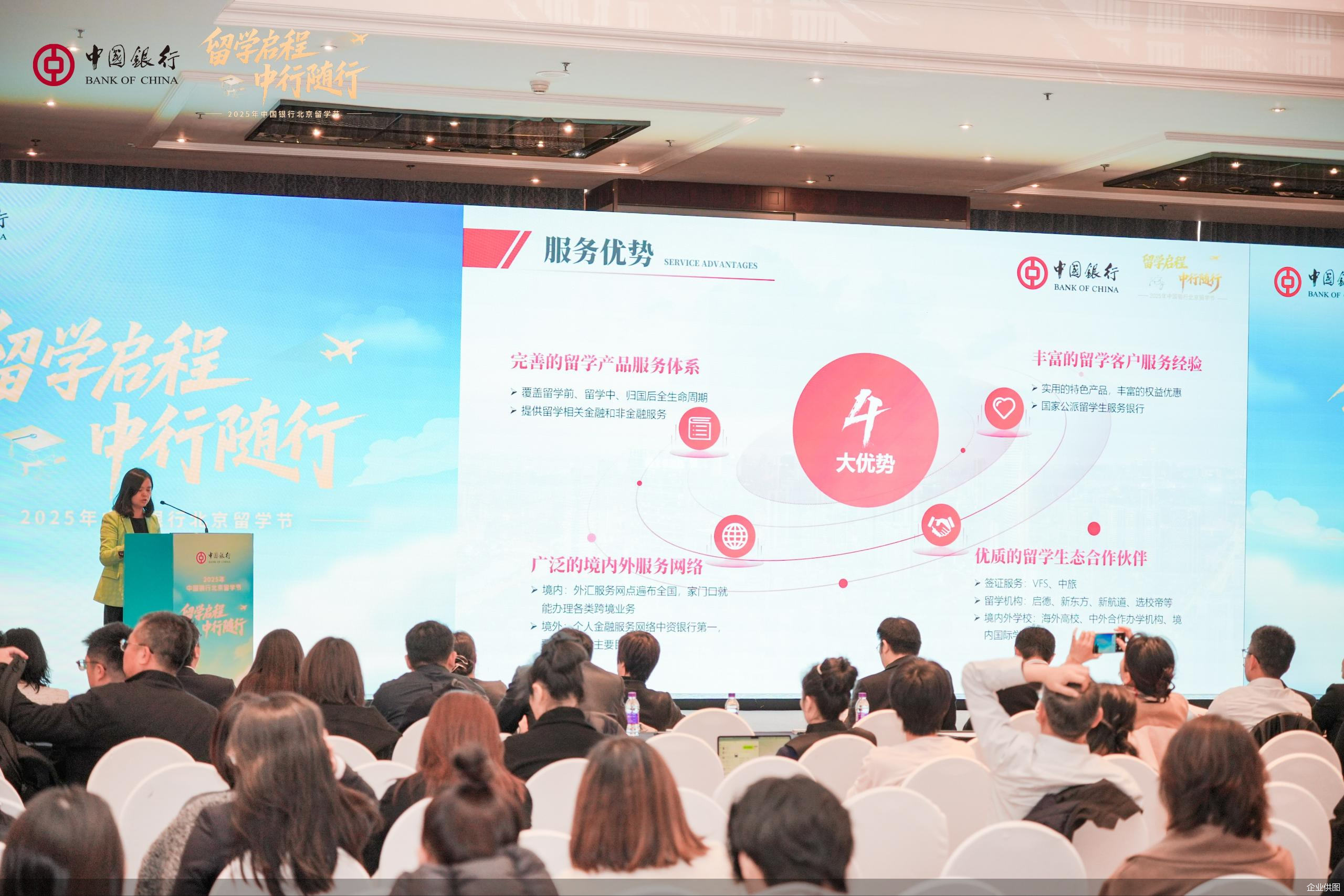
“留学启程·中行随行” 中国银行北京市分行举办2025年留学节活动
Bei Jing Shang Bao· 2025-11-17 14:05
Core Insights - The Bank of China Beijing Branch, in collaboration with six overseas branches, hosted the "Study Abroad Journey - Bank of China Accompanying You" 2025 Study Abroad Festival, with the Ministry of Education's Study Abroad Service Center in attendance [1][3] Group 1: Company Initiatives - The Bank of China aims to be the preferred bank for international students, emphasizing its commitment to being a "flagship bank for study abroad finance" [3] - The bank has launched a comprehensive financial service plan for study abroad, focusing on a full lifecycle service system that includes study planning, overseas learning, and return employment [5] - The event featured over 60 overseas universities and institutions, providing a platform for in-depth exchanges and cooperation among various stakeholders in the education sector [5] Group 2: Industry Trends - The study abroad market is characterized by a high proportion of high-net-worth clients, a concentration of prestigious schools, and a demand for high-end, multifaceted services [3] - The Ministry of Education's Study Abroad Service Center highlighted the value of studying abroad in the context of the new economy and its positive impact on employment prospects for returnees [3] - The event served as a vital link between overseas universities, international schools, and cooperative education programs, enhancing the overall study abroad experience [5]


中国银行业协会:截至2024年末,共有12家城商行资产规模过万亿元
Bei Jing Shang Bao· 2025-11-17 11:48
Core Insights - The report highlights the significant growth and development of urban commercial banks in China over the past 30 years, emphasizing their role in supporting local economies and small to medium-sized enterprises [1][2] Group 1: Development and Growth - As of the end of 2024, the asset scale of urban commercial banks reached 60.15 trillion yuan, a 134-fold increase since 1995, accounting for 13.53% of the banking sector [1] - The market share of urban commercial banks has increased by 8.24 percentage points, with a non-performing loan ratio of 1.76% and a provision coverage ratio of 188.08% [1] - There are 12 urban commercial banks with asset scales exceeding 1 trillion yuan, and 5 have been classified as systemically important banks in China [1] Group 2: Operational Management - Urban commercial banks have maintained a focus on serving urban and rural residents, small and medium-sized enterprises, and local economies, enhancing their service channels and product offerings [2] - They have played a crucial role in supporting the development of small and medium-sized enterprises, improving financial service coverage, accessibility, and customer satisfaction [2] - Urban commercial banks are actively exploring innovations to meet financing needs arising from major policies such as new urbanization and coordinated urban-rural development, thereby injecting financial momentum into local economic development [2]
中国银行业协会:截至2024年末城商行资产规模60.15万亿元
Zheng Quan Shi Bao Wang· 2025-11-17 10:36
Core Insights - The report indicates that by the end of 2024, the asset scale of urban commercial banks in China is projected to reach 60.15 trillion yuan, representing a 134-fold increase since 1995 [1] - Urban commercial banks now account for 13.53% of the total banking financial institutions, with a market share increase of 8.24 percentage points [1] - The non-performing loan (NPL) ratio stands at 1.76%, with a provision coverage ratio of 188.08% and a capital adequacy ratio of 12.97% [1] - There are currently 12 urban commercial banks with asset scales exceeding 1 trillion yuan, and 5 of these banks have been classified as systemically important banks in China [1]
合计发行超470亿元!中国银行牵头为多家科技型企业发行点心债
Zhong Zheng Wang· 2025-11-17 05:53
Core Viewpoint - China Bank has successfully coordinated the issuance of dim sum bonds for leading technology companies such as Alibaba, Baidu, Tencent, and Meituan in the Hong Kong market, with a total issuance amount exceeding 47 billion yuan, reflecting strong demand in the offshore RMB financing market [1] Group 1: Issuance Details - The total issuance amount of dim sum bonds exceeded 47 billion yuan, with subscription amounts close to 150 billion yuan, which is 3.2 times the issuance amount [1] - Dim sum bonds, also known as offshore RMB bonds, are issued outside of China and denominated in RMB, providing a diversified financing channel for enterprises in mainland China and Hong Kong [1] Group 2: Market Impact - The issuance of these bonds enhances the circulation efficiency and international usage of the RMB [1] - China Bank leverages its global advantages and comprehensive features to assist technology leaders in their first issuance of dim sum bonds, achieving innovative breakthroughs in terms of maturity structure, issuing entities, and market capacity [1] - This initiative enriches the issuing entities and improves the market ecosystem, injecting new momentum into the offshore RMB market and expanding new channels for technology finance [1]


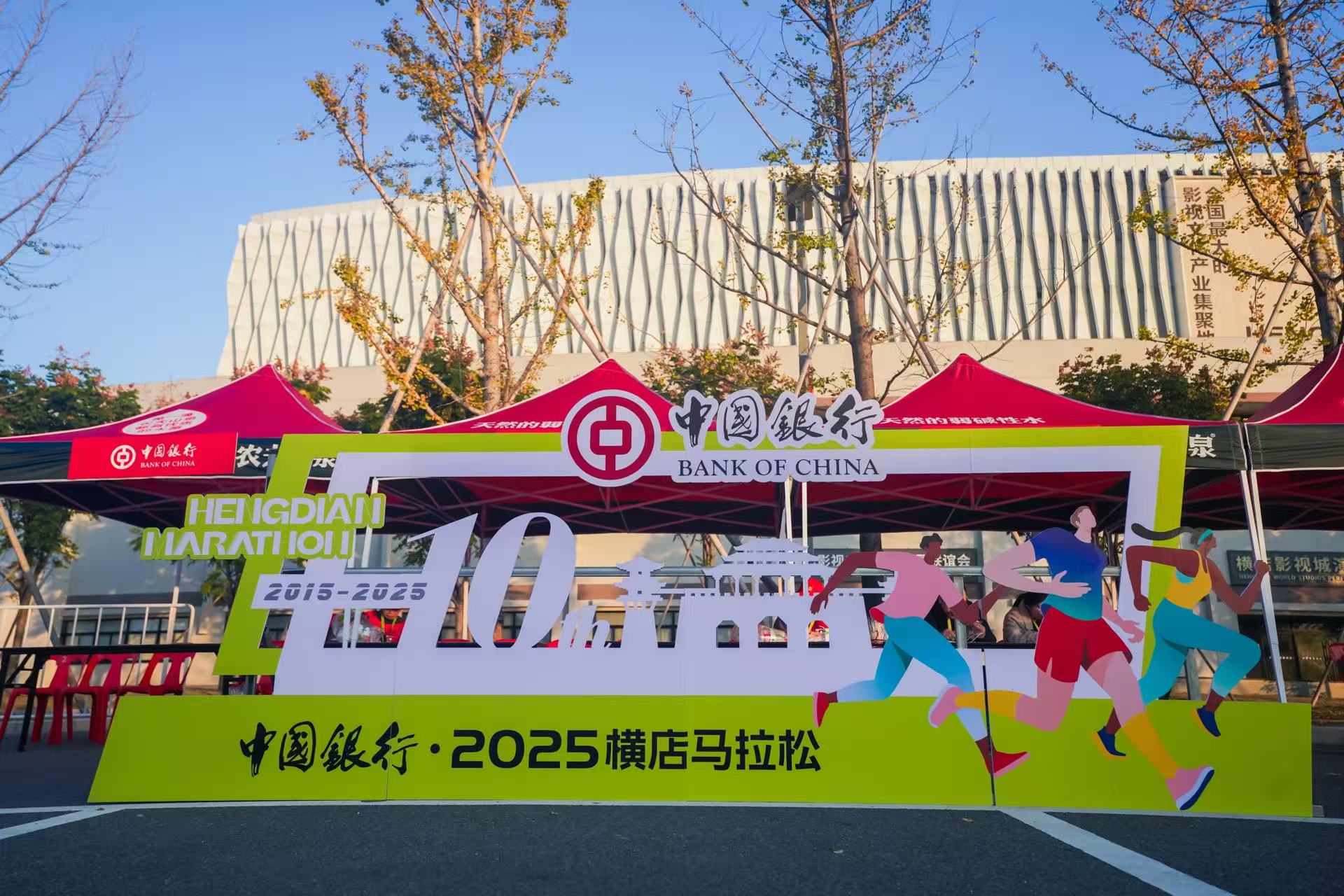
与跑者同行,为梦想续航——中国银行十年相伴赋能横店马拉松
Zhong Guo Jin Rong Xin Xi Wang· 2025-11-17 05:51
Core Points - The China Bank Marathon 2025 in Hengdian marks the 10th anniversary of the bank's exclusive sponsorship, showcasing its long-term commitment to the event and its growth from a few thousand participants to 18,000 runners [1][3] - The marathon has evolved into a unique "sports + film" gold medal event, becoming a prominent cultural tourism symbol for Zhejiang province [1] - China Bank provides comprehensive financial services and support to participants, including financial education and personalized wealth management solutions [3][4] Group 1 - The event attracted 18,000 participants, highlighting its growth and popularity over the past decade [1] - China Bank has been the exclusive sponsor for ten years, contributing to the marathon's development and success [1][3] - The marathon route features various cultural landmarks, emphasizing the integration of sports and local culture [1] Group 2 - China Bank organizes a "running team" and sets up multiple financial service points during the event to educate participants on financial safety and investment [3] - The bank offers personalized wealth management solutions, including asset allocation and retirement planning, catering to individual financial needs [3] - For small and micro enterprises, China Bank provides flexible loan support to promote the growth of the real economy [3][4] Group 3 - The bank aims to leverage its global and comprehensive operational advantages to continuously energize the Hengdian Marathon [4] - Future collaborations with runners are planned to enhance the event's experience and reach [4]
中国银行副行长刘承钢:出海企业需要更多的产品、工具提供融资服务
Xin Lang Cai Jing· 2025-11-14 09:35
Core Viewpoint - The Vice President of Bank of China, Liu Chenggang, emphasized the importance of commercial banks in supporting enterprises going abroad, highlighting the need for more diverse and professional financial services [1] Financing Needs - Liu Chenggang pointed out that outbound enterprises require a wider range of financing products and tools, such as project financing, merger loans, trade financing, and bond issuance [1] - He stated that only by providing diversified funding can the financing needs of projects be adequately met [1]
国有大型银行板块11月14日涨0.17%,中国银行领涨,主力资金净流入3699.4万元
Zheng Xing Xing Ye Ri Bao· 2025-11-14 08:58
Core Insights - The state-owned large bank sector saw a slight increase of 0.17% on November 14, with China Bank leading the gains [1] - The Shanghai Composite Index closed at 3990.49, down 0.97%, while the Shenzhen Component Index closed at 13216.03, down 1.93% [1] Bank Performance - China Bank (601988) closed at 5.82, up 1.39% with a trading volume of 3.83 million shares [1] - Bank of Communications (601328) closed at 7.52, up 0.94% with a trading volume of 2.07 million shares [1] - Industrial and Commercial Bank of China (601398) closed at 8.25, up 0.49% with a trading volume of 3.06 million shares [1] - Postal Savings Bank of China (601658) closed at 5.83, up 0.34% with a trading volume of 1.94 million shares [1] - China Construction Bank (601939) closed at 9.56, up 0.21% with a trading volume of 0.72 million shares [1] - Agricultural Bank of China (601288) closed at 8.50, down 0.70% with a trading volume of 3.55 million shares [1] Capital Flow Analysis - The state-owned large bank sector experienced a net inflow of 36.99 million yuan from institutional investors, while retail investors saw a net inflow of 91.47 million yuan [1] - Speculative funds had a net outflow of 128 million yuan [1] Individual Bank Capital Flow - Industrial and Commercial Bank of China (601398) had a net inflow of 14.5 million yuan from institutional investors, but a net outflow of 77.71 million yuan from speculative funds [2] - Bank of Communications (601328) had a net inflow of 83.88 million yuan from institutional investors, with a net outflow of 70.13 million yuan from speculative funds [2] - Postal Savings Bank of China (601658) had a net inflow of 83.25 million yuan from institutional investors, with a net outflow of 67.32 million yuan from speculative funds [2] - China Bank (601988) had a net inflow of 73.29 million yuan from institutional investors, with a net outflow of 13.32 million yuan from speculative funds [2] - Agricultural Bank of China (601288) had a significant net outflow of 37.1 million yuan from institutional investors, but a net inflow of 120 million yuan from speculative funds [2]




中国银行涨2.09%,成交额12.47亿元,主力资金净流入7853.19万元
Xin Lang Cai Jing· 2025-11-14 03:07
Core Viewpoint - China Bank's stock price has shown a significant increase this year, with a year-to-date rise of 11.24% and a recent uptick of 3.90% over the last five trading days [2] Group 1: Stock Performance - As of November 14, China Bank's stock price rose by 2.09% to 5.86 CNY per share, with a trading volume of 12.47 billion CNY and a turnover rate of 0.10% [1] - The stock has experienced a 9.74% increase over the past 20 days and a 5.21% increase over the past 60 days [2] Group 2: Financial Performance - For the period from January to September 2025, China Bank reported a net profit attributable to shareholders of 177.66 billion CNY, reflecting a year-on-year growth of 1.08% [2] - The bank's main business revenue composition includes personal financial services (39.47%), corporate financial services (36.29%), funding services (14.84%), investment banking and insurance (6.40%), and other businesses (3.00%) [2] Group 3: Shareholder Information - As of September 30, 2025, the number of shareholders for China Bank reached 678,900, an increase of 10.32% from the previous period [2] - The top three circulating shareholders include China Securities Finance Corporation with 7.941 billion shares, unchanged from the previous period, and Hong Kong Central Clearing Limited with 888 million shares, which decreased by 762 million shares [3]
第一财经携手中国银行发布重磅《跨越山海丨金融助力中国企业“走出去”》报告
Sou Hu Cai Jing· 2025-11-13 19:42
当前,全球经济格局正经历深刻重塑。地缘政治冲突频发、保护主义抬头、产业链重构加速,原有的经济全球化体系面临逆全球化浪潮的冲击。 对中国而言,过去数十年推动全球化的动力正由"引进来"逐步转向"走出去"。中国企业凭借在制造、供应链与技术等领域的优势,持续拓展海外市场,成 为全球经济中日益重要的投资与创新力量。然而,面对外部环境的不确定性,中国企业"走出去"进入了一个从规模扩张转向高质量发展的新阶段。 在此背景下,中国企业出海的需求、风险与机遇都在发生新的变化,金融服务中国企业"走出去"的支撑力量比以往任何时候都更为关键。如何让金融机构 在逆全球化与科技革新并行的时代中,为中国企业出海提供稳定而高效的支持,成为亟需探讨的重要课题。第一财经与中国银行以"金融助力中国企业'走 出去'"为主题,研究探讨中国金融机构在服务企业国际化进程中的新实践与新方向。 11月8日,白皮书《金融助力中国企业"走出去"》(下称"报告")在第八届中国国际进口博览会上重磅发布。本报告是第一财经研究院"跨越山海丨中国企 业全球化"系列的重磅篇章。报告系统梳理了中国金融机构在助力企业出海过程中的实践路径与创新成果,形成五大支撑维度。 第一,不断深 ...

中国银行:后续我行将发布A股派息实施公告
Zheng Quan Ri Bao· 2025-11-13 13:40
证券日报网讯中国银行11月13日在互动平台回答投资者提问时表示,我行按照《中国证券登记结算有限 责任公司上海分公司证券发行人业务指南》的公开规定来办理A股派息相关工作。我行已对外公告了A 股权益登记日为2025年12月10日。根据业务指南,A股股息发放日为权益登记日的下一个交易日。据 此,我行本次A股股息发放日为2025年12月11日。后续我行将发布A股派息实施公告。H股股息发放日 已公告,为2026年1月23日。 (文章来源:证券日报) ...
