
BeiGene(BGNE)

Search documents
百济神州再涨,周内累涨近20%!公司前三季度归母净利润11.39亿元,泽布替尼美欧市场放量超预期
Zhi Tong Cai Jing· 2025-11-13 02:19
Core Insights - The company reported a significant increase in revenue and profitability for the first three quarters of 2025, with total revenue reaching RMB 27.595 billion, a year-on-year growth of 44.2%, and a net profit attributable to shareholders of RMB 1.139 billion, marking a turnaround from a loss to profit [3][4] Revenue Breakdown - The global revenue for the drug Zebutini (BTK) reached USD 1.04 billion in Q3 2025, reflecting a year-on-year increase of 50.8% and a quarter-on-quarter increase of 9.6% [4] - In the U.S., Zebutini generated USD 740 million, up 46.7% year-on-year and 8.0% quarter-on-quarter [4] - European sales of Zebutini amounted to USD 160 million, showing a year-on-year growth of 67.7% and a quarter-on-quarter increase of 8.4% [4] - In China, Zebutini's revenue was USD 90 million, with a year-on-year increase of 36.3% and a quarter-on-quarter rise of 11.1% [4] - The company anticipates a 5-10% growth in Zebutini's revenue in Q4 2025, projecting total global revenue for the drug to exceed USD 3.9 billion for the year [4] Profitability Forecast - The company has revised its revenue forecasts for FY25-27 to USD 5.3 billion, USD 6.4 billion, and USD 7.1 billion respectively, indicating a compound annual growth rate (CAGR) of 23% over three years [3] - The net profit forecasts for FY25-27 have also been adjusted to USD 360 million, USD 660 million, and USD 1.05 billion respectively, reflecting better-than-expected growth in sales and R&D expenses [3]


百济神州Q3扭亏为盈,费率成本最低的港股通创新药ETF南方(159297)涨超3%,上市33日份额增长超2倍
Ge Long Hui· 2025-11-13 02:09
Group 1 - The Hong Kong innovative drug sector has seen a consecutive rise for two days, with BeiGene increasing by 7%, reaching its highest level since November 2021, and other companies like Innovent Biologics and 3SBio also showing significant gains [1] - BeiGene reported Q3 revenue of 10.077 billion yuan, a year-on-year increase of 41.1%, and a net profit attributable to shareholders of 689 million yuan, marking a turnaround from losses [1] - The Southbound Innovative Drug ETF (159297) has recorded a net inflow of 1.053 billion yuan since its launch on September 22, with a growth rate of 285.91% in shares, indicating strong investor interest [1] Group 2 - Guotai Junan Securities highlighted that the full-chain encouragement of innovation policies will further improve medical insurance payments, and the commercial insurance innovative drug catalog is about to be implemented, making innovative products the strongest area in the pharmaceutical sector [2] - In the context of the patent cliff for major products, the business development (BD) transactions of multinational corporations (MNCs) are active, with China becoming the second-largest source of projects for global top 20 MNCs, and BD is expected to reach new highs by 2026 [2]
港股医药股再度走强,港股创新药ETF(159567)冲击二连涨,盘中涨超3%
Mei Ri Jing Ji Xin Wen· 2025-11-13 02:09
Core Viewpoint - The Hong Kong pharmaceutical sector is experiencing a strong performance, driven by the rise of the National Index for Hong Kong Innovative Drugs, with leading stocks such as BeiGene, InnoCare Pharma, and 3SBio showing significant gains [1] Group 1: Market Performance - The Hong Kong Innovative Drug ETF (159567) opened higher and rose over 3% by 9:50 AM, with a trading volume exceeding 600 million yuan, indicating a slight increase compared to the previous day [1] - The strong performance of the index has positively influenced the trading activity of popular ETFs in the market [1] Group 2: Investment Outlook - CITIC Securities released a report forecasting the investment trends in the pharmaceutical sector through 2026, highlighting the concentration of innovation among Chinese pharmaceutical companies and supportive policies for innovative drugs and medical devices [1] - The healthcare industry is expected to gradually return to a market pricing system driven by clinical value and demand, leading to a stable and sustainable domestic pharmaceutical market environment [1] - Listed companies in the sector are anticipated to experience continuous and stable earnings growth, contributing to a positive growth outlook for the industry [1] Group 3: Investment Opportunities - The Hong Kong Innovative Drug ETF (159567) tracks the National Index for Hong Kong Innovative Drugs, aiming to reflect the operational characteristics of listed companies in the innovative drug sector within the Hong Kong Stock Connect [1] - Investors can also access the Hong Kong Innovative Drug ETF through connecting funds, providing an opportunity to capitalize on the upward potential of the innovative drug sector [1]

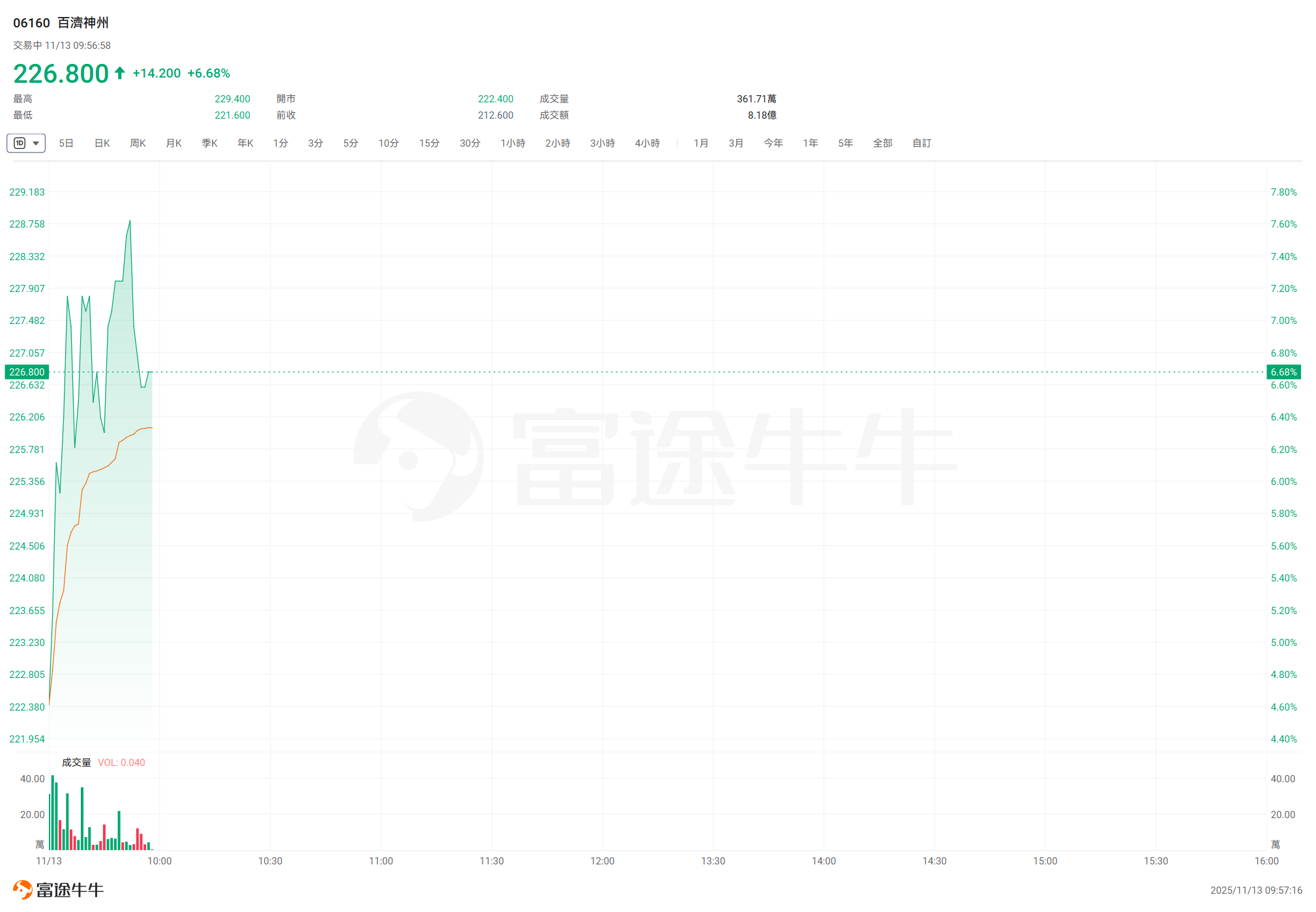
港股异动丨百济神州大涨创4年新高,Q3净利6.89亿元同比扭亏为盈
Ge Long Hui· 2025-11-13 02:07
Core Insights - After the earnings announcement, BeiGene's A-shares rose over 6% to 312.99 CNY, while H-shares increased over 7% to 228.8 HKD, reaching the highest level since November 2021 [1] Financial Performance - For Q3 2025, the company reported revenue of 10.077 billion CNY, a year-on-year increase of 41.1% [1] - The net profit attributable to shareholders was 689 million CNY, marking a turnaround from a loss to profit [1] - For the first three quarters, total revenue reached 27.595 billion CNY, up 44.2% year-on-year [1] - The net profit attributable to shareholders for the first three quarters was 1.139 billion CNY, also indicating a turnaround from a loss to profit [1] Operational Efficiency - The significant changes in performance were primarily driven by increased product revenue and improved operational efficiency due to effective cost management [1]
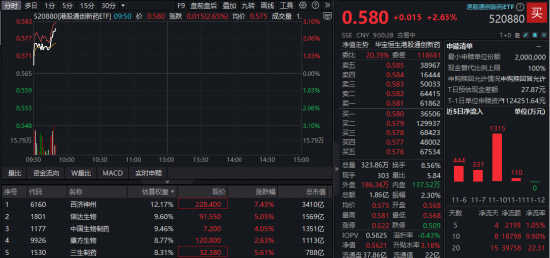
业绩引爆,百济神州飙涨逾7%续创三年新高!高弹性港股通创新药ETF(520880)逆市冲高3%!
Xin Lang Ji Jin· 2025-11-13 02:06
Group 1 - The overall Hong Kong stock market experienced a pullback, but the innovative drug sector, led by BeiGene, showed resilience with a significant increase in stock prices, with BeiGene rising over 7% to reach a three-year high [1] - The Hong Kong Stock Connect Innovative Drug ETF (520880) saw a 3% increase, indicating strong investor interest in innovative drug companies despite the market downturn [1] - BeiGene's total revenue for Q3 2025 reached $1.4 billion, a 41% year-on-year increase, exceeding market expectations, primarily driven by its self-developed product, Zebrutinib, which contributed over $1 billion in revenue for the first time, marking a 50.8% increase [1] Group 2 - Pfizer's acquisition of weight-loss drug developer Metsera for $10 billion highlights the intensifying competition among multinational corporations (MNCs) for innovative drug pipelines, increasing the attractiveness of Chinese innovative drug companies for international collaboration [2] - The trend of Chinese innovative drugs going global is clear, with ongoing drug review reforms and supportive policies contributing to the industry's transition from imitation to innovation, marking the entry into a 2.0 era [2] - The Hong Kong Stock Connect Innovative Drug ETF (520880) is recommended as a primary investment option, featuring a pure focus on innovative drug companies, with over 71% of its top ten holdings representing leading firms in the sector [2][3] Group 3 - The top ten holdings of the Hong Kong Stock Connect Innovative Drug ETF (520880) account for 71.65% of the total weight, showcasing a significant concentration in leading companies [3] - The ETF has surpassed a scale of 2 billion yuan, with an average daily trading volume of 474 million yuan since its inception, making it the largest and most liquid ETF tracking the same index [3]
创新药概念股反复活跃,南京新百2连板
Mei Ri Jing Ji Xin Wen· 2025-11-13 01:57
Group 1 - The core viewpoint highlights the active performance of innovative drug concept stocks, with notable movements in specific companies [1] - Nanjing Xinbai has achieved two consecutive trading limits, indicating strong investor interest [1] - BeiGene has seen an increase of over 6%, reflecting positive market sentiment towards its stock [1] Group 2 - Other companies such as Hainan Hai Chen Pharmaceutical, Lianhua Technology, Wanze Shares, and Xinlitai have also experienced upward trends, suggesting a broader rally in the sector [1]


港股生物医药板块拉升,百济神州涨超6%
Zheng Quan Shi Bao Wang· 2025-11-13 01:56
Core Viewpoint - The Hong Kong stock market's biopharmaceutical sector experienced a significant rally, with notable gains from companies such as BeiGene, which rose over 6%, along with other firms like Tigermed and CanSino Biologics also seeing increases [1] Group 1 - The biopharmaceutical sector in Hong Kong is showing positive momentum, indicating investor confidence and potential growth opportunities [1] - BeiGene's stock price increased by more than 6%, highlighting its strong market performance [1] - Other companies in the sector, including Tigermed and CanSino Biologics, also experienced upward movement, suggesting a broader trend within the industry [1]
港股医药股走强 百济神州涨超6%
Xin Lang Cai Jing· 2025-11-13 01:45
Core Viewpoint - The stocks of several biotechnology companies, including BeiGene, WuXi AppTec, and Legend Biotech, have experienced notable increases in their share prices, indicating positive market sentiment towards these companies [1] Group 1 - BeiGene (06160.HK) shares rose by 6.59% [1] - WuXi AppTec (02126.HK) shares increased by 3.97% [1] - Legend Biotech (02105.HK) shares went up by 3.33% [1]
港股异动 | 百济神州(06160)绩后涨超6% 前三季度归母净利润11.39亿元 泽布替尼美欧市场放量超预期
智通财经网· 2025-11-13 01:40
Core Insights - BeiGene's stock rose over 6% following the release of its Q3 2025 earnings report, with a current price of HKD 224.2 and a trading volume of HKD 239 million [1] Financial Performance - The company reported a revenue of RMB 27.595 billion for the first three quarters of 2025, representing a year-on-year growth of 44.2% [1] - Net profit attributable to shareholders was RMB 1.139 billion, marking a turnaround from a loss to profit [1] - Basic earnings per share stood at RMB 0.81 [1] Product Revenue Breakdown - Global revenue for Zebrutinib (BTK) reached USD 1.04 billion in Q3 2025, showing a year-on-year increase of 50.8% and a quarter-on-quarter increase of 9.6% [2] - Revenue from Zebrutinib in the U.S. was USD 740 million (up 46.7% year-on-year, up 8.0% quarter-on-quarter) [2] - European revenue for Zebrutinib was USD 160 million (up 67.7% year-on-year, up 8.4% quarter-on-quarter) [2] - Revenue from Zebrutinib in China was USD 90 million (up 36.3% year-on-year, up 11.1% quarter-on-quarter) [2] - The company anticipates a 5-10% quarter-on-quarter growth for Zebrutinib in Q4 2025, with global revenue expected to exceed USD 3.9 billion for the year [2] - Global revenue for Tislelizumab (PD-1) was USD 190 million, reflecting a year-on-year growth of 16.7% [2] Future Projections - Haitong International has revised its revenue forecasts for BeiGene for FY25-27 to USD 5.3 billion, USD 6.4 billion, and USD 7.1 billion respectively, indicating a three-year revenue CAGR of 23% [1] - The net profit forecasts for FY25-27 have also been adjusted to USD 360 million, USD 660 million, and USD 1.05 billion respectively, reflecting better-than-expected growth in sales and R&D expenses [1]
百济神州11月12日获融资买入2.01亿元,融资余额13.12亿元
Xin Lang Cai Jing· 2025-11-13 01:39
Core Insights - On November 12, BeiGene's stock rose by 5.62%, with a trading volume of 1.793 billion yuan [1] - As of November 12, BeiGene's total margin trading balance reached 1.332 billion yuan, indicating a high level of trading activity [1] Financing Summary - On November 12, BeiGene had a financing buy-in amount of 201 million yuan, while the financing repayment was 231 million yuan, resulting in a net financing outflow of 30.15 million yuan [1] - The current financing balance of 1.312 billion yuan accounts for 3.88% of the circulating market value, which is above the 90th percentile level over the past year [1] Securities Lending Summary - On November 12, BeiGene repaid 1,200 shares in securities lending and sold 2,015 shares, amounting to a selling value of 591,600 yuan based on the closing price [1] - The remaining securities lending balance is 66,600 shares, with a total value of 19.56 million yuan, also exceeding the 90th percentile level over the past year [1] Company Overview - BeiGene, established on October 28, 2010, and listed on December 15, 2021, is located in the Zhongguancun Life Science Park, Beijing [1] - The company's main business involves the research, development, production, and commercialization of innovative drugs, with 99.10% of revenue coming from drug sales and 0.90% from collaboration arrangements [1] Shareholder Information - As of September 30, the number of BeiGene shareholders increased by 55.33% to 36,200, while the average circulating shares per person decreased by 35.79% to 3,195 shares [2] - For the period from January to September 2025, BeiGene reported a revenue of 27.595 billion yuan, a year-on-year increase of 44.21%, and a net profit attributable to shareholders of 1.139 billion yuan, up 130.88% year-on-year [2] Institutional Holdings - As of September 30, among the top ten circulating shareholders, China Europe Medical Health Mixed A ranked fourth with 4.6788 million shares, a decrease of 146,600 shares from the previous period [2] - Hong Kong Central Clearing Limited entered as a new shareholder, holding 3.1565 million shares, while other notable changes included a significant reduction in holdings by several funds [2]