BioNTech SE(BNTX)

Search documents
昨夜,全线收涨!涉及美联储降息!
Xin Lang Cai Jing· 2026-01-07 00:29
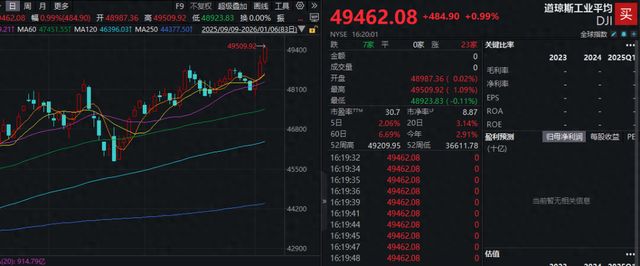
Group 1: Market Performance - The U.S. stock market saw all three major indices rise, with the Dow Jones Industrial Average reaching a new historical high, approaching the 50,000 mark, closing at 49,462.08 points, up 0.99% [3] - The Philadelphia Semiconductor Index increased by 2.75%, setting a new historical high, with notable gains in chip stocks such as Microchip Technology up over 11%, Micron Technology up over 10%, and NXP Semiconductors up over 9% [5][6] Group 2: Federal Reserve Insights - Federal Reserve Governor Milan stated that the Fed should lower interest rates by more than 100 basis points this year, as economic data trends may support further rate cuts [5] - Milan noted that core inflation has returned to around the Fed's 2% target, and he expects strong economic growth in the U.S. this year [5] Group 3: Commodity Prices - Silver prices surged again, with COMEX silver futures breaking the $80 per ounce mark, reflecting a rise of approximately 6% [8] - Gold prices also saw a slight increase, with COMEX gold futures surpassing $4,500 per ounce, up over 1% [8]


Bayer sues COVID vaccine makers over mRNA technology
Reuters· 2026-01-06 20:45
Core Viewpoint - Bayer's Monsanto has initiated a lawsuit against COVID-19 vaccine manufacturers Pfizer, BioNTech, and Moderna, claiming they have improperly utilized its messenger RNA technology in the production of their vaccines [1] Group 1: Legal Action - The lawsuit was filed in Delaware federal court, indicating a formal legal challenge to the vaccine makers [1] - The core allegation revolves around the alleged misuse of messenger RNA technology, which is critical in the development of mRNA vaccines [1] Group 2: Implications for the Industry - This legal action could have significant implications for the biotechnology and pharmaceutical sectors, particularly regarding intellectual property rights and technology usage in vaccine development [1] - The outcome of this lawsuit may influence future collaborations and innovations within the mRNA technology space [1]


BioNTech SE (BNTX) Closes the Acquisition of CureVac N.V.
Insider Monkey· 2025-12-23 05:53
Core Insights - Artificial intelligence (AI) is identified as the greatest investment opportunity of the current era, with a strong emphasis on the urgent need for energy to support its growth [1][2][3] Investment Opportunity - A specific company is highlighted as a potential investment opportunity, possessing critical energy infrastructure assets that are essential for meeting the increasing energy demands of AI data centers [3][7] - This company is not a chipmaker or cloud platform but is positioned to benefit significantly from the anticipated surge in electricity demand driven by AI technologies [3][6] Energy Demand and Infrastructure - AI technologies, particularly large language models like ChatGPT, consume vast amounts of energy, comparable to the energy usage of small cities [2] - The company in focus owns nuclear energy infrastructure, making it a key player in the future of clean and reliable power in the U.S. [7] Financial Position - The company is noted for being completely debt-free and holding a cash reserve that is nearly one-third of its market capitalization, which positions it favorably compared to other energy firms burdened with debt [8] - It is trading at less than 7 times earnings, indicating a potentially undervalued investment opportunity in the context of its critical role in the AI and energy sectors [10] Market Trends - The company is poised to benefit from the onshoring trend driven by tariffs, as well as the surge in U.S. LNG exports under the current administration's energy policies [5][14] - There is a growing recognition on Wall Street of this company's potential, as it quietly capitalizes on multiple favorable market trends without the high valuations seen in other sectors [8][9] Future Outlook - The influx of talent into the AI sector is expected to drive continuous innovation and advancements, reinforcing the importance of investing in AI-related infrastructure [12] - The overall sentiment is that investing in AI is not just about financial returns but also about participating in a transformative technological revolution [15]

BioNTech Closes Acquisition of CureVac N.V. Including Subsequent Offering Period to Strengthen its Unique Position in the mRNA Field
Globenewswire· 2025-12-18 09:45
Core Viewpoint - BioNTech has successfully completed the acquisition of CureVac, enhancing its mRNA technology capabilities and supporting its oncology strategy [1][6]. Group 1: Acquisition Details - The acquisition of CureVac was finalized on December 18, 2025, with the subsequent offering period for CureVac shares expiring at 12:01 a.m. Eastern Time on the same day [1]. - A total of 195,341,219 CureVac shares, representing approximately 86.75% of the outstanding shares, were tendered in the exchange offer [3][6]. - BioNTech plans to complete the compulsory acquisition of the remaining CureVac shares in January 2026 as part of a post-offer reorganization [3][6]. Group 2: Strategic Implications - The acquisition aims to complement BioNTech's proprietary technologies in mRNA design, delivery formulations, and manufacturing, thereby strengthening its position in the global mRNA industry [1][6]. - BioNTech's oncology strategy focuses on mRNA-based cancer immunotherapy candidates and a bispecific antibody candidate, pumitamig (BNT327/BMS986545), developed in collaboration with Bristol Myers Squibb [1][6]. - The merger is seen as a synergy of two pioneering German mRNA firms, contributing to the country's innovation agenda [2]. Group 3: Management and Operations - Following the acquisition, the Management Board of CureVac SE will consist of BioNTech executives, while former CureVac board members have resigned [2]. - CureVac will continue its existing organizational processes to ensure business continuity, while BioNTech will conduct strategic and operational analyses for future organizational setup [2][6].


BioNTech SE (BNTX) is a Buy on Lung Cancer Treatment Prospects: Clear Street
Yahoo Finance· 2025-12-11 12:44
Core Insights - BioNTech SE (BNTX) is viewed positively due to the promising prospects of its anti-CTLA4 therapy, Gotistobart, for treating squamous non-small cell lung cancer (NSCLC) [1][2] - The therapy demonstrates a 54% reduction in death risk compared to standard chemotherapy and a survival rate of 63% versus 30% with chemotherapy [1] - The oncology pipeline of BioNTech is considered undervalued, with potential for combination therapies using in-house antibody-drug conjugates [2] Company Overview - BioNTech SE is a German biotechnology firm focused on developing and commercializing innovative immunotherapies and vaccines for cancer and infectious diseases [3] - The company gained recognition for creating the first approved mRNA-based drug, the Pfizer-BioNTech COVID-19 vaccine, branded as Comirnaty [3]
BioNTech: Maintaining "Strong Buy" After Part 1 Success Of Next-Gen Anti-CTLA-4 Gotistobart
Seeking Alpha· 2025-12-09 22:54
Core Insights - The article discusses the investment analysis service provided by Biotech Analysis Central, focusing on the pharmaceutical sector and offering a subscription model for in-depth research [1][2]. Company Overview - Biotech Analysis Central is led by Terry Chrisomalis, who has extensive experience in the biotech sector and aims to generate long-term value through healthcare investments [2]. - The service includes a library of over 600 biotech investing articles and a model portfolio featuring more than 10 small and mid-cap stocks, providing detailed analysis for each [2]. Subscription Details - The subscription to Biotech Analysis Central is priced at $49 per month, with a yearly plan available at a discounted rate of $399, which represents a 33.50% discount [1].

BioNTech and Bristol Myers Squibb Present First Global Phase 2 Data for PD-L1xVEGF-A Bispecific Antibody Pumitamig Showing Encouraging Efficacy in Advanced Triple-Negative Breast Cancer
Globenewswire· 2025-12-09 12:00
Core Insights - BioNTech and Bristol Myers Squibb announced promising interim data from a Phase 2 trial evaluating pumitamig, a bispecific antibody targeting PD-L1 and VEGF-A, in combination with chemotherapy for treating locally advanced/metastatic triple-negative breast cancer (TNBC) [1][2][6] Efficacy - The combination of pumitamig and chemotherapy achieved a confirmed objective response rate (cORR) of 61.5%, an unconfirmed objective response rate (uORR) of 71.8%, and a disease control rate (DCR) of 92.3%, regardless of PD-L1 expression levels [6][7] - Efficacy was consistent across different dose levels and treatment lines, with higher doses correlating with better responses: uORR was 63.2% at 15 mg/kg and 80.0% at 20 mg/kg [7] - The progression-free survival (PFS) rate at 9 months was reported at 59.3%, although median PFS and overall survival (OS) data were not mature at the time of analysis [7] Safety - Pumitamig demonstrated a manageable safety profile, with grade ≥3 treatment-related adverse events (TRAEs) reported in 42.5% of patients in Cohort 1 and 38.2% in Cohort 2, with no deaths attributed to pumitamig [7][8] Clinical Trial Details - The trial evaluated two dose levels of pumitamig in combination with four different chemotherapy agents for first- and second-line treatment of TNBC [3][9] - The ongoing Phase 3 trial, ROSETTA BREAST-01, will further investigate pumitamig plus chemotherapy versus placebo plus chemotherapy in patients with PD-L1 negative TNBC [8][12] Industry Context - Triple-negative breast cancer (TNBC) accounts for 10-15% of all invasive breast cancer cases and has a poor prognosis, with a 5-year survival rate of only 15% in advanced stages, highlighting the urgent need for new treatment options [3][10] - Current standard care for PD-L1 low or negative TNBC is chemotherapy alone, as existing PD-(L)1 inhibitors have shown limited efficacy in this subgroup [10][11]


BioNTech and OncoC4 Announce Clinically Meaningful Overall Survival Benefit for Selective Treg Modulator Gotistobart in Patients with Previously Treated Squamous Non-Small Cell Lung Cancer
Globenewswire· 2025-12-06 20:30
Core Insights - BioNTech and OncoC4 presented promising data for gotistobart (BNT316/ONC-392), a Treg depletion candidate, showing significant overall survival benefits in patients with metastatic squamous non-small cell lung cancer (sqNSCLC) compared to standard chemotherapy [1][4][5] Company Overview - BioNTech is a biopharmaceutical company focused on developing innovative therapies for cancer and other serious diseases, leveraging advanced immunotherapy techniques and a diverse oncology pipeline [9] - OncoC4 is a late clinical-stage biopharmaceutical company engaged in developing novel biologicals for cancer treatment, with a strategic collaboration with BioNTech for gotistobart [14] Clinical Trial Insights - The PRESERVE-003 trial is a two-stage Phase 3 study evaluating gotistobart as a monotherapy against standard chemotherapy in sqNSCLC patients who have progressed on prior treatments [5] - In the non-pivotal stage, 45 patients received gotistobart, while 42 received docetaxel, with a 12-month overall survival rate of 63.1% for gotistobart versus 30.3% for docetaxel [2][4] - The ongoing pivotal stage aims to enroll approximately 500 patients across multiple countries, focusing on overall survival as the primary endpoint [5] Treatment Efficacy - Gotistobart has not yet reached a median overall survival at nearly 15 months of follow-up, while docetaxel showed a median overall survival of 10 months [2][4] - The treatment with gotistobart reduced the risk of death by 54% compared to docetaxel, indicating a significant clinical advantage [2][4] Safety Profile - The safety profile of gotistobart was manageable, with 42.2% of patients experiencing grade ≥3 treatment-related adverse events compared to 48.8% in the docetaxel group [2][4] Regulatory Status - Gotistobart has received Fast Track Designation from the FDA for treating metastatic NSCLC patients whose disease progressed on prior anti-PD-(L)1 therapy, highlighting its potential as a novel treatment option [4][6]
BioNTech Achieves Minimum Condition in CureVac Exchange Offer
Globenewswire· 2025-12-03 14:01
Core Viewpoint - BioNTech has successfully completed the initial offering period for the acquisition of CureVac, with approximately 81.74% of CureVac's shares tendered, allowing the company to proceed with the transaction and subsequent reorganization [1][8]. Group 1: Acquisition Details - A total of 184,071,410 shares of CureVac were validly tendered, satisfying the minimum condition for the exchange offer [1][8]. - The subsequent offering period for CureVac shareholders who have not yet tendered their shares will expire at 12:01 a.m. Eastern Time on December 18, 2025 [2][8]. - Following the expiration of the subsequent offering period, non-tendering holders of CureVac shares will receive BioNTech American Depositary Shares (ADSs) or cash in lieu of fractional ADSs as part of the post-offer reorganization [3]. Group 2: Tax Implications and Trading Status - Non-tendering holders of CureVac shares will generally be subject to a 15% Dutch dividend withholding tax when receiving BioNTech ADSs [3]. - Shares held by non-tendering CureVac shareholders will cease to be tradable on any national stock exchange after the completion of the post-offer reorganization [4]. Group 3: Company Background - BioNTech is a global next-generation immunotherapy company focused on developing novel therapies for cancer and other serious diseases, utilizing a diverse portfolio that includes mRNA cancer immunotherapies and targeted therapies [5]. - The company has established collaborations with various global pharmaceutical partners, enhancing its research and development capabilities [5].
Vaccine Stocks Fall After FDA Plans to Impose Stricter Vaccine Rules
ZACKS· 2025-12-02 15:41
Core Insights - Shares of major vaccine manufacturers including Moderna, BioNTech, Pfizer, Novavax, and Vaxcyte experienced declines following the FDA's announcement of new stringent vaccine requirements [1][7] Regulatory Changes - Dr. Vinay Prasad, head of the FDA's CBER, acknowledged in an internal memo that "COVID-19 vaccines have killed American children," citing at least 10 child deaths linked to COVID-19 vaccinations and myocarditis concerns [2][3] - The FDA plans to revise guidelines for various vaccines, including stricter safety requirements for vaccines administered to pregnant women and a reevaluation of the annual influenza vaccine framework [4][5] Market Reaction - Following the news, Moderna's shares fell by 7%, BioNTech by 6%, Pfizer by nearly 2%, Novavax by 5%, and Vaxcyte by over 8% [7] - Investor concerns are heightened regarding the potential for increased anti-vaccine sentiment due to the FDA's stricter regulatory focus [8] Industry Context - The developments align with the current leadership at the Department of Health and Human Services under Robert F. Kennedy Jr., known for his skepticism towards vaccines, raising questions about the independence of public health decision-making [9][11] - The upcoming CDC advisory committee meeting scheduled for December 4-5, 2025, will discuss the childhood vaccine schedule and hepatitis B shot, adding further pressure on vaccine manufacturers [8]