
Berkshire Hathaway(BRK.A)

Search documents
Abel takes over for Buffett in less than two weeks. Wall Street has some advice for new Berkshire CEO
CNBC· 2025-12-20 13:32
Core Insights - Warren Buffett's planned departure as CEO of Berkshire Hathaway is imminent, prompting advice for incoming CEO Greg Abel to avoid trying to replicate Buffett's style [1][4] - Analysts suggest that Abel should focus on increasing operating earnings, reducing outstanding shares, and being prepared for investment opportunities [1] - There is speculation that Abel may implement more management oversight compared to Buffett's hands-off approach, potentially leading to cost-cutting and consolidation within subsidiaries [3] Company Performance and Strategy - Gregory Abel currently owns approximately $171 million in Berkshire shares, which were acquired during Buffett's tenure [2] - Analysts predict that Abel's management style may lead to a shift towards growth stocks and away from slower-growing investments like Kraft Heinz [6] - Berkshire's B shares experienced a decline of 15% following Buffett's announcement of his departure, which has since been reduced to an 8.4% drop [4] Market Outlook - The Motley Fool's analysis indicates that Berkshire Hathaway is well-prepared for Abel's leadership, with expectations that his approach will not significantly differ from Buffett's [5] - There is a cautious optimism regarding Berkshire's future performance, with some analysts viewing it as an attractive investment opportunity, especially if stock prices dip post-Buffett [7] - Berkshire's diverse subsidiaries are seen as providing a stable investment option, likened to a lower-risk alternative to the broader market [7] Regulatory and Competitive Landscape - Berkshire Hathaway's railroad subsidiary, BNSF, opposes the proposed $85 billion merger between Union Pacific and Norfolk Southern, citing potential threats to the U.S. economy and consumers [8][9] - BNSF's CEO has expressed concerns that the merger would reduce shipping options and increase costs for consumers [9]

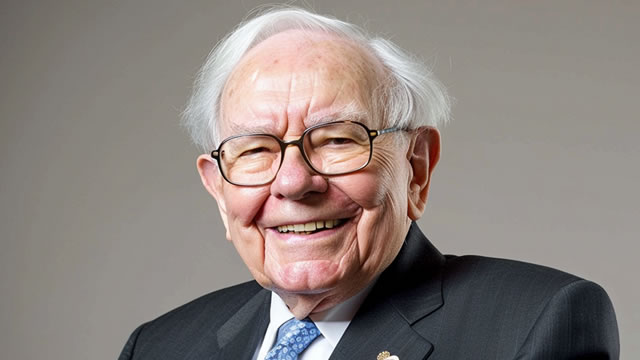
甲骨文涨近7% 博通涨超3% 英伟达市值增超万亿元!美联储官员发声 事关利率策略!俄罗斯央行降息50个基点
Mei Ri Jing Ji Xin Wen· 2025-12-19 23:16
Group 1: Major Tech Stocks Performance - Major tech stocks experienced a rally, with Nvidia rising nearly 4%, adding $166.5 billion (approximately 1172.3 billion RMB) to its market value [1] - Broadcom increased by over 3%, while Google saw an increase of over 1% [1] Group 2: Cryptocurrency and Semiconductor Companies - Cryptocurrency mining companies and semiconductor stocks led the gains, with U.S. Gold Corp rising over 11%, Hut 8 up over 14%, Century Aluminum up over 7%, and Micron Technology, AMD, and Circle each rising over 6% [3] - Other notable increases included Supermicro up over 5%, Americas Silver Corp nearly 4%, and Dell Technologies and Coinbase each up over 2% [3] Group 3: Chinese Stocks and Indices - The Nasdaq China Golden Dragon Index closed up 0.86%, with popular Chinese stocks mostly rising, including Xpeng Motors up over 6%, Li Auto up over 5%, and Pinduoduo up over 3% [6] - Baidu and Zhihu increased by over 2%, while iQIYI saw a decline of over 1% [6] Group 4: Commodity Prices - COMEX gold futures rose by 0.1% to $4368.7 per ounce, with a weekly increase of 0.9%; silver futures increased by 3.34% to $67.395 per ounce, with a weekly rise of 8.55% [6] - WTI crude oil futures rose by 0.91% to $56.66 per barrel, while Brent crude oil futures increased by 1.09% to $60.47 per barrel, both showing weekly declines [6] Group 5: Employment Trends and Economic Indicators - The U.S. employment trend index (ETI) for October and November was reported at 105.8, down from a revised 106.24 in September [7][8] - The University of Michigan's consumer confidence index for December was finalized at 52.9, lower than the initial value of 53.3 [6]





No ‘Intelligence or Emotional Stability’ Required: Warren Buffett Warns Short-Term Markets Are a ‘Voting Machine,’ But Eventually Reflect Reality
Yahoo Finance· 2025-12-19 16:54
Core Insights - The article emphasizes that stock prices and business value often diverge, particularly during periods of market volatility and innovation, such as the current interest in artificial intelligence [1][6][15] - It highlights that established companies with strong fundamentals may see their stock prices stagnate or decline due to market sentiment, despite their underlying business strength [1][9][12] Company Examples - **Coca-Cola (KO)**: The stock experienced a significant drop of over 50% within a year of its IPO in 1919, but ultimately compounded into over $2.1 million by 1993, and projected to reach $29.4 million by December 2025 [5][6] - **United Parcel Service (UPS)**: Despite improvements in operational efficiency and margins, UPS shares have not appreciated since pre-pandemic levels, reflecting a disconnect between business fundamentals and market perception [9][10][11] - **Procter & Gamble (PG)**: The company faces valuation pressure due to investor rotation towards faster-growing sectors, yet continues to deliver consistent cash flow and dividend growth, illustrating the divergence between share performance and business fundamentals [12][13] - **PayPal (PYPL)**: The company has seen a decline in share price amid growth concerns, but remains profitable and generates significant free cash flow, indicating that market skepticism may not reflect its underlying earnings power [14][15]


Despite Warren Buffett's Imminent Departure, Berkshire Hathaway Piled Into an AI Stock That's Been a 10-Bagger Since Its IPO in 2014
Yahoo Finance· 2025-12-19 14:35
Core Insights - Warren Buffett will step down as CEO of Berkshire Hathaway, marking a significant leadership change for the company, with Greg Abel taking over while Buffett remains as chairman [1][8] - Berkshire Hathaway has recently made a notable investment in an artificial intelligence stock that has significantly appreciated since its IPO in 2014 [2][8] Investment Activity - In the third quarter, Berkshire initiated a new position in Alphabet, purchasing over 17.8 million shares valued at more than $4.3 billion [4] - Alphabet is part of the "Magnificent Seven," a group of stocks that have benefited from the rise of AI, with Google experiencing approximately a 1,000% increase in value since its IPO in 2014 [5] Legal and Market Context - Alphabet faced a lawsuit from the U.S. Department of Justice alleging monopolistic practices, which resulted in a ruling that recognized Google as a monopoly but did not require divestiture of its Chrome web browser [6][7] - The ruling was seen as favorable for Google, allowing it to maintain its market position and continue partnerships that support its search engine dominance [7]
Buffett Leaving Berkshire Creates a ‘Vacuum Risk' and a $381 Billion Question
247Wallst· 2025-12-19 13:18
Core Viewpoint - The discussion begins with an acknowledgment of a sentiment that seems almost unnatural for long-time observers of Berkshire [1] Group 1 - The company is recognized for its long-standing reputation and the unique perspectives that come with it [1]
Is Warren Buffett's Last Purchase at Berkshire Hathaway a Top Stock Pick for 2026?
The Motley Fool· 2025-12-19 10:30
Core Insights - Berkshire Hathaway, led by Warren Buffett, has taken a significant stake in Alphabet during the second quarter, marking a notable investment decision as Buffett has previously expressed regret for not investing in Alphabet sooner [1][2] - Alphabet's stock has experienced substantial growth since Berkshire's investment, raising questions about its future value and whether it remains a good investment for 2026 [2][5] Investment Details - Berkshire's investment in Alphabet was disclosed through Form 13F filings, indicating that shares were purchased between July 1 and September 30, with potential gains depending on the timing of the purchases [4] - Since July 1, Alphabet's stock has increased by approximately 75%, and even if purchased at the end of September, it has still risen nearly 30%, showcasing strong short-term performance [5] Valuation Analysis - At the time of Berkshire's potential purchase, Alphabet was trading at over 16 times forward earnings, but it has since risen to 29 times forward earnings, indicating a shift from a discount to a premium compared to the S&P 500, which trades at 22 times forward earnings [7][9] - The significant increase in valuation raises questions about the current attractiveness of Alphabet as an investment [9] Growth Drivers - Alphabet's recent stock surge can be attributed to positive developments in a court case regarding its Google Search engine, where it faced less severe concessions than anticipated [9] - The company has also established itself as a leader in the generative AI sector, prompting competitors like OpenAI to express concern over Alphabet's advancements [10] Financial Performance - Alphabet's core businesses, including advertising and cloud computing, have shown strong growth, with Google Search revenue increasing by 15% year-over-year and Google Cloud growing by 34% in the third quarter, contributing to an overall growth of 16% for the quarter [12] - Diluted earnings per share (EPS) rose by 35%, indicating robust financial health and potential for continued success [12] Future Outlook - Given Alphabet's strong position and growth trajectory, it is suggested that investors may consider following Buffett's lead in investing in Alphabet, although returns may differ due to the timing of entry into the stock [13]
The future of Berkshire Hathaway's stock without Warren Buffett, plus the day's trading takeaways
Youtube· 2025-12-18 22:50
Group 1: Berkshire Hathaway - Berkshire Hathaway is viewed as a long-term investment, but concerns arise regarding its future without Warren Buffett leading the company [3][11] - The bull case highlights Berkshire's diversified portfolio, which includes both cyclical and counter-cyclical businesses, providing a lower-risk alternative to the broader market [5][6] - Valuation remains reasonable, with a price-to-earnings ratio aligning closely with the overall market, and a book value around 1.5 times, slightly above historical averages [7][8] - The leadership transition raises questions about the potential loss of the "Buffett premium," which has contributed to the company's performance [11][12] - Future returns are expected to be more modest, with a focus on discipline in capital allocation and potential for steady, market-like returns [14][15] Group 2: Salesforce - Salesforce is one of the worst performers in the Dow Jones Industrial Average, with shares down over 22% in 2025 due to concerns about AI competition and activist investor pressure [36] - The company struggles with monetizing AI, and analysts suggest that traditional software vendors may not be able to effectively capitalize on AI advancements [37][40] - Salesforce's recent acquisition of Informatica is viewed as lacking strategic value, primarily serving to buy growth rather than enhance core capabilities [44][46] - The outlook for Salesforce's growth is uncertain, with potential declines in revenue growth rates from low double digits to mid-single digits [48]

Berkshire Hathaway is a Scrooge Stock. Will It Have a Change of Heart and Start Paying Dividends in 2026?
Yahoo Finance· 2025-12-18 18:50
Core Viewpoint - Berkshire Hathaway has been selling more stocks than it has been buying, leading to a significant cash position of $381.7 billion, and is considering initiating dividend payments as Warren Buffett prepares to step down in 2026 [1][5][8]. Investment Strategy - Berkshire Hathaway has historically focused on acquiring companies and making stock investments, achieving a remarkable 6 million percent return since 1965, significantly outperforming the S&P 500's 46,000% return [2]. - The company has not paid dividends since 1967, preferring to reinvest earnings to generate higher returns for shareholders [3][5]. Recent Financial Performance - In the third quarter, Berkshire generated an operating profit of $13.5 billion, up from $10 billion year-over-year, and net income increased from $26.3 billion to $30.8 billion [9][10]. - The company holds approximately $360 billion in T-bills, benefiting from higher interest rates, although falling rates may impact future income generation [7]. Potential Changes in Capital Allocation - With Buffett's retirement approaching, there is speculation that Berkshire may alter its capital allocation strategy, potentially initiating dividend payments to provide shareholders with income [4][8][12]. - The company could afford to pay over $20 billion in dividends annually, which would be less than a quarter of its operating profit, allowing it to maintain its cash reserves for future investments [10][11].
Can Greg Abel Sustain Berkshire's Legacy After Buffett Steps Down?
ZACKS· 2025-12-18 16:46
Group 1 - Berkshire Hathaway is entering a transitional year as Warren Buffett steps down as CEO, with Greg Abel set to take over the role on January 1, 2026, while Buffett will remain on the board [1][8] - Greg Abel has been preparing for the CEO role for several years, overseeing non-insurance operations and serving as CEO of Berkshire Hathaway Energy since January 2018 [1][8] - The company's investment strategy is based on a diversified portfolio that generates resilient cash flows, supported by a strong insurance float from GEICO and Berkshire Hathaway Reinsurance, which facilitates long-term compounding [2] Group 2 - Under Warren Buffett's leadership, Berkshire Hathaway has maintained a disciplined, value-oriented investment philosophy focused on acquiring undervalued assets with long-term potential, creating significant value for shareholders over nearly six decades [3][4] - The company's shares have gained 11.3% year to date, outperforming the industry [7] - Berkshire Hathaway's current price-to-book value ratio is 1.55, slightly above the industry average of 1.52, indicating an expensive valuation [9] Group 3 - The Zacks Consensus Estimate for Berkshire Hathaway's fourth-quarter 2025 EPS is 4.89, with no movement in estimates over the past seven days, while the 2025 and 2026 EPS estimates indicate a year-over-year decline [10][11] - The consensus estimates for 2025 and 2026 revenues suggest year-over-year increases, contrasting with the EPS estimates [11]
‘We’ll Be in These Stocks 10, 20 Years’: Warren Buffett’s $30 Billion Bet Gets a Big Boost as Bank of Japan Raises Rates to 30-Year High
Yahoo Finance· 2025-12-18 16:34
Economic Policy - The Bank of Japan is expected to raise short-term interest rates to 0.75% from 0.5%, marking a significant shift in its monetary policy after decades of near-zero rates [2] - This rate increase reflects Japan's confidence in achieving a sustainable cycle of rising inflation and solid wage gains, with inflation remaining above the BOJ's 2% target for nearly four years [4] Government and Central Bank Alignment - Finance Minister Satsuki Katayama indicated that there is no gap in the economic outlook between the government and the Bank of Japan, suggesting the administration's support for the interest rate hike [3] Investment Landscape - The rate increase raises questions about the future of the yen carry trade and its implications for investors, particularly those following Warren Buffett's investments in Japanese equities [4] - Warren Buffett's investment in Japan has evolved, with Berkshire Hathaway increasing its stakes in Japan's five largest trading houses to nearly 10% each, now valued at over $30 billion, up from $23.5 billion at the end of 2024 [6]
