
Peabody(BTU)

Search documents
Peabody(BTU) - 2025 Q4 - Annual Report
2026-02-19 21:37
UNITED STATES SECURITIES AND EXCHANGE COMMISSION Washington, D.C. 20549 _____________________________________________ FORM 10-K (Mark One) ☑ ANNUAL REPORT PURSUANT TO SECTION 13 OR 15(d) OF THE SECURITIES EXCHANGE ACT OF 1934 For the Fiscal Year Ended December 31, 2025 or ☐ TRANSITION REPORT PURSUANT TO SECTION 13 OR 15(d) OF THE SECURITIES EXCHANGE ACT OF 1934 Commission File Number 1-16463 ____________________________________________ PEABODY ENERGY CORPORATION None Indicate by check mark if the registrant ...

博地能源股价近期波动显著,业绩承压引关注
Jing Ji Guan Cha Wang· 2026-02-13 22:51
Group 1 - The company's stock price has experienced significant volatility in the past week, with a total decline of 6.80% over five trading days and a price range fluctuation of 12.46% [1] - The stock closed at $34.41 on February 13, down 2.08% from the previous day, following a series of declines after a brief increase [1] - The trading volume was active, with over $167 million in transactions on February 12, while the coal sector declined by 0.83% and the Nasdaq index fell by 2.24% during the same period [1] Group 2 - The company's recent financial performance has been under pressure, reporting revenues of $1.022 billion and a net profit of $9.6 million for the fiscal year 2025, but showing a full-year net loss of $52.7 million with a net profit margin of -1.36% [2] - Key valuation metrics indicate challenges in profitability, with a trailing twelve months (TTM) price-to-earnings ratio of -79.10 and a price-to-book ratio of 1.18, alongside an 8.98% year-over-year revenue decline and a 69.13% drop in net profit [2] Group 3 - The company plans to distribute a cash dividend of $0.075 per share on February 23, 2026, which may attract short-term market attention [3] Group 4 - Despite 86% of institutions recommending a "buy" rating, the negative price-to-earnings ratio indicates market skepticism regarding performance improvement [4] - Institutions are monitoring the upcoming financial reports for signs of reversing the loss situation and have expectations regarding potential mergers or business restructuring, although no formal plans have been announced by the company [4]
Kinross to Initiate Two Phase 6,000-8,000 Metre Drill Program on BTU Dixie Halo Property Near Great Bear Property
Accessnewswire· 2026-02-12 13:00
Core Viewpoint - Kinross is set to commence a two-phase drill program in February 2026 on BTU Metals Corp.'s Dixie Halo property, indicating a significant development for the company and potential exploration opportunities in the mining sector [1]. Company Summary - BTU Metals Corp. is involved in the exploration and development of mineral properties, with a focus on the Dixie Halo property [1]. - The announcement of the drill program suggests that BTU is actively pursuing resource development and enhancing its project portfolio [1]. Industry Summary - The mining industry is witnessing increased exploration activities, as evidenced by Kinross's investment in drilling programs, which may lead to new discoveries and resource expansions [1]. - The initiation of drilling programs by established companies like Kinross reflects a positive outlook for mineral exploration and potential growth in the sector [1].



Trump Orders Pentagon To Buy 'A Lot Of' Coal Power, Pledges $175 Million For Plant Upgrades - Alliance Res Partners (NASDAQ:ARLP), Peabody Energy (NYSE:BTU)
Benzinga· 2026-02-12 07:02
Core Viewpoint - The U.S. government is taking measures to support the coal industry by directing the Department of War to purchase electricity from coal-fired power plants and allocating funds for upgrades to existing plants [1][2]. Group 1: Government Actions - President Trump signed an executive order for the Department of War to buy electricity from coal-fired power plants, aiming to support the struggling coal industry [1]. - The Energy Department will allocate $175 million to upgrade six coal plants located in Kentucky, North Carolina, Ohio, Virginia, and West Virginia [1]. - The Tennessee Valley Authority plans to delay the closure of two older coal-fired power plants in Tennessee, Kingston Fossil Plant and Cumberland Fossil Plant [2]. Group 2: Industry Perspectives - Southern Company CEO Chris Womack supports extending coal plant operations to maintain grid reliability [4]. - Yale analysts report that at least 15 coal plant retirements have been delayed, some indefinitely, indicating a shift in operational strategy [4]. - Peabody Energy noted a 13% year-over-year increase in coal generation, suggesting potential for further growth in the sector [4]. Group 3: Market Outlook - The International Energy Agency (IEA) projects that while U.S. coal consumption may see near-term growth, it is expected to decline by about 6% annually through 2030 due to the expansion of renewables and natural gas, along with the shutdown of older coal plants [5].
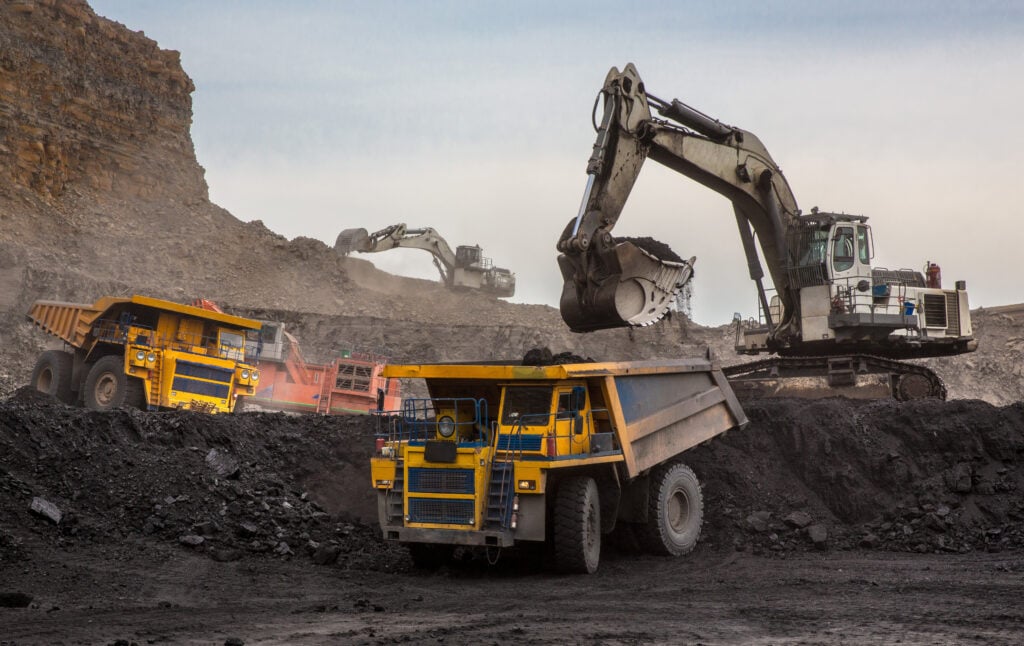
博地能源近期财务承压,行业波动与业务风险并存
Jing Ji Guan Cha Wang· 2026-02-11 20:19
Core Viewpoint - Boti Energy (BTU.US) is facing ongoing financial pressure due to a volatile industry environment and risks in its business structure, but there are potential catalysts for improvement [1] Group 1: Recent Financial Performance - The company's recent revenue is $1.012 billion, with a net loss of $69.8 million and earnings per share of -$0.58, reflecting continued pressure on profitability [2] - Despite 86% of institutions recommending a "buy," negative valuation metrics indicate market disagreement on the potential for performance improvement, necessitating close monitoring of future earnings reports [2] Group 2: Industry Policy and Environment - The overall coal industry has seen a slight increase recently, but the company's stock price has shown greater volatility than the industry average [3] - The company's revenue is highly dependent on the prices of metallurgical coal and thermal coal, requiring monitoring of supply and demand changes that could impact prices [3] Group 3: Company Fundamentals - The company has a high revenue concentration, primarily relying on specific sectors and U.S. customers, making it vulnerable to geopolitical or trade policy changes that could affect business stability [4] - A negative price-to-book ratio indicates low asset valuation, and a long-term decline in the coal industry could lead to asset impairment risks [4] Group 4: Stock Price Movements - Recent stock price fluctuations have been accompanied by increased trading volume, and a breakout above key resistance levels could attract short-term investor interest [5] - There are expectations among institutions regarding potential mergers or business restructuring, although the company has not yet announced any related plans [5] Group 5: Future Development - Under the global trend of carbon reduction, coal demand may structurally decline, and the company needs to demonstrate its ability to diversify its business or transition technologically [6] - Low market capitalization and trading volume can amplify stock price volatility, raising concerns about liquidity risks leading to sharp declines [6]
Peabody Energy Q4 Earnings Call Highlights
Yahoo Finance· 2026-02-06 09:27
Core Insights - Peabody Energy is experiencing significant operational advancements, particularly with the Centurion metallurgical coal mine, which is ahead of schedule and expected to produce 4.7 million tons per year of premium hard coking coal [1][6][9] - The company reported record safety performance and strong environmental reclamation efforts, reclaiming twice as many acres as disturbed in 2025 [2][4] - Financial results for Q4 2025 showed a net income of $10.4 million and adjusted EBITDA of $118 million, with a strong liquidity position of over $900 million [5][16][17] Operational Performance - The Centurion mine is in its final stages, with the last shield installed, indicating readiness for longwall mining [1] - Peabody achieved an incident rate of 0.71 per 200,000 hours worked, a 12% improvement from the previous record [2][4] - The company is expected to ramp up production at Centurion to 4.7 million tons per year by 2028, with a mine life exceeding 25 years [6][9] Market Fundamentals - Seaborne metallurgical coal pricing has increased by approximately 15%, with U.S. coal generation rising an estimated 13% in 2025 [4][12] - The company anticipates metallurgical coal realizations to rise from 70% of the benchmark in 2025 to 80% in 2026 [9] - U.S. coal production rose by an estimated 4% in 2025, contributing to a 15% decline in utility stockpiles [14] Financial Overview - Peabody's Q4 results included a net income of $10.4 million and an adjusted EBITDA of $118 million, reflecting a 19% increase from the prior quarter [5][16] - The company ended 2025 with $575 million in cash and total liquidity exceeding $900 million, indicating strong cash generation and disciplined capital deployment [17] - For 2026, management guided capital expenditures to $340 million, which is about $70 million lower than 2025 [21] Development Initiatives - Peabody is exploring renewable energy projects on previously mined lands and waste gas conversion to power, aiming to maximize long-term earnings [8][10] - The company has conducted testing for rare earth elements, showing promising concentrations and is pursuing a pilot processing plant with potential grant support [10][11] Strategic Outlook - The completion of the Centurion project is expected to enable substantial free cash flow, with management indicating a potential return of nearly 100% of free cash flow to shareholders [5][19] - The company is focusing on maximizing cash flow potential from its land and mineral holdings, with ongoing development initiatives [8]
Peabody Energy: Decent Q4 2025 And Centurion Ahead Of Schedule (Downgrade) (NYSE:BTU)
Seeking Alpha· 2026-02-05 18:27
Group 1 - The focus is on investing in turnarounds within the natural resource industries, with a typical holding period of 2-4 years, emphasizing value for downside protection and upside potential [1] - The portfolio has achieved a compounded annual growth rate of 38% over the last 7 years, indicating strong performance in this investment strategy [1] - Peabody Energy Corporation (BTU) is identified as the largest coal mining company in the United States, with significant production from the Powder River Basin [2] Group 2 - The investment strategy targets companies with quality characteristics that are trading at depressed valuations, allowing for participation in the upside of natural resource investing while mitigating extreme drawdowns [2] - The current focus on natural resource industries is driven by monetary and fiscal policies, underinvestment, and attractive valuations [2]
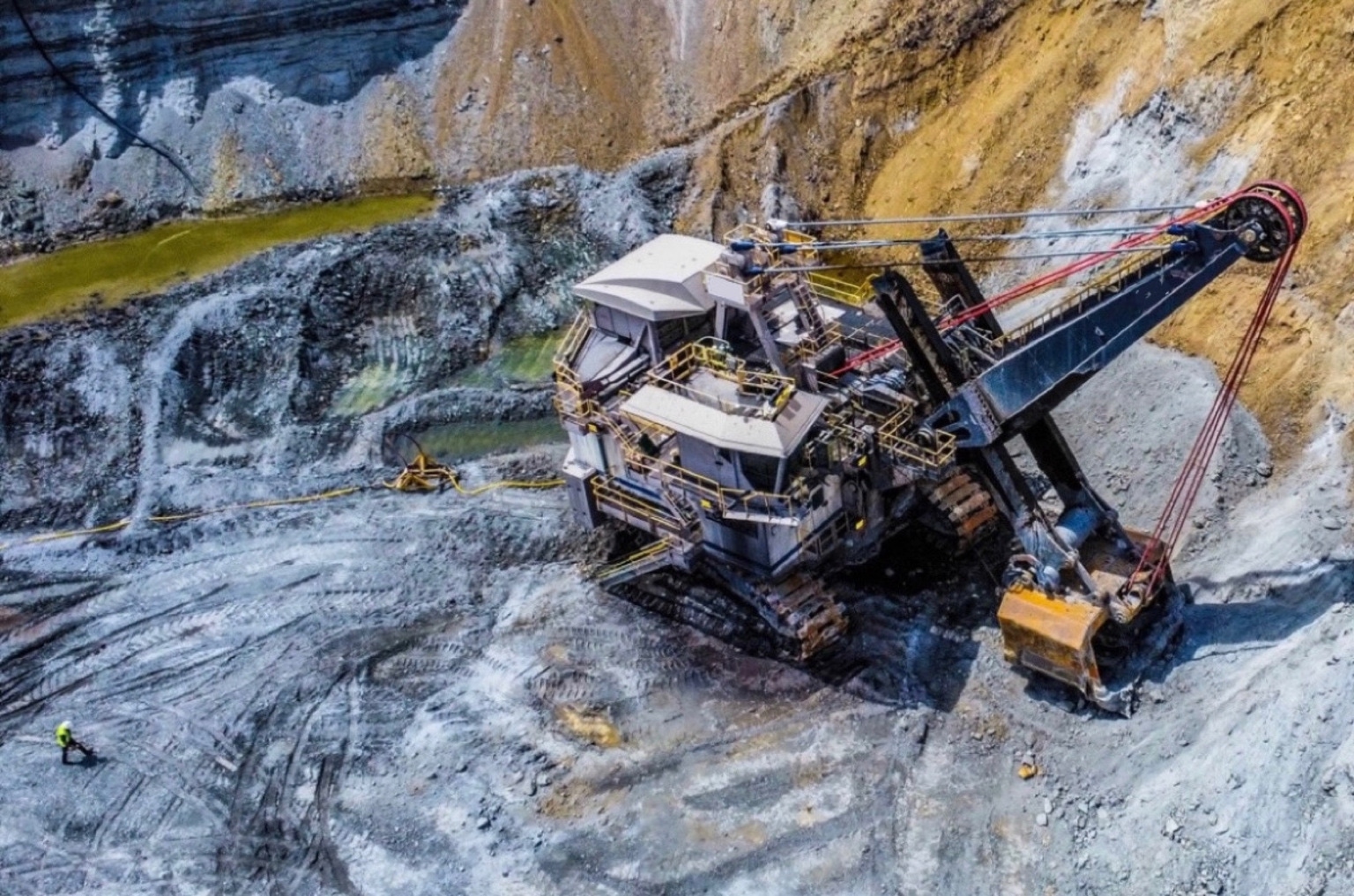
Peabody Energy: Decent Q4 2025 And Centurion Ahead Of Schedule (Downgrade)
Seeking Alpha· 2026-02-05 18:27
Group 1 - The focus is on investing in turnarounds within the natural resource industries, with a typical holding period of 2-4 years, emphasizing value for downside protection and upside potential [1] - The portfolio has achieved a compounded annual growth rate of 38% over the last 7 years, indicating strong performance in this investment strategy [1] - Peabody Energy Corporation (BTU) is identified as the largest coal mining company in the United States, with significant production from the Powder River Basin [2] Group 2 - The investment strategy targets companies with quality characteristics that are trading at depressed valuations, allowing for participation in the upside of natural resource investing while mitigating extreme drawdowns [2] - The current focus on natural resource industries is driven by monetary and fiscal policies, underinvestment, and attractive valuations [2]

Peabody(BTU) - 2025 Q4 - Earnings Call Transcript
2026-02-05 17:02
Financial Data and Key Metrics Changes - In Q4 2025, the company recorded net income attributable to common stockholders of $10.4 million or $0.09 per diluted share, with adjusted EBITDA of $118 million, a 19% increase from the prior quarter [25] - The company generated $69 million of operating cash flow from continuing operations during the quarter and $336 million for the full year, ending the year with $575 million in cash and total liquidity above $900 million [25][26] - For the full year, results met or exceeded original guidance for seven of eight volume and cost metrics, with seaborne thermal delivering 3.3 million tons, exceeding expectations [26] Business Line Data and Key Metrics Changes - Seaborne metallurgical coal shipped 2.5 million tons, up 400,000 from the third quarter, with realized pricing improving to $113 per ton [27] - The U.S. Thermal platform contributed $63 million of adjusted EBITDA in Q4, with nearly $250 million of adjusted EBITDA for the full year [28] - PRB operations shipped 22.3 million tons in Q4 and 84.5 million tons for the full year, almost 5 million tons or 6% more than the prior year [29] Market Data and Key Metrics Changes - Benchmark pricing for seaborne metallurgical coal rose to its highest mark in 18 months, increasing 15% from $190 per ton at the beginning of Q4 [16] - Coal fuel generation in the U.S. was up an estimated 13% year-over-year in 2025, running ahead of projections [20] - Asian countries continue to add coal generation capacity, with China adding 80 gigawatts of new capacity in 2025 [19] Company Strategy and Development Direction - The Centurion Mine is expected to ship an average of 4.7 million tons per year of premium hard coking coal, with a net present value for the project of $2.1 billion at $225 benchmark pricing [5][6] - The company aims to maximize long-term shareholder value by reweighting its portfolio toward higher-margin metallurgical coal [7] - Peabody is also evaluating renewable projects in formerly mined lands and developing a gas power station at the Centurion Mine [8] Management's Comments on Operating Environment and Future Outlook - Management expressed confidence in improving market fundamentals and highlighted a full agenda of priorities for the new year [3] - The company noted that coal remains a critical energy asset in the U.S., with substantial strength in both domestic thermal and seaborne metallurgical coal markets [15][13] - Management emphasized the importance of safety and environmental excellence, achieving a record safety year with an incident rate of 0.71 per 200,000 hours worked [3][4] Other Important Information - The company has conducted a robust critical mineral testing program, uncovering promising concentrations of heavy rare earths and other critical minerals [10] - Peabody is working with government agencies to strengthen domestic critical mineral supply chains and has been recommended for a $6.25 million grant for a pilot processing plant [11] Q&A Session Summary Question: What do you assume for the Australian dollar in the cost guide? - The company is looking at $0.70 for the Australian dollar and using a $225 benchmark pricing [39] Question: How much CapEx is potentially still left for Centurion development? - Approximately $100 million a year in development for the north for the next three years, plus $25 million a year in sustaining capital in the south [40] Question: How should we think about pricing in 2027 and beyond? - The company is not providing specific guidance for 2027 but expects favorable pricing conditions due to ongoing contracting [44] Question: What are the drivers for the increase in seaborne thermal costs? - The increase is primarily due to lower production volumes, particularly at Wilpinjong, and a slightly higher Australian dollar impacting costs [49] Question: How should we think about the cadence of shipments as the year progresses? - Seaborne thermal is expected to be less ratable in Q1, with a bounce back in Q2 and Q3, while Centurion will ramp up production throughout the year [54]
Peabody(BTU) - 2025 Q4 - Earnings Call Transcript
2026-02-05 17:02
Financial Data and Key Metrics Changes - In Q4 2025, the company recorded net income attributable to common stockholders of $10.4 million or $0.09 per diluted share, with adjusted EBITDA of $118 million, a 19% increase from the prior quarter [25] - Operating cash flow from continuing operations was $69 million for the quarter and $336 million for the full year, ending the year with $575 million in cash and total liquidity above $900 million [25][26] - The company met or exceeded original guidance for seven of eight volume and cost metrics for the full year [26] Business Line Data and Key Metrics Changes - Seaborne Thermal delivered 3.3 million tons, exceeding expectations, with realized export pricing averaging $81.80 per ton, up 7% from Q3 [26] - Seaborne metallurgical shipped 2.5 million tons, up 400,000 from Q3, with realized pricing at $113 per ton consistent with expectations [27] - U.S. Thermal contributed $63 million of adjusted EBITDA in Q4, with nearly $250 million for the full year against only $57 million of CapEx [28] Market Data and Key Metrics Changes - Benchmark pricing for seaborne metallurgical coal rose to its highest mark in 18 months, increasing 15% from $190 per ton at the beginning of Q4 [16] - Coal fuel generation in the U.S. was up an estimated 13% year-over-year in 2025, significantly outpacing production growth of 4% [20][21] - Asian countries continue to add coal generation capacity, with China adding 80 GW of new capacity in 2025 [19] Company Strategy and Development Direction - The Centurion Mine is positioned as a cornerstone asset to maximize long-term shareholder value, expected to ship an average of 4.7 million tons per year of premium hard coking coal [5][7] - The company aims to reweight its portfolio toward higher-margin metallurgical coal and is actively pursuing renewable projects and critical mineral opportunities [7][10] - The focus for 2026 includes achieving full operational performance at Centurion, maintaining strong EBITDA to CapEx margins, and prioritizing shareholder returns [35][36] Management's Comments on Operating Environment and Future Outlook - Management expressed confidence in improving market fundamentals and the strategic positioning of the company amid favorable coal market conditions [3][14] - The company anticipates continued strength in both domestic thermal and seaborne metallurgical coal markets, driven by supply-demand dynamics and government policies [15][19] - Management highlighted the importance of coal in U.S. energy policy and its role in meeting energy demands amid constraints on other energy sources [12][13] Other Important Information - The company has invested approximately $750 million in the development and expansion of the Centurion Mine, enhancing its leverage to premium hard coking coal markets [33] - The company is exploring opportunities in rare earth and critical minerals, with promising concentrations identified in its testing program [10][11] Q&A Session Summary Question: What do you assume for the Australian dollar in the cost guide? - The company is looking at an Australian dollar exchange rate of $0.70 [39] Question: How much CapEx is potentially still left for Centurion development? - Approximately $100 million a year in development for the northern part for the next three years, plus $25 million a year in sustaining capital in the south [40] Question: How should we think about pricing in 2027 and beyond? - There is potential for favorable pricing in 2027 as there is still a lot of contracting to be done [44] Question: What are the drivers for the increase in seaborne thermal costs? - The increase is primarily due to lower production volumes, particularly at Wilpinjong [49] Question: How should we think about the cadence of shipments as the year progresses? - The first quarter is expected to be weaker due to mine sequencing, with improvements anticipated in Q2 and Q3 [54]