
salesforce(CRM)

Search documents
Salesforce Stock Down 17% in Six Months: Should Investors Buy the Dip?
ZACKS· 2026-02-10 16:40
Core Insights - Salesforce, Inc. (CRM) shares have decreased by 16.8% over the past six months, underperforming the Zacks Computer and Technology sector which gained 10.8% [1] - The decline raises questions about whether this is a buying opportunity or a signal to move on from Salesforce stock, despite strong fundamentals still supporting investment in CRM [1] Performance Overview - Salesforce's revenue growth has slowed from double digits to single digits, with a year-over-year increase of only 8.7% in the first nine months of fiscal 2026 [3][4] - The Zacks Consensus Estimate projects revenue growth of 9.5% for fiscal 2026 and 10.9% for fiscal 2027, indicating no significant improvement in the near term [4] Profit Forecasts - Earnings per share (EPS) is expected to grow at a CAGR of 15% over the next five years, a significant drop from the previous five years' CAGR of 27.8% [5] - EPS forecasts for fiscal 2026 and 2027 indicate year-over-year improvements of 15.3% and 10.5%, respectively [5] Market Dynamics - The slowdown in growth reflects cautious enterprise spending amid economic uncertainty and geopolitical pressures, leading businesses to prefer smaller, lower-risk IT investments [4][9] - Salesforce is focusing on enhancing its enterprise software portfolio and integrating AI across its product lines to remain competitive [9] AI Integration and Revenue Growth - Salesforce's AI initiatives, particularly Agentforce and Data Cloud, generated $1.4 billion in recurring revenues in Q3 of fiscal 2026, marking a 114% year-over-year increase [12] - Agentforce alone contributed $540 million in recurring revenues, up 330% year over year, with over 50% of deals coming from existing clients [12] IT Spending Trends - Gartner estimates worldwide IT spending will increase by 9.8% year over year to $6.08 trillion in 2026, with software expected to grow by 15.2% to $1.43 trillion [13] - Despite potential short-term spending slowdowns, digital transformation remains a priority for businesses, ensuring steady demand for Salesforce's solutions [13] Valuation Analysis - Salesforce's stock currently trades at a forward P/E ratio of 14.89, significantly below the sector average of 25.91, indicating that much of the pessimism is already priced in [14] - Compared to competitors like SAP, Microsoft, and Oracle, Salesforce stock is cheaper on a P/E basis [17] Competitive Position - Salesforce has outperformed major competitors in the enterprise software space over the past six months, with Microsoft, SAP, and Oracle stocks declining by 23.1%, 29.2%, and 43.5%, respectively [18] Investment Recommendation - Despite slowing growth, Salesforce's leadership in customer relationship management, focus on AI, strategic acquisitions, and reasonable valuations provide compelling reasons to invest in the stock [19]


Jim Cramer on Salesforce: “I Think It’s Near a Bottom”
Yahoo Finance· 2026-02-10 15:58
Group 1 - Salesforce, Inc. (NYSE:CRM) is identified as a potential undervalued stock by Jim Cramer, who considers it "enticing" among software stocks [1] - The company provides CRM-focused tools that assist businesses in managing customer interactions, utilizing AI agents, analyzing data, and running various operations such as marketing and commerce [3] Group 2 - While Salesforce is acknowledged for its investment potential, there are certain AI stocks that are believed to offer greater upside potential and carry less downside risk [4]
美股明星科技股多数上扬:甲骨文、赛富时涨超2%




Ge Long Hui A P P· 2026-02-10 15:17
格隆汇2月10日|奈飞涨超3%,迪士尼涨近3%,甲骨文、赛富时涨超2%,微软、台积电涨近2%,特斯 拉涨超1%。 ...
美股明星科技股多数上扬,奈飞涨超3%,迪士尼涨近3%
Mei Ri Jing Ji Xin Wen· 2026-02-10 15:17
每经AI快讯,2月10日,美股明星科技股多数上扬,奈飞涨超3%,迪士尼涨近3%,甲骨文、赛富时涨 超2%,微软、台积电涨近2%,特斯拉涨超1%。 ...
What's Going On With Salesforce Stock Tuesday? - Salesforce (NYSE:CRM)
Benzinga· 2026-02-10 14:29
Core Insights - Salesforce Inc. has recently implemented workforce cuts affecting fewer than 1,000 employees across various teams, including marketing, product, and data, although the company has not publicly confirmed these layoffs [1] - The company has appointed six new or promoted executives to lead different business units, replacing five high-profile leaders who have departed since December [2] - The layoffs are part of a broader trend in the tech industry, where many companies are reducing staff while increasing their reliance on artificial intelligence, which is expected to replace some routine jobs [3] Financial Performance and Analyst Outlook - The upcoming earnings report is anticipated on February 25, 2026, with an EPS estimate of $2.69, down from $2.78 year-over-year, and a revenue estimate of $11.18 billion, up from $9.99 billion year-over-year [5][7] - The stock currently holds a Buy Rating with an average price target of $325.24, although it is trading near its 52-week low of $185.73, having decreased by 2.49% to $189.20 in premarket trading [6] - Recent analyst actions include Piper Sandler lowering its target to $280.00, Barclays raising its target to $338.00, and RBC Capital raising its target to $290.00, indicating varying outlooks on the stock's future performance [7] Valuation and Market Position - Salesforce's current P/E ratio stands at 25.9x, indicating a premium valuation compared to peers [7] - The company is rated weak in value (score: 7.28), strong in growth (score: 65.51), and strong in quality (score: 73.45), reflecting a healthy balance sheet despite underperforming in momentum (score: 7.09) [7]

Salesforce (CRM) Signals Stable Growth Signs
Yahoo Finance· 2026-02-10 14:22
Core Insights - SGA's U.S. Large Cap Growth Strategy reported a Q4 2025 portfolio return of 0.3% (Gross) and 0.2% (Net), underperforming the Russell 1000 Growth Index (1.1%) and the S&P 500 Index (2.7%) [1] - The portfolio faced significant challenges in 2025, marking the most difficult year since the firm's inception in 2003, but remains optimistic about growth potential and relative valuation [1] - The strategy is positioned to benefit from a shift away from high momentum dynamics in U.S. markets and a broadening of market leadership [1] Company Focus: Salesforce, Inc. (NYSE:CRM) - Salesforce was highlighted as a top contributor in Q4 2025, despite a one-month return of -19.51% and a 52-week loss of 40.19% [2] - As of February 9, 2026, Salesforce's stock closed at $194.03, with a market capitalization of $184.717 billion [2] - The company demonstrated growth stabilization and momentum, with subscription revenue growth and current remaining performance obligation (cRPO) exceeding guidance [3] - Management is targeting revenue acceleration over the next 12-18 months, supported by increased competitiveness in the SMB segment and the expiration of pandemic-era shelfware deals [3] - Salesforce's AI and Data Cloud offerings are gaining traction, with Agentforce annual recurring revenue growing over 300% and Data Cloud annual recurring revenue more than doubling [3] - The company's integrated front-office applications, strong brand, and high renewal rates continue to drive revenue growth, while disciplined capital allocation and share repurchases enhance shareholder returns [3] - Salesforce is well-positioned to compete in the Agentic AI era, supporting low-teens earnings growth over the next three years [3] - The portfolio maintained an average weight in Salesforce and increased the position by selling other higher multiple software holdings [3]
小摩加入力挺美股软件股行列:AI冲击担忧被夸大 历史性下跌过后有望反弹
智通财经网· 2026-02-10 13:47
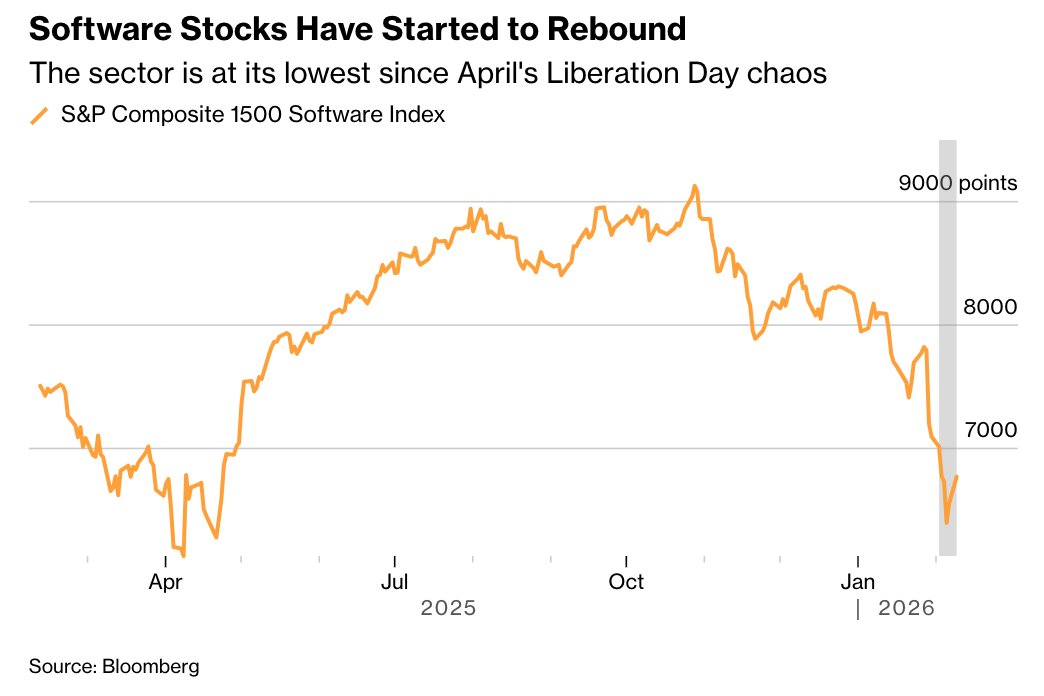
Core Viewpoint - Software stocks are expected to rebound from historic lows as the market has overly pessimistic expectations regarding AI's short-term disruption of the software industry, according to JPMorgan strategists [1][5]. Group 1: Market Sentiment and Stock Performance - The software sector has fallen to its lowest level since the market turmoil in April last year [4]. - Concerns over new AI tools potentially disrupting traditional Software as a Service (SaaS) business models have led to sustained pressure on U.S. software stocks [1][5]. - The recent sell-off did not differentiate between companies with AI partnerships or proprietary data assets, affecting nearly all related software companies equally [1]. Group 2: Company Resilience and Long-term Outlook - Companies like Microsoft and CrowdStrike are highlighted as resilient players in the AI space, likely to benefit from AI-enhanced workflow efficiencies [5]. - The high switching costs and long-term contracts in enterprise software provide a buffer against short-term disruptions [5]. - The long-term fate of traditional software companies in the face of AI remains uncertain, but current market pessimism appears to be an overreaction [5]. Group 3: Analyst Perspectives - Analysts from Morgan Stanley believe that U.S. tech stocks still have room for further gains, and the decline in software stocks has created an attractive entry point [5]. - Wedbush analysts argue that the market's reaction to AI risks is excessive, suggesting that the current sell-off implies an extreme assumption of widespread AI disruption, which is not feasible [6]. - The caution of enterprise clients regarding AI migration is emphasized, as many are reluctant to expose core data to immature new platforms [6]. Group 4: AI Integration and Market Dynamics - The narrative that AI will replace entire enterprise software stacks is overly simplistic; the value density of enterprise software lies in proprietary data and compliance structures [8][9]. - AI is more likely to integrate as embedded tools within existing software platforms rather than completely replacing them [6][9]. - The current sell-off reflects a market response to the question of how much profit pools in SaaS will be redistributed due to AI [10]. Group 5: Future Indicators and Investment Strategy - The rebound in software stocks may depend on two hard indicators: the speed of real deployment and payment expansion by enterprises, and the elasticity of SaaS companies' AI-related product revenues [10]. - Companies with strong data assets and solid fundamentals, such as Microsoft, MongoDB, Snowflake, Palantir, and SAP, are likely to experience a robust rebound post-panic [10].


Zacks Investment Ideas feature highlights: iShares Expanded Tech-Software Sector ETF, AppLovin, Palantir, Salesforce, ServiceNow and Robinhood Markets
ZACKS· 2026-02-10 07:50
Core Viewpoint - The software sector has experienced a significant selloff, with the iShares Expanded Tech-Software Sector ETF declining over 20% due to concerns about AI disrupting traditional software economics. However, this may have led to an overreaction in market sentiment, creating attractive investment opportunities in premium software stocks [2][3][22]. Industry Overview - Software stocks have historically been viewed as attractive investments due to their asset-light models, high margins, and recurring revenue. However, excessive valuation premiums have made the sector cautious despite the quality of the businesses. Recent market dynamics have shifted, leading to more reasonable valuations [4][22]. - The current market sentiment appears to be mispricing the durability of strong software platforms, creating compelling opportunities for long-term investors [3][22]. Company Summaries AppLovin - AppLovin shares surged after the withdrawal of money laundering allegations, which had previously pressured the stock. The stock had fallen approximately 50% from its record highs, but the recent recovery may indicate the start of a broader upward trend [6][7]. - The company has shown significant growth, with sales projected to increase by 18.2% this year and 38.3% next year, while earnings are expected to rise by 106% this year and 62.5% next year. The stock trades at about 25x forward earnings, which is reasonable given its growth trajectory [8]. Salesforce - Salesforce has been affected by the AI disruption narrative, despite its strong market position and ongoing innovation. The stock is currently trading at approximately 14.7x forward earnings, the lowest since its IPO, with revenue expected to grow by 9.5% this year and 10.9% next year [9][10]. - Earnings are projected to rise by 15.3% this year and 10.5% next year, indicating solid growth potential despite the current valuation [11]. Palantir Technologies - Palantir has established itself as a leading software company, supported by long-duration government contracts and differentiated data platforms. The stock has corrected nearly 40% recently, but still trades at a premium of about 100x forward earnings, backed by strong growth expectations [12][13]. - Revenue is projected to grow by 61.4% this year and 40.8% next year, with earnings expected to surge by 78.7% this year and 42.2% next year. The company carries a Zacks Rank 2 (Buy), reflecting confidence in its earnings trajectory [14]. ServiceNow - ServiceNow is recognized as a high-quality enterprise software franchise, now trading at one of its most attractive valuations in history at approximately 24.5x forward earnings. Revenue is expected to grow by 20.1% this year and 18.2% next year [15][17]. - The company serves a significant portion of large enterprises, with earnings projected to expand around 24% annually over the next three to five years, making it a compelling option for long-term investors [16][17]. Robinhood Markets - Robinhood has evolved into a multi-product financial platform, with shares rebounding as investors return to former growth leaders. The stock trades at approximately 33.6x forward earnings, below its historical median of 50.4x [18][20]. - Revenue is expected to grow by 53% this year and 21.8% next year, while earnings are forecasted to surge by 86% this year and 21.2% next year, indicating strong growth potential [20].




赛富时据报裁员不到1000人,涉及营销、产品管理等岗位
Ge Long Hui A P P· 2026-02-10 05:42
格隆汇2月10日|据Business Insider,云软件供应商赛富时本月初裁减了不到1000个职位。知情人士 称,此次裁员涉及营销、产品管理、数据分析和Agentforce人工智能产品相关的岗位。 ...
人工智能即软件-Software Gut Check – AI IS Software
2026-02-10 03:24
Summary of the Conference Call on Software Industry and AI Impact Industry Overview - The conference call focused on the Software industry in North America, particularly the impact of Generative AI (GenAI) on enterprise software capabilities and market dynamics [1][6]. Key Insights 1. **Impact of GenAI on Software**: - GenAI is expanding the capabilities of enterprise software, creating both opportunities and risks for investors [1][8]. - The potential for GenAI to automate a significant portion of unstructured data work (over 80% of organizational data) could add approximately $400 billion to the Enterprise Software Total Addressable Market (TAM) by 2028 [3][8]. 2. **Market Valuation Trends**: - There has been a ~33% pullback in software multiples since October 2025, with current averages around 4.4X EV/Sales, similar to levels seen during previous periods of uncertainty (2014-2016) [8][39]. - The software industry is currently trading at multiples that are 40% below the trailing 5-year average, indicating potential undervaluation [63][68]. 3. **CIO Insights**: - In a recent CIO survey, AI/ML spending is expected to grow to 9.2% of overall public cloud spending within three years, reflecting strong interest in AI capabilities [12][32]. - CIOs have consistently ranked AI/ML as a top priority for IT budgets over the past nine quarters [10][12]. 4. **Competitive Landscape**: - Concerns exist regarding competition from DIY solutions, startups, and model providers, which may erode the market share of incumbent software vendors [17][20]. - However, incumbent vendors are expected to leverage their existing capabilities and customer relationships to adapt and thrive in the evolving landscape [21][24]. 5. **Business Model and Margin Risks**: - The shift towards automation may necessitate changes in pricing models, as traditional seat-based pricing could become less effective [22][24]. - Rising competition and increased infrastructure costs associated with GenAI could pressure margins for software vendors [24][25]. Notable Companies and Investment Opportunities - **Microsoft (MSFT)**: Positioned as a leader in the GenAI space, with a strong adoption rate of its AI tools among CIOs [55]. - **Intuit (INTU)**: Expected to continue its growth trajectory with strong product cycles and margin expansion [55]. - **Salesforce (CRM)**: Benefiting from significant growth in AI-related annual recurring revenue (ARR) [55]. - **ServiceNow (NOW)**: Anticipated to see improvements in free cash flow and margin expansion [55]. - **Atlassian (TEAM)**: Despite perceived risks, it is viewed as undervalued with strong growth potential [56]. - **Snowflake (SNOW)**: Expected to benefit from ongoing data modernization trends [58]. - **Palo Alto Networks (PANW)**: Positioned well in the cybersecurity space, benefiting from increased demand due to GenAI [60]. Conclusion - The software industry is at a pivotal moment, with GenAI presenting both challenges and opportunities. While current market valuations suggest potential for recovery, the ability of incumbents to adapt and innovate will be crucial in determining future success [1][8][39].


