
First Bank(FRBA)

Search documents
First Bank Announces Fourth Quarter 2025 Net Income of $12.3 Million and Full Year Net Income of $43.7 Million
Globenewswire· 2026-01-26 21:45
Strong net interest margin and operating efficiency support tangible book value expansion Dividend increase declared HAMILTON, N.J., Jan. 26, 2026 (GLOBE NEWSWIRE) -- First Bank (Nasdaq Global Market: FRBA) ("the Bank") today announced results for the fourth quarter of 2025. Net income for the fourth quarter of 2025 was $12.3 million, or $0.49 per diluted share, compared to $10.5 million, or $0.41 per diluted share, for the fourth quarter of 2024. Return on average assets, return on average equity and retu ...



RBI to infuse Rs 1.25 trn; $10 billion USD-INR buy-sell swap
Rediff· 2026-01-24 19:25
Core Viewpoint - The Reserve Bank of India (RBI) has announced liquidity measures including open market operations (OMOs), dollar-rupee buy-sell swaps, and long-term variable rate repo (VRR) operations to infuse liquidity into the banking system [3][6]. Group 1: Liquidity Measures - The RBI will purchase Government of India securities worth Rs 1 trillion in two tranches of Rs 50,000 crore each on February 5 and February 12 [3]. - A dollar-rupee buy-sell swap of $10 billion for three years will be conducted on February 4 [5][12]. - A 90-day VRR auction for Rs 25,000 crore will be held on January 30 [4][12]. Group 2: Current Liquidity Conditions - Surplus liquidity in the system fell to about Rs 10,000 crore as of Thursday [7]. - Economists predict that the RBI may conduct additional OMOs of Rs 1 trillion by March-end to maintain liquidity around 0.9% of net demand and time liabilities (NDTL) [8][9]. - The RBI aims to ensure orderly liquidity conditions and will continue to monitor evolving market conditions [6]. Group 3: Impact on Forward Book and Market - Buy-sell swaps are primarily used to lengthen the maturity profile of the RBI's forward book rather than to add fresh liquidity [9][10]. - The net short-dollar positions in contracts of less than a year decreased to $37.9 billion at the end of November, while short positions in contracts of more than a year increased to $28 billion [10]. - OMO auctions are expected to soften the yield on the benchmark 10-year government bond by 2-3 basis points [11][13].

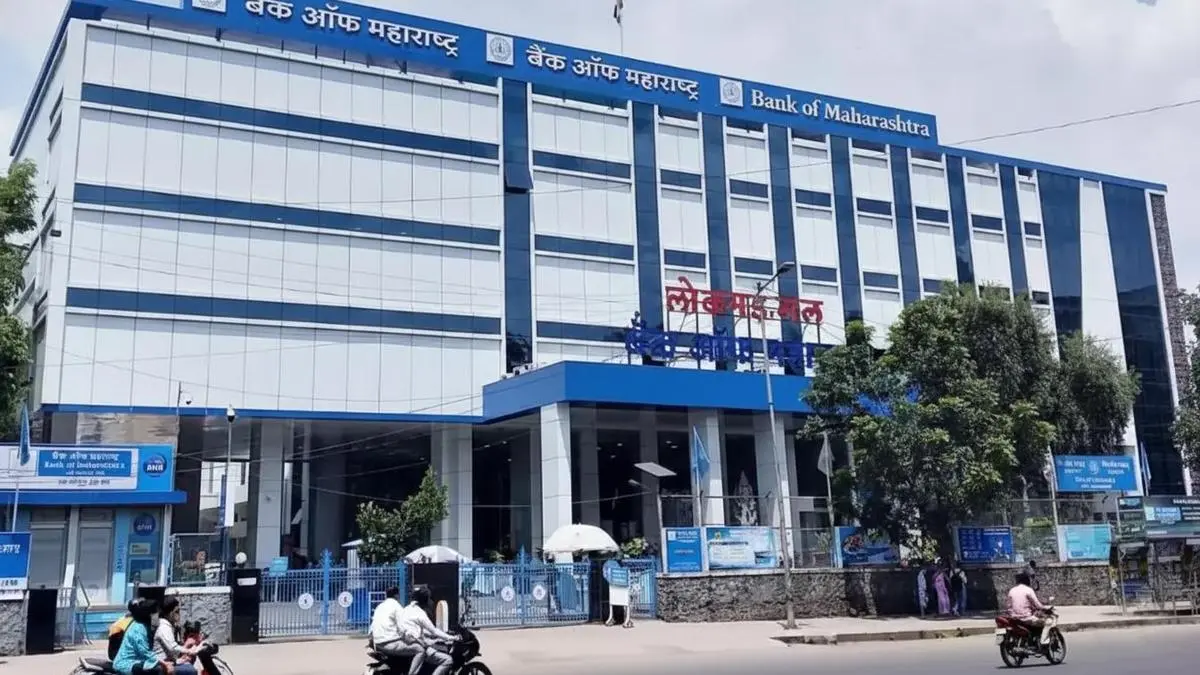
Should you consider buying Bank of Maharashtra’s stock?
BusinessLine· 2026-01-24 15:09
Core Viewpoint - Bank of Maharashtra's stock has reached a 52-week high but is trading at a discount compared to previous highs, indicating potential for future growth due to strong fundamentals and market positioning [1][2]. Company Overview - Bank of Maharashtra is a mid-cap PSU bank with a promoter holding of approximately 74% after a government stake sale [4]. - The bank manages a loan book of about ₹2.75 lakh crore, with a small portion (1.3%) in overseas advances [5]. Financial Performance - The bank has shown consistent growth, with a net profit of ₹5,520 crore for FY25, up from ₹389 crore in FY20 [10]. - In 9M-FY26, net profit reached ₹5,005 crore, growing over 24% year-on-year [12]. - The bank's advances and deposits grew by 20% and 15% respectively in 9M-FY26, outperforming the banking system [12]. Asset Quality - As of Q3 FY26, the bank's gross NPA and net NPA ratios are at 1.6% and 0.15% respectively, indicating strong asset quality [14]. - The bank has a provision coverage ratio of 90.7% and a slippage ratio of 1.2%, reflecting effective management of bad loans [15]. Cost and Efficiency Metrics - The bank boasts a CASA ratio of 49.5% and a cost-to-income ratio of 37.3%, which are among the best in the industry [13]. - The management plans to expand its branch network by 1,000 branches over the next five years, which may impact the cost-to-income ratio [13]. Future Guidance - For FY26, the bank targets a loan growth of 17% and a NNPA ratio of 0.25% [17]. - The management expects to achieve a net interest margin (NIM) of 3.75% by the end of FY26 [18].
RBI lines up a big liquidity push amid rupee's slideshow
The Economic Times· 2026-01-24 01:22
Core Viewpoint - The Reserve Bank of India (RBI) has announced three liquidity-boosting measures aimed at significantly enhancing system liquidity and aiding in the transmission of rate cuts made over the past year [10]. Group 1: Liquidity Measures - The RBI will conduct an open market operation (OMO) purchase of ₹1 lakh crore in two tranches of ₹50,000 crore each on February 5 and February 12 [10]. - A three-year dollar-rupee buy-sell swap of $10 billion will be conducted on February 4, which is expected to infuse nearly ₹92,000 crore into the banking system [2][10]. - A 90-day variable rate repo operation of ₹25,000 crore is scheduled for January 30 [2][10]. Group 2: Current Liquidity Status - System liquidity stood at a daily average surplus of ₹57,120 crore in January so far, compared to ₹72,549 crore in December [4][10]. - As a percentage of net demand and time liabilities (NDTL), liquidity is at 0.2% in January, down from 0.3% in December [4][10]. Group 3: Future Expectations - Market participants expect the RBI to continue conducting OMOs, with expectations of ₹2 lakh crore in February and March, and additional measures of ₹5 lakh crore in the next fiscal year [4][10]. - With the latest liquidity measures, liquidity is projected to reach around 0.9% of NDTL, assuming minimal leakage from liquidity via foreign exchange market interventions [6][10].

Forecast Evaluation Report – January 2026
Bankofengland.Co.Uk· 2026-01-23 09:30
Core Insights - The Bank of England's Monetary Policy Committee (MPC) is evolving its forecasting process in response to recommendations from former Federal Reserve Chair Ben Bernanke, focusing on improving the accuracy and transparency of economic forecasts [1][3][10]. Forecast Evaluation - The Forecast Evaluation Report is part of the Bank's response to Bernanke's recommendations, assessing the accuracy, unbiasedness, and efficiency of forecasts published in the MPC's Monetary Policy Reports [3][12][14]. - The report evaluates forecasts for four key variables: CPI inflation, GDP growth, wage growth, and the unemployment rate, which are crucial for understanding the UK economy [14][64]. - The Bank's forecasts have been at least as accurate as those from external forecasters and alternative model-based approaches over the past decade, although accuracy has declined since the onset of the COVID-19 pandemic [12][21][90]. Methodology and Tools - The Bank employs a range of models and data sources to produce forecasts, which are published quarterly alongside the Monetary Policy Report [34][35]. - A new forecast evaluation toolkit has been developed to support systematic evaluation of forecasts, enabling real-time benchmarking against alternative models [66][68]. Findings on Forecast Performance - The report identifies that forecast errors have increased post-COVID, with the RMSE for one-year ahead inflation forecasts rising from 0.6 percentage points pre-COVID to 3.7 percentage points post-COVID [83][84]. - The analysis highlights that while external shocks have contributed to forecast errors, there are also areas for improvement in the Bank's forecasting models, particularly regarding labour market variables [21][23][25]. Future Directions - The Bank plans to enhance its forecasting models and processes based on the findings from the report, focusing on better understanding key economic mechanisms such as wage-price interactions and inflation expectations [30][32][31]. - Continuous learning from forecast errors is emphasized as a means to improve the MPC's understanding of the UK economy and the effectiveness of monetary policy [9][7][56].

Nifty Bank Prediction Today – January 23, 2026: Nifty Bank futures: Might stay within a range
BusinessLine· 2026-01-23 04:58
Group 1 - Nifty Bank index opened at 59,305, showing a gap-up from the previous close of 59,200, but is currently trading at 59,100, down 0.2% [1] - The advance-decline ratio is 6-8, indicating a slight bullish sentiment, with IDFC First Bank and Union Bank of India being the top performers, up 1% and 0.8% respectively [1] - Punjab National Bank is the top loser, down 1%, followed by Bank of Baroda, down 0.9% [1] Group 2 - Nifty PSU Bank has decreased by nearly 0.3% today, while Nifty Private Bank is down 0.1%, indicating higher selling pressure on public sector banks [2] Group 3 - January expiry Nifty Bank futures opened higher at 59,463 compared to the previous close of 59,343, but is currently trading at 59,175, down 0.3% [3] - The futures faced resistance at 59,500, and a breakout above this level is needed for a positive outlook, with support at 59,000 to potentially halt the downtrend [3][4] Group 4 - The Nifty Bank futures are expected to remain within the range of 59,000 and 59,500 today, with the breakout direction providing clues for the next trend [4] Group 5 - Trade strategy suggests staying on the sidelines and initiating trades based on the breakout of the 59,000-59,500 range, with specific targets and stop-loss levels outlined for both short and long positions [5]

Nifty Bank Prediction Today – January 22, 2026: Nifty Bank futures: Shows a bullish tilt
BusinessLine· 2026-01-22 05:19
Market Overview - Nifty Bank index opened at 59,194, up 0.6% from the previous close of 58,800, currently trading at 59,150 [1] - The advance-decline ratio is 10-4, indicating a bullish market sentiment [1] Stock Performance - Federal Bank and IDFC First Bank are the top performers, rising by 2.7% and 2.6% respectively [1] - IndusInd Bank is the top loser, down 0.8%, followed by AU Small Finance Bank, down 0.6% [1] Sector Performance - Nifty PSU Bank has increased nearly 2% today, while Nifty Private Bank is up 0.3%, indicating that public sector banks are outperforming private banks [2] Futures Market - January expiry Nifty Bank futures opened at 59,160, currently trading at 59,250, up 0.7% [3] - Increased volatility has been observed, with expectations of a bullish bias for the day [3] Price Projections - The Nifty Bank futures contract could rise to 60,000 in the next couple of days, with support levels at 59,200 and 59,000 [4] Trading Strategy - A long position on Nifty Bank futures is recommended at 59,250, with a target of 60,000 and a stop-loss at 58,900 [5] - Support levels are identified at 59,250 and 59,000, while resistance levels are at 60,000 and 60,200 [5]
QNB enters $10bn club as Middle East’s most valuable banking brand
Gulf Business· 2026-01-21 08:20
Core Insights - QNB Group has become the first bank in the Middle East and Africa to surpass a banking brand value of $10 billion, reaching $10.3 billion, which is an 11% year-on-year increase, solidifying its position as the most valuable banking brand in the MEA region [2][5] Brand Strength and Rankings - QNB maintained a Brand Strength Index (BSI) score of 86, retaining its AAA brand rating, one of the highest distinctions awarded by Brand Finance [3] - On a global scale, QNB moved up three places to rank 36th among the world's top banking brands and secured the 244th position among the world's most valuable brands across all sectors, climbing one place from its 2025 ranking in the Global 500 index [4] Strategic Focus and Commitment - The rise in brand value reflects growing confidence among customers, investors, and stakeholders, reinforcing QNB's strategic focus on being a trusted financial partner in local, regional, and international markets [5] - Brand Finance's assessment highlights QNB's long-term commitment to brand building as a competitive differentiator, supported by investments in innovation, digital banking, green finance, and inclusive finance initiatives [6] - This milestone underscores QNB's progress toward its 2030 strategy, which aims to enhance its standing as a leading banking group in the MEA while delivering sustainable value for shareholders and clients [7]
Union Budget 2026: Fiscal policy to turn pro-growth as government moves to target debt-to-GDP, economists say
The Economic Times· 2026-01-21 08:13
Fiscal Policy Shift - The Indian government is shifting its focus from targeting the fiscal deficit to targeting the debt-to-GDP ratio starting April 2026, which is expected to support growth through a more modest pace of tightening [1][9] - The fiscal deficit is targeted to decrease to 4.4% of GDP for the year ending March 2026, down from 9.2% in 2020-21 [1][9] Debt Targets - Economists from Bank of America Securities project that the government will aim for a debt target of 55% of GDP by 2026-27, compared to the current level of approximately 57% [2][9] - Deutsche Bank and Axis Bank anticipate a fiscal deficit of 4.25% and 4.2%, respectively, with a long-term goal of reducing the debt-to-GDP ratio to 50% by 2030-31 [9] Borrowing Forecast - Gross borrowings are expected to rise to a record high, estimated between 16 trillion rupees and 17.50 trillion rupees ($174.7 billion to $191.1 billion), compared to 14.6 trillion rupees in the current year [5][6][9] - Net borrowings are projected to remain stable at 11.5 trillion rupees [6][9] Market Impact - The Indian bond markets are facing pressure due to heavy supply from federal and state government bonds, coinciding with a decline in demand from major buyers like insurance companies and pension funds [7][9] - Traders predict that if federal gross borrowing exceeds 16 trillion rupees, the trend of supply pressure will continue, with Nomura expressing caution regarding bonds due to these dynamics [8][9]
Risk Appetite Dives on Trump Rhetoric
Investing· 2026-01-19 10:39
Group 1 - The article provides a market analysis covering various financial instruments including the US Dollar, Japanese Yen, Gold Spot in US Dollars, US Dollar Index Futures, and Bitcoin [1] Group 2 - The analysis highlights the performance of the US Dollar against the Japanese Yen, indicating fluctuations and trends in the currency pair [1] - It discusses the current status of Gold Spot prices in US Dollars, reflecting investor sentiment and market conditions [1] - The US Dollar Index Futures are examined, showcasing the overall strength of the US Dollar in the global market [1] - Bitcoin's market performance is analyzed, noting its volatility and potential investment opportunities [1]
