J&J(JNJ)

Search documents
Best Dividend Aristocrats For October 2025
Seeking Alpha· 2025-09-28 05:00
Group 1 - The ProShares S&P 500 Dividend Aristocrats ETF (NOBL) experienced a gain of 3.01% in August, indicating a positive performance for Dividend Aristocrats during that month [1] - The article highlights the author's background in analytics and accounting, emphasizing over 10 years of experience in the investment arena, which adds credibility to the insights shared [1] Group 2 - The author holds long positions in several companies including ADP, FAST, HRL, JNJ, O, PEP, SHW, and WST, indicating a personal investment interest in these stocks [2] - The article does not provide specific investment recommendations or advice, maintaining a neutral stance on the suitability of investments for individual investors [3]





Johnson & Johnson (JNJ) to Withdraw the LINC Reflux Management System from Markets Outside the U.S.
Yahoo Finance· 2025-09-27 14:44
Group 1 - Johnson & Johnson (JNJ) will withdraw the LINC Reflux Management System from markets outside the U.S. by the end of March 2026 for commercial reasons, while the device will remain available in the U.S. [2] - Guggenheim raised its price target on Johnson & Johnson from $167 to $206, citing strong top-line growth in 2025 despite the loss of exclusivity for Stelara [3] - The company’s recently launched bladder cancer drugs, Inlexzo (TAR-200) and TAR-210, are expected to generate over $6 billion in sales at peak [3] Group 2 - Johnson & Johnson operates across pharmaceuticals, medical devices, and consumer health markets, focusing on research and development, manufacturing, and sales of a broad range of healthcare products globally [4] - The company is recognized as one of the Best Diversified Stocks to buy according to hedge funds, indicating significant upside potential [1]
Johnson & Johnson (JNJ) to Withdraw the LINC Reflux Management System from Markets Outside the U.S.
Yahoo Finance· 2025-09-27 14:44
Core Insights - Johnson & Johnson (NYSE: JNJ) is recognized as one of the 13 Best Diversified Stocks to Buy According to Hedge Funds due to its significant upside potential [1] Company Developments - On September 23, 2025, Johnson & Johnson announced plans to withdraw the LINC Reflux Management System from markets outside the U.S. by the end of March 2026 for commercial reasons, while the device will remain available in the U.S. [2] - Guggenheim raised its price target on Johnson & Johnson from $167 to $206, citing strong top-line growth in 2025 despite the loss of exclusivity for Stelara [3] - The company’s recently launched bladder cancer drugs, Inlexzo (TAR-200) and TAR-210, are projected to generate over $6 billion in sales at peak [3] Business Focus - Johnson & Johnson is engaged in research and development, manufacturing, and sales of a wide range of healthcare products globally, operating across pharmaceuticals, medical devices, and consumer health markets [4]

Global Economic Shifts and US Policy Turmoil Dominate Financial Headlines
Stock Market News· 2025-09-27 03:08
US Policy and Political Landscape - The Department of Justice is pushing for a breakup of Google (GOOG, GOOGL) to enhance competition in the online display advertising market, indicating increased regulatory scrutiny on major tech firms [2] - The Trump administration's policies continue to influence various sectors, including a growing backlog in student loan forgiveness affecting 74,510 borrowers and the engagement of Oracle (ORCL) for data security in the TikTok sale [3][4] - The US Labor Board has dropped allegations against Apple (AAPL) CEO Tim Cook, suggesting a shift towards a more business-friendly regulatory environment [5] Global Trade and Economic Indicators - China has decided to stop claiming special WTO benefits, which could alter global trade dynamics, while its export sector has shown resilience against US tariffs, with shipments to non-US markets increasing [6][8] - Economic indicators are mixed, with the S&P 500 Free Cash Flow Yield dropping to 2.58%, the lowest since the Global Financial Crisis, and Japan's 10-year bond yield reaching its highest level since 2008 [7][8] - France is facing credit challenges, with Scope Ratings downgrading its outlook to negative due to rising debt and political gridlock [7] Healthcare, Technology, and Social Policy - Johnson & Johnson (JNJ) remains optimistic about US pharmaceutical innovation despite challenges from the Trump administration, although there are concerns regarding past acknowledgments related to prenatal use of Tylenol and childhood autism [10] - The CDC has removed pages from its website related to sexual and gender identity and health equity, indicating a shift in social policy [11] Investor Sentiment and Market Trends - Investor Tom Lee has stated that the market is in an AI supercycle, suggesting that Nvidia (NVDA) is undervalued, reflecting strong bullish sentiment in the AI sector [12] - US household allocation to stocks reached a record 66% at the end of June, indicating robust investor confidence [12] Corporate Developments - Pine Gate is reportedly negotiating with lenders for debt restructuring and may file for Chapter 11 bankruptcy [13] - Sinclair Broadcast Group will resume airing "Jimmy Kimmel Live!" on its ABC affiliates, ending a blackout in several cities [13]


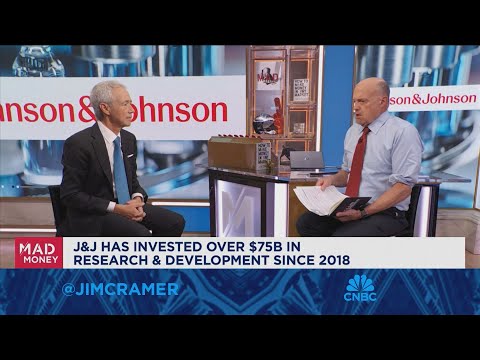
'I'm an optimist,' says Johnson & Johnson CEO on its R&D investment
CNBC Television· 2025-09-27 02:18
Industry Leadership & Innovation - US is considered the best country for innovation in life sciences [1] - The life science industry in the US is expected to remain the undisputed leader in healthcare innovation [3] - The US possesses key elements for innovation: universities, research institutions, talent, and capital markets [2] Optimism & Resilience - The speaker expresses optimism about the future of the life science industry [3] - The speaker believes things will come through fine despite ups and downs [3] - The speaker references Johnson & Johnson's 140-year history of navigating challenges [3] Addressing Concerns - Some researchers feel under attack from the government [2] - The speaker expresses confidence that these issues will be resolved [3]
'I'm an optimist,' says Johnson & Johnson CEO on its R&D investment
Youtube· 2025-09-27 02:18
Group 1 - The US is considered the best country for innovation in life sciences, with a strong belief in its capacity for research and development [1][2] - The country possesses essential elements for innovation, including universities, research institutions, talent attraction, capital markets, and capable companies [2] - There is an optimistic outlook for the life science industry, with a belief that it will continue to lead in healthcare innovation despite historical ups and downs [3]
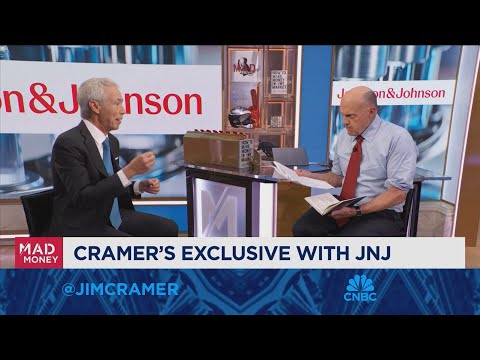
Watch Jim Cramer's interview with Johnson & Johnson CEO Joaquin Duato
CNBC Television· 2025-09-27 00:43
Financial Performance & Investment - Johnson & Johnson's stock has increased by over 24% year-to-date [1] - The company is investing $55 billion in the US over the next four years, a 25% increase compared to the previous four years [3] - Q2 performance was stellar, exceeding analyst expectations and substantially increasing guidance, with expectations for continued growth in the coming years [21] - The stock is considered inexpensive with a 3% yield [20][21] Innovation & Pipeline - Advances in biology and chemistry, amplified by artificial intelligence, are expected to lead to cures for previously incurable diseases [6][7] - Cell therapy carvicti shows promising results in treating multiple myeloma, with patients disease-free 5 years after a single administration [8] - FDA approved Inlexo, a groundbreaking therapy for bladder cancer, allowing patients to keep their bladder [10][11] - Acquisition Abomemed is performing well, with data showing patients living 600 days longer after a heart attack with cardiogenic shock [12][13] US Operations & Manufacturing - Johnson & Johnson is breaking ground in North Carolina for a major biologics plant [5] - The company aims to manufacture essentially all advanced medicines in the US [5] - The company has been in New Brunswick, New Jersey for 140 years [4] Legal & Ethical Considerations - The company is fighting claims related to talc and has not paid a single penny since returning to the tort system [17][18] - Johnson & Johnson has won 16 out of 17 cases in ovarian cancer over the last 11 years [18]
Watch Jim Cramer's interview with Johnson & Johnson CEO Joaquin Duato
Youtube· 2025-09-27 00:43
Core Viewpoint - Despite a challenging year for healthcare stocks, Johnson & Johnson has shown strong performance, with a year-to-date increase of over 24%, attributed to its robust research and development pipeline [1] Investment and Manufacturing - Johnson & Johnson plans to invest $55 billion in the US over the next four years, which is a 25% increase compared to the previous four years, driven by tax reforms [3] - The company is committed to enhancing US manufacturing capabilities, including a major biologics plant in North Carolina, aimed at producing advanced medicines domestically [5] Innovations in Healthcare - The company anticipates significant advancements in human health over the next decade, leveraging progress in biology and artificial intelligence to develop cures for previously incurable diseases [6][7] - Johnson & Johnson has made strides in cancer treatment, particularly with its CAR-T cell therapy for multiple myeloma, showing promising results where patients have remained disease-free for five years after treatment [8] New Drug Approvals - The FDA has approved a groundbreaking therapy for localized bladder cancer called Inlexo, which allows for direct delivery of treatment into the bladder, potentially preserving patients' bladders and improving their quality of life [10][11] Medical Devices and Acquisitions - Johnson & Johnson's acquisition of Abomemed, which specializes in heart pumps, has yielded positive outcomes, with patients experiencing significantly longer survival rates post-heart attack [13][14] Market Position and Outlook - The company maintains a strong belief in the US as a leader in life sciences innovation, supported by its historical presence and ongoing commitment to research and development [15][17] - Johnson & Johnson has successfully navigated legal challenges related to talc claims, with a strong track record in court, which has positively impacted its stock performance [18][19] Financial Performance - The company reported a stellar Q2, exceeding analyst expectations and increasing its guidance for future performance, indicating confidence in its innovation pipeline [23]
Johnson & Johnson CEO is optimistic about pharma innovation in the U.S. despite industry challenges from the Trump administration
CNBC· 2025-09-26 23:02
Core Viewpoint - Johnson & Johnson's CEO expresses optimism about the future of pharmaceutical innovation in the U.S. despite challenges such as tariffs on imported drugs and cuts in research funding [1][2] Company Investment and Manufacturing - Johnson & Johnson plans to invest over $55 billion to build four manufacturing plants in the U.S., with a factory already under construction in North Carolina [3] - The company has maintained a manufacturing presence in the U.S. since its inception and aims to create significant middle-class jobs in various fields including robotics and cell therapy [3] Regulatory Environment and Drug Development - The Trump administration announced a 100% tariff on branded or patented pharmaceutical products entering the U.S., effective October 1, but this will not affect companies building drug manufacturing plants domestically [2] - Johnson & Johnson has recently received FDA approval for new drugs, including treatments for myeloma and bladder cancer, highlighting the company's ongoing commitment to innovation [4] Industry Strength and Talent - The CEO emphasizes the strength of the U.S. life sciences industry, citing the presence of universities, research institutions, and capital markets as key elements for continued leadership in healthcare innovation [4]

Trump announces 100% tariffs on pharmaceutical drugs, beginning October 1
Fastcompany· 2025-09-26 13:33
Core Points - President Trump announced new import tariffs of 100% on pharmaceutical drugs, 50% on kitchen cabinets, 30% on upholstered furniture, and 25% on heavy trucks, effective October 1 [2] - The tariffs are intended to reduce the government's budget deficit and boost domestic manufacturing, although no legal justification was provided [2] - The tariffs may lead to higher consumer prices and could negatively impact hiring, contributing to inflationary pressures already observed in the economy [2][4] Pharmaceutical Industry - In 2024, the U.S. imported nearly $233 billion in pharmaceutical and medicinal products, raising concerns that prices for some medicines could double [2] - The announcement of tariffs on pharmaceuticals was unexpected, as Trump had previously indicated a phased approach to tariff implementation [2][4] - Major pharmaceutical companies have announced investments in U.S. production in response to earlier tariff threats [4] Construction and Home Furnishings - Tariffs on kitchen cabinets and bathroom vanities could increase costs for homebuilders, exacerbating existing housing affordability issues [4] - The National Association of Realtors reported an 11.7% increase in sales listings in August, but the median price for existing homes was $422,600 [4] Heavy Truck Manufacturing - The tariffs on heavy trucks aim to protect domestic manufacturers like Peterbilt and Freightliner from foreign competition [4] - Trump has argued that tariffs will encourage companies to invest in domestic factories, despite evidence suggesting that tariffs have not led to job creation in manufacturing [4] Economic Context - The consumer price index has increased by 2.9% over the past year, indicating ongoing inflation concerns [4] - Despite claims of economic success, job losses in manufacturing and construction have been reported since the introduction of tariffs [4]