
J&J(JNJ)

Search documents
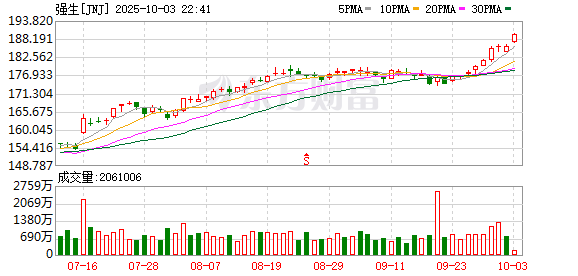
强生公司股价创下历史新高,最新上涨1.8%
Mei Ri Jing Ji Xin Wen· 2025-10-03 14:41
(文章来源:每日经济新闻) 每经AI快讯,10月3日,强生公司股价创下历史新高,最新上涨1.8%。 ...


Apple downgraded, Alibaba upgraded: Wall Street's top analyst calls
Yahoo Finance· 2025-10-03 13:42
Upgrades - Rothschild & Co Redburn upgraded Coinbase (COIN) to Buy from Neutral with a price target of $417, increased from $325, expecting retail volume growth to mitigate take rate compression [2] - Wells Fargo upgraded Johnson & Johnson (JNJ) to Overweight from Equal Weight with a price target of $212, up from $170, indicating that concerns around pharmaceutical tariffs and pricing risks are largely resolved [3] - Gordon Haskett upgraded Zillow (Z) to Buy from Hold with a price target of $90, citing favorable risk/reward due to negative sentiment affecting shares [3] - Fox Advisors upgraded Instacart (CART) to Outperform from Equal-Weight, believing the 24% decline in stock price since August 11 is "oversold" due to overblown competitive concerns [3] - Erste Group upgraded Alibaba (BABA) to Buy from Hold, noting the company's strong development in artificial intelligence applications [4] Downgrades - Jefferies downgraded Apple (AAPL) to Underperform from Hold with a price target of $205.16, down from $205.82, citing excessive expectations on the replacement cycle and prospects of the iPhone 18 Fold [5] - Piper Sandler downgraded Instacart (CART) to Neutral from Overweight with a price target of $41, down from $62, due to rising competitive pressures from major players like Amazon and Walmart [5] - Wolfe Research downgraded PayPal (PYPL) to Peer Perform from Outperform, with a fair value range of $70-$80, indicating shares may be range-bound until further proof of execution is shown [5] - KeyBanc downgraded Corteva (CTVA) to Sector Weight from Overweight without a price target, following the company's announcement to separate into two public companies [5] - Goldman Sachs downgraded Bumble (BMBL) to Neutral from Buy with a price target of $7, down from $8, stating that the stock's risk/reward is more balanced at current levels [5]



2 Dividend Stocks That Jim Cramer Wants Every Retiree to Own
247Wallst· 2025-10-03 13:11
Core Insights - Retirees and older individuals represent a significant demographic that engages with Jim Cramer's Mad Money show [1] Group 1 - The show attracts a large audience from the retiree and older age groups, indicating a strong interest in financial advice among these demographics [1]
Jim Cramer's top 10 things to watch in the stock market Friday
CNBC· 2025-10-03 12:39
Group 1 - Boeing's new 777X widebody jet commercial debut is delayed to early 2027, potentially leading to significant non-cash accounting charges due to prolonged safety certification work [1] - BlackRock's Global Infrastructure Partners is negotiating to acquire Aligned Data Centers for approximately $40 billion, following a nearly $38 billion takeover of AES [1] - Johnson & Johnson was upgraded to buy from hold at Wells Fargo, with analysts optimistic about its cancer franchise and the removal of existential risks related to tariffs and drug pricing [1] Group 2 - Constellation Brands' price target was reduced to $175 from $205 by UBS, although the stock maintains a buy rating, trading at over 11 times forward earnings with a 2.9% dividend yield [1] - UBS maintains a sell rating on Tesla despite better-than-expected third-quarter deliveries, citing concerns over demand pull-forward due to EV tax credit expiration [1] - AeroVironment received price target increases to $400 and $415 from Citizens JMP and BTIG, both maintaining buy ratings and expressing strong bullish sentiment [1] Group 3 - KeyBanc downgraded Corteva to hold from buy following its announcement to split into two companies, raising concerns about the impact of breakups on stock performance [1] - Citi analysts proposed a three-way merger involving CSX, Canadian Pacific Kansas City, and Berkshire Hathaway-owned BNSF as a strategic response to the Union Pacific and Norfolk Southern merger [1] - Barclays lowered its price target on PepsiCo to $140 from $144, expressing caution ahead of earnings, particularly regarding sales and margins [1]



Government Shutdown Halts Jobs Data Release, J.P. Morgan Lifts Tesla Target
Stock Market News· 2025-10-03 12:38
Key TakeawaysThe U.S. Bureau of Labor Statistics has delayed the release of the critical September Nonfarm Payrolls report due to the ongoing government shutdown, leaving markets without a key economic indicator.J.P. Morgan has significantly raised its price target for electric vehicle giant Tesla (TSLA) to $150.00 from $115.00.Wells Fargo has issued a "buy" rating for Johnson & Johnson (JNJ), driven by continued improvements in the company's drug sales.Political leaders continue to grapple with the shutdow ...

Barclays Maintains a Hold Rating on Johnson & Johnson (JNJ) With a $176 PT
Insider Monkey· 2025-10-03 10:27
Core Insights - Artificial intelligence (AI) is identified as the greatest investment opportunity of the current era, with a strong emphasis on the urgency to invest in AI technologies now [1][13] - The energy demands of AI technologies are highlighted, with data centers consuming as much energy as small cities, leading to concerns about power grid strain and rising electricity prices [2][3] Investment Opportunity - A specific company is presented as a key player in the AI energy sector, owning critical energy infrastructure assets that are essential for supporting the anticipated surge in energy demand from AI data centers [3][7] - This company is characterized as a "toll booth" operator in the AI energy boom, benefiting from the increasing need for energy as AI technologies expand [4][5] Market Position - The company is noted for its unique position in the market, being debt-free and holding a significant cash reserve that is nearly one-third of its market capitalization [8] - It also has a substantial equity stake in another AI-related company, providing investors with indirect exposure to multiple growth engines in the AI sector [9][10] Strategic Advantages - The company is involved in large-scale engineering, procurement, and construction (EPC) projects across various energy sectors, including nuclear energy, which is crucial for America's future power strategy [7][8] - The current political climate, particularly Trump's tariffs and the push for onshoring, positions this company favorably to capitalize on domestic manufacturing and energy needs [5][14] Future Outlook - The influx of talent into the AI sector is expected to drive rapid advancements and innovation, reinforcing the importance of investing in AI-related companies [12] - The potential for significant returns is emphasized, with projections suggesting a possible 100% return within 12 to 24 months for investors who act now [15][19]

Johnson & Johnson (JNJ) Is Leading The Industry In Cancer Treatments, Says Jim Cramer
Yahoo Finance· 2025-10-02 07:08
We recently published 5 Stocks That Were On Jim Cramer’s Radar As He Discussed AI. Johnson & Johnson (NYSE:JNJ) is one of the stocks Jim Cramer recently discussed. Johnson & Johnson (NYSE:JNJ) is one of the most diversified healthcare companies in the world. The firm operates in the pharmaceutical, medical devices, and other industries. Cramer previously discussed the stock on September 11th, when he wondered whether the major “litigation overhang” surrounding the firm actually involved an “overplayed” ha ...
Johnson & Johnson (JNJ) Gains FDA Nod for TREMFYA Subcutaneous Therapy
Insider Monkey· 2025-10-02 06:55
Group 1: AI Investment Opportunity - Artificial intelligence is considered the greatest investment opportunity of our lifetime, with a strong emphasis on the urgency to invest now [1] - Wall Street is investing hundreds of billions into AI, but there is a critical question regarding the energy supply needed to support this technology [2] - AI data centers consume as much energy as small cities, leading to concerns about power grid strain and rising electricity prices [2] Group 2: Company Overview - A specific company, largely overlooked by AI investors, is positioned to benefit from the increasing demand for energy due to AI [3] - This company owns critical energy infrastructure assets and is involved in the U.S. LNG exportation sector, which is expected to grow under the current administration's energy policies [7] - The company is debt-free and has a significant cash reserve, amounting to nearly one-third of its market cap, making it financially robust [8] Group 3: Market Position and Valuation - The company is trading at less than 7 times earnings, which is considered undervalued given its ties to both AI and energy sectors [10] - It also holds a substantial equity stake in another AI-related company, providing indirect exposure to multiple growth engines without a premium [9] - Wall Street is beginning to take notice of this company as it benefits from various market trends without the high valuations typical of the sector [8] Group 4: Future Outlook - The future of AI is heavily reliant on energy infrastructure, and this company is strategically positioned to capitalize on the upcoming energy demands [6][14] - The influx of talent into the AI sector ensures continuous innovation and advancements, further solidifying the importance of investing in AI-related companies [12] - The overall sentiment is that investing in AI now is crucial for future growth and returns, with potential for significant upside within the next 12 to 24 months [15]
Factbox-Global drugmakers rush to boost US presence as tariff threat looms
Yahoo Finance· 2025-10-01 10:45
(Reuters) -Global drugmakers are scrambling to shore up their U.S. manufacturing capacity and domestic inventory as the Trump administration moves ahead with a 100% tariff on imported branded and patented drugs, starting October 1. The sweeping measure has triggered a flurry of activity across the industry, including fast-tracking U.S. manufacturing projects, price cuts and direct-to-consumer sales. Here's what drugmakers are doing to mitigate supply-chain risks and reassure investors: Pfizer Pfizer re ...


Jim Cramer on Johnson & Johnson: “It’s Differentiating Itself From the Pack”
Yahoo Finance· 2025-09-30 18:04
Core Insights - Johnson & Johnson (NYSE: JNJ) has shown strong performance in a challenging healthcare market, with a year-to-date increase of over 24% [1] - The company is recognized for its impressive research capabilities and a robust product pipeline, distinguishing it from other healthcare stocks [1] - As of the latest data, JNJ ranks as the 10th best performing healthcare stock in the S&P 500, with a year-to-date increase of 21.5% [2] Company Overview - Johnson & Johnson develops, manufactures, and markets a wide range of healthcare products, focusing on pharmaceuticals and medical technologies [2] - The company's areas of expertise include immunology, oncology, neuroscience, cardiovascular health, and surgery [2] Market Context - Despite a generally poor year for healthcare stocks, Johnson & Johnson has emerged as a standout performer [1] - The company faces ongoing litigation challenges, yet it remains primarily a pharmaceutical entity in a market that has shown skepticism towards the pharmaceutical sector [2]