Novo Nordisk(NVO)

Search documents
礼来减重药即将纳入医保,有医院价格直降80%!电商订单增长十倍
第一财经· 2025-12-30 12:21
Core Viewpoint - The article discusses the competitive landscape of the weight loss drug market, highlighting the significant price reductions expected with the inclusion of Eli Lilly's drug, tirzepatide, into the medical insurance system, which is anticipated to lead to a price drop of up to 80% [4][6]. Group 1: Market Dynamics - The weight loss drug market is experiencing intense competition, with multinational companies engaging in a "price war" as they seek to capture market share [3]. - Tirzepatide's price will be significantly reduced starting January 1, with specific prices listed for various dosages, indicating a shift towards more affordable options for consumers [4][5]. - Novo Nordisk's weight loss drug, semaglutide, is also expected to see a price reduction of nearly 50%, further intensifying the competitive pricing environment [6]. Group 2: Consumer Behavior - The decision-making process for patients has shifted from post-consultation to pre-consultation, with many seeking prescriptions for weight loss drugs before visiting healthcare providers [8]. - The market for weight loss drugs is becoming increasingly consumer-driven, with patients actively seeking these medications, akin to purchasing consumer electronics [9]. - Data from e-commerce platforms indicate a significant gender and age disparity in the consumer base, with women making up about three times the number of male users and 85% of buyers being under 40 years old [10]. Group 3: Future Outlook - The global weight loss drug market is projected to grow to approximately $150 billion over the next decade, indicating a trend towards these medications becoming a part of everyday lifestyle choices [10]. - The potential for direct-to-consumer sales of weight loss drugs raises concerns about safety and regulation, as bypassing traditional healthcare systems could lead to risks associated with side effects and long-term health implications [10].


Wall Street Breakfast Podcast: Meta Snaps Up Manus
Seeking Alpha· 2025-12-30 11:28
Acquisition and Business Strategy - Meta is set to acquire Manus, a Singapore-based AI startup specializing in general-purpose AI agents, to enhance its consumer and business product offerings with advanced AI capabilities [3] - The financial terms of the acquisition have not been disclosed, but Manus has achieved a $125 million annual revenue run rate shortly after launching its subscription-based AI agent services [4] - This acquisition aligns with Meta CEO Mark Zuckerberg's focus on AI infrastructure and monetization strategies beyond metaverse initiatives, marking the company's fifth AI-related acquisition in 2025 [5] Industry Developments - Boeing has secured an $8.6 billion contract from the U.S. Air Force to produce F-15 fighter jets for the Israeli Air Force, with the contract including options for additional aircraft [6] - The contract involves the design, integration, and delivery of 25 new F-15IA aircraft, with work expected to be completed by the end of 2035 [6] - Novo Nordisk has reduced the price of its GLP-1 medication Wegovy in China by nearly 50% for its two highest dosage strengths, in anticipation of increased competition from generics following the expiration of its patent in March 2026 [7][8]



礼来减重药即将纳入医保,有医院价格直降80%!电商订单增长十倍
Di Yi Cai Jing· 2025-12-30 11:00
第一财经记者注意到,在南京鼓楼医院公众号上,该院减重代谢中心称,自明年1月1日起,替尔泊肽 将"大降价",具体价格为2.5mg*4次324.1元;5.0mg*4次551元;7.5mg*4次751元;10mg*4次936.7元。 以上剂量为每周一次注射。 药企对待这些减重药物的态度,就像在告诉消费者"你现在可以像买一个智能手机那样去买药。"互联网 医疗平台也成为减重药厂商的下一个"竞技场"。 基于大量的用户数据,互联网电商平台正在成为减重药企重要的合作伙伴。第一财经记者刚刚在某互联 网平台上查询相关减重药的信息,就立马收到短信广告:"别让肚腩负担毁了旅行,露腰自由自信站C 位!"后面附有某国内减重药厂商的产品购买链接。 这就是减重药市场的竞争现状。跨国巨头也在积极投身这场难以避免的"价格战"。礼来的减重药替尔泊 肽纳入医保后,价格也将"大跳水"。 礼来减重药价格"大跳水" 明年1月1日起,礼来公司的重磅减重药替尔泊肽(商品名:穆峰达)即将纳入医保。近日,已有医院相 关科室公开了1月1日起替尔泊肽的价格。 与此同时,诺和诺德的重磅减重药司美格鲁肽的价格预计也将出现下调。根据四川省药械招采中心近日 公示的一批药品降 ...
产业焦点 | 进口GLP-1减肥药价格腰斩:司美格鲁肽、替尔泊肽集体降价
Sou Hu Cai Jing· 2025-12-30 10:15
Core Insights - The industry is experiencing intensified competition as imported GLP-1 weight loss drugs enter a price reduction phase, moving away from previously high profit margins [2][4] Group 1: Price Reductions - The imported GLP-1 weight loss drug Semaglutide (brand name: Ozempic) has seen significant price cuts, with prices dropping from 1893.67 yuan to 987.48 yuan for one specification and from 2463 yuan to 1284.36 yuan for another, effectively halving the original prices [2] - Eli Lilly's weight loss drug Tirzepatide is also undergoing price reductions in the market, with pre-sale activities initiated on e-commerce platforms [4] Group 2: Market Dynamics - The competition is heightened as Novo Nordisk's single-target GLP-1 drug Semaglutide faces direct competition from Eli Lilly's dual-target GLP-1 drug Tirzepatide and the impending market entry of biosimilars for Semaglutide [4] - Novo Nordisk's patent in the Chinese market is set to expire on March 20, 2026, with 10 domestic biosimilar applications already filed for Semaglutide [4] Group 3: Industry Impact - The price reductions of imported GLP-1 weight loss drugs indicate a breaking of the market ceiling price, suggesting that previously anticipated excess profits may no longer be achievable, although normal profit levels are expected to persist [5] - The impact of these price changes is likely to be more pronounced on the pricing strategies of upcoming GLP-1 weight loss products [5]

Novo Nordisk's 'long game' on weight loss drugs sparks hope in science, but the Street is impatient
CNBC· 2025-12-30 06:12
Core Viewpoint - Novo Nordisk is facing significant challenges, including a sharp decline in stock price and increased competition in the GLP-1 drug market, leading to a major leadership shakeup and investor skepticism about its growth potential [1][18]. Group 1: Company Performance and Market Position - Novo Nordisk's stock has dropped 50% year-to-date, marking its worst performance since listing on Nasdaq Copenhagen over three decades ago, with shares trading around 320 Danish kroner compared to over 1,000 kroner at its peak in mid-2024 [18][19]. - The company is experiencing pressure from competitors like Eli Lilly, which has introduced rival drugs, and from compounding pharmacies producing cheaper versions of semaglutide [19][25]. - Despite the challenges, Goldman Sachs analysts maintain a "Buy" rating on Novo Nordisk, citing potential volume opportunities in the evolving obesity market [26]. Group 2: Drug Development and Potential Benefits - Semaglutide, marketed as Ozempic and Wegovy, is a GLP-1 receptor agonist initially developed for diabetes management but has gained popularity for its weight-loss properties, generating billions in annual revenue for Novo Nordisk [3]. - The U.S. FDA has approved semaglutide for various conditions, including liver disease and reducing cardiovascular risks in overweight individuals [4]. - Emerging research suggests that GLP-1 drugs may have additional benefits, such as reducing cravings for food, alcohol, and drugs by affecting the brain's reward pathways [6][9]. Group 3: Research and Clinical Trials - Observational studies indicate that semaglutide may help manage excessive cravings and could be effective in treating conditions like alcohol use disorder, with clinical trials showing reduced alcohol consumption in patients [10][12]. - A recent clinical trial aimed at assessing semaglutide's impact on Alzheimer's disease did not meet its primary goal, leading to disappointment among investors, but some experts believe the trial provided valuable insights for future research [12][15]. - There is ongoing interest in exploring semaglutide's effects on brain functions and its potential as a preventative therapy for cognitive decline [7][16].
Where is Novo Nordisk A/S (NVO) Headed?
Insider Monkey· 2025-12-30 04:59
Core Insights - Artificial intelligence (AI) is identified as the greatest investment opportunity of the current era, with a strong emphasis on the urgency to invest now [1][13] - The energy demands of AI technologies are significant, with data centers consuming as much energy as small cities, leading to concerns about power grid strain and rising electricity prices [2][3] Investment Opportunity - A specific company is highlighted as a potential investment opportunity, possessing critical energy infrastructure assets that are essential for supporting the anticipated surge in energy demand from AI data centers [3][6] - This company is not a chipmaker or cloud platform but is positioned to benefit from the increasing need for electricity in the digital age [3][6] Energy Infrastructure - The company owns vital nuclear energy infrastructure assets, making it central to America's future power strategy [7] - It is capable of executing large-scale engineering, procurement, and construction projects across various energy sectors, including oil, gas, and renewables [7] Financial Position - The company is noted for being debt-free and having a substantial cash reserve, amounting to nearly one-third of its market capitalization [8] - It also holds a significant equity stake in another AI-related company, providing investors with indirect exposure to multiple growth opportunities without high premiums [9] Market Perception - Wall Street is beginning to recognize this company due to its undervalued status and its ability to capitalize on multiple favorable trends in the energy and AI sectors [8][10] - The company is trading at less than seven times earnings, which is considered attractive given its connections to AI and energy [10] Future Trends - The ongoing AI infrastructure supercycle, the onshoring boom driven by tariffs, and a surge in U.S. LNG exports are all trends that the company is well-positioned to leverage [14] - The influx of talent into the AI sector is expected to drive continuous innovation and advancements, further solidifying the importance of investing in AI-related companies [12]

【医药】口服司美格鲁肽减肥适应症获批,相关密集催化有望推动产业发展——行业跨市场周报(叶思奥 /吴佳青/黄素青/黎一江/曹聪聪)
光大证券研究· 2025-12-29 23:04
Core Viewpoint - The oral weight loss drug sector is entering a critical commercialization phase, with significant regulatory approvals and partnerships indicating strong market potential and demand for innovative treatments [4][5][6]. Group 1: Recent Developments in Oral Weight Loss Drugs - On December 23, 2025, the FDA approved Novo Nordisk's oral semaglutide for chronic weight management, marking a significant milestone for oral GLP-1 peptides [4]. - Eli Lilly's management anticipates that the oral small molecule weight loss drug orforglipron will likely receive approval by March 2026, potentially becoming the second approved oral weight loss medication [4]. - Recent data releases include Structure's report on aleniglipron, which showed a 11.3% weight loss in the 120mg dose group and 15.3% in the 240mg dose group after 36 weeks [4]. Group 2: Industry Partnerships and Strategic Moves - On December 9, 2025, Pfizer announced an exclusive collaboration with YaoPharma for the oral small molecule GLP-1R agonist YP05002, involving a $150 million upfront payment and up to $1.935 billion in milestones, indicating strong interest from multinational pharmaceutical companies in oral weight loss products [5]. - Shijiazhuang Pharmaceutical Innovation announced the establishment of a joint venture focused on innovative metabolic drug development, highlighting the recognition of the significant value in GLP-1 related metabolic disease medications [6]. Group 3: Market Trends and Valuation Recovery - The pharmaceutical and biotechnology sector has seen a recovery in valuation, with the PE ratio stabilizing and increasing since Q1 2025, driven by macroeconomic conditions and supportive policies for innovative drugs [7]. - The global trend of returning to a rate-cutting environment, alongside increasing healthcare spending due to aging populations, is expected to expand the global demand for pharmaceuticals, particularly benefiting China's pharmaceutical industry [8]. Group 4: Investment Themes in Innovation - The investment focus is categorized into three phases: "0→1" for breakthrough technologies in innovative drugs, "1→10" for clinical validation of high-quality domestic innovative drugs, and "10→100" for leveraging China's efficiency in the pharmaceutical supply chain [9]. - The acceleration of business development (BD) for innovative drugs and the rise of high-end medical devices and consumables are seen as promising investment opportunities [9].


贵金属风暴冲击市场情绪,美股三大指数集体收跌,中概股震荡走弱
Feng Huang Wang· 2025-12-29 22:52
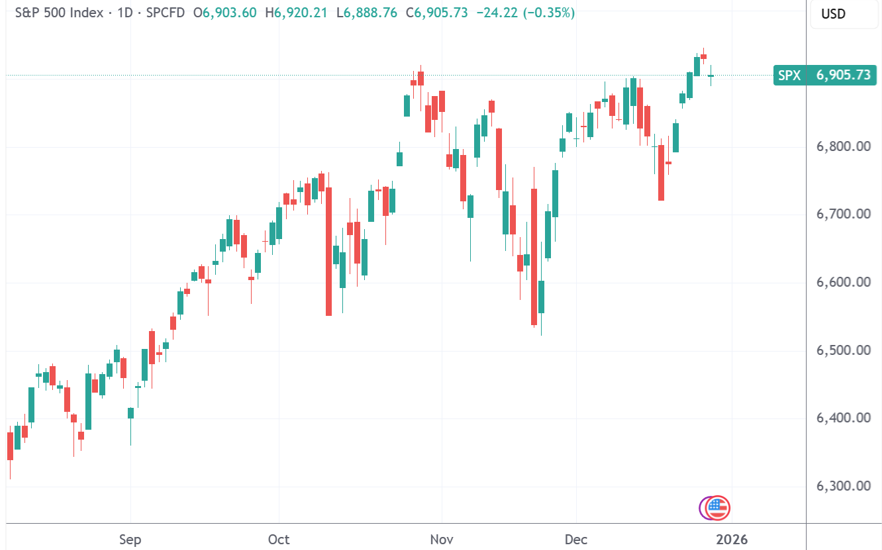
Market Performance - The U.S. stock market indices collectively declined due to heightened tensions from significant fluctuations in commodity prices, with the S&P 500 down 0.35% to 6905.74 points, the Nasdaq Composite down 0.5% to 23474.35 points, and the Dow Jones Industrial Average down 0.51% to 48461.93 points [1] - The mining sector experienced a collective drop, with First Majestic Silver down 4.13% and Newmont Mining down 5.64%, while lithium giant Albemarle fell by 3.62% [2] Commodity Market - Silver futures on Comex saw extreme volatility, reaching a high of $82 per ounce before plummeting to $71.6, marking a decrease of 7.20% [4] - Analysts suggest that precious metals have been severely overbought, and the recent declines may present a buying opportunity in the coming weeks [4] Company News - SoftBank Group announced a $4 billion acquisition of data center investment company DigitalBridge, marking a significant step in its artificial intelligence strategy [10] - Citigroup expects to record an after-tax loss of approximately $1.1 billion in Q4 related to the sale of its Russian business, with the transaction anticipated to complete next year [11] - Meta has acquired AI startup Manus, which was originally founded in China and later moved to Singapore, although financial terms of the deal were not disclosed [12] Sector-Specific Developments - Lululemon is facing a rare power struggle as founder Chip Wilson seeks to remove the current board, emphasizing the need for visionary leadership to drive the company's next phase of success [9] - Novo Nordisk has lowered the price of its weight loss drug semaglutide in China, following the impending expiration of its patent, with local companies preparing to introduce cheaper generic alternatives [8] Chinese Stocks - The Nasdaq Golden Dragon China Index fell by 0.67%, with notable declines in Alibaba (down 2.46%) and JD.com (down 0.44%), while NIO and NetEase saw gains of 4.71% and 0.92%, respectively [7]


My Market Outlook For 2026: Focus On Pharma For Consistent Returns, Potential Skyrocketing Shares
Seeking Alpha· 2025-12-29 16:00
Group 1 - The article promotes a weekly newsletter focused on stocks in the biotech, pharma, and healthcare industries, highlighting key trends and catalysts that influence market valuations [1] - The newsletter is led by a biotech consultant with over 5 years of experience, who has compiled detailed reports on more than 1,000 companies [1] - The investing group provides insights for both novice and experienced investors, including buy and sell ratings, product sales forecasts, and integrated financial statements [1] Group 2 - The article emphasizes the importance of understanding market catalysts and trends for making informed investment decisions in the biotech and healthcare sectors [1]



The Obesity Pill Rush: Healthcare ETFs to Gain as FDA Nods to Novo Drug
ZACKS· 2025-12-29 14:50
Core Insights - The FDA's approval of Novo Nordisk's oral obesity pill, Wegovy, represents a significant advancement in the weight-loss drug market, enhancing the company's long-term profitability and cash flow visibility [1][4] Company Overview - Novo Nordisk's oral Wegovy is the first GLP-1 tablet approved for chronic weight management, offering a lower-cost and more convenient alternative to injectable forms, which could improve production capacity utilization and profit margins [2][6][11] - The drug has shown impressive efficacy, with participants in a clinical trial losing an average of 16.6% of their body weight over 64 weeks, matching the results of the injectable version [5] Market Dynamics - The obesity prevalence among U.S. adults is currently at 40.3%, indicating a substantial market opportunity for Wegovy [7] - The oral formulation is expected to drive unprecedented demand, solidifying Novo Nordisk's position in the competitive obesity drug market [6] Investment Opportunities - Investors may consider healthcare ETFs as a strategic way to gain exposure to Novo Nordisk's growth while mitigating risks associated with direct stock investment [3][8] - Notable healthcare ETFs include: - Roundhill GLP-1 & Weight Loss ETF (OZEM) with $45.9 million AUM, featuring a 19.81% weightage in NVO and a year-to-date surge of 45.9% [13] - Amplify Weight Loss Drug & Treatment ETF (THNR) with $2.87 million AUM, holding a 12.55% weightage in NVO and a year-to-date increase of 15.9% [14] - VanEck Pharmaceutical ETF (PPH) with $1.19 billion AUM, featuring a 6.59% weightage in NVO and a year-to-date rise of 23.1% [15]