
Takeda(TAK)

Search documents
未知机构:JPM展望2026哪些MNC带来信息增量和国内映射-20260120
未知机构· 2026-01-20 02:25
Summary of Conference Call Notes Industry Overview - The conference call primarily focuses on the pharmaceutical industry, specifically highlighting key players such as Merck and Takeda. Key Points from Merck - Merck emphasizes the continuity of its product pipeline, with SKB264 identified as a next-generation core product [1] - The report highlights the performance focus, aiming for multiple blockbuster products to be launched, which is expected to completely offset the patent cliff of Keytruda (K drug) [1] - SKB264 is anticipated to have several overseas Phase III clinical trial data disclosures starting in 2027, with CNPV expected to significantly accelerate the commercialization approval process [1] Key Points from Takeda - Takeda introduces several core products: - Oveporexton (TAK-861) for Type 1 Narcolepsy (NT1) is expected to receive approval in H2 2026 [1] - Rusfertide (TAK-121) for Polycythemia Vera (PV) is also projected to be approved in H2 2026 [1] - Zasocitinib (TAK-279) for psoriasis is anticipated to gain approval in H1 2027 [1] Additional Important Information - The information presented is a summary of publicly available data from JPM and does not constitute specific investment advice [1]


CXO-多家公司年报预告超预期-JPM-大会亮点不断
2026-01-19 02:29
Summary of Conference Call Records Industry Overview - The conference call primarily discusses the biopharmaceutical industry, focusing on several key companies and their projected performance for 2025 and beyond. The overall sentiment reflects a robust growth trajectory within the sector. Key Companies and Their Projections 1. WuXi AppTec (药明康德) - Expected revenue for 2025 is 454.56 billion CNY, a year-on-year increase of 15.84% - Adjusted net profit is projected to be 149.57 billion CNY, up 41.33%, with total net profit reaching 191.51 billion CNY, a 102.65% increase [2] - The company has 24 GLP-1 drug candidates, with 15 in Phase II and III clinical trials, indicating strong pipeline growth [4] 2. Kanglong Chemical (康龙化成) - Anticipates revenue between 138.72 billion CNY and 142.4 billion CNY, reflecting a growth of 13%-16% - Adjusted net profit is expected to be between 17.68 billion CNY and 18.48 billion CNY, a growth of 10%-15% [2] 3. Sunway Pharma (阳光诺和) - Projected revenue between 1.192 billion CNY and 1.37 billion CNY, a growth of 10.57%-27.15% - Expected net profit between 190 million CNY and 229 million CNY, a growth of 7.69%-29.23% [2] 4. AstraZeneca (阿斯利康) - Focused on cardiovascular, ADC, next-generation IO, and cell therapy TCE areas - Key clinical data readouts expected in 2026, which may impact market dynamics [5] 5. Gilead Sciences (吉利德) - Key projects include Cloud Native Top two ADC, expected to show promising data in TNBC treatment and potential approval in the second half of the year [8] - Anticipates significant changes in the first-line triple-negative breast cancer market due to the SG molecule [8] 6. DZD Pharma (迪哲医药) - DZD6,008 shows significant efficacy in non-small cell lung cancer (NSCLC) with an ORR of 60% and PFS exceeding 10 months [3][16] Clinical Trials and Data Readouts - Multiple companies, including Gilead, AstraZeneca, and others, are set to release important clinical trial data in 2026, which could reshape competitive dynamics in the NSCLC market [16] - AstraZeneca's ADC project 18.2 is expected to have significant clinical data readouts in 2026, with a focus on large-scale Phase III trials [7] Strategic Collaborations and Market Expansion - WuXi Biologics (药明生物) has signed a strategic cooperation memorandum with Qatar Free Zone Authority to expand into the Middle East market [4] - The conference highlighted the increasing participation of Chinese companies in the global pharmaceutical market, particularly in the dual-antibody and ADC sectors [22] Emerging Trends and Innovations - The industry is witnessing a shift towards L2.0 and ADC combinations, which are expected to become the next wave of drug development [17][18] - The importance of speed and mechanism synergy in new drug development was emphasized, indicating that early-stage projects have a higher success rate [18] Conclusion - The biopharmaceutical industry is poised for significant growth, with several companies reporting strong projections and innovative clinical developments. The upcoming clinical data releases in 2026 are anticipated to have a substantial impact on market dynamics and competitive positioning within the sector.




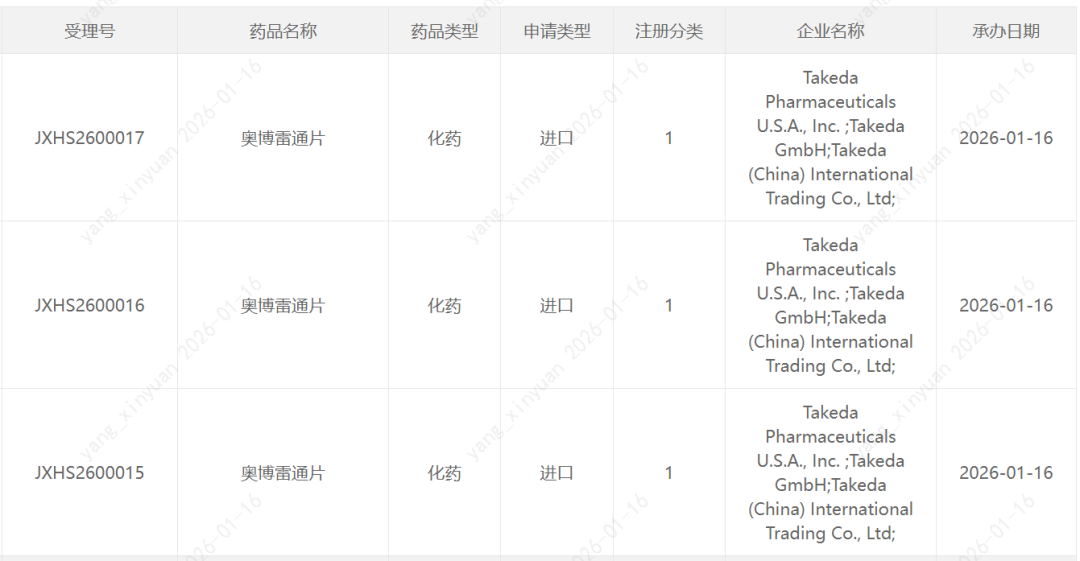
武田制药(TAK.US)1类新药“奥博雷通片”在中国申报上市
智通财经网· 2026-01-16 07:40
Core Viewpoint - Takeda's investigational oral selective orexin 2 receptor (OX2R) agonist, oveporexton (development code: TAK-861), is positioned for regulatory approval in the second half of 2026, targeting narcolepsy type 1 (NT1) [2] Group 1: Product Development - Ovaporexton has been included in the breakthrough therapy designation by the CDE for the treatment of NT1 [2] - Two pivotal Phase 3 studies for oveporexton have met all primary and secondary endpoints [2] - Takeda has a diversified pipeline of orexin products, with orexin being a key regulator of sleep-wake patterns and involved in attention, mood, metabolism, and respiration [2] Group 2: Regulatory and Market Position - The product is expected to receive regulatory approval from authorities in the United States (FDA) and China (CDE) as a breakthrough therapy for NT1 [2]

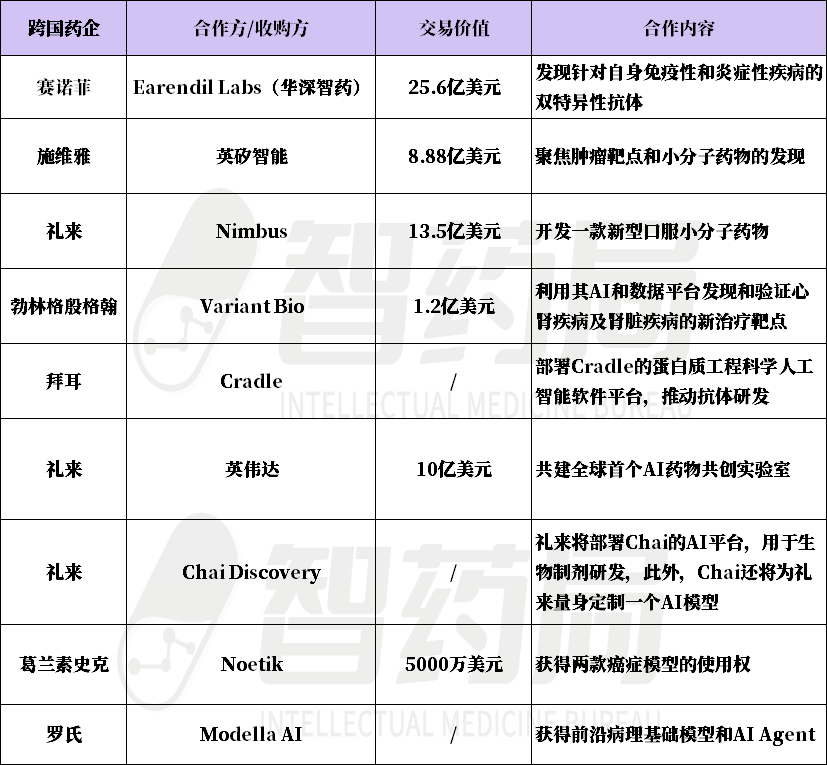
15天9起合作,狂飙60亿美元!2026AI制药开门红,礼来、英伟达、赛诺菲重金押注!
Xin Lang Cai Jing· 2026-01-15 14:09
Core Insights - The pharmaceutical industry is experiencing a surge in AI drug development collaborations, with over 9 partnerships announced in just 15 days, totaling more than $6 billion [1][18] - Major pharmaceutical companies are systematically integrating AI, particularly large biopharmaceutical models, into their core R&D processes, moving beyond small-scale pilot projects to enhance efficiency and overcome R&D bottlenecks [3][20] Group 1: Collaborations and Investments - Sanofi partnered with Earendil Labs for $2.56 billion to discover bispecific antibodies for autoimmune and inflammatory diseases [2][19] - Eli Lilly invested $1 billion with NVIDIA to co-build the world's first AI drug co-creation laboratory [2][23] - Takeda renewed its collaboration with Nabla Bio for over $1 billion to strengthen its AI drug development efforts [5][21] Group 2: Shift in AI Utilization - AI is transitioning from pilot projects to foundational infrastructure within pharmaceutical companies, with a shift in investment focus from R&D expenses to strategic investments [5][22] - The collaborations are diverse, including traditional project-based agreements, model subscriptions, platform co-construction, and acquisitions [2][19] Group 3: Advancements in AI Models - The industry is increasingly investing in large biopharmaceutical models, moving from a focus on small chemical molecules to more complex biologics [6][24] - The release of AlphaFold3 has significantly improved the accuracy of predicting biological interactions, marking a turning point in the industry [28] - Companies like GSK are willing to pay substantial fees for access to advanced AI models, indicating a shift in how AI platforms are valued in drug development [13][30] Group 4: Future Trends - The demand for AI and related platforms in the pharmaceutical industry is expected to grow, with companies needing to integrate top AI capabilities with internal biological insights and clinical data [15][16] - The emergence of AI agents and automated laboratory technologies based on large models has the potential to disrupt traditional R&D logic [30]


Takeda Pharmaceutical Company Limited (TAK) Presents at 44th Annual J.P. Morgan Healthcare Conference Transcript
Seeking Alpha· 2026-01-13 05:45
Core Insights - Takeda is focusing on innovation and aims to discover and deliver life-transforming treatments, which requires significant scale and a robust R&D engine [3] - The company has embraced digital technology, moving all data to the cloud in 2018, which is currently transforming its operations across R&D, manufacturing, and commercial activities [4] Company Strategy - Takeda's mission emphasizes the importance of innovation and the need for a strong R&D foundation to develop expensive treatments [3] - The integration of digital technology and AI is enhancing the company's operational efficiency, allowing it to work faster and more intelligently [4] Future Outlook - The company anticipates a significant divergence in performance over the next few years due to its early adoption of digital and technological advancements [4]

Takeda Pharmaceutical Company Limited (TAK) Presents at 44th Annual J.P. Morgan Healthcare Conference - Slideshow (NYSE:TAK) 2026-01-12
Seeking Alpha· 2026-01-13 03:01
Group 1 - The article does not provide any relevant content regarding the company or industry [1]

Takeda Pharmaceutical Company (NYSE:TAK) FY Conference Transcript
2026-01-13 02:17
Takeda Pharmaceutical Company FY Conference Summary Company Overview - **Company**: Takeda Pharmaceutical Company (NYSE: TAK) - **Revenue**: $30 billion, with over 50% from the U.S. market, up from less than 20% a decade ago [2][3] - **R&D Investment**: Approximately $5 billion annually [3] - **Global Presence**: Operations in 80 countries, with headquarters in Tokyo and a significant hub in Boston [2][3] Core Focus Areas - **Innovation and Digital Transformation**: Takeda has shifted focus towards innovation and digital technology since 2014, moving all data to the cloud in 2018 [1][2] - **Therapy Areas**: Focus on gastroenterology, neuroscience, and oncology [3] Financial Performance and Strategy - **Generic Exposure**: Experienced a 20% revenue loss from 2021 over the past five years due to generic competition, but expects lower exposure moving forward [3] - **Product Portfolio**: Transitioned away from branded generics and OTC businesses to concentrate on innovative medicines [2][3] Upcoming Product Launches - **Pipeline**: Eight late-stage assets expected to launch before the end of the decade, with significant potential for revenue generation [5][19] - **Key Products**: - **Oveporexton**: First orexin agonist, expected launch in H2 2026, with peak revenue potential of $2-$3 billion [12][19] - **Rusfertide**: For polycythemia vera, also launching in H2 2026, with potential to transform standard care [13][19] - **Zasocitinib**: TYK2 inhibitor for psoriasis and psoriatic arthritis, with peak revenue potential of $3-$6 billion [18][19] Market Dynamics - **Oveporexton**: Addresses unmet needs in narcolepsy type 1, with a patient population of approximately 100,000 in the U.S. [11][12] - **Rusfertide**: Aims to replace phlebotomy in treatment, with 78% of patients currently uncontrolled [14][19] - **Zasocitinib**: Competes in a mature market, with a focus on creating a new oral treatment option [17][28] Oncology Pipeline - **TAC-928 and TAC-921**: New immuno-oncology assets with promising data, focusing on non-small cell lung cancer and gastric cancer respectively [6][7] - **Market Positioning**: Takeda aims to differentiate its oncology products through unique mechanisms and partnerships, particularly with Innovent in China [44] Leadership Transition - **CEO Transition**: Christophe will retire in June 2026, with Julie Kim set to succeed him, marking a significant leadership change [4][21] Challenges and Future Outlook - **Patent Cliffs**: Anticipated decline in revenue from Entyvio starting in 2030, necessitating successful launches of new products to offset losses [19][20] - **Investment Strategy**: Balancing investment in new product launches with margin commitments, while managing the transition from recent losses [45][46] Conclusion - Takeda is positioned for significant growth through its innovative pipeline and strategic focus on high-potential therapy areas, while navigating challenges related to market competition and patent expirations. The upcoming product launches are critical for sustaining revenue growth and maintaining market leadership.
跨国药企疯抢中国创新药
21世纪经济报道· 2026-01-02 06:29
Core Viewpoint - The article highlights the unprecedented surge in business development (BD) activities in China's biotech sector, with the total amount of domestic innovative drug licensing exceeding $100 billion by November 18, 2025, marking a doubling compared to 2024. This trend reflects the increasing global competitiveness and value of Chinese pharmaceutical assets, while also prompting a deeper examination of transaction quality and product value realization post-agreement [1][2]. Summary by Sections BD Market Dynamics - The BD market in China is experiencing a significant boom, with a projected compound annual growth rate (CAGR) for external BD activities expected to remain in double digits over the next five years, despite a forecasted decline in growth rate [2]. - Key characteristics of future transactions include an increase in late-stage pipeline contributions and a shift from pure technology transfer to models involving "licensing + co-development + commercialization" [2]. Major Transactions - Notable transactions in 2025 include: - Hengrui Medicine's collaboration with GSK, involving a total potential amount of approximately $120 billion, with an upfront payment of $500 million [3]. - Innovent Biologics' agreement with Takeda, with a potential total of $114 billion and an upfront payment of $1.2 billion [3]. - A record-setting deal between 3SBio and Pfizer, with an upfront payment of $12.5 billion and potential milestone payments reaching $48 billion [5][6]. Global Interest in Chinese Biotech - Chinese innovative drugs are gaining significant traction in global markets, with multinational corporations increasingly sourcing early-stage innovation pipelines from China due to cost-effectiveness and potential efficacy [7][8]. - The trend indicates a shift where Chinese biotech firms are evolving from technology providers to value co-creators in the global pharmaceutical landscape [7]. Transaction Models - The dominant transaction model remains "License-out," which accounted for 91% of upfront payments and 99% of total amounts in related transactions in the first half of the year [10]. - NewCo models are gaining popularity, allowing companies to inject parts of their product pipelines into newly formed entities with foreign capital, reflecting a flexible asset operation strategy [10][11]. Future Outlook - The BD market is expected to continue thriving, driven by the need for multinational companies to replenish their pipelines as many blockbuster drugs face patent expirations, creating a significant market opportunity [15]. - Emerging technologies, particularly in ADCs and bispecific antibodies, are anticipated to dominate future BD transactions, with a notable interest in metabolic and autoimmune products [16][17]. Challenges and Considerations - Despite the growth, challenges remain in ensuring compliance with international standards and protecting intellectual property during global collaborations [13]. - The market is expected to stabilize, with a rational return to expectations regarding BD transactions, as the industry matures and the focus shifts from explosive growth to sustainable value creation [17].



当科技养老成为新趋势,中国如何书写本土答案?
3 6 Ke· 2025-12-31 12:09
Core Insights - The article discusses the emerging trend of technology in elder care, highlighting the integration of AI and robotics to address key challenges in the industry [1][2][3] Group 1: Technology in Elder Care - Inspiren, a startup in the U.S., has developed an integrated solution that addresses core pain points in elder communities using AI predictive engines [1][2] - The company has rapidly expanded, entering 150 regular elder care communities and 33 dementia care communities within 18 months, raising over $155 million in funding [2] - Japan is also leveraging technology in elder care, with significant government investment in robotic care solutions, including over $300 million by 2018 [2] Group 2: Aging Population in China - By the end of 2024, China's population aged 60 and above is projected to reach 310 million, accounting for 22% of the total population [4] - The proportion of empty-nest elderly individuals has reached 54%, with over 12 million living alone [4] Group 3: Challenges in Healthcare System - China's healthcare system faces challenges such as fragmentation, low chronic disease control rates, and high risks associated with polypharmacy [5] - The need for a comprehensive primary care system is emphasized as a key solution to address aging-related healthcare demands [5] Group 4: Integration of Medical and Elder Care - The concept of "medical-elderly integration" is proposed as a new approach, with high-quality elder care communities increasingly incorporating professional rehabilitation and general hospitals [6] - This integration aims to provide timely medical support within elder care facilities, enhancing overall care quality [6] Group 5: Innovative Payment Models - The "Happiness Appointment" product by Taikang links insurance with elder care community services, allowing seniors to secure long-term care while managing financial pressures [19][24] - This model has seen significant market acceptance, with over 300,000 units sold, addressing the financial concerns of families seeking quality elder care [19] Group 6: Industry Dynamics and Sustainability - The elder care industry is characterized by a disparity between high demand and insufficient quality services, with many institutions struggling financially [21][22] - The article highlights the importance of sustainable business models that balance profitability with social responsibility, particularly in the context of aging populations [25]
创新药周报:礼来口服SERD imlunestrant III期数据更新-20251221
Huachuang Securities· 2025-12-21 13:23
Investment Rating - The report does not explicitly state an investment rating for the industry or specific companies involved in the development of oral SERDs for breast cancer treatment. Core Insights - The report highlights the recent FDA approval of Imlunestrant, an oral SERD developed by Eli Lilly, for the treatment of ER+/HER2–/ESR1 mutant advanced or metastatic breast cancer, marking it as the second oral SERD approved after Elacestrant [18][19] - The EMBER-3 trial results indicate that Imlunestrant significantly improves progression-free survival (PFS) compared to standard endocrine therapy, with a median PFS of 5.5 months versus 3.8 months for standard therapy [23] - Giredestrant, developed by Roche, has shown positive results in the III phase evERA trial, demonstrating significant benefits in PFS compared to standard treatment in patients previously treated with CDK4/6 inhibitors [27] - Camizestrant, another oral SERD from AstraZeneca, has shown promising efficacy in the SERENA-6 trial, with a median PFS of 16.6 months when combined with CDK4/6 inhibitors [33] Summary by Sections Section 1: Focus on Innovative Drugs - The report reviews the advancements in innovative drugs, particularly in the field of breast cancer treatment, emphasizing the importance of oral SERDs [2][5] Section 2: Current Status of ER+ Breast Cancer Therapies - The report discusses the current landscape of therapies for ER+ breast cancer, including the mechanisms of action for various anti-estrogen therapies and the challenges of resistance faced by patients [10][8] Section 3: Clinical Development of New Oral SERDs - The report details the clinical development progress of several new oral SERDs, including Imlunestrant, Giredestrant, and Camizestrant, highlighting their respective phases and trial outcomes [12][11][33] Section 4: Market Dynamics and Company Performance - The report provides insights into the market dynamics of the biotech sector, including stock performance of key companies involved in the development of innovative cancer therapies [46][49]


