
Takeda(TAK)

Search documents
细胞与基因治疗“变天了”
Ge Long Hui· 2025-11-06 12:03
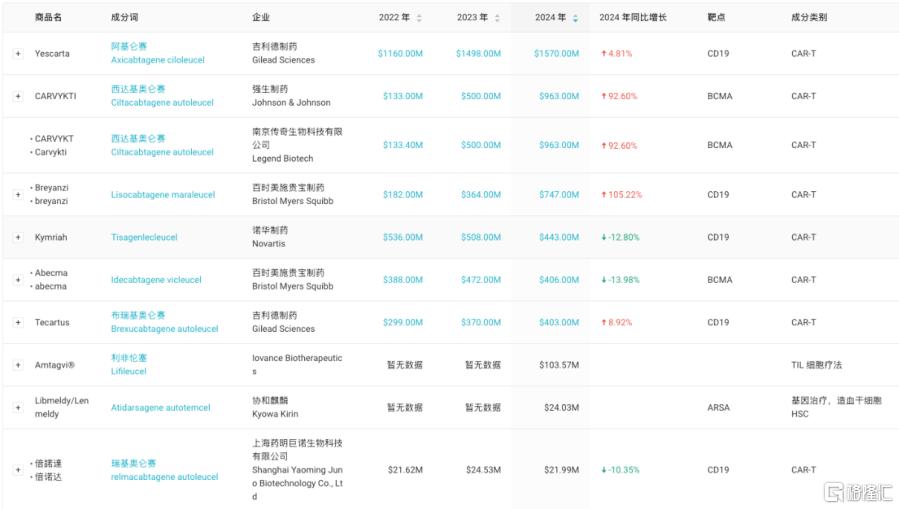
Core Insights - The cell and gene therapy (CGT) sector is experiencing a dichotomy, with major pharmaceutical companies entering the CAR-T therapy space while others are exiting, indicating a complex market landscape [1][2][10]. Group 1: Market Dynamics - The CGT market has seen rapid growth, with 46 CGT products approved by the FDA and approximately 3,600 active INDs [2]. - Despite the approval of over 10 CAR-T therapies globally, only a few have achieved blockbuster status, with Gilead's Yescarta showing a sales growth of only 4.81% in 2024 [3][4]. - The commercial performance of most CAR-T therapies has been disappointing, with high costs and market access issues limiting their success [6][9]. Group 2: Economic Challenges - The CGT sector faces significant economic challenges, including high R&D costs (estimated at $1.7 to $2.3 billion for CGT drugs compared to $1.25 to $1.48 billion for traditional drugs) and high production costs due to the personalized nature of treatments [11][12]. - The pricing of CAR-T therapies is exorbitant, with Carvykti priced over $500,000 in the U.S. and similar high costs in China, which restricts market accessibility [8][13]. Group 3: Industry Exits - Major multinational corporations (MNCs) like Takeda and Novo Nordisk have announced exits from the CGT space, indicating a shift in focus from technology-driven enthusiasm to financial viability [10][11]. - The industry's narrative has shifted from a focus on unique treatment mechanisms to a more pragmatic assessment of economic returns, highlighting the unsustainable nature of current CGT investments [11]. Group 4: Path to Recovery - The CGT industry is exploring various strategies to overcome its challenges, including the development of off-the-shelf CAR-T therapies to reduce costs and improve accessibility [14]. - Expanding the indications for CGT drugs to target larger patient populations is seen as a potential avenue for growth, similar to how Novartis expanded the application of siRNA therapies [17]. - The shift towards in vivo CAR-T therapies aims to simplify processes and reduce costs significantly, with predictions suggesting treatment costs could drop by an order of magnitude [18]. Group 5: Future Directions - The future of the CGT sector hinges on technological advancements that enhance accessibility, with a focus on universal CAR-T, in vivo therapies, and next-generation delivery technologies [19]. - The strategic movements of MNCs signal a paradigm shift in the industry, emphasizing the need to convert cutting-edge technology into sustainable business models for long-term success [19].


跨国药企进博会“秀肌肉”,在华建厂买创新药
3 6 Ke· 2025-11-05 12:34
Core Insights - The 8th China International Import Expo (CIIE) opened in Shanghai on November 5, 2023, with the theme "Open Up to Create New Opportunities, Collaborate to Share a New Future," attracting participation from 155 countries and regions, with over 4,108 foreign enterprises exhibiting, marking a new high in scale [1][3] Industry Developments - Multinational pharmaceutical companies are increasingly establishing R&D centers in China, with Astellas announcing its first innovation R&D center in Beijing on October 27, 2023, complementing its existing centers in Tokyo, San Francisco, Boston, Chicago, and Cambridge [3][4] - Major pharmaceutical companies like AstraZeneca and Boehringer Ingelheim have announced new investment plans in China, with AstraZeneca planning to invest $2.5 billion (approximately 18 billion RMB) and Boehringer Ingelheim over 5 billion RMB [4][5] - The trend of multinational companies acquiring innovative drug assets in China is accelerating, with companies like Takeda and Pfizer making significant investments to secure innovative drug assets, setting new records for business development (BD) transaction volumes in the Chinese innovative drug market [4][5] Market Positioning - China is evolving from a passive consumer market to a global innovation hub for multinational pharmaceutical companies, participating deeply in the entire process from R&D to production and sales [5][6] - By 2024, over 20% of the top 100 life sciences research institutions in the Nature Index will be in China, and the number of clinical trials initiated in China is expected to approach 2,000, reflecting a significant increase in China's innovation capabilities [6][7] Collaborative Trends - The number of multinational pharmaceutical companies establishing R&D centers in China has surged, with at least eight companies announcing new centers in October 2023 alone, including Eli Lilly, Pfizer, Bayer, and AstraZeneca [8][9] - Eli Lilly has invested over 20 billion RMB in China, focusing on a full industry chain layout from R&D to commercialization, and plans to continue expanding its local collaborations [10][11] Investment and Business Development - The total amount of innovative drug licensing agreements from China has surpassed $100 billion, with significant growth in transaction volumes and values, indicating a robust BD trend in the Chinese pharmaceutical market [15][16] - Notable transactions include Pfizer's $12.5 billion upfront payment for a breakthrough drug and Takeda's recent collaboration with Innovent Biologics involving a potential total deal value of up to $11.4 billion [16][17] Future Outlook - The trend of multinational companies seeking innovative resources in China is expected to continue, driven by the need to fill revenue gaps due to patent expirations in the U.S. and Europe [18][19] - The influence of Chinese biotech on the global market is growing, with projections indicating that by 2040, 35% of FDA-approved innovative drugs may originate from China [19]




X @Bloomberg
Bloomberg· 2025-11-03 12:26
Vaccine Efficacy - Takeda Pharmaceutical's dengue vaccine demonstrates strong protection against dengue infection and hospitalization for seven years [1] - The seven-year efficacy represents the longest reported among available dengue vaccines [1]
Takeda Lowers 2025 Outlook After Weak Q2 And Pipeline Impairment Charges
Benzinga· 2025-10-30 13:13
Core Insights - Takeda Pharmaceutical Company Limited reported a second-quarter 2025 adjusted net profit of 201.6 billion Japanese yen (approximately $1.31 billion), with earnings per American Depositary Share (EPADS) of 43 cents, missing analyst expectations of 44 cents [1][2] - Total sales for the quarter were $7.52 billion (1.18 trillion yen), falling short of consensus estimates of $8.08 billion [1][3] Financial Performance - First half 2025 sales decreased by 6.9% (-3.9% at constant currency) to 2.22 trillion yen, while core operating profit dropped 11.2% to 639.2 billion yen [3] - Neuroscience revenue significantly impacted the decline, with second quarter Neuroscience sales falling 33% to 97.5 billion yen [3] - Vaccine sales decreased by 21.1% to 20.2 billion yen, while cancer drug sales increased by 4.3% to 149.1 billion yen [3] Segment Performance - Gastrointestinal sales rose by 2% to 353.5 billion yen, while revenue from rare diseases fell by 2.7% to 184.1 billion yen [4] Outlook - Takeda updated its full-year 2025 outlook, revising core revenue guidance from 4.53 trillion yen to 4.50 trillion yen [5] - The company expects core operating profit of 1.13 trillion yen, down from prior guidance of 1.14 trillion yen, and core earnings of 479 yen, reduced from previous guidance of 485 yen [5] Stock Performance - Following the earnings report, TAK stock was trading 2.25% lower at $13.46 in premarket trading [6]
Takeda(TAK) - 2026 Q2 - Earnings Call Transcript
2025-10-30 11:00
Financial Data and Key Metrics Changes - Revenue in H1 was just over JPY 2,200 billion, a decrease of 6.9% or 3.9% at constant exchange rates [11] - Core operating profit was JPY 639.2 billion, a year-on-year decrease of 11.2% at actual FX or 8.8% at constant rates [11] - Reported operating profit declined by 27.7% due to larger impairment losses this fiscal year [11] - Core EPS was JPY 279 and reported EPS was JPY 72, reflecting a 40% decline in reported net profit [11] Business Line Data and Key Metrics Changes - Growth on launch products grew 5.3% at constant exchange rates, representing over 50% of revenue [12] - ENTYVIO grew at 5.1% at constant rates, with a revision of full year forecast for NTDO to 6% at constant exchange rates [12][13] - TAKHZYRO grew steadily with 5.9% growth at constant rates [13] - Immunoglobulin and albumin are expected to grow at high single digits [15] Market Data and Key Metrics Changes - The U.S. market for ENTYVIO is seeing increased active pen patients, but revenue growth has been slightly below expectations [12][13] - The impact of Medicare Part D redesign is affecting several products in the U.S. [14] - The strength of the euro against the Brazilian real is impacting QDenga sales [16] Company Strategy and Development Direction - The company is entering a new business cycle with the Vyvanse generic impact mainly behind it, with potential launches for three new products [7] - The partnership with Innovent Biologics is expected to enhance the oncology pipeline significantly [8][34] - The company is focused on leveraging technology and AI to transform operations [7] Management's Comments on Operating Environment and Future Outlook - Management expects better growth rates for the full fiscal year despite H1 being impacted by loss of exclusivity [22] - The company is committed to maintaining cost discipline while investing for future growth [22] - Management acknowledges the challenges posed by foreign exchange fluctuations, particularly the euro's strength [20][68] Other Important Information - The company has revised its full year guidance for corporate profits and core EPS to reflect unfavorable changes in product mix and transaction FX dynamics [20] - The dividend outlook remains at JPY 200 per share for the full year [21] Q&A Session All Questions and Answers Question: Regarding the Innovent deal and R&D spending - Management emphasized commitment to investment in oncology while managing R&D expenses effectively, with a focus on achieving mid to long-term margins driven by top-line growth [64][66] Question: About the growth rate of ENTYVIO and competitive pressures - Management noted that ENTYVIO remains a market leader but faces intensified competition, particularly in Crohn's disease, impacting growth expectations [93][94] Question: On the gross margin trend and revised guidance - Management explained that the gross margin decline is primarily due to transaction effects and product mix changes, with expectations for lower gross margins in the second half [82][84] Question: About the Innovent partnership and data replicability - Management expressed confidence in the data from the Innovent partnership, noting significant due diligence was conducted to ensure data applicability in global trials [96]
Takeda(TAK) - 2026 Q2 - Earnings Call Presentation
2025-10-30 10:00
Financial Performance - FY2025 H1 revenue decreased by 69% to JPY 22195 billion[21], a 39% decrease at CER[21] - FY2025 H1 core operating profit decreased by 112% to JPY 6392 billion[21], an 88% decrease at CER[21] - FY2025 H1 adjusted free cash flow increased by 1123% to JPY 5254 billion[21] - Growth & Launch Products increased by 53% at CER in H1[18, 24] - The company maintains broadly flat revenue guidance at CER[18, 36] Pipeline Update - Rusfertide and oveporexton are on track to file within FY2025[18] - Zasocitinib Ph3 psoriasis data is expected in H2[18] - Mezagitamab Ph1b IgAN data show durable eGFR over 18 months[18] - A partnership with Innovent Biologics to bolster the oncology pipeline[18] Oncology Partnership - Takeda entered into a license and collaboration agreement with Innovent Biologics for rights to IBI343 and IBI363, and an exclusive option to license rights to IBI3001, in each case worldwide outside of mainland China, Hong Kong, Macau and Taiwan[12] - IBI363 has demonstrated encouraging data across multiple solid tumor types, with a confirmed objective response rate (cORR) of 367% in sqNSCLC (IO-Refractory) and a median overall survival (mOS) of 153 months at 1/15 mg/kg[80] - IBI343 has shown robust monotherapy activity and a favorable safety profile, with a cORR of ~30% in 2L Pancreatic Cancer (CLDN182 1+/2+/3+ ≥60% expression) and an mOS of 121 months[94]
Takeda Reports First Half FY2025 Results, with Business Fundamentals Tracking as Planned. Updates Full Year Outlook to Reflect FX Impact and Pipeline Impairment.
Businesswire· 2025-10-30 07:04
Core Insights - Takeda announced earnings results for the first half of fiscal year 2025, which ended on September 30, 2025, and provided an updated full-year outlook [1] Financial Performance - The results for the first half are in line with expectations for core business progress during this transitional year focused on new product launches [1] Management Commentary - CEO Christophe Weber highlighted that the updated full-year outlook reflects impairment charges [1]
“楚商社会责任标杆企业”百强揭晓,多家上榜企业从武汉走向世界
Chang Jiang Ri Bao· 2025-10-29 12:35
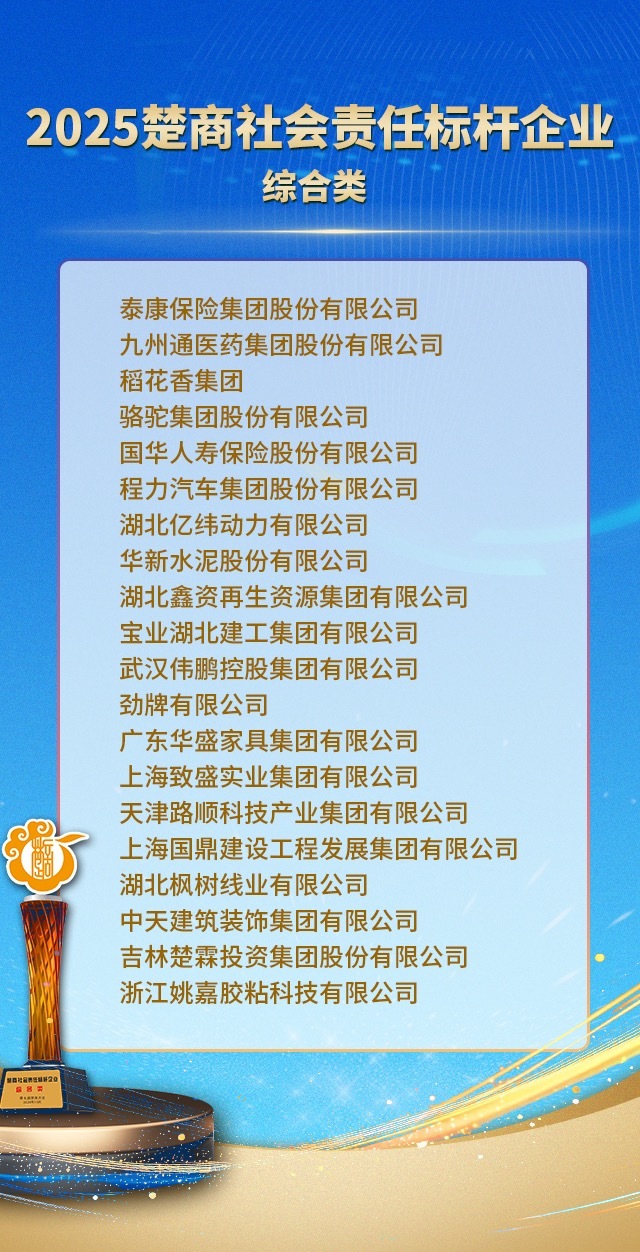
Core Insights - The seventh Chushang Conference was held in Wuhan, where the "Chushang Social Responsibility Benchmark Enterprises" list was released, featuring 100 companies across five categories [1][2] - Notable companies on the list include Taikang Insurance Group, Xiaomi Technology, and Jiuzhoutong Pharmaceutical Group, many of which have strong ties to Wuhan [1][2] Company Developments - Taikang Insurance Group is constructing a financial center in Wuhan with a total investment of 6 billion yuan, expected to be operational by 2027, further solidifying its strategic foundation in Central China [1] - Xiaomi's new smart appliance factory in Wuhan has commenced operations, with a peak production capacity of 7 million air conditioners and an annual output value of nearly 14 billion yuan [2] - Jiuzhoutong Pharmaceutical Group, a leading private pharmaceutical company in China, is deeply involved in the health industry in Hubei, operating over 400 logistics centers and employing more than 5,000 delivery personnel [2] Social Responsibility Recognition - The "Chushang Social Responsibility Benchmark Enterprises" list includes companies recognized for their contributions in various categories such as comprehensive, technological innovation, green development, rural revitalization, and stable employment [3][5][6][7][9][11]


114亿美元交易背后的野心,没换来股价上涨
36氪· 2025-10-28 00:10
Core Viewpoint - The article discusses a significant licensing deal between Innovent Biologics and Takeda Pharmaceutical, valued at $11.4 billion, which includes an upfront payment of $1.2 billion and potential milestone payments of $10.2 billion. This deal is seen as a pivotal moment for the Chinese innovative drug sector, particularly in the context of the global oncology market [5][9]. Group 1: Transaction Details - The deal includes three drug candidates: IBI363, IBI343, and IBI3001, with the majority of the payment focused on IBI363 and IBI343. IBI3001 is only sold under an option agreement [7][9]. - IBI363 is a PD-1/IL-2α-bias dual antibody currently in the registration clinical development phase, targeting non-small cell lung cancer (NSCLC) [8]. - IBI343 is an ADC targeting CLDN18.2, with ongoing clinical studies for gastric and pancreatic cancers [8]. - IBI3001 is an ADC targeting EGFR/B7H3, currently in Phase I clinical trials [8]. Group 2: Strategic Implications - The unique "Co-Co" collaboration model allows Innovent to remain deeply involved in the global development of IBI363, sharing both costs and future profits with Takeda, which is a departure from traditional licensing agreements [11][12]. - This partnership is expected to enhance Innovent's capabilities in global clinical development and commercialization, aligning with its goal to become a leading global biopharmaceutical company by 2030 [13][16]. - The collaboration with Takeda, a well-established player in the oncology market, is seen as a strategic move to access the U.S. market and leverage Takeda's expertise [15][16]. Group 3: Product Potential - IBI363 is positioned as a potential cornerstone drug for next-generation cancer immunotherapy, with the ability to address PD-1 resistance and target "cold tumors" [18]. - The market potential for PD-1 resistant therapies is projected to reach billions, with IBI363 showing promising clinical data, including an objective response rate (ORR) of 36.7% in a specific dosage group [19][20]. - The drug's broad-spectrum applicability across various cancers, including colorectal and gastric cancers, further enhances its market potential [21].
医药生物行业周报(10月第4周):创新药达成超百亿大额BD-20251027
Century Securities· 2025-10-27 00:54
Investment Rating - The report does not explicitly state an investment rating for the pharmaceutical and biotechnology industry, but it highlights significant developments that may influence future ratings [1]. Core Insights - The pharmaceutical and biotechnology sector saw a weekly increase of 0.58%, underperforming compared to the Wind All A index (3.47%) and the CSI 300 index (3.24%) [2][7]. - A major strategic collaboration was announced between Innovent Biologics and Takeda Pharmaceutical, with a total deal value potentially reaching $11.4 billion, including an upfront payment of $1.2 billion and milestone payments of up to $10.2 billion [2][10]. - The report emphasizes the importance of the upcoming commercial insurance innovative drug directory, which is expected to be released soon, and suggests monitoring the companies that will be included [2][11]. Weekly Market Review - The pharmaceutical and biotechnology sector's performance was mixed, with medical research outsourcing (5.47%), offline pharmacies (2.99%), and pharmaceutical distribution (1.97%) leading the gains, while other biological products (-1.91%), traditional Chinese medicine (-0.85%), and chemical preparations (-0.41%) lagged behind [2][7]. - Notable stock performances included Teva Pharmaceutical (22.3%), Bid Pharma (18.9%), and *ST Jingfeng (16.6%) as top gainers, while Tuo Jing Life (-18.6%), Xin Nuo Wei (-17.5%), and Shuo Tai Shen (-14.9%) were the biggest losers [2][10]. Industry News and Key Company Announcements - Innovent Biologics announced a significant global strategic partnership with Takeda to accelerate the development of new therapies, including three key drug candidates [2][10]. - Kangfang Biologics' AK112 injection has been proposed for inclusion in breakthrough therapy designation for treating triple-negative breast cancer [2][11]. - Summit Therapeutics announced a $500 million private placement to fund the clinical development of its drug candidate [2][11]. - Ipsen and ImCheck Therapeutics reached a final agreement for a €1 billion acquisition focused on a first-in-class monoclonal antibody for acute myeloid leukemia [2][13]. - Moderna decided to terminate the development of its CMV mRNA vaccine after failing to meet primary endpoints in a Phase III trial [2][13].