Takeda(TAK)

Search documents
医药行业周报:重磅交易落地,创新出海再上台阶-20251026
Huaxin Securities· 2025-10-26 14:35
Investment Rating - The report maintains a "Recommended" investment rating for the pharmaceutical industry [1] Core Insights - The report highlights the significant collaboration between Innovent Biologics and Takeda Pharmaceutical, which is seen as a positive trend for Chinese innovation going global. The deal includes an upfront payment of $1.2 billion and potential milestone payments, with a total deal value reaching up to $11.4 billion [2] - The report notes a surge in License-out transactions, with 103 deals and a total value of $92.03 billion in the first three quarters of 2025, marking a 77% increase compared to the total for 2024 [2] - The report emphasizes the recovery of the CDMO sector, with companies like Jiuzhou Pharmaceutical and Boteng achieving significant revenue growth in Q3 2025, indicating a positive trend in the industry [3] - The medical device market is showing a steady recovery, with a 29.8% year-on-year growth in the overall bidding market for medical devices in Q3 2025 [4] - The report discusses the increasing trend of oral immunomodulatory drugs, particularly in the treatment of psoriasis, with Johnson & Johnson's acquisition of Protagonist Therapeutics being a notable example [5] - The report also highlights the trends in respiratory infectious diseases, with an expected increase in cases in the coming months, which may impact medical testing and treatment medications [6] Summary by Sections 1. Pharmaceutical Market Tracking - The pharmaceutical industry has underperformed compared to the CSI 300 index, with a recent weekly decline of 0.95% and a monthly decline of 3.28% [21][25] 2. Pharmaceutical Sector Performance and Valuation - The pharmaceutical sector's recent performance has been below the CSI 300 index, with a 1-month decline of 3.28% and a 3-month increase of only 1.75% [39][42] 3. Recent Research Achievements - The report lists various recent research outputs from the team, including deep dive reports on the growth of the blood products industry and the potential of GLP-1 drugs [47] 4. Recent Industry Policies and News - The report outlines significant recent policies, including the promotion of instant settlement reforms by the National Medical Insurance Administration and the regulation of clinical research for biomedical technologies [49] - Recent news highlights include major collaborations and drug approvals, such as the partnership between Innovent Biologics and Takeda, and the approval of new drugs by various companies [50][51]

本周申万医药生物指数上涨0.6%,关注2025 ESMO会议:医药行业周报(2025/10/20-2025/10/24)-20251026
Shenwan Hongyuan Securities· 2025-10-26 07:12
Investment Rating - The report maintains a positive outlook on the pharmaceutical sector, indicating an "Overweight" rating for the industry, suggesting it is expected to outperform the overall market in the next six months [30]. Core Insights - The pharmaceutical sector saw a weekly increase of 0.6%, while the Shanghai Composite Index rose by 2.9% during the same period. The pharmaceutical index ranked 25th among 31 sub-industries [3][5]. - Notable collaborations include a strategic partnership between Innovent Biologics and Takeda Pharmaceutical, valued at up to $11.4 billion, which includes an upfront payment of $1.2 billion [4][13]. - Key clinical trial results presented at the 2025 ESMO conference highlighted significant advancements in cancer treatments, with several companies reporting promising outcomes in their respective studies [4][14][17]. Market Performance - The pharmaceutical sector's overall valuation stands at 30.4 times earnings, ranking 9th among 31 primary industries [7][5]. - Various sub-sectors showed mixed performance, with medical devices and medical consumables performing relatively well, while traditional Chinese medicine and chemical preparations faced declines [7][5]. Key Events - The report notes that 99 A-share pharmaceutical companies released their Q3 2025 earnings, with a total revenue of 94.15 billion yuan, reflecting a year-on-year growth of 1.3% [19][21]. - Significant clinical trial results from companies like Kintor Pharmaceutical and Zai Lab were highlighted, showcasing their innovative approaches to cancer treatment [14][17][18]. Company Recommendations - The report recommends focusing on innovative drug companies and those with improving performance in medical devices and CXO sectors, listing companies such as Hengrui Medicine, Changchun High-tech, and Mindray Medical as key investment targets [4][19].


引爆市场!信达、武田达成百亿美元合作,ADC与肿瘤免疫管线同步上线
Ge Long Hui· 2025-10-25 12:00
Core Insights - The strategic collaboration between Innovent Biologics and Takeda involves three innovative drugs, with a total transaction value exceeding $10 billion, marking a significant milestone for domestic companies in licensing-out agreements [1][3][12] - This partnership is one of the largest licensing deals in China's biotechnology sector to date, highlighting the growing value of Chinese innovative drugs in the global pharmaceutical market [1][12] Summary by Sections Transaction Details - The agreement includes an upfront payment of $1.2 billion (including a $100 million premium for nearly 30% equity stake) and potential milestone payments, bringing the total deal value to a maximum of $11.4 billion, along with sales revenue sharing [3][12] - This transaction sets a new record for licensing deals by Chinese biotech companies and aligns with Takeda's strategic focus on competing in the oncology market, similar to Merck's approach with its K drug [3][12] Drug Pipeline - The collaboration focuses on three key investigational drugs: IBI363 (PD-1/IL-2α-bias), IBI343 (CLDN18.2 ADC), and IBI3001 (EGFR/B7H3 ADC), all of which are at the forefront of tumor immunotherapy and antibody-drug conjugate (ADC) development [3][4] - IBI363 is a globally innovative PD-1/IL-2α-bias bispecific antibody fusion protein, currently undergoing a global Phase III clinical trial for advanced non-small cell lung cancer patients who have failed previous treatments [4][6] - IBI343 has received breakthrough therapy designations for three indications: third-line gastric cancer, second-line pancreatic cancer, and third-line pancreatic cancer, while IBI3001 is the first EGFR/B7H3 ADC currently in Phase I clinical trials [7][9] Market Context - The collaboration reflects a broader trend where global pharmaceutical giants are reassessing the value of Chinese innovative drugs, as evidenced by Merck's success with its K drug, which transformed its oncology business [12] - The partnership between Takeda and Innovent is positioned to compete in the multi-billion dollar global immunotherapy and ADC market, potentially reshaping the global pharmaceutical landscape over the next decade [12]

日本制药巨头,1000亿锁定中国创新药
2 1 Shi Ji Jing Ji Bao Dao· 2025-10-23 13:30
Core Insights - The collaboration between Innovent Biologics and Takeda Pharmaceutical aims to develop cancer treatment drugs, with a total deal value of $11.4 billion, marking the highest record for a biopharmaceutical licensing deal from China [2][4] - The partnership focuses on two late-stage therapies and one early-stage project, leveraging Innovent's innovative immune-oncology and antibody-drug conjugate (ADC) therapies [2][5] Group 1: Deal Structure and Strategic Importance - The deal involves a co-development model where both companies will share development costs and commercial rights, with a 40/60 cost-sharing ratio for IBI363 [9] - Takeda's leadership sees this collaboration as a way to enhance its oncology pipeline, balancing developments in hematologic and solid tumors [4][22] - Takeda has made significant investments in China over the past three years, with disclosed transaction amounts exceeding 100 billion RMB [4][23] Group 2: Product Details and Clinical Status - IBI363 is a dual-antibody product that targets PD-1/PD-L1 pathways and activates IL-2 pathways, showing promise in treating lung and colorectal cancers [5][8] - IBI343, an ADC, has demonstrated significant efficacy against advanced gastric cancer and pancreatic ductal adenocarcinoma [5][8] - Both products have entered Phase III clinical trials, indicating advanced stages of development [8] Group 3: Takeda's Global Strategy and Market Focus - Takeda's CEO, Christophe Weber, emphasizes the importance of bringing Chinese innovations to the global market, aligning with the company's "Takuvi China" strategy to make China its second-largest market by 2030 [15][22] - The company has shifted focus to oncology, neuroscience, and gastrointestinal diseases, prioritizing innovative biotherapeutics and ADCs [14][22] - Takeda's global presence spans over 80 countries, with a strong emphasis on research and development, investing over $5 billion annually [27][28] Group 4: Leadership and Future Outlook - Christophe Weber, the first non-Japanese CEO of Takeda, has been pivotal in the company's global expansion and innovation strategy [29][30] - The upcoming leadership transition to Julie Kim is expected to continue the momentum in commercializing rare disease and oncology products [32][33] - The collaboration with Innovent is viewed as a significant asset for Takeda's future growth, particularly in the context of increasing competition and innovation in the biopharmaceutical sector [11][22]
当BD从“卖青苗”到“种大树”
Xin Lang Cai Jing· 2025-10-23 11:44
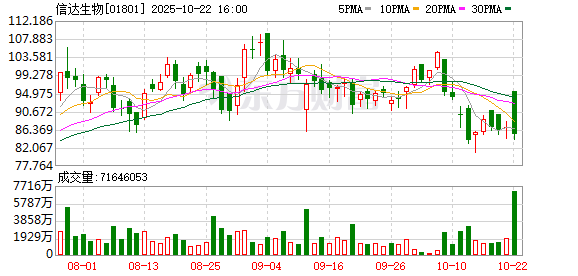
Core Viewpoint - The collaboration between Takeda and Innovent, totaling $11.4 billion with an upfront payment of $1.2 billion, reflects a shift in the biotech industry towards "co-development" models, which may be undervalued by the market despite the potential long-term benefits [3][4][10]. Group 1: Transaction Details - The deal includes three drug candidates at different development stages: IBI363 (PD-1/IL-2 dual antibody), IBI343 (CLDN18.2 ADC), and IBI3001 (EGFR/B7H3 ADC) [3][4]. - Innovent's stock price fell for two consecutive trading days following the announcement, indicating market skepticism regarding the perceived value of the upfront payment [3][4]. - The total amount of innovative drug transactions from China reached $102.996 billion in the first three quarters of 2025, with upfront payments totaling $4.976 billion [3]. Group 2: Market Perception and Strategy - The traditional view of high upfront payments in BD transactions may lead to the underestimation of the value of co-development agreements, which involve shared costs and uncertain returns [4][5]. - Innovent's strategy of co-development is driven by a desire to enhance its international competitiveness and not just rely on domestic commercialization [8][10]. - The PD-1/IL-2 dual antibody IBI363 has received FDA approval for global Phase III clinical trials, indicating its potential as a first-in-class drug [8][10]. Group 3: Collaboration Dynamics - Takeda's acceptance of a co-development model was influenced by its strategic need for innovative products in the oncology space, particularly those that can differentiate from existing therapies [11][12]. - The collaboration is expected to leverage both companies' strengths, with Innovent focusing on early-stage clinical trials and Takeda managing international Phase III trials [12][14]. - The negotiation process for this co-development agreement was lengthy, lasting over a year, due to the complexities involved in aligning both parties' interests and responsibilities [14][15]. Group 4: Future Implications - The partnership aims to explore the potential of combination therapies, particularly with IBI363 and other ADC drugs, to enhance treatment efficacy across various cancer types [13][12]. - Innovent's approach signifies a broader trend in the Chinese biotech sector, moving from short-term gains to long-term value creation in the global market [17]. - The success of this collaboration could set a precedent for other Chinese biotech firms, demonstrating the viability of co-development models in achieving international market presence [16][17].

武田以12亿美元首付与中国信达生物共研抗癌药
日经中文网· 2025-10-23 02:54
Core Viewpoint - Takeda Pharmaceutical has signed a joint research contract with Innovent Biologics for cancer treatment drugs, with a total potential transaction value of up to $11.4 billion, including an initial payment of $1.2 billion [2][4]. Group 1 - Takeda may pay an additional $10.2 billion as potential milestone payments based on progress [2][4]. - The agreement grants Takeda global research and sales rights for the cancer drug candidates IBI363 and IBI343 outside of mainland China, Hong Kong, Macau, and Taiwan [4]. - IBI363 and IBI343 are in late-stage development, with IBI363 being co-developed and jointly marketed in the U.S. [4]. Group 2 - Takeda's global oncology division president, Teresa Bitetti, stated that IBI363 and IBI343 are expected to bring disruptive breakthroughs to Takeda's oncology pipeline and significantly enhance growth potential beyond 2030 [4].
信达生物携手日本药企
Shen Zhen Shang Bao· 2025-10-22 23:34
Core Viewpoint - The collaboration between Innovent Biologics and Takeda Pharmaceutical aims to develop cancer treatment drugs, with a total deal value of $11.4 billion, setting a record for business development transactions in China's pharmaceutical industry [1] Group 1: Collaboration Details - The total amount of the collaboration is $11.4 billion, focusing on three drugs: IBI363 and IBI343 in Phase 3 clinical trials, and IBI3001 in Phase 1 [1] - Both companies will jointly advance the development of IBI363, with Takeda granted commercialization rights outside Greater China and the U.S. [1] - Takeda will also receive exclusive rights for IBI343 outside Greater China, and an exclusive option for IBI3001 in regions outside Greater China [1] Group 2: Strategic Implications - This partnership is expected to accelerate Innovent's global development in the fields of immuno-oncology (IO) and antibody-drug conjugates (ADC) [1] - The collaboration will explore the research potential for treatments targeting non-small cell lung cancer and colorectal cancer [1]
信达生物与武田制药达成百亿美元合作;东亚药业被浙江证监局责令改正丨医药早参
Mei Ri Jing Ji Xin Wen· 2025-10-22 23:19
Group 1 - Cinda Biologics has reached a global strategic cooperation with Takeda Pharmaceutical, aiming to accelerate the development of new generation IO and ADC therapies, with a total deal value potentially reaching $11.4 billion [1] - The collaboration includes two late-stage therapies, IBI363 and IBI343, and an early-stage project, IBI3001, with an upfront payment of $1.2 billion, including $100 million in strategic equity investment [1] - Cinda Biologics is expected to maximize the long-term commercialization prospects of IBI363 and IBI343 globally, leveraging Takeda's strong presence in the gastrointestinal oncology field [1] Group 2 - Shouyao Holdings announced that its self-developed RET inhibitor, SY-5007, has received acceptance for a new drug application for treating RET fusion-positive locally advanced or metastatic non-small cell lung cancer [2] - SY-5007 is a highly selective small molecule RET tyrosine kinase inhibitor and is among the fastest progressing fully domestic RET inhibitors in clinical research [2] - If approved, SY-5007 will fill the gap in domestic RET inhibitors, as currently only two RET inhibitors, pralsetinib and selpercatinib, have been approved globally [2] Group 3 - Dongya Pharmaceutical has been ordered to rectify discrepancies between the use of raised funds and disclosures in its IPO prospectus, as identified by the Zhejiang Securities Regulatory Bureau [3] - The company failed to timely follow the review procedures regarding the actual use of raised funds, leading to inaccurate disclosures [3] - This incident highlights the need for listed companies to enhance transparency and compliance in information disclosure [3] Group 4 - ST Nuotai reported a revenue of approximately 1.527 billion yuan for the first three quarters of 2025, representing a year-on-year increase of 21.95%, with a net profit of about 445 million yuan, up 26.92% [4] - In the third quarter, the company achieved revenue of approximately 479 million yuan, a year-on-year growth of 13.82%, and a net profit of about 134 million yuan, increasing by 9.27% [4] - The growth in ST Nuotai's performance is attributed to the rapid increase in demand for peptide raw materials, with oral peptide products expected to become a new growth point for the company [4]


Medicenna Therapeutics (OTCPK:MDNA.F) 2025 Conference Transcript
2025-10-22 18:32
Summary of Medicenna Therapeutics Conference Call Company Overview - Medicenna Therapeutics is a publicly listed company on the TSX main board and OTCQX under the symbol MDNA, focused on developing immunotherapies for late-stage diseases, particularly cancer [1][2] - The company specializes in a class of molecules known as cytokines, aiming to develop enhanced versions called Superkines [1][2] Core Points and Arguments Development and Collaborations - Medicenna licensed the Superkines platform from Stanford University in 2016 and has exclusive worldwide rights [2] - The company has a clinical collaboration with Merck, utilizing Keytruda, the world's best-selling drug, in combination with its own therapies [2][3] Clinical Trials and Data - Medicenna is preparing to provide updates on its Superkine MDNA11, with over 100 patient data points collected [3][6] - The company has received FDA agreement on a phase 3 design for its brain cancer drug, indicating significant progress in its development pipeline [3][5] - MDNA11 has shown promising results, with tumor shrinkage observed in 30% to 50% of patients who have previously failed other therapies [12][14] Market Opportunity - Keytruda, which is set to go off patent in 2028, currently generates nearly $30 billion in annual sales, highlighting a significant market opportunity for alternatives like MDNA11 [11][12] - Medicenna's valuation is approximately $60 million USD, with potential for substantial growth given the response rates observed in clinical trials compared to competitors [18][19] Competitive Landscape - The company is positioned against competitors like Replimune and Iovance, which have higher valuations despite similar response rates [19][20] - Recent multibillion-dollar transactions in the bispecific molecule space, such as the $11.2 billion deal between Takeda and Innovent, indicate a growing interest in this area [21][22] Pipeline and Future Developments - Medicenna is advancing multiple drugs, including MDNA113, a bispecific molecule combining anti-PD-1 and IL-2, with data expected soon [21][23] - The brain cancer program shows potential for significant market impact, with an estimated $4 billion opportunity across various brain cancer types [25][26] Important but Overlooked Content - The company has a strong advisory team, including leading experts in brain cancer and skin cancer, which enhances its credibility and potential for success [4] - Medicenna's approach to IL-2 therapy addresses previous challenges with safety and efficacy, aiming to provide a safer treatment option that effectively shrinks tumors [10][11][13] - The company has a cash runway into Q3 of the following year, allowing it to continue its development efforts without immediate financial pressure [26][40] Upcoming Milestones - Key data readouts are expected by the end of the year, particularly at a major cancer conference in the UK [27][40] - The company plans to meet with regulators to discuss pathways for accelerated approval based on upcoming clinical trial results [28][40]

最高可达114亿美元 信达生物签3款产品BD合作
Shang Hai Zheng Quan Bao· 2025-10-22 18:09
Core Viewpoint - The collaboration between Innovent Biologics and Takeda Pharmaceutical aims to develop groundbreaking cancer treatment solutions, focusing on next-generation immuno-oncology (IO) and antibody-drug conjugate (ADC) therapies, with a total deal value of up to $11.4 billion [2][5]. Summary by Sections Strategic Collaboration - Innovent Biologics has entered a significant global strategic partnership with Takeda Pharmaceutical to develop and commercialize three innovative products: IBI363, IBI343, and IBI3001 [2][5]. - The collaboration is seen as a milestone for Innovent to maximize pipeline value and advance its globalization strategy [2]. Product Development - IBI363, currently in Phase III clinical trials, is a first-in-class PD-1/IL-2α-bias bispecific antibody fusion protein, showing broad anti-tumor activity and expected to become a cornerstone therapy in IO [3]. - IBI343, also in Phase III, is a leading CLDN18.2 ADC drug targeting gastric and gastroesophageal junction cancers, with ongoing clinical studies in China and Japan [3]. - IBI3001 is a pioneering EGFR/B7H3 dual antibody ADC, currently in Phase I clinical trials [4]. Financial Terms - Under the agreement, Takeda will pay Innovent an upfront payment of $1.2 billion, including a $100 million premium for strategic equity investment, with potential milestone payments bringing the total to $11.4 billion [5]. - The partnership employs a flexible model of "tiered licensing + risk-sharing," allowing for shared development costs and commercialization rights in various regions [5]. Globalization Strategy - This collaboration marks a critical advancement in Innovent's globalization strategy, with the company aiming to become a multinational pharmaceutical enterprise by 2030 [6]. - Innovent has 16 products approved for market, with 10 candidates having global development potential, and plans to advance five pipelines into global Phase III clinical trials [6]. - Takeda's extensive experience in tumor immunotherapy and global commercialization will provide essential support for Innovent [6].