
Kia

Search documents
China Intervenes to Tame Yuan Rally as AI Fears Roil Hong Kong Markets
Stock Market News· 2026-02-27 03:38
Market Volatility and Currency Intervention - The People's Bank of China (PBOC) has reduced shorting costs to halt the Yuan's recent rally, which reached its strongest levels since mid-2023, potentially threatening the export-led recovery [2] - Analysts believe Beijing is trying to create a "slow bull" market to avoid historical boom-bust cycles in Chinese equities [2] Regional Performance and Record Highs - The Hang Seng Index (HSI) is facing its steepest monthly decline since October, down 3.2% in February, driven by concerns over AI disruption affecting traditional sectors [3][9] - Malaysia's FBM KLCI index fell over 1% to 1,722.34 points, its lowest since late January, but remains nearly 10% higher than a year ago due to growth in financial services and utilities [4] - Hyundai Motor (HYMTF) shares surged over 6% to a record high, driven by a 60 trillion won proposal for hydrogen fuel cell infrastructure in Canada and optimism surrounding its robotics division [5][9] Geopolitics and Domestic Policy - Russia has warned Britain against deploying troops to Ukraine, stating it could lead to a large-scale military confrontation [6] - A meeting between President Trump and New York City Mayor Zohran Mamdani focused on a proposal for 12,000 housing units at Sunnyside Yards, indicating potential federal-local cooperation on urban development [7] Commodities and Corporate Trends - Copper prices are rising, supported by positive global demand and industrial growth prospects, as Chinese firms seek foreign expertise for global expansion [10]


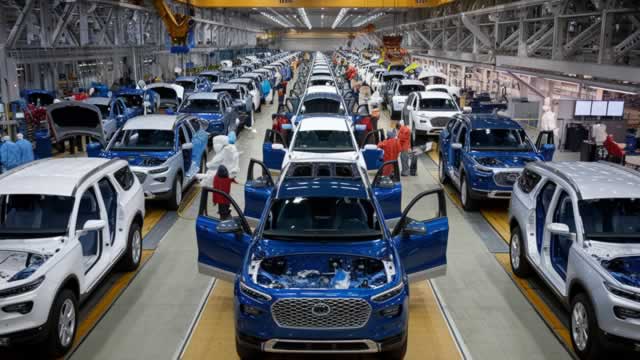
KIA AMERICA ANNOUNCES PRICING FOR FIRST-EVER 2027 KIA TELLURIDE HEV
Prnewswire· 2026-02-26 14:00
Starting at under $47,000 MSRP[1], first-ever 2027 Telluride HEV combines stunning design, tech-forward amenities, generous interior space and EPA-est. 35-combined mpg (EX FWD) EX FWD starting MSRP: $46,490[1] Power meets efficiency: Available turbo-hybrid with 329 horsepower and rated an EPA-estimated 35 mpg[2] combined and a total estimated driving range of 637 miles[3] on the EX FWD trim Larger dimensions than previous generation: Provides more first and second-row headroom, improved third-row seat acc ...

South Korea's Hyundai Motor warns US tariff pressure may intensify despite Supreme Court ruling
Reuters· 2026-02-24 06:20
Core Viewpoint - Hyundai Motor warns that tariff pressure from the U.S. may intensify despite a recent Supreme Court ruling, urging South Korea to pass a $350 billion U.S. investment package to mitigate potential impacts [1][1]. Group 1: Tariff Impact - Hyundai and Kia have already incurred a combined financial hit of approximately $4.98 billion (7.2 trillion won) from U.S. tariffs last year [1][1]. - The company president cautioned that if tariffs are raised back to 25%, the financial impact could increase significantly this year [1][1]. - The Trump administration has threatened to escalate tariffs on sectors including autos, which could weaken the competitiveness of Korean companies [1][1]. Group 2: Legislative Urgency - Hyundai is urging the South Korean government to swiftly pass legislation related to the $350 billion U.S. investment package, which is part of a trade deal aimed at reducing tariffs from 25% to 15% [1][1]. - The South Korean government has committed to adhering to the trade deal reached last year, despite the ongoing tariff threats from the U.S. [1][1]. Group 3: Industry Challenges - The auto industry is facing a "major crisis" due to the existing U.S. tariffs, with ongoing transitions to electric vehicles and increased competition in autonomous driving [1][1]. - There are concerns that sector-specific tariffs, particularly in steel and autos, are likely to remain in place, further complicating the industry's recovery [1][1].
催化转型:金融部门的韧性和创新驱动的增长(英)2026
Shi Jie Yin Hang· 2026-02-24 03:05
Investment Rating - The report does not explicitly provide an investment rating for the industry but emphasizes the positive impacts of the SCFI Trust Fund on financial sector resilience and innovation-led growth in the East Asia and Pacific region [26][28]. Core Insights - The SCFI Trust Fund Phase 3, operational from July 2020 to December 2023, allocated US$10.9 million to support financial and private sector development in seven countries, leveraging US$4.6 billion in World Bank lending [34][35]. - The report highlights the implementation of 51 reforms across various sectors, focusing on financial stability, inclusion, resilience, and innovation [45]. - Key achievements include significant reforms in Cambodia, Indonesia, and the Philippines, contributing to enhanced financial sector stability and private sector growth [36][40][42]. Summary by Sections Section 1: Overview - The East Asia and Pacific region faced multiple crises, including the COVID-19 pandemic, which led to economic slowdowns and increased poverty levels [56][62]. - Despite these challenges, the region has shown resilience, with a recovery in economic activity driven by exports and private consumption [57][60]. Section 2: SCFI Trust Fund - The SCFI Trust Fund, established in partnership with the Ministry of Economy and Finance of Korea, aims to enhance financial sector stability and promote private sector-led growth [72][74]. - The fund has supported various initiatives, including technical assistance and capacity building, to foster innovation and sustainable development [80]. Section 3: Impacts - The SCFI Trust Fund has facilitated 51 reforms, focusing on financial stability, financial inclusion, and private sector development across seven countries [45]. - Notable outcomes include Cambodia's first local currency government bond issuance and Indonesia's Financial Sector Omnibus Law [40][41]. Section 4: Spotlight Countries - The report provides in-depth insights into Cambodia, Indonesia, and the Philippines, showcasing their significant achievements and reforms supported by the SCFI Trust Fund [36][42]. - Other countries like Lao PDR, Mongolia, and the Pacific Islands also benefited from SCFI initiatives, enhancing their financial systems and regulatory frameworks [43]. Section 5: Lessons Learned and Recommendations - Key lessons include the importance of leveraging Korean development experience and enhancing coordination among client countries [30][44]. - Recommendations for future phases emphasize the need for long-term engagement and stakeholder dialogue to ensure the sustainability of reforms [44][55].
U.S. Diplomatic Envoy Arrives in Seoul as South Korea Reaffirms Trade Pact Stability
Stock Market News· 2026-02-23 07:08
Group 1: Diplomatic Relations and Investment - A high-ranking aide to U.S. Secretary of State Marco Rubio visited South Korea to stabilize bilateral relations amid trade tensions related to President Trump's demands for increased Korean investment in U.S. manufacturing [2][3] - The visit is seen as a "fact-finding mission" to assess if South Korea can meet legislative deadlines for a $350 billion investment package by the end of February [3] Group 2: Trade Agreement Status - South Korea's Ministry of Trade confirmed that the KORUS FTA is operational and unaffected by recent legal changes in the U.S., following a Supreme Court ruling that deemed certain tariffs unlawful [4][10] - The ruling nullified a 15% reciprocal tariff on Korean exports, but a new 10% global tariff under Section 122 of the Trade Act poses ongoing concerns [5][10] Group 3: Impact on Key Sectors - The reaffirmation of the KORUS FTA is beneficial for major companies like Samsung Electronics and SK Hynix, which are dealing with U.S. semiconductor subsidies and export controls [6] - The automotive sector, particularly Hyundai Motor and Kia, remains vulnerable due to the potential for a 25% auto tariff, which could significantly impact their revenue from the U.S. market [6][7] Group 4: Legislative Challenges - The U.S. delegation plans to meet with South Korean National Assembly members to address delays in passing the Strategic Investment Memorandum of Understanding, with divisions between the Democratic Party and the People's Power Party over fiscal responsibilities [8] - The U.S. State Department has indicated that legislative delays create an unfavorable mood in Washington, but the visit suggests both sides are seeking a rational resolution to avoid escalating trade barriers [9]
South Korea to Integrate Business Input in Response to New U.S. Tariff Pressures
Stock Market News· 2026-02-23 00:08
Trade Relations and Government Response - South Korea's government is shifting to a collaborative defense of national trade interests, planning intensive consultations with major exporters and industry associations to address private sector concerns in discussions with the U.S. [2][9] - The U.S. Supreme Court ruled the use of the International Emergency Economic Powers Act for reciprocal tariffs as unlawful, but the Trump administration quickly responded with a new 10% global tariff, potentially increasing to 15% [3][9] Investment Commitments and Legislative Pressure - The South Korean government is under pressure to expedite a $350 billion investment commitment in the U.S., with delays in legislation potentially triggering higher tariffs [4][9] - The success of negotiations with U.S. trade officials will depend on South Korea's ability to fast-track investment-related legislation through the National Assembly [6] Impact on Key Industries - The Korean stock market is facing challenges, particularly for companies like Samsung Electronics and SK Hynix, as the tech sector prepares for the implications of new global tariffs [5] - Hyundai Motor and Kia are navigating a complex environment with existing Section 232 auto tariffs remaining in place despite recent legal victories regarding other duties [5][9]
Vietnam vehicle market surges 90% in January – VAMA
Yahoo Finance· 2026-02-12 09:12
Market Overview - Vietnam's new vehicle market rebounded by 90% to 29,774 units in January 2026 from 15,676 units in January 2025, according to VAMA data [1] - Compared to peak volumes of 42,701 units in December 2025, the market was down by 30% in January 2026 [2] Economic Context - The vehicle market growth is supported by strong economic growth, with GDP accelerating to 8.5% year-on-year in Q4 2025, marking the fastest quarterly growth in 15 years [2] - The overall economy expanded by 8% in 2025, driven by robust domestic consumption, fixed investment, and exports [2] Sales Performance - Light passenger vehicle sales surged by 103% to 22,440 units, while commercial vehicle deliveries increased by 59% to 7,334 units in January 2026 [3] - Truong Hai (Thaco) Group reported an 82% sales increase to 9,458 units, including a 98% jump in commercial vehicle sales to 2,001 units [3] - Major brands like Toyota, Ford, Mitsubishi, and Hyundai also reported significant sales increases, with Ford's sales surging by 109% to 5,121 units and Mitsubishi's by 194% to 5,039 units [4] Future Projections - GlobalData forecasts that sales of light vehicles in Vietnam will grow by over 4% to 587,000 units in 2026, up from 564,000 units in 2025, driven by continued economic growth and rising consumer demand [5] - The Vietnamese government will continue to exempt battery electric vehicles (BEVs) from vehicle registration tax until the end of February 2027, further supporting market growth [5]
Best of 2026: Cars.com Names Nissan Leaf Top Vehicle of the Year
Prnewswire· 2026-02-05 12:30
Core Insights - Cars.com announced the winners of its annual Best Of Awards for 2026, highlighting top-rated vehicles amidst rising vehicle prices and changing market conditions [1][2] - The Nissan Leaf was named Best Car of the Year, recognized for its value, innovation, and usability, especially as affordable EV options become more limited [2][7] Award Winners - Best Car: 2026 Nissan Leaf, starting at $31,485, offers up to 303 miles of range and access to Tesla's Supercharger network [7] - Best SUV: 2026 Nissan Armada, known for its strong twin-turbo V-6 power and towing capacity of up to 8,500 pounds [7] - Best Family Car: 2026 Hyundai Santa Fe, featuring three-row seating and flexible cargo space [7] - Best Pickup Truck: 2026 Ram 1500, combining work-ready trims with luxury models and class-leading comfort [7] - Best Electric Vehicle: 2026 Kia EV9, providing up to 305 miles of range and family-friendly versatility [7] - Best Luxury Vehicle: 2026 Cadillac Escalade IQ, offering an estimated 465 miles of range and advanced technology [7] Methodology - The Best Car of the Year was selected from over 40 new or redesigned models, evaluated based on quality, innovation, and value [4] - Other awards considered specific criteria relevant to their respective categories, open to all model-year 2026 vehicles [4]


Walmart hits $1T market cap, PepsiCo CEO talks earnings beat and GLP-1 strategy
Youtube· 2026-02-03 21:54
Disney Succession Plan - Disney has officially named Josh Dearo as its next CEO, succeeding Bob Iger later this year [1][10] - Josh Dearo's experience in overseeing the parks and cruises business, which accounts for nearly 60% of Disney's profits, is seen as a critical factor for his selection [4][10] - The transition is expected to be smoother than previous succession attempts due to a more deliberate process and the retention of key executives like Dana Walden [14][15] Business Performance and Strategy - Disney's reliance on its experiences segment is crucial for growth, especially as the entertainment sector faces challenges [4][8] - The company has established a strong base of intellectual property (IP) that supports its content strategy, although there are concerns about the need for more content [6][9] - The stock performance has been rangebound over the past decade, with a need for continued growth in experiences and streaming to improve profitability [15][20] Market Outlook - Despite short-term headwinds, such as a dip in tourism to domestic parks, the long-term outlook for Disney is considered optimistic due to the growth potential in its core businesses [21][22] - The company is viewed as undervalued, with expectations for a recovery as it navigates the transition in leadership and focuses on its growth-oriented segments [20][22]


汽车-高度自动驾驶时代已至-Autos & Shared Mobility-Global Auto Monitor The Era of Abundant Autonomy Is Upon Us
2026-02-02 02:22
Summary of Key Points from the Conference Call Industry Overview - The conference call focuses on the **North American automotive industry**, particularly the developments in **autonomous vehicles (AV)** and the transition towards **physical AI** in automotive technology [1][2][3]. Core Company Insights Tesla (TSLA) - Tesla is phasing out the **Model X/S** to concentrate on **robotaxi** and **Optimus** initiatives, indicating a strategic shift towards autonomy [1]. - The company is expected to incur a **cash burn of $8 billion** in 2026 due to increased spending, which may pressure the stock but is deemed necessary to maintain leadership in **autonomous vehicles**, **robotics**, and **energy** sectors [2]. - Current stock valuation is at **30x 2030 EBITDA**, with a cautionary stance on potential downside risks to near-term consensus estimates [3]. General Motors (GM) - GM's stock rose nearly **10%** following a strong earnings report, with a **2026 guidance** that exceeds consensus expectations [2]. - The company has announced a **$6 billion buyback authorization**, reinforcing its commitment to capital return [2]. - The price target for GM is set at **$100**, with a bullish case reaching **$140** [2]. Industry Dynamics - The automotive industry is entering a period characterized as an **'EV Winter'**, expected to persist through 2026, which may impact growth prospects [4]. - Despite challenges in the electric vehicle segment, there is a slightly more optimistic outlook for **internal combustion engine (ICE)** and **hybrid vehicles**, projected to grow by **1.0% year-over-year** [4]. - The year 2026 is anticipated to be a pivotal moment for **autonomous driving**, with advancements in technology and new entrants in the market [4]. Additional Insights - The **global auto market** saw a **1% decline** in December, influenced by a drop in China, while the U.S. market showed a smaller-than-expected decline [18]. - **BYD** reported a **20%+ month-over-month growth** in overseas registrations, indicating strong performance in Europe and Latin America, despite challenges in the ASEAN region [13]. - **Kia** and **Hyundai** are positioned favorably in the physical AI narrative in Korea, suggesting potential for re-rating of traditional OEMs globally [9]. Financial Performance Highlights - **Volvo** reported revenues of **SEK 123.8 billion**, a **1% increase** compared to consensus expectations, with an adjusted EBIT of **SEK 12.8 billion**, exceeding forecasts by **12%** [8]. - The **global auto sales** summary indicates a **5.1% year-to-date growth**, with notable performances from various OEMs, although some, like **General Motors**, faced a **15.9% decline** in December sales [22]. Conclusion - The North American automotive industry is navigating a complex landscape with significant shifts towards autonomy and physical AI, with key players like Tesla and GM leading the charge. The outlook remains cautious due to potential headwinds in the EV market, but opportunities for growth in traditional segments and advancements in technology present a mixed but promising scenario for investors.