
Schneider Electric

Search documents
Schneider Electric sees energy management demand drive strong quarter
Yahoo Finance· 2025-11-03 11:47
Core Insights - Schneider Electric reported a strong Q3 2025 with group revenue reaching $11.5 billion, reflecting a 9% organic growth and a 17% increase in the Energy Management segment driven by data center demand [1][2]. Group Performance - The Energy Management segment experienced a year-over-year growth of 10%, with North America showing a significant 17% increase, largely due to investments from hyperscalers in data centers [1][3]. - The company’s overall performance was bolstered by strong demand from nonresidential building owners, indicating a positive trajectory in this segment [5]. Market Trends - Demand from residential buildings was noted to be soft, particularly in China and North America, but this segment is relatively small compared to the overall business [6]. - There is a strong and accelerating demand from new AI-related players, particularly in North America and China, as highlighted by the CFO [2]. Strategic Initiatives - Schneider Electric is expanding its product and service portfolio to meet the needs of large-scale data centers, which is a key growth area [3]. - The company is positioning itself as an "energy technology partner" across various industries, focusing on electrification, automation, and digitization, with further details expected at the upcoming Capital Markets Day [7]. Partnerships and Acquisitions - The company announced the acquisition of a 75% stake in Motivair to enhance its presence in the high-performance cooling systems market [4]. - Schneider has co-developed data center reference designs with NVIDIA, aimed at reducing deployment times for data centers [4].
The AI boom is over — here’s your bubble survival guide
Yahoo Finance· 2025-10-31 11:31
Core Insights - The AI bubble is deflating gradually, with significant differences in outcomes for various market tiers, leading to a separation of winners and losers in the next 18 to 24 months [3][30] - Tier 1 hyperscalers like Microsoft, Alphabet, and Amazon are well-positioned due to their substantial capital expenditures and strong cash flows, allowing them to weather disappointing AI returns [2][9][10][11] - Tier 2 companies, including unicorns like OpenAI and Anthropic, face existential questions regarding their ability to justify high valuations amidst competition from hyperscalers and cheaper models [1][3] - Tier 3 companies are experiencing mass casualties, with increased startup shutdowns and failed AI pilots, indicating a challenging environment for less established firms [6][28] Tier 1 Hyperscalers - Microsoft is projected to have a $13 billion annual run rate in AI, with a 175% year-over-year increase, supported by $72 billion in annual free cash flow [9] - Amazon's AWS is growing at 17.5% year over year, reaching a $123 billion annual run rate, allowing for significant investment in AI infrastructure [10] - Alphabet's revenue is heavily reliant on internet-search advertising, with an operating margin of 32.4% and estimated capital expenditures of $85 billion for AI and data-center infrastructure [11] Tier 2 Unicorns - Companies like OpenAI are valued at $500 billion, but face scrutiny over whether they can deliver returns that justify such valuations [1][7] - The AI bubble is not comparable to the dot-com crash, as the current situation involves a slow deflation rather than a sudden collapse [4][3] Tier 3 Companies - Startup shutdowns surged by 26% year over year in 2024, and 95% of enterprise AI pilots failed to show measurable P&L impact within six months of launch [6][3] - The number of down rounds in venture deals reached a decade high at 15.9% in 2025, indicating a challenging funding environment [3] Investment Strategies - Investors are advised to buy Tier 1 hyperscalers during corrections of 15% to 20%, as these companies have strong fundamentals and cash flow to support AI investments [9][10][11] - Investing in data centers is recommended due to projected power constraints, with Gartner forecasting that 40% of AI data centers could face power-availability issues by 2027 [13][14] - Companies like Dominion Energy are positioning themselves as essential players in the AI infrastructure landscape, with significant investments planned [15][20] Profitable Companies - Companies that automate back-office processes, such as UiPath and BlackLine, are highlighted for their strong ROI and profitability, making them attractive investment opportunities [21][22] - Enterprise SaaS leaders like Atlassian and DocuSign are leveraging AI to enhance their products, maintaining strong customer bases and financial performance [23][25][26]




全球冷却行业:引入 2027 年预期;因人工智能服务器销量增长上调全球服务器冷却总可寻址市场(TAM)-Global Cooling_ 2027E introduced; Global Server cooling TAM raised on higher AI server volumes
2025-10-31 01:53
Summary of Global Server Cooling Market Conference Call Industry Overview - The conference call discusses the **Global Server Cooling** market, particularly focusing on the **AI server** segment and the adoption of **liquid cooling** technologies. Key Points and Arguments 1. **Market Forecasts**: - The **Global Server Cooling Total Addressable Market (TAM)** is projected to grow significantly, with estimates for 2025 and 2026 raised to **US$7.9 billion** and **US$14.0 billion**, respectively, reflecting a **9%** and **16%** increase from previous estimates [1][2][16]. - The TAM for AI training servers is expected to increase from **US$1.5 billion** to **US$12.4 billion** from 2024 to 2027, representing a **101% CAGR** [1]. 2. **Liquid Cooling Penetration**: - Liquid cooling penetration rates for AI training servers are forecasted to reach **15%** in 2024, escalating to **80%** by 2027. For AI inferencing servers, penetration is expected to rise from **1%** to **20%** over the same period [1][2][17]. - The ongoing increase in liquid cooling adoption is attributed to the rising computing power of GPUs and ASICs, denser server designs, and the need for improved power efficiency in data centers [1]. 3. **Growth Drivers**: - The growth in the cooling TAM is driven by the increasing volume of high-power AI servers that require advanced cooling solutions, particularly liquid cooling, which offers higher cooling efficiency compared to air cooling [1][2][16]. - Innovations in cooling technologies, such as double-sided cold plates and microfluidics solutions, are enhancing heat exchange efficiency and thermal performance, further supporting the growth of the liquid cooling market [22]. 4. **Market Dynamics**: - The report indicates a strong year-over-year growth forecast for the server cooling market, with **111%** growth expected in 2025 and **77%** in 2026 [8][23]. - The cooling solutions market is evolving with new designs and technologies to meet the increasing thermal demands of AI servers [22]. 5. **Competitive Landscape**: - Key players in the liquid cooling market include companies like **Wiwynn**, **Lenovo**, **Dell**, and **HP**, with varying ratings and market caps provided [28]. - The report highlights the importance of customization and rapid response capabilities for cooling suppliers to adapt to new technologies and market demands [22]. Additional Important Content - The report includes detailed tables summarizing the projected TAM for various server types, including AI training, general, and HPC servers, along with their respective liquid cooling penetration rates [2][8][23]. - It emphasizes the need for cooling suppliers to enhance their product offerings and capabilities to keep pace with technological advancements in the server industry [22]. This summary encapsulates the critical insights from the conference call regarding the Global Server Cooling market, focusing on growth forecasts, market dynamics, and competitive landscape.
X @Bloomberg
Bloomberg· 2025-10-30 16:03
Event Announcement - Bloomberg Green 将前往巴西参加 COP30 [1] - 会议将于巴西时间 11 月 4 日上午 9:00 直播 [1] Topics of Discussion - 气候技术与创新 [1] - 气候政策 [1] - 气候经济 [1]
Schneider Electric beats organic growth forecast as AI boom fuels data centre demand
Reuters· 2025-10-30 10:55
Core Insights - Schneider Electric's organic revenue growth exceeded quarterly estimates, driven by increased demand for data centers that support artificial intelligence [1] Company Performance - The French industrial group reported strong performance in its latest quarter, indicating robust market conditions and effective business strategies [1] Industry Trends - The surge in demand for data centers is a significant trend, reflecting the growing importance of artificial intelligence in various sectors [1]

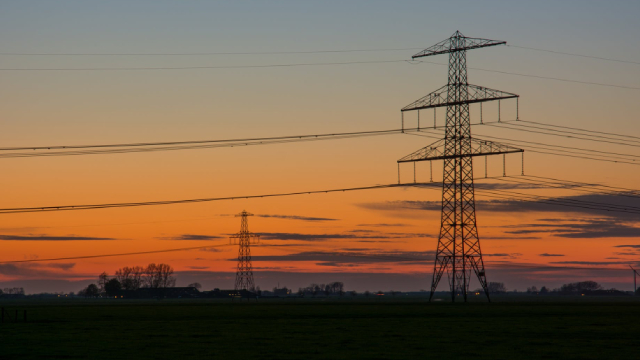
Hubbell Incorporated's Market Position and Financial Performance
Financial Modeling Prep· 2025-10-29 19:12
Company Overview - Hubbell Incorporated is a significant player in the electrical and utility solutions industry, providing a variety of products and services such as electrical wiring devices, lighting fixtures, and power systems [1] - The company competes with industry leaders like Eaton Corporation and Schneider Electric, focusing on innovation and strategic growth to maintain its market position [1] Financial Performance - On October 29, 2025, Seaport Global set a price target of $515 for Hubbell, indicating a potential price increase of approximately 9.53% from the current trading price of $474.48 [2][5] - The stock has experienced a trading day range between $458.96 and $474.95, with a current price reflecting a 4.20% increase today, equivalent to a $19.14 rise [2][5] - Hubbell's market capitalization is approximately $25.21 billion, showcasing its substantial presence in the market [4][5] - Over the past year, the stock has seen a high of $481.35 and a low of $299.43, indicating volatility in its stock price [4] Earnings Call Insights - The recent Q3 2025 earnings call, led by President, CEO, and Chairman Gerben Bakker, along with Executive VP and CFO William Sperry, provided valuable insights into the company's financial health [3] - Analysts from major financial institutions, including JPMorgan Chase & Co., attended the call, emphasizing the significance of Hubbell's strategic direction and financial performance [3]


Why Nvidia is worth $5 trillion: Inside a $35 billion, 1 gigawatt AI data center.
Business Insider· 2025-10-29 18:01
Core Insights - Nvidia is capturing a significant share of the AI spending boom, contributing to its valuation of nearly $5 trillion [1][12] - The new metric for AI data centers is gigawatts of computing capacity, with 1 gigawatt costing approximately $35 billion, representing a new economic foundation for AI [3][4] AI Data Center Costs - The largest cost component in an AI data center is GPUs, accounting for about 39% of total spending, with Nvidia's chips being the primary drivers [7][12] - Networking equipment constitutes around 13% of data center costs, benefiting companies like Arista Networks, Broadcom, and Marvell [14] - Power distribution and cooling infrastructure represent significant costs, with power distribution alone taking up nearly 10% of spending [16][18] Company Opportunities - Nvidia captures nearly 30% of total AI data center spending as profit due to its high gross profit margins of 70% [12] - TSMC, Nvidia's foundry partner, earns approximately $1.3 billion per gigawatt from manufacturing GPU components [12] - Other chipmakers like AMD and Intel are attempting to catch up, while hyperscalers such as Google, Amazon, and Microsoft are investing in custom AI accelerators [13] Infrastructure and Operational Costs - Real estate, electricity, and labor account for about 10% of upfront costs, with operational costs being relatively low [18] - The annual electricity cost to run a 1 gigawatt AI data center is about $1.3 billion, and personnel costs are minimal, with only 8 to 10 staff members typically required [18] - The bottleneck is shifting towards power availability, with companies like Siemens Energy and GE Vernova experiencing increased orders for turbines and grid infrastructure [19]

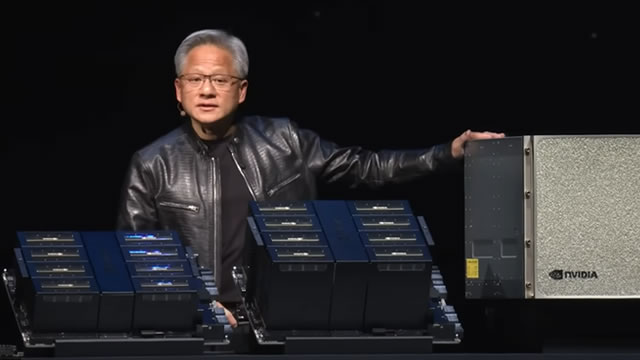
RS and Schneider Electric enable solar powered motor control
Prnewswire· 2025-10-27 15:12
Core Insights - Schneider Electric's Altivar Solar ATV320 variable speed drives (VSDs) enhance the reliability, sustainability, energy efficiency, and service life of solar-powered pumping applications [1][7]. Technology Overview - VSDs, also known as variable frequency drives (VFDs), control the speed, deceleration, and torque of electric motors without mechanical components, offering flexible and precise motor control with reduced maintenance needs [2]. - The Altivar Solar ATV320 VSDs are specifically designed to handle variable DC supply voltages from solar arrays, eliminating the need for additional equipment like battery storage and AC inverters, thus reducing costs [4][3]. Performance and Applications - These VSDs are suitable for various industrial segments, including water and wastewater, oil and gas, HVAC, agriculture, and more, demonstrating field-proven performance in remote solar-powered pumping applications [5][6]. - The Altivar Solar ATV320 VSDs can connect to both the grid and solar arrays, optimizing energy availability and supporting applications such as irrigation systems and water treatment [9][7]. Features and Benefits - The VSDs feature self-preserving functions, diagnostic capabilities, and safety features that minimize maintenance and protect assets [7]. - They support multiple communication protocols, including Modbus and CANopen, enabling remote control and intuitive programming through integrated software [8][7]. Product Specifications - The Altivar Solar ATV320 VSDs are available in single-phase and three-phase models, with input voltage ranges from 150–778VDC and power ratings from 0.37 to 15kW [13]. - They utilize various motor control methods, including sensorless vector control and variable torque control, to optimize performance based on load demands [13].
全球及中国智能工业安全警报系统行业现状调查及竞争格局分析报告2025~2031年
Sou Hu Cai Jing· 2025-10-25 06:35
Market Overview - The global smart industrial safety alarm system market is projected to grow significantly from 2020 to 2031, with various product types showing distinct growth trends [3][12]. - The market can be categorized into wired, wireless, and hybrid systems, each with unique growth trajectories [4][12]. Industry Development Status - The smart industrial safety alarm system industry is characterized by specific development features, including technological advancements and regulatory influences [4][12]. - Factors affecting industry growth include both favorable conditions, such as increasing safety regulations, and unfavorable conditions, such as high entry barriers [4][12]. Supply and Demand Analysis - Global supply and demand for smart industrial safety alarm systems are expected to evolve from 2020 to 2031, with detailed forecasts on production capacity, output, and utilization rates [4][12]. - The Chinese market is anticipated to play a significant role in global supply, with projections indicating its production and demand trends [4][12]. Regional Market Analysis - The market size and revenue for smart industrial safety alarm systems will vary across major regions, including North America, Europe, and Asia-Pacific, with specific sales forecasts for each region [5][12]. - The Asia-Pacific region, particularly China, is expected to dominate in terms of both production and consumption by 2031 [5][12]. Competitive Landscape - The competitive landscape of the smart industrial safety alarm system market includes major players with significant market shares, production capacities, and sales revenues [6][12]. - Key manufacturers are analyzed based on their market positions, product offerings, and financial performance from 2020 to 2025 [6][12]. Product Type Analysis - Different product types within the smart industrial safety alarm system market are expected to show varying sales and revenue trends from 2020 to 2031, with specific market shares outlined [6][12]. - The revenue generated from each product type will be crucial for understanding market dynamics and competitive positioning [6][12]. Application Analysis - The application of smart industrial safety alarm systems spans various industries, including chemicals, metallurgy, and energy, with distinct sales and revenue trends projected for each sector [6][12]. - The growth in specific applications will be driven by industry-specific safety requirements and technological advancements [6][12]. Industry Trends and Drivers - The smart industrial safety alarm system industry is influenced by several key trends, including increased automation and the integration of IoT technologies [7][12]. - Regulatory changes and safety standards are significant drivers of market growth, pushing companies to innovate and enhance their product offerings [7][12]. Supply Chain Analysis - The supply chain for smart industrial safety alarm systems involves various stakeholders, including raw material suppliers, manufacturers, and end-users [8][12]. - Understanding the procurement and production models within the industry will provide insights into operational efficiencies and market competitiveness [8][12].

These stocks are the real deal for investors in AI — Wall Street is just chasing bubbles
Yahoo Finance· 2025-10-24 11:26
Core Insights - The article highlights the stark contrast between China's rapid infrastructure development, particularly in energy, and the U.S.'s lagging efforts, emphasizing the implications for technological leadership and energy reliability [1][5][20]. Energy Infrastructure - China has built 42 ultrahigh-voltage transmission lines, while the U.S. has built none, showcasing a significant gap in energy infrastructure development [1][7]. - The U.S. electrical grid has been rated a D+ by the American Society of Civil Engineers, indicating severe deficiencies in maintenance and modernization [4][6]. Investment and Corporate Actions - The U.S. private sector has mobilized $92 billion for energy infrastructure in Pennsylvania, signaling a reactive approach to a long-standing issue [6][7]. - Major companies like Blackstone and Alphabet are investing heavily in data centers and infrastructure, indicating a shift towards self-sufficiency in energy due to grid inadequacies [9][10]. Market Opportunities - Companies involved in energy equipment and infrastructure, such as Hitachi, ABB, and Schneider Electric, are positioned to benefit from the U.S.'s urgent need for modernization [10][12]. - Cable specialists like Prysmian and Nexans are critical players due to supply constraints and high demand for energy cables, presenting investment opportunities [11]. Future Projections - The U.S. Energy Department warns of a potential increase in blackouts by 100-fold by 2030, highlighting the urgency for infrastructure improvements [14]. - Global power-grid investment is projected to reach $594 billion annually by 2030, with a total of $15.8 trillion needed through 2050, indicating a massive market for infrastructure development [17][18].