
Apple

Search documents
A 5.6% Yield and a $3 Million Buy Point to a Different Kind of Emerging Markets Bet
Yahoo Finance· 2026-01-04 22:03
Core Insights - The Vanguard Emerging Markets Government Bond ETF (VWOB) provides institutional investors with exposure to U.S. dollar-denominated government bonds from emerging markets, emphasizing low costs and efficient market representation for competitive yield and total return potential [1][6] Portfolio Composition - The ETF primarily invests at least 80% of its assets in bonds included in its target index, which consists of U.S. dollar-denominated government bonds from various emerging market countries [2] Investment Strategy - VWOB aims to track the performance of an index of U.S. dollar-denominated government bonds from emerging markets, utilizing a sampling approach to replicate index characteristics [2] Performance Metrics - As of December 31, VWOB shares were priced at $67.45, reflecting a 7% increase over the past year, although it underperformed compared to the S&P 500, which rose nearly 17% during the same period [3] Recent Transactions - GP Brinson Investments LLC increased its stake in VWOB by purchasing 50,100 shares, valued at approximately $3.38 million based on average quarterly pricing, with the quarter-end value of the VWOB position rising by $3.42 million due to additional shares and price changes [4][5] Yield and Expense Ratio - The ETF currently offers a 30-day SEC yield exceeding 5.6% and has a low expense ratio of 0.15%, making it an efficient income tool in a yield-starved fixed income environment [6] Portfolio Diversification - VWOB complements a portfolio already anchored in U.S. and developed international markets by providing diversification through sovereign credit rather than corporate balance sheets, indicating it serves as a satellite allocation rather than a primary investment [7] Risk Considerations - While emerging market government bonds can exhibit equity-like behavior during stress, they offer income and diversification benefits for investors who understand the associated risks, emphasizing the importance of selective risk management in portfolio balance [8]
OpenAI Sets Sights on Challenging Apple’s Tech Dominance
Crowdfund Insider· 2026-01-04 19:28
Core Insights - OpenAI is shifting its competitive focus from rival chatbots to hardware and user ecosystems, particularly targeting Apple as a long-term opponent in the AI landscape [1] - OpenAI is pursuing hardware initiatives, partnering with Jony Ive to develop AI-centric devices, with prototypes already in testing [2] - A new screenless or minimally screened device aims to enhance user experience by providing contextual awareness and reducing distractions [3][4] Hardware Initiatives - OpenAI's collaboration with Jony Ive involves the development of an audio-focused gadget, which could be the first product from this partnership [2] - The device is designed to anticipate user needs through microphones and cameras, promoting a calmer experience compared to current smartphones [3] Integration with Fintech - If the advancements in hardware are integrated into Fintech and investment applications, they could significantly transform user experiences and decision-making processes [4] - Altman suggests that these developments could be as transformative as the iPhone, with a potential launch timeframe of late 2026 or 2027 [4] ChatGPT Ecosystem - OpenAI is reimagining ChatGPT as a foundational platform, introducing features like an in-chat App Directory and developer SDK for third-party app integration [5] - This positions ChatGPT as a central hub for daily activities, potentially reducing reliance on traditional app stores and device-specific platforms [6] User Feedback and Adoption - OpenAI's early releases focus on user feedback and iteration, emphasizing the need for refining reliability for widespread adoption [7] - Altman's strategy highlights the importance of controlling the everyday interface with technology, aiming to challenge Apple's dominance in personal computing [7] Future of AI Companions - Successful implementation of these initiatives could lead to a new era of proactive AI companions, redefining user interaction with the digital realm [8]


4 Stocks to Buy in January That Could Join Nvidia in the $1 Trillion Club by 2030
The Motley Fool· 2026-01-04 13:09
Core Insights - Visa, ExxonMobil, Oracle, and Netflix are identified as potential investments with the ability to join the $1 trillion market cap club by 2030, appealing to patient investors [2][19] Visa - Visa has a straightforward path to reaching a $1 trillion market cap, supported by high margins, reasonable valuation, and steady earnings growth [4] - In 2025, Visa's non-GAAP earnings per share grew by 14%, indicating strong growth potential that could lead to a market cap exceeding $1 trillion by 2030 [5] - Current market cap stands at $663 billion, with a gross margin of 77.31% and a dividend yield of 0.70% [6][7] ExxonMobil - ExxonMobil needs to double its market cap in five years to surpass $1 trillion, but it has strong fundamentals to achieve this [7] - The company generates significant free cash flow and high earnings, even with oil prices at four-year lows, and has reduced production costs [8] - ExxonMobil's corporate plan forecasts double-digit earnings growth through 2030, with a potential 15% annual growth rate that could double earnings [9][10] Oracle - Oracle nearly reached a $1 trillion market cap but faced a decline due to concerns over AI spending and debt [11] - The company is investing heavily in data center infrastructure to grow its cloud computing market share, with $523 billion in remaining performance obligations indicating high demand [12] - Despite being free cash flow negative, Oracle's aggressive AI investments present a high-risk, high-reward opportunity for investors [13] Netflix - Netflix's market cap has decreased from over $560 billion to under $400 billion due to valuation concerns and uncertainties regarding its acquisition of Warner Bros. Discovery [14] - The company is expected to grow earnings through global subscriber growth and pricing power, with potential benefits from the acquisition [15][16] - Netflix has demonstrated strong pricing power and effective content spending strategies, positioning it as a likely outperformer over the next five years [17]



A Near-Perfect Passive Income Portfolio To Sleep Well In Retirement
Seeking Alpha· 2026-01-04 12:05
Core Insights - The company is preparing to release its top investment picks for 2026, emphasizing the timeliness of joining to access these opportunities [1] - Significant resources are allocated to research, with an annual investment exceeding $100,000 to identify high-yield strategies [1] - The company has received approximately 200 five-star reviews from satisfied members, indicating a positive reception and effectiveness of its investment approach [2]

The 5 Hottest Robinhood Stocks to Kick Off 2026
The Motley Fool· 2026-01-04 05:00
Core Insights - Robinhood has become a significant platform for retail investors, influencing stock movements more than in the past [1][2] Group 1: Tesla - Tesla remains a favorite among retail investors, known for its controversial CEO Elon Musk and its potential in full self-driving technology and robotaxi fleets [4][6] - Current market cap is not specified, but the stock price is $437.94, with a 52-week range of $214.25 to $498.83 [5][6] - Gross margin stands at 17.01%, and the stock has faced challenges in its core EV business but continues to attract retail interest [6][7] Group 2: Nvidia - Nvidia has gained popularity among retail investors due to its position in the AI chip market, with a current price of $188.85 and a market cap of $4.6 trillion [8][9] - The company has a gross margin of 70.05%, but faces potential competition and concerns about its accounting practices [9][10] - Strong demand persists, and a recovery in the Chinese market could significantly boost revenues [10] Group 3: Apple - Apple, part of the "Magnificent Seven," has faced challenges due to tariffs and a perceived lack of an AI strategy, with a current price of $270.77 and a market cap of $4 trillion [11][12] - The stock has declined 12% over the past year but is viewed as a safer investment among its peers, with potential for a strong AI strategy in 2026 [13] Group 4: Amazon - Amazon has been impacted by tariffs but remains a strong player due to its logistics network and cloud services, with significant potential for growth in AI solutions [14][15][16] - The company is well-positioned to benefit from the increasing shift of businesses to the cloud [16] Group 5: Ford Motor Company - Ford has shifted its strategy to focus on hybrids and internal combustion vehicles, resulting in a $19.5 billion charge but is seen positively by investors [17][18] - The company has raised its 2025 guidance for adjusted earnings and has a trailing-12-month dividend yield of approximately 4.5% [19]



喜茶掉队、DeepSeek被它打败,2025年好品牌之争谁赢了
3 6 Ke· 2026-01-04 02:24
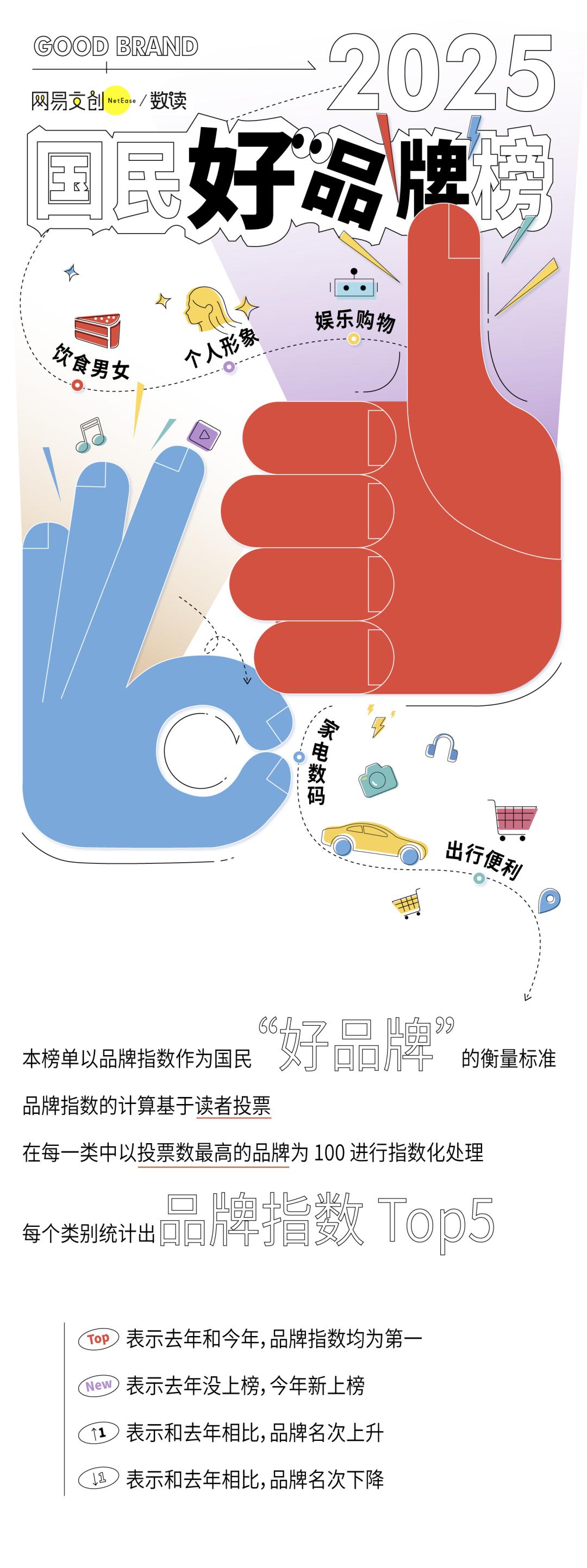
Group 1 - The brand index is used as a measurement standard for the public, calculated based on reader votes, with the highest voted brand in each category set to 100 for index processing [2] - The top five brands in various categories have been identified, with changes in rankings noted, including new entries and shifts in positions compared to the previous year [4][9] - The overall consumer sentiment indicates a cautious approach to spending, with a significant portion of respondents prioritizing product quality and reliability over brand loyalty [123][124] Group 2 - Heytea has fallen behind, with Guming Tea replacing it in the top five, and Guming Tea's store count reaching 11,179 with a net profit of 1.625 billion yuan, surpassing its total profit from the previous year [9] - Haidilao remains the top brand in the hot pot category, while KFC and McDonald's have swapped positions, with KFC slightly ahead [12] - The beverage market sees a return of Nongfu Spring to the top ranks, while Wahaha faces management turmoil, impacting its brand perception [15][17] Group 3 - In the beauty and personal care sector, Estee Lauder and L'Oreal dominate, with significant changes in rankings and the absence of local brands in the top positions [41] - Anta and Li Ning lead the sportswear category, with Li Ning rising to first place from fourth last year, while Adidas has returned to the rankings [45] - Douyin has surpassed Bilibili in the short video sector, with Douyin's daily active users reaching 600 million, while Bilibili has improved its profitability [55] Group 4 - The e-commerce landscape is evolving, with traditional platforms like JD, Meituan, and Taobao entering the instant retail competition, leading to significant financial investments in subsidies [73] - The AI app market is witnessing explosive growth, with ByteDance's products leading in active user numbers, indicating a shift towards AI-driven applications [80] - The adult product market is quietly rising, with brands like Durex and Okamoto leading the category [82] Group 5 - The home appliance market is characterized by intense competition, with Midea focusing on diversified business strategies, while Haier emphasizes high-end and localized operations [92] - Huawei continues to focus on the high-end market, with significant developments in its HarmonyOS ecosystem, while Apple faces challenges with its latest iPhone series [94][95] - The hotel industry is shifting towards new chain hotels, with traditional five-star hotels losing appeal as consumers seek more modern accommodations [116]

Apple CEO Tim Cook Just Loaded Up on Nike Stock. Should You?
The Motley Fool· 2026-01-03 20:18
Core Viewpoint - Nike is currently facing challenges despite a notable insider purchase by Apple CEO Tim Cook, which has raised questions about the company's potential turnaround [1][2]. Group 1: Insider Purchase - Tim Cook purchased 50,000 shares of Nike for nearly $3 million, nearly doubling his stake in the company, which was interpreted positively by the market [4]. - The purchase was made in the open market, indicating a personal investment rather than part of a compensation plan, which adds weight to the significance of the transaction [4]. - As a director, Cook's motivations may include aligning with shareholders and reinforcing confidence during a challenging period for Nike [6]. Group 2: Business Performance - Nike's revenue for Q2 of fiscal 2026 increased by only 1% year-over-year, with wholesale revenue rising by 8% but Nike Direct revenue declining by 8% [8][9]. - The company's gross margin fell by 300 basis points to 40.6%, and net income decreased by 32% to $792 million, indicating profitability issues [9]. - Nike is in the midst of a strategic turnaround, focusing on strengthening partner relationships and rebalancing its portfolio, but faces intense competition in the athleisure market [10]. Group 3: Valuation and Market Position - Nike's current price-to-earnings ratio stands at 37, with a forward price-to-earnings ratio of 40, suggesting that analysts expect continued pressure on earnings [11][12]. - Despite a solid dividend yield of 2.6% and a strong balance sheet, the lack of significant sales growth and declining profitability make the stock appear overvalued [11]. - The competitive landscape in athleisure, along with challenges in the direct-to-consumer channel and margin pressures, contribute to a cautious outlook for Nike [13].


XLK Offers Broader Tech Diversification, While SOXX Targets Semiconductor Stocks. Which Is the Better Investment?
Yahoo Finance· 2026-01-03 18:50
Core Insights - The iShares Semiconductor ETF (SOXX) focuses specifically on the semiconductor sector, while the State Street Technology Select Sector SPDR ETF (XLK) provides diversified exposure across the entire technology sector [2][8] Cost & Size - SOXX has an expense ratio of 0.34% and assets under management (AUM) of $17 billion, while XLK has a lower expense ratio of 0.08% and AUM of $93 billion [3][4] - Both funds have similar dividend yields, with SOXX at 0.55% and XLK at 0.53% [4] Performance & Risk Comparison - Over the past five years, a $1,000 investment in SOXX would have grown to $2,483, compared to $2,220 for XLK [5] - SOXX experienced a maximum drawdown of -45.75%, while XLK had a lower maximum drawdown of -33.56%, indicating higher risk for SOXX due to its narrower focus [5] Holdings Overview - XLK tracks the Technology Select Sector Index, including 70 leading U.S. technology stocks, with top holdings like Nvidia, Apple, and Microsoft making up nearly 40% of its assets [6][7] - SOXX is concentrated on the semiconductor industry, holding only 30 companies, with major positions in Nvidia, Advanced Micro Devices, and Micron Technology [7]
Stock Market Today, Jan. 2: Dow Climbs After Industrials Outperform on Rotation Away From Mega Cap Tech
Yahoo Finance· 2026-01-02 22:45
Market Performance - The S&P 500 rose 0.19% to 6,858.54, while the Dow Jones Industrial Average climbed 0.66% to 48,382.38, indicating strong performance in blue-chip stocks [1] - The Nasdaq Composite slipped 0.03% to 23,235.63, reflecting softness in the tech sector [1][2] Sector Analysis - Cyclical and industrial strength contributed to the Dow's outperformance, while the Nasdaq experienced a decline from its early gains [2] - Semiconductor stocks showed significant gains, with Sandisk rising 16%, ASML up 9%, and Intel increasing by 7%, driven by optimism regarding AI demand [3] Company-Specific Developments - Tesla's stock fell 3% due to vehicle deliveries falling short of expectations, and BYD has now surpassed Tesla as the world's largest electric vehicle seller [4] - Greg Abel officially took over as CEO of Berkshire Hathaway, succeeding Warren Buffett after his 60-year tenure [4]
苹果公司任命Ben Borders为首席会计官,接替Chris Kondo。
Xin Lang Cai Jing· 2026-01-02 22:03
Group 1 - Apple Inc. has appointed Ben Borders as the new Chief Accounting Officer, succeeding Chris Kondo [1]