Axis Bank

Search documents
Stock markets end with marginal gains in volatile trade
Rediff· 2025-11-13 11:49
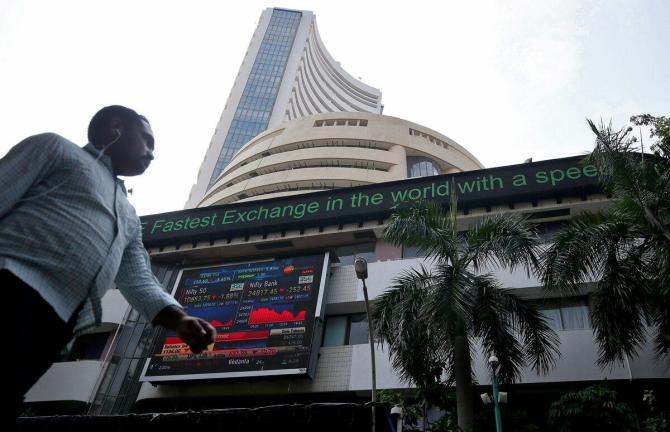
Market Performance - The benchmark indices Sensex and Nifty ended on a flat note after a three-day rally, with Sensex gaining 12.16 points (0.01%) to close at 84,478.67 and Nifty rising 3.35 points (0.01%) to finish at 25,879.15 [1][3][4] - During the trading session, Sensex reached a high of 84,919.43 and a low of 84,253.05 [3] Sector Performance - Among the gainers in the Sensex pack were Asian Paints, ICICI Bank, PowerGrid, Larsen & Toubro, Bajaj Finserv, Bharti Airtel, Sun Pharmaceuticals, Maruti Suzuki India, Axis Bank, UltraTech Cement, and HCL Technologies [4] - Conversely, laggards included Tata Motors' commercial vehicles arm, Mahindra & Mahindra, Tata Steel, Bharat Electronics Ltd, Tata Motors Passenger Vehicles, Trent, Tata Consultancy Services, Hindustan Unilever, and Infosys [5] Investor Sentiment - Investor sentiment was positively influenced by the signing of a short-term funding bill by Trump to end the US government shutdown and expectations of tariff relief for India [6] - Record-low October inflation figures bolstered expectations for an interest rate cut by the Reserve Bank of India (RBI), making rate-sensitive sectors like metals and realty attractive to investors [6] Foreign and Domestic Investment - Foreign institutional investors (FIIs) were net sellers for the third consecutive day, offloading equities worth ₹1,750.03 crore [9] - In contrast, domestic institutional investors (DIIs) continued their buying spree, purchasing stocks worth ₹5,127.12 crore [10] Global Market Context - Asian markets showed positive performance, with indices such as Shanghai's SSE Composite, Hong Kong's Hang Seng, Japan's Nikkei 225, and South Korea's Kospi ending higher [8] - Brent crude oil prices declined by 0.29% to $62.53 per barrel [8]

Has RBI directed all banks to migrate to '.bank.in' domain? PIB Fact Check team clears confusion
The Economic Times· 2025-11-13 11:30
What did the The PIB Fact Check team confirmed that this claim is true and the RBI had directed all banks to migrate their existing web domains to the new ‘.bank.in’ domain by October 31, 2025.The Central Bank issued these instructions to all banks in a circular dated April 22, 2025..As per the PIB Fact Check’s social media post on X (formerly known as Twitter), “The Indian National Internet Exchange (NIXI), operating under the Ministry of Electronics and Information Technology (MeitY), has appointed the I ...
Stock markets end with marginal gains amid volatile trade, foreign fund outflows
The Hindu· 2025-11-13 11:24
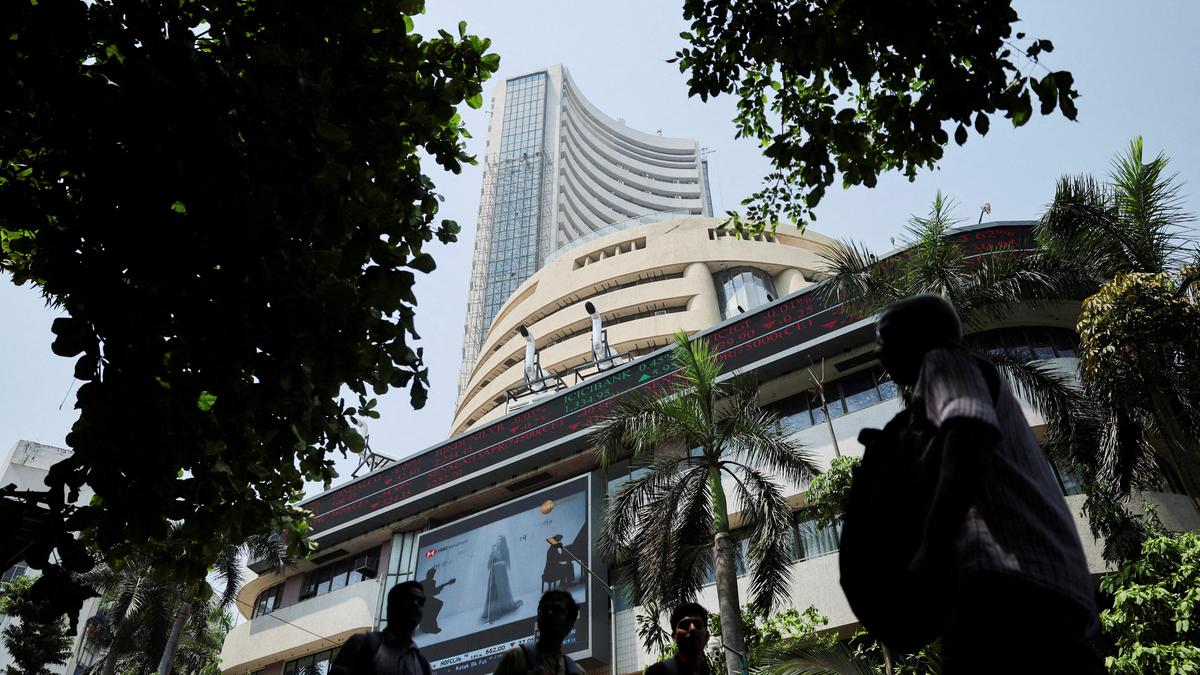
Market Overview - Stock markets experienced a three-day rally that fizzled out, with benchmark indices Sensex and Nifty ending flat amid choppy trading on November 13, 2025 [1] - The BSE Sensex closed with a slight gain of 12.16 points, or 0.01%, at 84,478.67, while the NSE Nifty rose by 3.35 points, or 0.01%, to 25,879.15 [1][2] Sector Performance - Among the gainers in the Sensex pack were Asian Paints, ICICI Bank, PowerGrid, Larsen & Toubro, Bajaj Finserv, Bharti Airtel, Sun Pharmaceuticals, Maruti Suzuki India, Axis Bank, UltraTech Cement, and HCL Technologies [2] - Conversely, laggards included Tata Motors' commercial vehicles arm, Mahindra & Mahindra, Tata Steel, Bharat Electronics Ltd, Tata Motors Passenger Vehicles, Trent, Tata Consultancy Services, Hindustan Unilever, and Infosys [3] Economic Indicators - The market sentiment was positively influenced by the signing of a short-term funding bill by Trump to end the U.S. government shutdown and hopes for tariff relief for India [4] - Record-low October inflation figures reinforced expectations of an interest rate cut by the Reserve Bank of India (RBI), making rate-sensitive sectors like metals and realty attractive to investors [5] Foreign Investment Trends - Foreign institutional investors were net sellers for the third consecutive day, offloading equities worth ₹1,750.03 crore, while domestic institutional investors purchased stocks worth ₹5,127.12 crore [7] - The previous day, the BSE Sensex had rallied by 595.19 points, closing at 84,466.51, and the NSE Nifty climbed 180.85 points to close at 25,875.80 [7]
Super saver home loans: How they help cut interest and shorten your loan tenure
MINT· 2025-11-11 09:18
Are you planning to take a home loan soon? Do you have surplus funds with you? Then, a super saver home loan can be the right choice for you. Though the interest rates are slightly higher than regular home loans, super saver home loans will reduce your total payout substantially if used properly.This is because the surplus funds when parked in an OD (Overdraft) account linked to the home loan, earn you a significantly higher interest than regular savings accounts. State Bank of India (SBI), Axis Bank, HSBC, ...

Can your job tenure and work experience influence your personal loan eligibility?
MINT· 2025-11-11 08:35
Core Insights - The article discusses how work experience impacts personal loan applications, highlighting both positive and negative effects of job changes on loan approval [1][2]. Group 1: Positive Impact of Work Experience - A recent job change can positively influence a personal loan application if it involves a higher designation, reputable company, and increased salary, leading to improved cash flows [3][4]. - Higher cash flows reduce the debt-to-income (DTI) ratio, enhancing the borrower's repayment capacity, which is a critical factor for banks [4]. - Transitioning from a risky sector to a stable one, such as moving from a startup to a manufacturing company, increases the likelihood of loan approval [5]. Group 2: Negative Impact of Work Experience - Frequent job changes within a short period can raise red flags for banks, potentially leading to loan application rejection or unfavorable terms [7][8]. - A significant break between jobs may cause banks to process applications cautiously, especially if the gap is prolonged without valid reasons [9]. - Applications during a probation period of 6 to 12 months may face scrutiny, with banks preferring to wait for confirmation of employment [10]. Group 3: Work Experience Criteria by Banks - Banks typically require a minimum overall work experience, with specific tenure requirements for current employment. For example, HDFC Bank requires at least 2 years of total work experience, with 1 year at the current employer [12]. - ICICI Bank mandates a minimum of 2 years of total work experience for salaried individuals and 3 years for self-employed individuals [13]. - State Bank of India (SBI) requires a minimum of 6 months for government employees and 12 months for corporate sector employees [14]. Group 4: Overall Eligibility Criteria - Meeting work experience criteria alone is insufficient for loan approval; other factors such as credit score, DTI ratio, income, and age must also be considered [15][16]. - Maintaining a good credit score (750 and above) and a low DTI ratio (35% or lower) is essential for enhancing loan approval chances [18].

Stock markets snap three-day decline on buying in IT stocks; Sensex jumps 319 points
The Hindu· 2025-11-10 11:36
Market Performance - Benchmark stock indices Sensex and Nifty rebounded on November 10, 2025, after three consecutive days of losses, driven by buying in IT and financial shares and a rally in global markets [1][2] - The BSE Sensex increased by 319.07 points, or 0.38%, closing at 83,535.35, with an intraday high of 83,754.49, reflecting a rise of 538.21 points, or 0.64% [1] - The NSE Nifty rose by 82.05 points, or 0.32%, settling at 25,574.35, reaching an intraday high of 25,653.45, which was an increase of 161.15 points, or 0.63% [2] Sector Performance - Among the Sensex firms, notable gainers included Infosys, HCL Technologies, Bajaj Finance, Asian Paints, Tata Motors Passenger Vehicles, Tata Consultancy Services, Bharti Airtel, Titan, Bajaj Finserv, Reliance Industries, and Larsen & Toubro [2] - Conversely, laggards included Trent Ltd, Eternal, Power Grid, UltraTech Cement, Mahindra & Mahindra, Axis Bank, State Bank of India, Adani Ports, Hindustan Unilever, and NTPC [3] Market Sentiment - The potential resolution of the U.S. government shutdown and renewed Foreign Institutional Investor (FII) buying, supported by a favorable Q2 earnings season, contributed to positive market sentiment [4] - Strengthening domestic macroeconomic indicators are expected to lead to upward revisions in earnings estimates for H2FY26, reinforcing current valuations and attracting incremental liquidity [5] Global Market Influence - Asian markets showed positive performance, with South Korea's Kospi up 3.02%, Hong Kong's Hang Seng rising 1.55%, Japan's Nikkei 225 increasing by 1.33%, and Shanghai's Composite Index finishing 0.53% higher [5] - European markets were mostly trading higher, and U.S. markets ended largely higher on November 7, 2025 [6] Institutional Investment - On November 7, 2025, Foreign Institutional Investors (FIIs) purchased equities worth ₹4,581.34 crore, while Domestic Institutional Investors acquired stocks worth ₹6,674.77 crore, indicating strong domestic buying interest [6]
Markets rebound after 3-day fall on firm Asian peers, FII inflows
BusinessLine· 2025-11-10 04:39
Core Insights - Equity benchmark indices Sensex and Nifty rebounded in early trade on Monday after three sessions of decline, driven by positive trends in Asian markets and buying in blue-chip stocks [1] - Fresh foreign fund inflows contributed to the positive investor sentiment [1] Market Performance - The 30-share BSE Sensex rose by 267.74 points or 0.32% to 83,484.02, while the 50-share NSE Nifty increased by 84.90 points or 0.33% to 25,577.20 in early trade [1] - Among the 30 Sensex firms, notable gainers included Asian Paints, Bharat Electronic Ltd, Larsen & Toubro, Titan, and Reliance Industries, while laggards included Trent Ltd, Power Grid, and Mahindra & Mahindra [2] Asian Market Trends - In Asian markets, South Korea's Kospi surged by 3%, Japan's Nikkei 225 index gained nearly 1%, and Hong Kong's Hang Seng rose by 0.47%, while Shanghai's Composite Index was slightly lower [3] - The US markets ended largely higher on the previous Friday [3] Foreign Investment Activity - Foreign Institutional Investors (FIIs) purchased equities worth ₹4,581.34 crore, while Domestic Institutional Investors acquired stocks worth ₹6,674.77 crore, indicating strong domestic buying [3] Commodity Prices - Brent crude, the global oil benchmark, increased by 0.64% to $64.04 per barrel [4]

Why zero forex cards are better than prepaid cards for frequent overseas travellers?
The Economic Times· 2025-11-10 01:00
Core Insights - The article discusses the rising costs associated with overseas spending for Indian travelers due to foreign currency markup fees on international transactions, highlighting the need for more cost-effective financial products [1][2][26] - Financial services are responding to this challenge by introducing zero-forex credit and debit cards, which aim to reduce the costs of overseas transactions and encourage spending abroad [2][24] Financial Products Overview - Zero-forex cards allow users to pay only the actual exchange rate plus a small commission, avoiding the typical 3.5% markup associated with foreign transactions [4][10] - Private lenders and fintech companies are launching zero-forex products, with notable examples including Scapia's partnership with Federal Bank and Niyo's offerings with DCB Bank and SBM Bank [6][24] - These products have gained popularity among travelers, as they provide benefits such as unlimited domestic airport lounge access and reward points for transactions [9][10] User Experiences - Users like Manas Batra have reported positive experiences with zero-forex cards, citing lower costs and better rewards compared to traditional travel cards [8][10] - Cautious spenders, such as Nishant Kapoor, prefer debit cards for their top-up mechanism, allowing for better tracking of expenses and control over spending [11][12] Market Trends - The Reserve Bank of India's data indicates a decline in overseas expenditure under the Liberalised Remittance Scheme, suggesting that high costs are impacting travel spending [26] - Experts believe that as awareness of zero-forex cards increases, the demand for traditional prepaid forex cards may decrease, shifting the market dynamics [24][25] Cost Considerations - While zero-forex cards offer advantages, they may not always maximize savings compared to traditional credit cards that provide cashback and rewards despite their forex markup [18][19] - Most travel cards, including zero-forex options, still charge fees for overseas ATM withdrawals, which can add to the overall cost of using these financial products [22][23]


GST bazooka: Lenders raise credit growth guidance for FY26
BusinessLine· 2025-11-09 14:20
Core Insights - Banks have increased their credit growth guidance for the current financial year due to factors such as GST rate cuts, lower interest rates following a 100 basis points repo cut, and easing banking regulations by the Reserve Bank of India (RBI) [1][2] Group 1: Banking Sector - State Bank of India (SBI) has revised its credit growth guidance from 11% to 12-14% for FY26, citing robust growth across business segments and supportive measures from the RBI and fiscal policies [2] - SBI reported significant demand for car and personal loans following the GST rate cuts in September [3] - Axis Bank anticipates strong credit growth in H2FY26, driven by favorable conditions such as repo cuts, improved liquidity, and a favorable monsoon, despite facing headwinds in H1FY26 [3][4] Group 2: Non-Banking Financial Companies (NBFCs) - Shriram Finance has observed increased credit demand in the last week of September, particularly in the two-wheeler and car segments, and has guided for a loan growth of 15% in FY26, with potential for higher growth of 17-18% [5] - Piramal Finance expects an AUM growth of 25% for the fiscal year, noting that while used car prices have decreased due to GST reductions, the increase in units sold compensates for this [6]

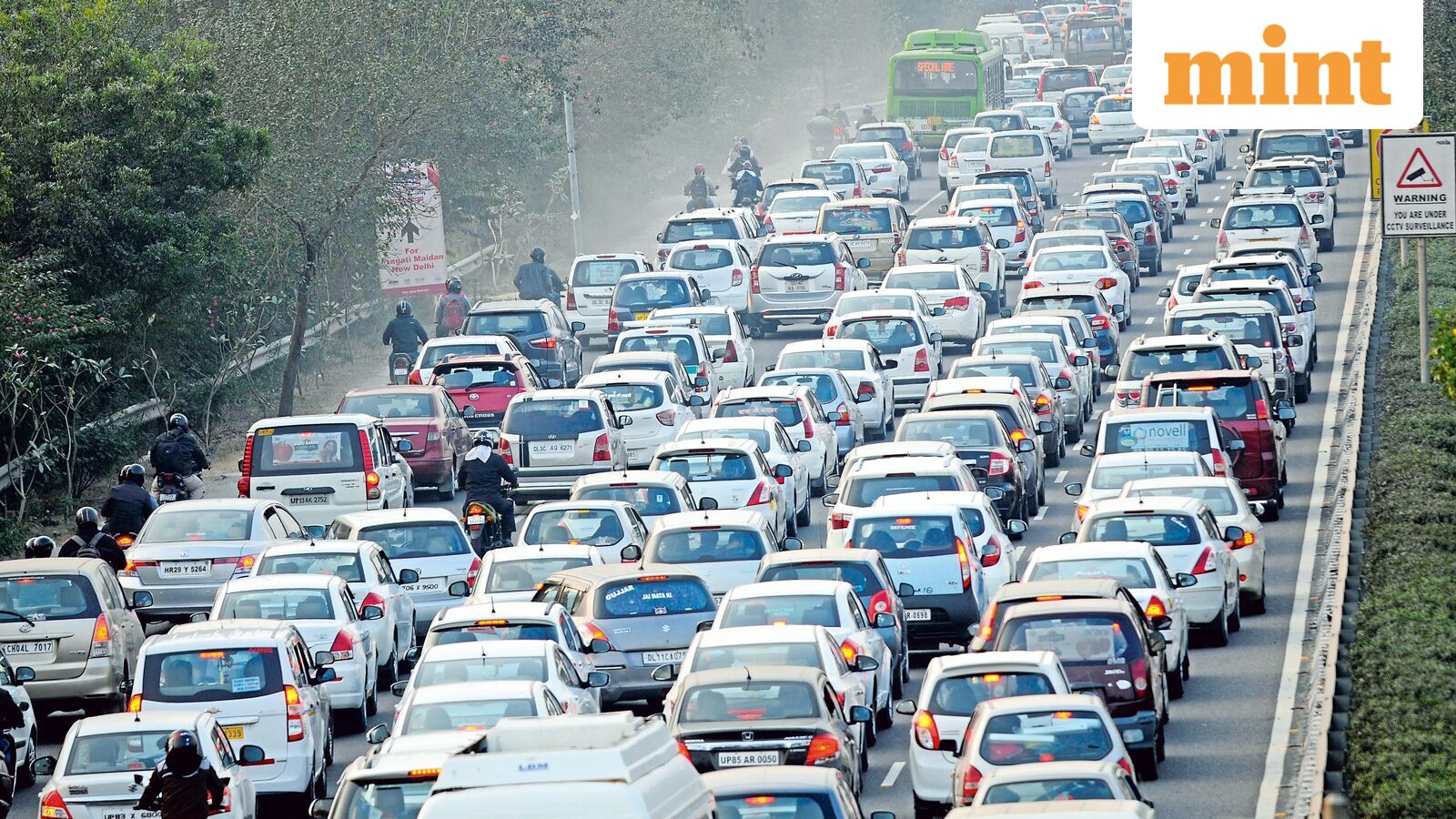
Road divergence: Car loans race ahead post-GST cuts, but CVs stuck in slow lane
MINT· 2025-11-06 00:30
Core Insights - The reduction in GST rates on select vehicles has revitalized retail sentiment, leading to increased demand for auto loans and passenger vehicle sales [1][3][6] Vehicle Loan Growth - In September, India's banking sector experienced a vehicle loan growth of 7.3% year-on-year, a decline from the 14% growth seen in the same month the previous year [2] - For the first half of the current financial year, vehicle loan growth ranged from 7.3% to 10.8%, compared to a rise of 13.9% to 17.2% in the same period last year [2] Impact of GST Reform - The GST reforms effective from September 22 created a two-slab tax system, significantly reducing rates on certain vehicle categories, which has led to a recovery in vehicle demand [3][8] - State Bank of India reported a nearly 10% year-on-year growth in auto loans to ₹1.28 trillion during the September quarter, attributing this to the GST cuts [8] Segment Performance - Commercial vehicle sales increased by over 8% year-on-year to 240,000 units, while passenger vehicle sales fell by 1.5% to 1.04 million units, although there were signs of recovery towards the end of the quarter [9] - The two-wheeler segment saw over 7% year-on-year growth, totaling 5.56 million units sold in the July-September period [12] Market Sentiment and Future Outlook - Bankers noted that the recent uptick in vehicle loans is still in early stages, with sustainability dependent on continued demand through the festive season [6] - IndusInd Bank reported a significant rebound in vehicle loan disbursements post-GST implementation, with expectations of continued demand momentum supported by the festive season and improved economic activity [17][16] Commercial Vehicle Segment Challenges - Despite some growth in commercial vehicle sales, lenders remain cautious due to borrower over-leverage and economic sluggishness, leading to tightened underwriting standards [21][23] - The effective cost for customers in the commercial vehicle segment has not changed significantly, as manufacturers have reduced discounts rather than passing on the full benefits of GST cuts [20][21]