ProShares

Search documents
SEC Blocks High-Leverage ETF Plans from Top Firms
Wealth Management· 2025-12-03 16:05
(Bloomberg) -- The US Securities and Exchange Commission has issued a flurry of warning letters to some of the country’s most prolific providers of high-octane exchange-traded funds, effectively blocking the introduction of products designed to deliver three and even five times the daily returns of stocks, commodities and cryptocurrencies.In a set of nine almost identical letters posted Tuesday, the SEC told firms including Direxion, ProShares and Tidal that it would not move forward with reviewing proposed ...


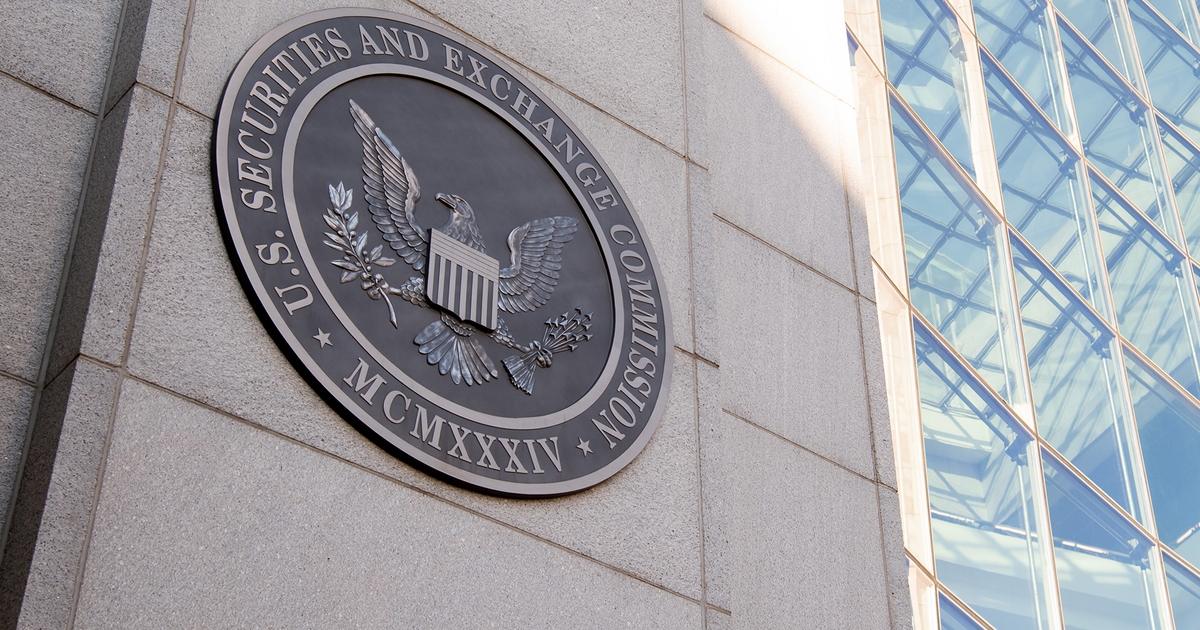
SEC Halts High-Leveraged ETF Plans in Warning Over Risks
Yahoo Finance· 2025-12-03 13:33
Core Viewpoint - The US Securities and Exchange Commission (SEC) has issued warning letters to major providers of leveraged exchange-traded funds (ETFs), effectively halting the introduction of products that aim to deliver returns exceeding 200% of daily performance for various assets [1][2][3]. Group 1: SEC's Actions - The SEC sent nine nearly identical letters to firms such as Direxion, ProShares, and Tidal, stating that it will not review proposed launches until significant issues are resolved [2]. - The SEC's primary concern is that the risk exposures of these funds may surpass the regulatory limits on risk relative to their assets [2][5]. - Fund managers are directed to either revise their investment strategies or formally withdraw their applications in response to the SEC's concerns [2]. Group 2: Nature of the Funds - The funds under scrutiny are characterized by high leverage, daily trading resets, and exposure to volatile assets, including single stocks and cryptocurrencies [4]. - Some funds, such as those proposed by Volatility Shares, aimed to launch ETFs with five times leverage targeting highly volatile assets like Tesla and Bitcoin [5]. - Currently, no 5x or even 3x single-stock ETFs exist in the US due to SEC regulations that have historically limited such exposure to a maximum of 2x leverage [5].
Why The Tech Sector's Ergodic Illusion Aligns With The ProShares Nasdaq-100 High Income ETF's Directive
Benzinga· 2025-12-03 13:12
Core Viewpoint - The Nasdaq Composite has shown strong performance this year, gaining over 21%, but has faced volatility, particularly due to concerns over an AI bubble and declines in other sectors like cryptocurrency [1][2]. Market Performance - The Nasdaq Composite index has experienced a recent decline of approximately 2% over the past month, despite a recovery attempt with a nearly 3% increase in the last five sessions [1][5]. - The IQQQ ETF has gained about 5.5% since the start of the year and approximately 16% over the past six months, indicating a bullish reversal in the latter half of November [13]. Economic Context - The Federal Reserve's potential rate cuts have shifted market sentiment, with analysts from JP Morgan and Goldman Sachs forecasting a quarter-point cut after the December policy meeting [4]. - The economic theory suggests that reduced borrowing costs could encourage spending and investment, while a hawkish policy may lead to hoarding behavior, which is detrimental to growth [3]. Investment Strategy - The ProShares Nasdaq-100 High Income ETF (IQQQ) is designed to provide high income while targeting long-term returns, utilizing a daily covered-call strategy to navigate market volatility [8][9]. - The daily reset mechanism of IQQQ allows it to capture short bursts of implied volatility, enhancing its ability to collect premiums during market fluctuations [10][12]. - IQQQ offers a balance between immediate cash flow and long-term participation in tech's trajectory, appealing to income-focused investors seeking stability amid market turbulence [11][16].

美国SEC叫停高杠杆ETF产品发行计划
Jing Ji Guan Cha Wang· 2025-12-03 04:00
经济观察网当地时间12月2日,美国证券交易委员会(SEC)向美国多家高杠杆交易所交易基金(ETF)的主 要提供商密集发出警告函。SEC告知Direxion、ProShares和Tidal等公司,在关键问题得到解决之前,将 暂停对拟推出产品的审核,要求基金管理人修改投资策略或正式撤回申请。SEC称,对寻求超过200%(2 倍)杠杆敞口的交易所交易基金注册申请表示关切。 ...
美国SEC连发九封警告函 叫停高杠杆ETF产品发行计划
Xin Lang Cai Jing· 2025-12-03 03:28
Core Viewpoint - The SEC has issued warnings to several major providers of leveraged ETFs, effectively halting the launch of products aimed at achieving two to three times daily returns on stocks, commodities, and cryptocurrencies [1][3]. Group 1: SEC Actions - The SEC sent out nine nearly identical letters to companies like Direxion, ProShares, and Tidal, stating that the review of proposed products will be paused until key issues are resolved [1][3]. - The SEC's primary concern is that the risk exposure of these funds may exceed the agency's limits on risk relative to asset size [1][3]. - The letters require fund managers to either modify their investment strategies or formally withdraw their applications [1][3]. Group 2: Market Context - This action marks a rare pause in the previously lenient approval environment for U.S. funds, which had allowed various cryptocurrency-related ETFs and increasingly complex trading strategies to launch [1][3]. - The funds currently under SEC scrutiny are at the extreme edge of this trend, combining high leverage, daily trading reset mechanisms, and involvement in highly volatile markets, including individual stocks and digital tokens [1][3]. Group 3: Leveraged Products Popularity - Leveraged products are favored by investors for their ability to amplify returns through options, leading to a surge in trading volume since the pandemic, with related asset sizes reaching $162 billion [2][4]. - The SEC's swift public disclosure of its concerns indicates a desire to communicate these issues promptly, as the agency typically releases correspondence with companies only after completing reviews, which usually takes about 20 business days [2][4].
ETF flows reveal what smart investors are buying now
Yahoo Finance· 2025-12-02 21:12
Mo Haghbin They're a conglomerate. Underneath that, there's several companies, and those companies underneath are not necessarily correlated. So like let's take Apple for example. You know they have hardware. They have you know, things like wearables, they have software. These things are actually not as correlated as you think. And maybe 20 years ago those would all be independent companies. For me, I think short term that I think will probably continue and markets will rally because of it.Mo Haghbin I mean ...
ETF Flows Reveal What Smart Investors Are Buying Now
Youtube· 2025-12-02 18:48
Joining me now, Mo Hagbin, managing director at ProShares. Mo, thanks so much for being here at the desk with me. >> Thanks for having me.>> So, let's start by talking about ETF flows because you have some unique insights. Obviously, at ProShares, you get a chance to see where the money's going, where it's coming from. What are you seeing that might be surprising or maybe that goes against the market narrative.>> Sure. Well, I mean, look, headline, we're having an incredible year in terms of asset gathering ...

Santa Rally May Skip 2025: ETFs To Watch This December - Invesco QQQ Trust, Series 1 (NASDAQ:QQQ), iShares Expanded Tech-Software Sector ETF (BATS:IGV)
Benzinga· 2025-12-01 20:59
Core Insights - December's market behavior is expected to be more volatile than usual, contrasting with its historical trend of stability and comfort [1] - Investors are shifting focus towards downside protection, indicating a departure from traditional year-end optimism [2] Volatility ETFs - There is an increased interest in volatility-linked ETFs such as ProShares VIX Short-Term Futures ETF (BATS:VIXY), ProShares VIX Mid-Term Futures ETF (BATS:VIXM), and ProShares Ultra VIX Short-Term Futures ETF (BATS:UVXY) as investors seek protection against potential market downturns [2][3] Market Dynamics - The typical calm of December is disrupted by recent market shocks, including DeepSeek's collapse and unexpected tariffs, leading to a potential rise in volatility [3] - The momentum trade is showing signs of weakness, which may benefit equal-weight ETFs like Invesco S&P 500 Equal Weight ETF (NYSE:RSP) and defensive funds such as iShares MSCI USA Minimum Volatility Factor ETF (BATS:USMV) [4] Megacap Tech ETFs - Megacap technology stocks have caused significant market fluctuations, impacting tech-heavy ETFs like Invesco QQQ Trust (NASDAQ:QQQ) and iShares Semiconductor ETF (NASDAQ:SOXX), with AI-related uncertainties contributing to this volatility [5]

Big Returns and Big Risk: See How SOXL and SSO Measure Up
The Motley Fool· 2025-12-01 20:25
Core Insights - The article discusses the differences between two leveraged ETFs: Direxion Daily Semiconductor Bull 3X Shares (SOXL) and ProShares Ultra S&P500 (SSO), highlighting their distinct investment strategies and risk profiles [1][9]. Fund Overview - SOXL focuses exclusively on the semiconductor sector, while SSO aims to double the daily return of the S&P 500 index [1][9]. - SOXL has an expense ratio of 0.75% and an AUM of $12.9 billion, whereas SSO has a higher expense ratio of 0.87% and an AUM of $7.3 billion [3]. Performance Metrics - As of November 28, 2025, SOXL achieved a 1-year return of 47.0%, significantly outperforming SSO's 18.8% return [3]. - The maximum drawdown over five years for SSO was -46.77%, while SOXL experienced a much steeper drawdown of -90.51% [5][10]. - Over five years, a $1,000 investment in SSO would grow to $2,735, compared to $1,525 for SOXL [5]. Sector Concentration - SOXL is highly concentrated with 100% allocation to technology, specifically semiconductors, and holds only 44 positions, including major companies like Broadcom, AMD, and Nvidia [6]. - In contrast, SSO mirrors the S&P 500 with over 500 holdings across various sectors, including technology and financials, with top positions in Nvidia, Apple, and Microsoft [7]. Investment Suitability - SOXL is designed for short-term traders seeking aggressive sector exposure, while SSO offers broader market exposure but with higher volatility [12]. - Despite SSO's better performance compared to the S&P 500, it still does not consistently deliver a 2x return, indicating the inherent risks of leveraged ETFs [12].

QLD vs. SSO: Which 2x Leveraged ETF Is Best for Investors Right Now?
The Motley Fool· 2025-12-01 18:28
Core Insights - The ProShares Ultra QQQ ETF (QLD) and ProShares Ultra S&P 500 ETF (SSO) both provide 2x daily leveraged exposure but differ in underlying index, sector concentration, and risk-return profile [1][2] Group 1: Cost and Size Comparison - SSO has a lower expense ratio of 0.87% compared to QLD's 0.95% [3] - As of December 1, 2025, SSO's one-year return is 18.32%, while QLD's is significantly higher at 32.48% [3] - SSO offers a higher dividend yield of 0.72% compared to QLD's 0.18% [3] - SSO has assets under management (AUM) of $7.7 billion, while QLD has $9.9 billion [3] Group 2: Performance and Risk Comparison - Over the past five years, SSO experienced a maximum drawdown of -46.73%, while QLD faced a more severe drawdown of -63.68% [4] - The growth of $1,000 over five years is $2,725 for SSO and $2,736 for QLD, indicating similar performance despite different risk profiles [4] Group 3: Portfolio Composition - QLD's portfolio is heavily concentrated in technology (55%), with significant allocations to Nvidia, Apple, and Microsoft [5] - SSO's portfolio is also tech-heavy (35%) but offers broader sector diversification with 503 holdings [6] - Both funds reset their daily leverage, which can lead to divergence in long-term returns, especially in volatile markets [6] Group 4: Risk Profile - QLD is identified as the more volatile option, with a higher beta of 2.22 compared to SSO's 2.02, indicating greater price fluctuations [3][9] - SSO provides more diversification and has experienced less volatility in recent years, although it has lower one-year returns compared to QLD [10][11]