General Motors

Search documents
General Motors (GM) Increases Yet Falls Behind Market: What Investors Need to Know
ZACKS· 2025-03-07 23:50
Group 1 - General Motors (GM) stock closed at $47.44, with a daily increase of +0.51%, underperforming the S&P 500's gain of 0.55% [1] - Over the past month, GM shares experienced a loss of 1.52%, which is significantly better than the Auto-Tires-Trucks sector's loss of 17.9% and the S&P 500's loss of 5.56% [1] Group 2 - GM is projected to report earnings of $2.70 per share, reflecting a year-over-year growth of 3.05%, with quarterly revenue expected at $42.7 billion, down 0.73% from the previous year [2] - For the full year, earnings are estimated at $11.46 per share and revenue at $180.2 billion, showing changes of +8.11% and -3.87% respectively from the prior year [3] Group 3 - Recent changes in analyst estimates for GM indicate a positive outlook, with a 1.52% rise in the Zacks Consensus EPS estimate over the past month [5] - GM currently holds a Zacks Rank of 2 (Buy), which has historically outperformed the market [5] Group 4 - GM's Forward P/E ratio stands at 4.12, significantly lower than the industry average of 11.2, suggesting that GM is trading at a discount [6] - The PEG ratio for GM is 0.66, compared to the industry average of 1.14, indicating favorable valuation metrics [6] Group 5 - The Automotive - Domestic industry, which includes GM, has a Zacks Industry Rank of 158, placing it in the bottom 38% of over 250 industries [7] - The Zacks Industry Rank assesses the performance potential of industry groups based on the average Zacks Rank of individual stocks [7]


TWG Motorsports and GM Receive Formal Approval for Cadillac Formula 1™ Team
Prnewswire· 2025-03-07 16:01
Core Points - The Cadillac Formula 1 Team has received final approval to join the FIA Formula One World Championship grid in March 2026, backed by TWG Motorsports and General Motors [1][2] - This expansion to an 11th team is seen as a milestone for the FIA Formula One Championship, bringing fresh energy and aligning with the new FIA 2026 regulations [2] - The partnership between TWG Motorsports and General Motors aims to create a distinctly American team with a strong foundation in performance and engineering excellence [3][4] Company Developments - TWG Motorsports has been working closely with General Motors to establish a robust foundation for the Cadillac Formula 1 Team, focusing on expanding facilities and refining technologies [4][5] - Graeme Lowdon has been appointed as Team Principal, while Russ O'Blenes will lead TWG GM Performance Power Units, which will focus on building Formula 1 chassis and power units [4] - The team has assembled over 300 experienced personnel for aerodynamics, chassis, and component development, with ongoing preparations for their first V6 power unit [6] Industry Impact - The entry of the Cadillac Formula 1 Team is expected to inspire future competitors and fans, pushing the boundaries of motorsport at the highest level [3] - The announcement signifies a commitment to innovation and competitive excellence within the motorsports industry, particularly in the context of Formula 1 [7][8]
EVGO or CHPT: Which Stock is the Better Pick Post Q4 Results?
ZACKS· 2025-03-07 15:50
Industry Overview - The electric vehicle (EV) charging infrastructure market is rapidly expanding globally, with China leading at over 3.2 million public charge points, followed by Europe with over 900,000, and the United States with approximately 206,000 public charging ports [1][2][3] - The U.S. is set to add more than 11,500 EV charging ports through the Bipartisan Infrastructure Law, aiming for a total of 500,000 publicly available EV chargers by 2030 [2] Company Analysis: EVgo - EVgo has seen a 35% year-over-year revenue growth in Q4 2024, driven by increased charging sessions, with a network throughput of 84 gigawatt-hours compared to 50 gigawatt-hours in the previous year [5] - The company has expanded its operational stalls from 2,980 to 4,080 and added over 133,000 accounts in the quarter [5] - A joint development agreement with Delta Electronics aims to enhance charger reliability and cost efficiency, potentially boosting EVgo's prospects [6] - Despite growth, EVgo remains unprofitable with a negative adjusted EBITDA and is vulnerable to shifts in federal policy due to its reliance on NEVI funding [8] Company Analysis: ChargePoint - ChargePoint has reduced its non-GAAP operating expenses by 42% and reported a 14% year-over-year growth in subscription revenues, reaching $38 million in Q4 [10] - The company operates 342,000 managed charging ports, benefiting from increasing EV adoption, and is not reliant on NEVI funding, providing insulation from federal policy changes [10] - ChargePoint's collaboration with General Motors aims to install hundreds of ultra-fast charging ports across the U.S. by 2025, enhancing its growth prospects [11] - The company has introduced innovative solutions to combat EV charger vandalism, which are expected to strengthen its market position [12] Financial Performance - In the trailing 12 months, EVgo shares have decreased by 9.8%, while ChargePoint shares have dropped by 64.2%, compared to a 6.1% decline in the Zacks Auto, Tires and Trucks sector [14] - EVgo's forward price/sales ratio is 1.94x, while ChargePoint's is 0.64x, indicating that both stocks are not considered cheap [16] - The Zacks Consensus Estimate for EVgo's 2025 loss is 55 cents per share, while ChargePoint's fiscal 2026 loss estimate is 19 cents per share [20][21] Investment Outlook - EVgo's high valuation is not justified given its risky growth prospects and dependence on federal policies, leading to a Zacks Rank 3 (Hold) [22] - ChargePoint, with its cost-cutting measures, growing revenues, and strong partnerships, presents a more stable investment opportunity, carrying a Zacks Rank 2 (Buy) [23]



Don't Miss Out! NVDA & GM are the Best AI and EV Stocks to Buy Now
ZACKS· 2025-03-07 14:30
Group 1: Future of Transportation - The future of transportation is centered around self-driving cars and robotics-powered industries, with significant market expansion expected in the coming decades [1] - Companies leading in AI-driven automation, such as NVIDIA and General Motors, are positioned to benefit greatly as self-driving technology becomes mainstream [1] Group 2: NVIDIA's Role in AV and Robotics - NVIDIA's automotive AI revenues reached $570 million in Q4 of fiscal 2025, reflecting a 103% year-over-year growth, driven by adoption from major automakers [2] - NVIDIA's AI chips and software are essential for real-time object detection, movement prediction, and decision-making in self-driving cars, making high-performance AI computing crucial for the self-driving revolution [3] - Beyond automotive, NVIDIA's AI is transforming robotics and smart manufacturing, enhancing efficiency in factories and warehouses [4] - Partnerships with companies like Uber and automakers are expected to drive NVIDIA's revenue growth in AI-driven mobility solutions [5] Group 3: General Motors' Strategy - General Motors reported revenues of $47.7 billion in Q4 of 2024, a 10.99% increase year-over-year, with EV production reaching 189,000 units [6] - GM is focusing its autonomous driving strategy on personal vehicles, which could lead to annual cost savings of $1 billion [6] - The expansion of GM's Super Cruise technology is expected to double the number of equipped vehicles by 2025, potentially generating $2 billion in annual revenues from subscriptions [7] - GM aims for 100% EV sales by 2035, with new models driving adoption and partnerships aimed at improving capital efficiency [8] Group 4: Investment Perspective - Short-term growth for GM is anticipated from EV sales and Super Cruise subscriptions, while long-term gains will stem from leadership in autonomous driving technology [9] - Investing in both NVIDIA and GM provides exposure to the growing AV and electric mobility sectors, leveraging NVIDIA's AI capabilities and GM's manufacturing expertise [10][11] - This combination positions investors for long-term growth as automation reshapes industries globally [12]


Will Trump's One-Month Tariff Delay for Automakers Be of Much Help?
ZACKS· 2025-03-06 15:50
Core Viewpoint - The one-month exemption from tariffs for U.S. automakers provides temporary relief but does not address the underlying issues and uncertainties that the tariffs will create once the exemption period ends [1][12]. Group 1: Immediate Market Reaction - The announcement of the one-month exemption led to a recovery in auto stocks, with Ford, General Motors, and Stellantis seeing stock price increases of approximately 6%, 7%, and 9% respectively [2]. - Tesla also experienced a 2.6% gain following the news, recovering from a previous drop of 4.4% [2]. Group 2: Impact on Vehicle Prices - Tariffs are projected to increase vehicle prices by as much as $12,000 for cars not yet built or imported, with the average new car price nearing $49,000 expected to rise by at least $3,000 [4]. - Full-size pickup trucks, a significant segment for U.S. automakers, could see price hikes of up to $10,000 [4]. Group 3: Inventory and Consumer Options - Current new car inventory is up 12% compared to last year, providing consumers a limited opportunity to purchase vehicles at pre-tariff prices [5]. - Used cars remain exempt from tariffs, but their availability is decreasing, with the supply of used cars declining from 49.5 days in January to 45.2 days in February [6]. Group 4: Long-Term Industry Consequences - The Big 3 automakers face varying exposure to tariffs, with GM and Stellantis particularly vulnerable due to their reliance on Mexican manufacturing [7]. - The complex supply chain means that no automaker is fully insulated from tariff impacts, and the one-month exemption only delays the inevitable cost increases [8][9]. Group 5: Predictions and Future Outlook - Prolonged tariffs could lead to production slowdowns or shutdowns, with S&P Global Mobility warning of a potential "Tariff Winter" scenario, predicting a 10% decline in North American light-vehicle sales over several years if tariffs persist beyond eight weeks [10]. - The market's short-term boost does not resolve the long-term challenges posed by tariffs, and companies are strategizing on how to manage increased costs [12].


General Motors (GM) Moves 7.2% Higher: Will This Strength Last?
ZACKS· 2025-03-06 09:46
General Motors (GM) shares ended the last trading session 7.2% higher at $48.48. The jump came on an impressive volume with a higher-than-average number of shares changing hands in the session. This compares to the stock's 6.9% loss over the past four weeks.General Motors shares have gained following the Trump administration's decision to postpone tariffs on automakers for one month, provided their vehicles meet the United States-Mexico-Canada Agreement requirements. This development is particularly benefic ...
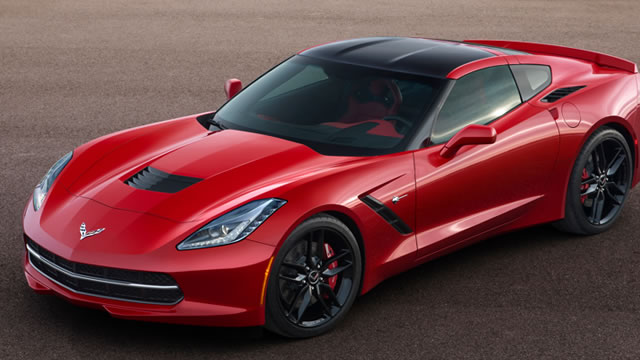
The Big 3 automakers wanted a tariff exemption. Trump has given them one month.
Business Insider· 2025-03-05 19:52
Group 1 - The White House has granted a one-month reprieve on tariffs for automakers Stellantis, Ford, and General Motors at their request [1][2][6] - Automakers will not receive another pause when the second round of trade-related tariffs goes into effect on April 2, and additional tariffs on steel and aluminum are set to begin on March 12 [3][4] - Shares of automakers rebounded on Wall Street following the announcement, indicating potential optimism among traders for future deals [3] Group 2 - The current tariffs are linked to President Trump's concerns regarding the flow of fentanyl from Canada and Mexico into the US, which has been disputed by leaders of those countries [4][5] - Trump expressed that he is open to dialogue regarding further exemptions for automakers [5][6]

Big Three automakers get 1-month tariff exemption, White House says
Fox Business· 2025-03-05 19:26
Group 1 - The "Big Three" automakers, Stellantis, Ford, and General Motors, received a one-month exemption from tariffs imposed by the Trump administration [1][2] - The exemption allows these companies to avoid economic disadvantages while reciprocal tariffs are set to take effect on April 2 [2] - The Trump administration encourages these automakers to invest and shift production to the United States to avoid tariffs altogether [3] Group 2 - The administration's tariffs aim to match higher tariff rates from other countries and address trade barriers such as regulations and subsidies [5] - The trade review by the Trump administration is expected to be completed by April 1, focusing on countries with significant trade surpluses with the U.S. [4] - Critics argue that the tariffs could lead to increased prices for American consumers, while the administration views them as a negotiation tool [6]

Trump grants automakers one-month exemption from tariffs
CNBC· 2025-03-05 19:17
Core Points - The White House announced a one-month tariff exemption for automakers after discussions with General Motors, Ford Motor, and Stellantis [1][2] - The exemption is intended to prevent economic disadvantages for automakers while reciprocal tariffs will still take effect on April 2 [2][4] - Shares of affected automakers rose between 4% and 9% following the announcement [3] Group 1: Tariff Exemption Details - The one-month delay allows for further discussions between the White House and the automotive industry regarding tariffs [4] - The exemption applies to vehicles that comply with the United States-Mexico-Canada Agreement (USMCA) [3][5] - It remains unclear if the exemption will also cover automotive parts in addition to vehicles [3] Group 2: Industry Impact - The American Automotive Policy Council, representing major automakers, argued for the exemption of vehicles and parts meeting USMCA requirements from tariff increases [5][6] - Former Missouri Governor Matt Blunt emphasized that tariffs could undermine the competitiveness of American automakers who have invested significantly in the U.S. [6] - S&P Global Mobility reported that 25 automakers produce an average of 63,900 light-duty passenger vehicles daily in North America, with 65% assembled in the U.S. [7]

Trade War Fears Surge: Sector ETFs & Stocks to Watch Out For
ZACKS· 2025-03-05 17:15
Core Viewpoint - The escalation of trade tensions due to new tariffs imposed by the U.S. on Canada, Mexico, and China is expected to significantly impact various sectors, leading to increased costs for consumers and potential disruptions in the global economy [1][4]. Automobiles - The automobile sector will be heavily affected, with Canada and Mexico accounting for approximately 47% of U.S. auto imports and 54% of car part imports [6]. - U.S. carmakers could see a reduction of 10-25% in their annual EBITDA due to the new tariffs, with potential increases of up to $12,000 in the price of new cars [7]. - ETFs like First Trust S-Network Future Vehicles & Technology ETF (CARZ) are likely to face pressure [7]. Agriculture - The agricultural export sector, valued at $191 billion, is threatened by the tariffs, particularly affecting imports of grains, meats, and dairy products from Canada and Mexico [8]. - The tariffs are expected to increase grocery prices, especially since Mexico is a key supplier of various produce to the U.S. [9]. - The Invesco DB Agriculture Fund (DBA) is anticipated to experience rough trading conditions [9]. Homebuilding - Tariffs will raise the costs of building materials, leading to a projected increase of 4-6% in homebuilding costs over the next year, which will negatively impact profitability [10]. - Companies like D.R. Horton (DHI), Toll Brothers (TOL), and Lennar (LEN), along with ETFs such as iShares U.S. Home Construction ETF (ITB) and SPDR S&P Homebuilders ETF (XHB), will be affected [10][11]. Aerospace - The aerospace industry will face increased production costs due to retaliatory tariffs from major buyers like China, Mexico, and Canada [12]. - Companies such as Boeing (BA) and Airbus, along with suppliers like Spirit AeroSystems and Hexcel, will see higher raw material costs [12]. - The iShares U.S. Aerospace & Defense ETF (ITA) is likely to be negatively impacted [12]. Retail - Major retailers, including Walmart (WMT), Target (TGT), Best Buy (BBY), and Costco (COST), are expected to face higher prices due to tariffs on consumer goods sourced from China and Mexico [13]. - Over 80% of toys sold in the U.S. are made in China, making retailers vulnerable to increased costs [14]. - Walmart's grocery business could also see rising costs, as Mexico supplies a significant portion of U.S. fruit and vegetable imports [14]. Energy - The energy sector will experience increased costs due to a 10% tariff on Canadian energy exports, which could raise prices for heating, electricity, and fuel for American consumers [15]. - ETFs like United States Natural Gas Fund (UNG) and Energy Select Sector SPDR Fund (XLE) are expected to be adversely affected [15].