
Fannie Mae

Search documents
How Trump’s latest bond-buying plan could influence mortgage rates and affordability
Yahoo Finance· 2026-01-09 16:59
Core Viewpoint - President Trump's directive for Fannie Mae and Freddie Mac to purchase $200 billion in mortgage bonds aims to lower mortgage rates below 6% and enhance housing affordability [1] Group 1: Mortgage Rate Influence - The directive is intended to impact mortgage spreads, which are the differences between the 10-year Treasury yield and 30-year mortgage rates, historically averaging 1.8 percentage points higher than Treasury yields [2] - By increasing the purchase of mortgage bonds, the initiative seeks to influence the demand for mortgage-backed securities, which is one of the factors determining spread levels [3] Group 2: Expert Opinions and Housing Supply - Housing experts agree that additional mortgage-bond purchases could lower mortgage rates, but the effectiveness of this plan is uncertain without addressing the significant housing supply shortage in the U.S., estimated between 1.5 million and 5.5 million homes [4][6] - The current housing supply shortage is pegged at 2.8 million homes, which could take a decade to resolve, indicating that demand-side measures alone may not suffice to improve affordability [6] Group 3: Current Market Context - Fannie Mae and Freddie Mac hold a relatively small portion of mortgage-backed securities, with a combined total of $247 billion, while larger players include banks, foreign investors, and the Federal Reserve in the $9 trillion market [7] - The recent actions of Fannie Mae and Freddie Mac have already contributed to a decrease in mortgage rates, which fell from the high 6% range to just under 6.2% over the past year, with spreads also compressing from 2.65 percentage points in April to just under 2 percentage points currently [8][9]
Offerpad, Opendoor Stocks Go Vertical On Trump Mortgage Plans
Benzinga· 2026-01-09 16:18
Core Viewpoint - Offerpad Solutions, Inc. (NYSE:OPAD) shares surged over 50% following President Trump's housing directive aimed at lowering mortgage rates and prioritizing individual homeowners over institutional investors [1][6]. Group 1: Market Reaction - OPAD stock experienced a significant rally, with Opendoor Technologies, Inc. (NASDAQ:OPEN) also seeing double-digit gains in response to the proposed housing measures [1]. - Other companies such as LoanDepot, Inc. (NYSE:LDI) and Rocket Companies, Inc. (NYSE:RKT) rose by 17% and 6% respectively, as the market anticipates a refinancing wave if mortgage rates fall below 6% [2]. Group 2: Policy Details - The central element of Trump's plan involves a federal directive to purchase $200 billion in mortgage-backed securities (MBS), aimed at injecting liquidity into the market to lower mortgage rates and enhance home affordability [3]. - The proposal includes utilizing the cash reserves of Fannie Mae (OTC:FNMA) and Freddie Mac (OTC:FMCC) to buy mortgage bonds, which is expected to alleviate the current housing market gridlock [3]. Group 3: Impact on Business Models - High interest rates have created a lock-in effect, preventing homeowners with low rates from selling; lowering rates would benefit Offerpad and Opendoor by speeding up transactions and reducing inventory costs [4]. - Trump's call for a ban on institutional investors purchasing single-family homes aims to eliminate competition for individual buyers, potentially benefiting companies that facilitate consumer-to-consumer transactions [5]. Group 4: Overall Implications - The administration's message indicates a strong intent to reset the housing market, with active measures to stimulate the residential real estate sector [6].




Trump orders mortgage bond purchases to lower rates. These stocks are jumping in response
CNBC· 2026-01-09 16:14
Market Reaction - Shares in mortgage lenders surged following President Trump's directive for representatives to purchase $200 billion in mortgage bonds, aimed at lowering rates for homebuyers [3][4] - Better Home & Finance increased by over 2%, Opendoor Technologies rose more than 16%, Rocket Companies jumped over 6%, UWM Holdings gained more than 8%, and PennyMac rose about 5% [1] Government Action - Trump indicated that the Federal Housing Finance Agency (FHFA) should facilitate the purchase of mortgage-backed securities (MBS) to reduce interest rates [5][12] - Analysts expect the 10-year U.S. Treasury yield to decrease to 3.5% by 2026, potentially lowering 30-year fixed mortgage rates from 6.2% to approximately 5.25% [5] Analyst Perspectives - Wolfe Research's Tobin Marcus noted that the $200 billion purchase program is smaller than anticipated, predicting a modest positive impact on the housing market [7] - Bank of America estimated that a quarter-point decline in mortgage rates could reduce monthly payments on a $400,000 loan by up to $70 [7] - Morgan Stanley and Barclays analysts see UWM and Rocket performing well if mortgage rates decrease, with PennyMac and UWM offering favorable risk-reward profiles [8][9] IPO Considerations - Analysts are questioning whether Trump's plan could disrupt potential IPOs for Freddie Mac and Fannie Mae, which are currently under federal conservatorship [10] - The path to a transaction for these government-sponsored enterprises is expected to be slow and complicated [11]

Trump's order for Freddie, Fannie to buy $200 billion mortgage bonds raises IPO doubts
Reuters· 2026-01-09 16:12
Core Viewpoint - U.S. President Donald Trump's directive for Freddie Mac and Fannie Mae to purchase $200 billion in mortgage bonds raises concerns regarding the future privatization of these entities [1] Group 1: Impact on Freddie Mac and Fannie Mae - The order for the purchase of mortgage bonds indicates a significant government intervention in the housing finance market [1] - Analysts express skepticism about the feasibility of privatization plans for Freddie Mac and Fannie Mae following this directive [1] Group 2: Market Implications - The $200 billion investment in mortgage bonds could influence market dynamics, potentially affecting interest rates and housing affordability [1] - The move may signal a shift in policy that could have long-term effects on the mortgage market and related financial sectors [1]


PHH Webinar Series; Agencies to Buy One Month's Worth of Production
Mortgage News Daily· 2026-01-09 16:10
Core Insights - The article discusses the impact of mortgage bond purchases on housing affordability, referencing President Trump's directive to buy $200 billion in mortgage bonds to lower housing costs and interest rates [4][5][8] - It highlights the ongoing challenges in the housing market, including a significant shortage of homes and elevated mortgage rates despite lower benchmark interest rates from the Fed [6][7][26] Mortgage Market Dynamics - The Federal Reserve's past actions, such as purchasing mortgage-backed securities (MBS), have historically driven down mortgage rates, but current conditions differ due to low housing inventory and reluctance among homeowners to sell [6][7] - The mortgage credit availability index has improved modestly, particularly for higher-income borrowers, but remains tight overall, reflecting a multiyear tightening trend [26] Housing Supply and Demand - The U.S. is facing a shortage of approximately 4 million homes needed to restore affordability levels, as reported by Goldman Sachs Research [7] - The article notes that Ginnie Mae's share of total mortgage issuance has reached record highs, indicating a shift in the market towards easier credit access for certain borrower segments [26] Economic Indicators - Recent labor statistics show a decline in job openings and a modest increase in payrolls, which may affect economic forecasts and market sentiment [25][27] - The article mentions the anticipated impact of upcoming Fed remarks and a Supreme Court ruling on tariffs, which could influence market dynamics [28]

Here’s what’s happening now with mortgage rates after Trump's latest push on housing affordability
CNBC· 2026-01-09 16:03
Core Viewpoint - President Trump is directing Fannie Mae and Freddie Mac to purchase $200 billion in mortgage bonds to improve housing affordability, which is expected to lower mortgage rates and monthly payments for homebuyers [1]. Group 1: Impact on Mortgage Rates - The purchase of mortgage-backed securities (MBS) by Fannie Mae and Freddie Mac is anticipated to lower mortgage rates, with analysts predicting a reduction of 25 to 50 basis points [6]. - UBS analysts estimate that the $200 billion in MBS purchases could lead to a reduction of approximately 10 to 25 basis points, potentially bringing the current 30-year mortgage rate down to around 6.0% from 6.21% [7]. - Historical context shows that significant MBS purchases by the Federal Reserve during the COVID-19 pandemic led to a substantial decrease in mortgage rates, highlighting the effectiveness of such actions [3][4]. Group 2: Financial Implications for Homebuyers - A decrease in mortgage rates to around 5.9% could result in a monthly payment reduction of $118 for buyers of a median-priced home valued at approximately $425,000, which could significantly impact first-time buyers [8]. - Despite potential rate reductions, affordability remains a critical issue, as home prices have increased nearly 50% since pre-pandemic levels, making it challenging for buyers to qualify for loans even at lower rates [10][11]. Group 3: Market Reactions - Homebuilder stocks experienced a rally following the announcement, although builders were already implementing strategies to lower mortgage rates prior to this news [9]. - The psychological impact of the announcement may encourage potential buyers to re-enter the market, although overall affordability issues persist [10].
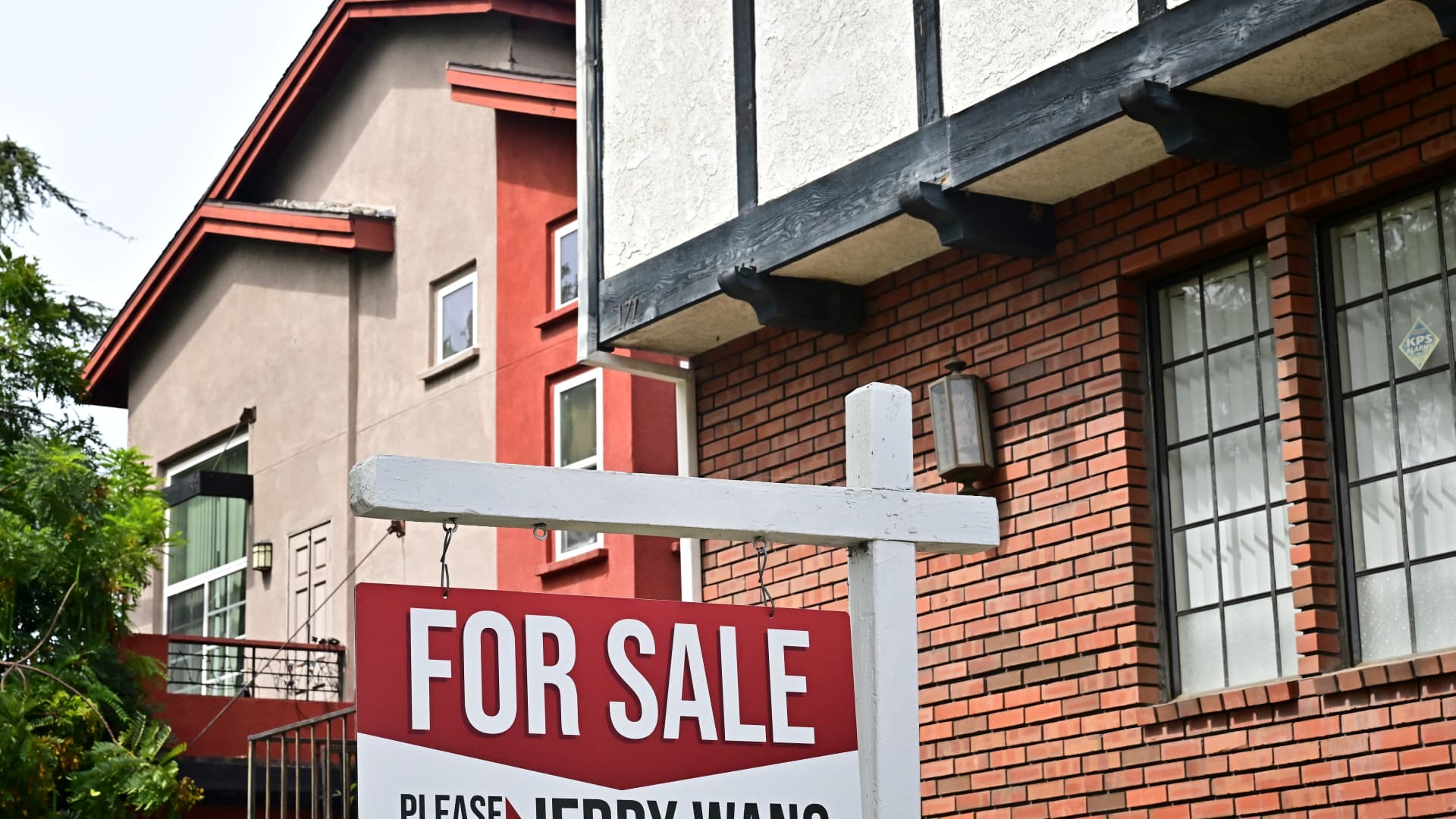
Trump deals blow to Fannie, Freddie privatization hopes. But there are other options that could lift the stocks.
MarketWatch· 2026-01-09 12:47
Core Viewpoint - The directive from President Donald Trump for Fannie Mae and Freddie Mac to purchase $200 billion worth of mortgage securities indicates a significant shift in the government's approach to supporting the housing market and may signal the end of previous strategies regarding mortgage-backed securities [1] Group 1 - The $200 billion investment in mortgage securities by Fannie Mae and Freddie Mac is aimed at stabilizing the housing market [1] - This move is expected to enhance liquidity in the mortgage market, potentially leading to lower mortgage rates for consumers [1] - The directive reflects a broader strategy by the government to intervene in the housing sector amid economic uncertainties [1]

Mortgage and refinance interest rates today, January 9, 2026: Trump floats plan to push rates down
Yahoo Finance· 2026-01-09 11:00
Mortgage Rates Overview - Mortgage rates have been fluctuating within an 11-basis-point range since late October, with the national average 30-year fixed mortgage rate currently at 6.16%, up one basis point, and the 15-year fixed rate at 5.46%, up two basis points [1][14] Government Influence - President Trump's initiative for Fannie Mae and Freddie Mac to purchase $200 billion in mortgage bonds could potentially lower mortgage rates below 6% [1] Future Projections - The Mortgage Bankers Association (MBA) forecasts that the 30-year mortgage rate will remain around 6.4% through 2026, while Fannie Mae predicts a slight decrease to 5.9% in Q4 2026 [16] - For 2027, the MBA anticipates 30-year fixed rates of 6.3% for most of the year, with a rise to 6.4% in Q4, while Fannie Mae expects average rates near 5.9% for the entire year [17]
Trump Tells Fannie, Freddie to Buy $200 Billion of Mortgage Debt
Yahoo Finance· 2026-01-09 08:47
Group 1 - US President Donald Trump directed Fannie Mae and Freddie Mac to purchase $200 billion in mortgage bonds to lower housing costs ahead of the midterm elections [1] - The announcement is part of Trump's strategy to restore affordability in housing, which he claims was damaged by the Biden Administration [1] - Fannie Mae and Freddie Mac have increased their holdings of mortgage bonds by over 25% in the five months leading up to October [3] Group 2 - The total outstanding agency mortgage bonds amount to roughly $9 trillion, meaning the proposed purchases would represent just over 2% of the market [4] - Increased demand for mortgage bonds has led to tighter spreads, the narrowest since 2022, with expectations that banks will also increase their purchases [5] - Allowing Fannie and Freddie to grow their retained portfolios is expected to exert downward pressure on mortgage rates, potentially reducing them by at least a quarter of a point [6]
特朗普表示其正指示“代表们”购入2000亿美元抵押贷款支持债券 以此压低利率
Jin Rong Jie· 2026-01-09 06:50
Core Viewpoint - President Donald Trump has instructed "representatives" to purchase $200 billion in mortgage-backed securities to lower interest rates and reduce monthly housing payments for the public [1] Group 1: Proposal Details - The proposal aims to utilize $200 billion in cash held by Fannie Mae and Freddie Mac to lower housing costs [1] - The specific entities referred to as "representatives" for executing the bond purchase remain unclear, and the White House has not responded to requests for clarification [1] Group 2: Economic Implications - Housing economists suggest that the impact of such a ban on large institutional investors purchasing single-family homes will be minimal in improving national housing affordability [1] - Richard Green, director of the USC Lusk Center for Real Estate, argues that the proposal is insufficient to address the fundamental issues in the U.S. housing market, primarily the mismatch between housing supply and demand [1][2] Group 3: Symbolic Nature of the Proposal - The $200 billion proposal is viewed more as a symbolic gesture rather than a substantive solution, especially when compared to the trillions previously used by the Federal Reserve for similar purchases [2] - Lowering mortgage rates may lead to increased home prices, which could further strain the affordability for the public [2] Group 4: Political Context - The proposal aligns with a broader shift in Trump's economic policy towards a more interventionist approach, where the federal government plays a more active role in the market [2] - As midterm elections approach, public dissatisfaction with rising prices is growing, and Trump's recent statements appear to target the ongoing cost-of-living crisis [2][3]