抵押贷款支持债券

Search documents
特朗普表示其正指示“代表们”购入2000亿美元抵押贷款支持债券 以此压低利率
Jin Rong Jie· 2026-01-09 06:50
Core Viewpoint - President Donald Trump has instructed "representatives" to purchase $200 billion in mortgage-backed securities to lower interest rates and reduce monthly housing payments for the public [1] Group 1: Proposal Details - The proposal aims to utilize $200 billion in cash held by Fannie Mae and Freddie Mac to lower housing costs [1] - The specific entities referred to as "representatives" for executing the bond purchase remain unclear, and the White House has not responded to requests for clarification [1] Group 2: Economic Implications - Housing economists suggest that the impact of such a ban on large institutional investors purchasing single-family homes will be minimal in improving national housing affordability [1] - Richard Green, director of the USC Lusk Center for Real Estate, argues that the proposal is insufficient to address the fundamental issues in the U.S. housing market, primarily the mismatch between housing supply and demand [1][2] Group 3: Symbolic Nature of the Proposal - The $200 billion proposal is viewed more as a symbolic gesture rather than a substantive solution, especially when compared to the trillions previously used by the Federal Reserve for similar purchases [2] - Lowering mortgage rates may lead to increased home prices, which could further strain the affordability for the public [2] Group 4: Political Context - The proposal aligns with a broader shift in Trump's economic policy towards a more interventionist approach, where the federal government plays a more active role in the market [2] - As midterm elections approach, public dissatisfaction with rising prices is growing, and Trump's recent statements appear to target the ongoing cost-of-living crisis [2][3]
特朗普表示,其正指示“代表们”购入2000亿美元抵押贷款支持债券 以此压低利率
Xin Lang Cai Jing· 2026-01-09 06:20
Core Viewpoint - President Donald Trump has instructed "representatives" to purchase $200 billion in mortgage-backed securities to lower interest rates and reduce monthly housing payments for the public [1][4][5]. Group 1: Proposal Details - The proposal aims to utilize the $200 billion in cash held by Fannie Mae and Freddie Mac to lower housing costs [1][4]. - The specific entities referred to as "representatives" for executing the bond purchase remain unclear, and the White House has not responded to requests for clarification [1][4]. Group 2: Economic Implications - Economists suggest that the impact of Trump's proposal on national housing affordability is minimal, as the core issue lies in the insufficient housing supply to meet demand [5][6]. - Richard Green, director of the USC Lusk Center for Real Estate, describes the $200 billion proposal as largely symbolic compared to the trillions previously used by the Federal Reserve for similar purchases [2][5]. - Lowering mortgage rates could lead to increased home prices, which may further strain the down payment burden on the public [2][5]. Group 3: Political Context - The proposal aligns with a broader shift in Trump's economic policy towards a more interventionist capitalism, where the federal government plays a more active role in the market [6]. - As midterm elections approach, public dissatisfaction with high prices is rising, and Trump's recent statements appear to target the cost-of-living crisis [6]. - A recent poll indicates strong support for housing affordability and fair wage policies in competitive swing districts, suggesting that candidates focusing on economic issues may gain an advantage [6].
美联储本周或宣布450亿购债计划?资产负债表走向仍有变数!
Jin Shi Shu Ju· 2025-12-09 08:47
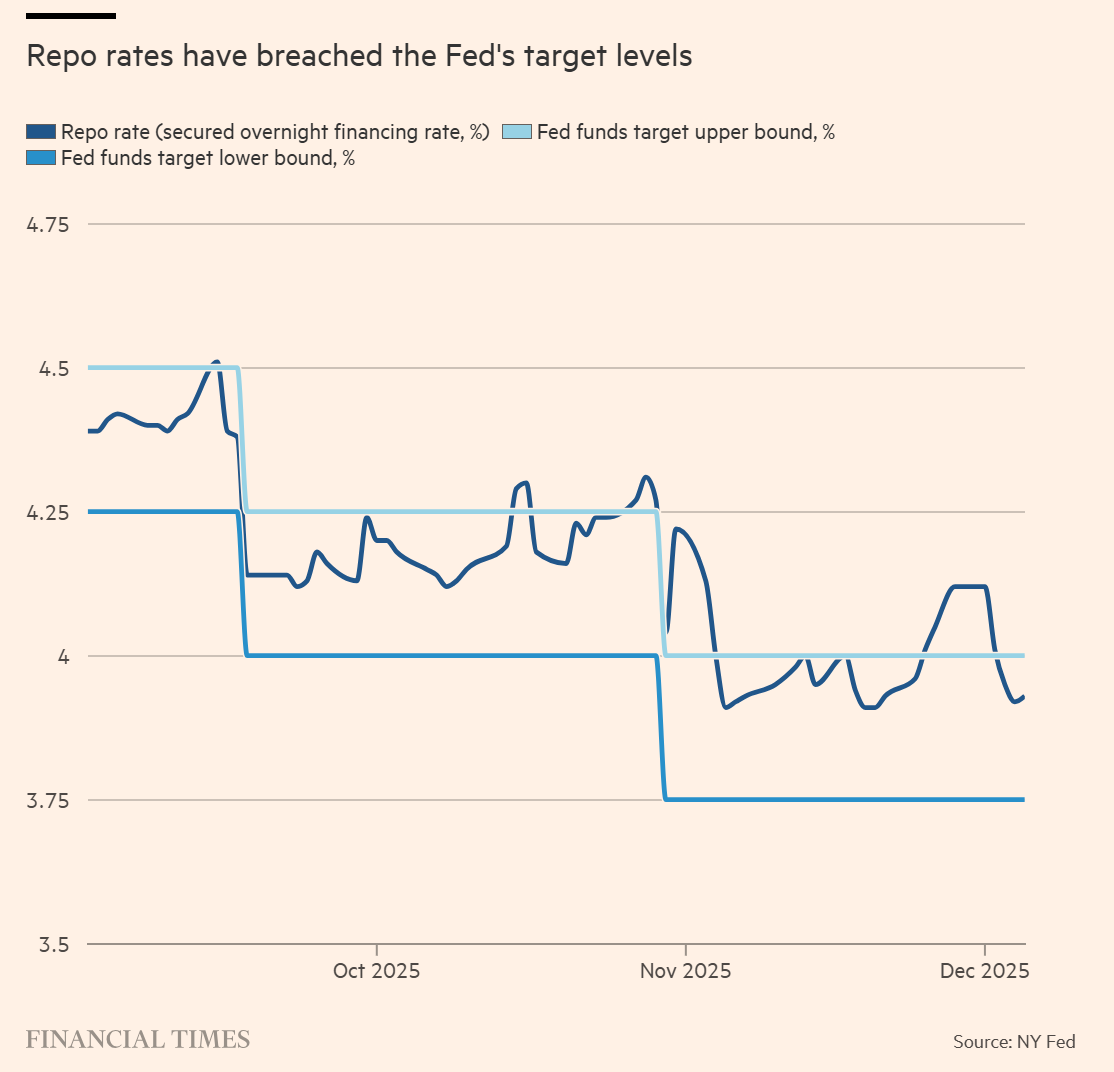
Core Viewpoint - The Federal Reserve's upcoming meeting is expected to focus on interest rate trends and the state of the U.S. economy, with a high probability of a third rate cut this year. Additionally, updates regarding the Fed's asset portfolio may be announced following the conclusion of the balance sheet reduction process on December 1 [1]. Group 1: Federal Reserve Actions - In October, the Federal Reserve announced plans to reinvest the principal of maturing Treasury and mortgage-backed securities into short-term Treasury bills to address pressures in the repo market, although this measure has not fully resolved the issues [1]. - Overnight rates have frequently exceeded the Fed's target range, indicating that banks continue to rely on the central bank's liquidity support tools, such as the standing repo facility [2][1]. - The Fed is expected to announce a "reserve management purchase" plan of approximately $45 billion per month to maintain order in the repo market and ensure smooth transmission of monetary policy [1]. Group 2: Balance Sheet Expansion Debate - The future trajectory of the Fed's balance sheet is viewed as increasingly uncertain, despite expectations of expansion due to pressures in the repo market [3]. - There are significant disagreements within the Fed regarding how to implement the ample reserves policy, raising doubts about the inevitability of balance sheet expansion [4]. - Dallas Fed President Logan has expressed support for a more flexible approach to balance sheet expansion, suggesting that the scale and timing of reserve management purchases should not be mechanical [4]. Group 3: Regulatory Considerations - The argument for reducing the Fed's influence on the economy through a smaller balance sheet is gaining traction, particularly from figures like Stephen Miran, who advocate for regulatory reforms to alleviate pressures in the repo market [5][6]. - Miran has criticized the "regulatory dominance" that leads to banks holding excessive reserves, suggesting that relaxing capital rules for Treasury securities could reduce the required reserve levels [5]. - Current regulatory adjustments under Fed Governor Bowman aim to allow banks to hold more Treasuries without additional capital requirements, potentially increasing capacity by approximately $2.1 trillion [6]. Group 4: Future Implications - The anticipated changes in regulatory frameworks and the potential for a new Fed chair next year could further alleviate pressures in the repo market and allow for lower reserve levels [7]. - These adjustments align with the previous administration's goal of increasing private sector involvement, although they carry risks of increasing bank size and leverage [7].